
Late in the afternoon the trade winds rattle the palm fronds, surfers wait on the swell off a reef, and a rainbow stands over a green valley on the wet side of the island. The year here is a slow swing between a hot, bright summer and a cooler, wetter winter, with humpback whales offshore for much of the cold half. From Waikiki to the cliffs of Kauai, each island has its own moment, and the right month depends on the coast you pick.
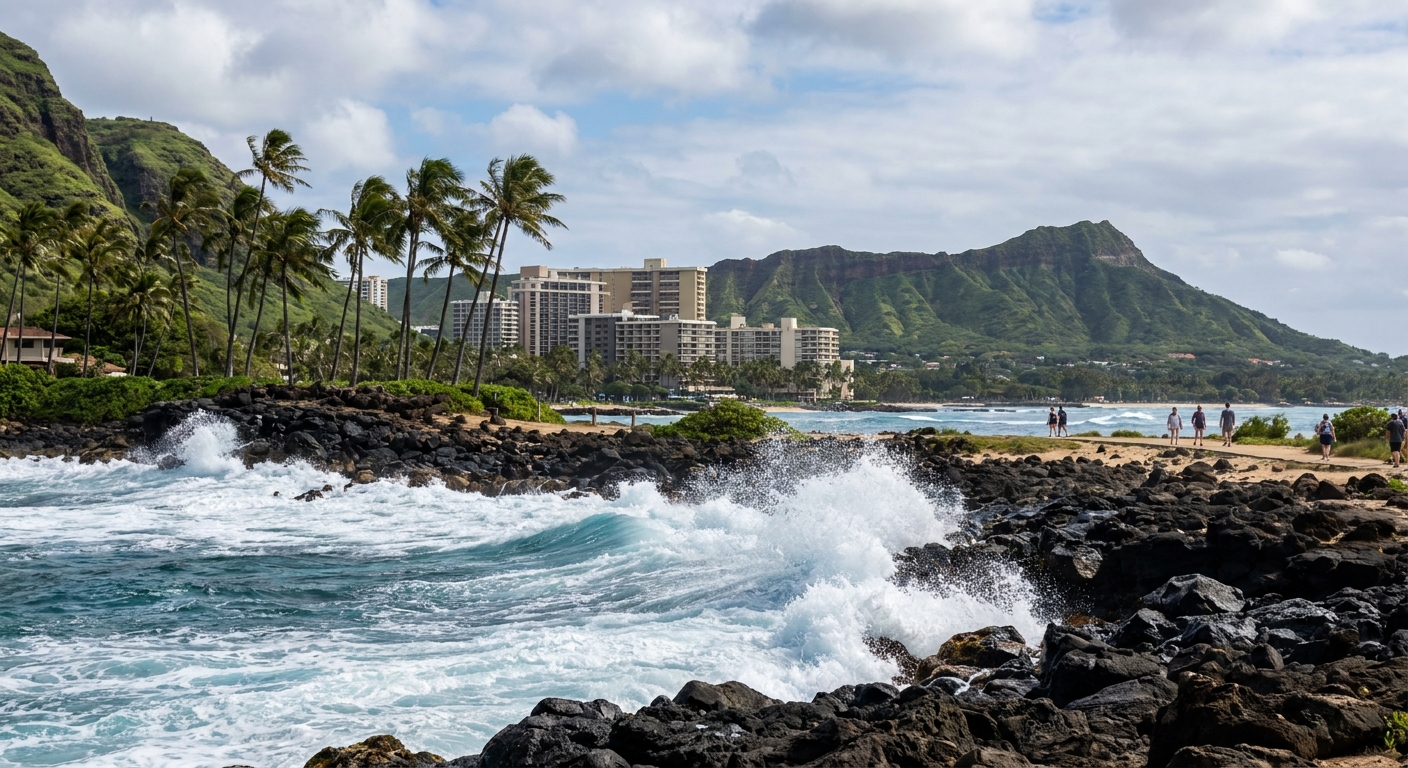
When is the best time to visit Hawaii?
For most travelers the best months are April, May, September and October, when the weather is warm and settled, the beaches are not packed, and rooms are easier to find than in midsummer or at the year-end holidays. Winter has its own pull for anyone who wants whales and big surf, and summer suits families tied to school calendars.
For a beach vacation, the dry leeward coasts are the safe bet nearly all year: Waikiki, Kona, Wailea, Kaanapali and Poipu stay sunny while other parts of the same island get soaked. Summer and early fall bring the warmest ocean and the calmest water on many shores. In winter the north-facing beaches of Oahu and Maui turn rough, and the swimming moves south and west.
For sightseeing and hiking, spring and fall are easy on the legs. The Na Pali Coast, Waimea Canyon, the Road to Hana and the lava fields of the Big Island all feel better without midsummer heat, and the trails are drier than in the heart of winter. Volcanoes National Park and the Haleakala summit are cool in any month, so a jacket belongs in the bag whatever the season.
For quiet and value, September and the weeks after Labor Day are the calm spot, with the summer rush gone and the sea still warm. Early May and the stretch between Thanksgiving and mid-December are the other soft patches.
Families should know that March is loud. Spring break fills the resorts of Waikiki, Maui and Kona with school groups, and pools and beach stretches get lively.
If your children are on a flexible calendar, late April or the first weeks of June bring the same sunshine with a lot more elbow room. In July and August, family weeks take over and the islands are busy but cheerful, with the calmest seas for little swimmers who stay with a lifeguard nearby.
Hawaii weather by region and season
Hawaii is not one climate but a set of coasts and altitudes, and the side of the island you sleep on matters more than the month on the calendar.
| Place | Region | January | April | August | October |
|---|---|---|---|---|---|
| Honolulu | Oahu, south shore | 81°F, 3.3 rain days | 83°F, 1.9 rain days | 89°F, 1.2 rain days | 87°F, 2.6 rain days |
| Maui | Dry central and leeward side | 82°F, 4.0 rain days | 85°F, 2.5 rain days | 90°F, 1.3 rain days | 89°F, 1.6 rain days |
| Kauai | Island station | 79°F, 4.4 rain days | 80°F, 5.4 rain days | 85°F, 5.3 rain days | 84°F, 5.4 rain days |
| Kona | Big Island, west coast | 81°F, 1.8 rain days | 83°F, 1.5 rain days | 87°F, 1.4 rain days | 86°F, 1.7 rain days |
| Hilo | Big Island, east coast | 79°F, 9.6 rain days | 79°F, 17.2 rain days | 83°F, 18.2 rain days | 82°F, 16.7 rain days |
The big contrast is Kona against Hilo. Both sit on the same island and have similar temperatures, but the Kona coast stays dry and sunny nearly all year while Hilo is soaked in every season, and its waterfalls and orchid gardens owe everything to that rain. Honolulu and Maui’s resort coast sit in the dry column too, with short, light showers even in winter.
Kauai sits in between. It is the green island, and its showers come in every month without much seasonal swing, mostly on the north side around Hanalei and Princeville, while Poipu on the south shore is sunnier. Carry a light rain shell there whenever you go.
Altitude changes everything. At Haleakala the average afternoon high in January is only 61°F, and it reaches about 66°F in August, with a cold, windy dawn all year. Hawaii Volcanoes National Park is also cool, and the crater rim gets frequent rain, most often in winter. Dress in layers for both places, even when the beach below is blazing.
What is there to do in Hawaii in each season?
Summer and early fall: sea, snorkeling and long days
From May to October the islands are hotter and drier, the trade winds blow steadily, and the ocean is at its warmest. This is the time for snorkeling on the reefs of Kona and Maui, paddleboarding, and sunset sails off Waikiki. Summer swells reach the south shores, so surf lessons at Waikiki and the surf breaks of the south coasts get lively, while north shores tend to be calmer.
Kauai’s Na Pali Coast is easiest to reach by boat in the summer months, when the north coast is gentler. Hiking is best early in the morning, since the afternoons are hot on the leeward side. October brings the Ironman World Championship to Kona, and the town fills with athletes and spectators along the coastal road.
Winter: whales, big surf and green valleys
From November to April the weather is cooler and wetter, and the trade winds can drop for days when fronts or Kona storms pass nearby. It is also whale season, with humpbacks reaching a peak from January through March. You can spot them from the shore at Maui’s Lahaina coast, from lookouts on Oahu, and on boat trips from Kona and Kauai.
On Oahu the North Shore turns into the stage for big-wave surfing, and spectators line the sand at Waimea Bay and Sunset Beach. Leave swimming to the leeward beaches during these weeks. The winter rain also makes waterfalls run full and the hillsides vivid, which is the best time for the Road to Hana or the Kauai valleys.
Spring and fall shoulders, and the winter holidays
April, May, September and October are the easiest months for combining beaches, hikes and drives. Mornings on Haleakala and the Volcanoes rim are clear more often, crowds thin, and snorkeling is good. Spring is also the time of the Merrie Monarch hula festival in Hilo, the week after Easter, which is a joy for anyone interested in Hawaiian culture.
At the year-end holidays, the islands are lively, with lights in Honolulu, packed resort pools and restaurants that fill early. It is a lovely time for the festive mood and for whale watching, but not for solitude. Leave the quiet small islands of Lanai and Molokai for another week of the year if you want true calm.
When is Hawaii cheapest and least crowded?
The quietest stretches are September, the weeks after Labor Day, early May, and the weeks between Thanksgiving and mid-December, when rooms are easier to find and beaches have space. September in particular is the calm one, noticeably quieter than July or December.
The busiest times follow the school calendar and the holidays. Summer fills the islands from June through August, with family vacations everywhere. Spring break brings a crowded March, and Easter week adds another surge. From the days before Christmas through New Year’s, resorts, car rental counters and popular trailheads run full, and peak-season rates apply.
Crowds also vary by island. Oahu is the busiest, with Waikiki thick with people almost all year. Maui is next, and the Big Island and Kauai feel more relaxed. Lanai and Molokai stay quiet in every season, with few hotels and little traffic. Within a given island, go early: beach parking, sunrise spots and snorkeling coves are peaceful in the morning and busy by midday.
If you are flexible, the best combination is a shoulder month on a quieter island. A mid-September week on Kauai or the Kona coast feels like a different place from Waikiki in July.
Which months should you avoid in Hawaii?
No month is truly bad, but a few come with trade-offs: the stormy edge of the hurricane season, the wettest winter weeks on the windward side, and the winter swells on the north shores.
The Central Pacific hurricane season runs from June 1 to November 30. Hawaii is rarely hit by a hurricane, but it can happen, as Hurricane Iniki showed when it crossed Kauai in September 1992. Most trips in these months go ahead without a hitch, but a tropical system can disrupt flights and close beaches, so keep an eye on forecasts close to departure.
Winter brings rain to windward coasts and slopes: Hilo, Hana, the north shore of Kauai and the rim of Hawaii Volcanoes National Park. Fronts and Kona storms can interrupt the trade winds for days, with gray skies and heavy rain, even on the leeward coasts. If a sunny beach week is your priority, pick a dry-side resort and stay flexible.
The north shores of Oahu, Maui and Kauai get big surf in winter. It is thrilling to watch, but Waimea Bay, Honolua and Hanalei are not places to swim in those months, and lifeguards and beach signs decide what is safe on a given day.
Summer heat is the lesser issue. Leeward afternoons are hot, especially in August on Maui and Oahu, so plan hikes at dawn and beach time in the afternoon, and bring plenty of water.
When can you swim in Hawaii?
You can swim in Hawaii in every month of the year, because the water stays pleasantly warm, but which beach is best changes with the season.
The ocean off Honolulu runs in the high 70s in winter and spring and warms to around 80 in late summer and fall, so a wetsuit is rarely needed, though winter mornings can feel brisk on first entry. October is among the warmest months for the water.
In winter, big swells build on north-facing shores, and the calmest swimming moves to the south and west sides: Waikiki, Ko Olina, Kaanapali, Kona and Poipu. In summer, north shores are often calm, though swells can still arrive, and the south shores take the summer swells, which is when Waikiki’s long rolling waves are best for beginner surf lessons.
Conditions vary day by day, so check the lifeguard flags and beach signs wherever you swim. Keep off the reef, and give sea turtles and monk seals the space they need when they rest on the sand.
Festivals and events in Hawaii through the year
Spring and summer: Lei Day, hula and Kamehameha Day
May 1 is Lei Day, celebrated with flower garlands, music and hula competitions, with the biggest events in Honolulu’s Kapiolani Park. It is a gentle, fragrant holiday that suits anyone who likes crafts and traditional dance. Plan to arrive early, because shaded lawn space fills up.
In spring, the Merrie Monarch hula festival in Hilo, the week after Easter, is one of the most respected hula competitions in the world, and rooms in town are booked well ahead. On June 11, Kamehameha Day honors the king who united the islands, with floral parades and ceremonies in Honolulu and on the Big Island.
Fall: Ironman and the sea at its warmest
In October, the Ironman World Championship takes over Kona, with swimmers heading out from the pier at dawn and cyclists on the Queen Kaahumanu Highway. You do not have to be an athlete to enjoy it. The town has an atmosphere of cheering crowds and cafés full of tired, happy people.
Fall is also quiet on the beaches, with warm water and gentler crowds, and local food festivals and farmers markets are a pleasure after the summer rush. Expect harvest stands and plate lunches at roadside spots on every island.
Winter: whales, the Honolulu Marathon and big waves
Humpback whales arrive from the North Pacific from about November to May, and the peak is from January through March. On the last Saturday of January, February and March, volunteers count whales from the shores of Oahu, the Big Island and Kauai for the Sanctuary Ocean Count, and visitors are welcome to sign up. Boat trips are best in the morning when the sea is calm.
December brings the Honolulu Marathon, with runners filling the streets of Waikiki, and holiday lights in downtown Honolulu. On the North Shore, big-wave surf contests draw crowds to Waimea Bay and Pipeline in winter, whenever the swell is right. Bring a folding chair, go early, and keep well back from the water’s edge on the sand.
Sources
- NWS Honolulu (HFO), « Climate of Hawaii » summary, weather.gov/hfo/climate_summary, checked September 24, 2026
- NWS Honolulu / Central Pacific Hurricane Center, « 2026 Central Pacific Hurricane Season Outlook », weather.gov/hfo/hurricaneOutlook2026, checked September 24, 2026
- NOAA/NWS, Natural Disaster Survey Report « Hurricane Iniki, September 6-13, 1992 », April 1993, weather.gov/media/publications/assessments/iniki1.pdf, checked September 24, 2026
- NOAA/NWS, Natural Disaster Survey Report « Hurricane Iniki », April 1993, Finding 1.1 and Executive Summary, checked September 24, 2026
- Hawaiian Islands Humpback Whale National Marine Sanctuary (NOAA), pages « Boating Guide » and « About the Sanctuary », hawaiihumpbackwhale.noaa.gov, checked September 24, 2026
- NOAA National Ocean Service, « Hawaiian Islands Humpback Whale National Marine Sanctuary », oceanservice.noaa.gov, checked September 24, 2026
- Hawaiian Islands Humpback Whale NMS (NOAA), « Boating Guide », checked September 24, 2026
- Hawaiian Islands Humpback Whale NMS (NOAA), « About the Sanctuary », checked September 24, 2026
- Hawaiian Islands Humpback Whale NMS (NOAA), « Sanctuary Ocean Count », checked September 24, 2026
- National Park Service, state « Hawaii », nps.gov/state/hi, checked September 24, 2026
- National Park Service, nps.gov/state/hi, checked September 24, 2026
- National Park Service, Haleakala « Fees & Passes », nps.gov/hale/planyourvisit/fees.htm, checked September 24, 2026
- National Park Service, Hawaii Volcanoes « Fees & Passes », nps.gov/havo/planyourvisit/fees.htm, checked September 24, 2026
- National Park Service, Pearl Harbor « Fees & Passes », nps.gov/perl/planyourvisit/fees.htm, checked September 24, 2026
- DBEDT (Hawaii Department of Business, Economic Development & Tourism), press release « Visitor Spending Increased in December 2025 », dbedt.hawaii.gov/blog/26-04, checked September 24, 2026
- DBEDT, press release December 2025, dbedt.hawaii.gov/blog/26-04, checked September 24, 2026
- DBEDT, press releases monthly July (blog/25-34), September (blog/25-42) and December 2025 (blog/26-04), checked September 24, 2026
- NOAA NCEI, monthly normals 1991-2020, station USW00022521, checked September 8, 2026
- NOAA NCEI, monthly normals 1991-2020, station USW00022516, checked September 8, 2026
- NOAA NCEI, monthly normals 1991-2020, station USW00022536, checked September 8, 2026
- NOAA NCEI, monthly normals 1991-2020, station USW00021510, checked September 8, 2026
- NOAA NCEI, monthly normals 1991-2020, station USW00021504, checked September 8, 2026
- NOAA NCEI, monthly normals 1991-2020, station USC00511004, checked September 8, 2026
- NOAA NCEI, monthly normals 1991-2020, station USC00511303, checked September 8, 2026
- Open-Meteo Marine API, average 2015-2024, checked September 8, 2026
To plan your stay
- Things to Do in Hawaii: Volcano Sunrises, Snorkeling Bays, Pearl Harbor and What to Eat
- Where to Stay in Hawaii: Choosing an Island, Oahu to Kauai Bases and the Hotel Tax
- Getting Around Hawaii: Interisland Flights, TheBus and Skyline, Rental Cars and Taxi Fares
- Know Before You Go to Hawaii: Agriculture Form, Sunscreen Law, Reservations and Taxes