
Before dawn at the rim of Haleakala, a line of headlights waits in the cold for the sky to turn orange. A few hours later the same people are eating shave ice in the sun at sea level.
Hawaii is that kind of place, with volcano summits, reef-lined bays, green valleys and surf towns spread over islands that each have their own mood. It suits first-timers who want a taste of everything and repeat visitors who come back for one island’s quieter side.
What are the best things to do in Hawaii?
The best things to do in Hawaii are watching a sunrise from a volcano, snorkeling a protected bay, standing at Pearl Harbor and spending a day somewhere green and wet. Here are the essentials.
- Pearl Harbor and the USS Arizona Memorial on Oahu, a quiet and moving morning.
- The Diamond Head hike, for the view over Waikiki and the south shore.
- Snorkeling at Hanauma Bay, a protected bay in an old volcanic crater.
- Sunrise on top of Haleakala on Maui, above the clouds.
- The Road to Hana, a slow drive through rain forest and waterfalls.
- Hawaii Volcanoes National Park on the Big Island, where Kilauea steams and the air turns cool.
- Humpback whales off the coast in winter, and big-wave surfing on Oahu’s North Shore.
- A plate lunch, fresh poke and shave ice, eaten on a beach or at a farmers market.
Sights and landmarks in Hawaii
Pearl Harbor and the USS Arizona Memorial
Pearl Harbor is a place of remembrance for the attack of December 7, 1941, and the white memorial stands over the sunken battleship. The program starts with a safety orientation, then a short boat ride, time on the memorial and the return to the visitor center. Voices drop on their own. Nearby, the Bowfin submarine, the Battleship Missouri and the Aviation Museum are ticketed separately and fill out a full day.
From Waikiki the drive takes about 45 minutes, and the airport is much closer. Cabs and ride-hailing cars let passengers out at the visitor center. Drivers should skip the exit for Hickam Air Force Base and the Ford Island bridge, which is for military personnel only. Memorial tickets are reserved on Recreation.gov, released daily in two windows, and a free standby list runs on tablets at the memorial for those without one.
Bags of any kind are not allowed in the memorial or the visitor center, backpacks and purses included, so travel light. Mornings are the easiest time, before the heat and the tour groups build up.
Diamond Head
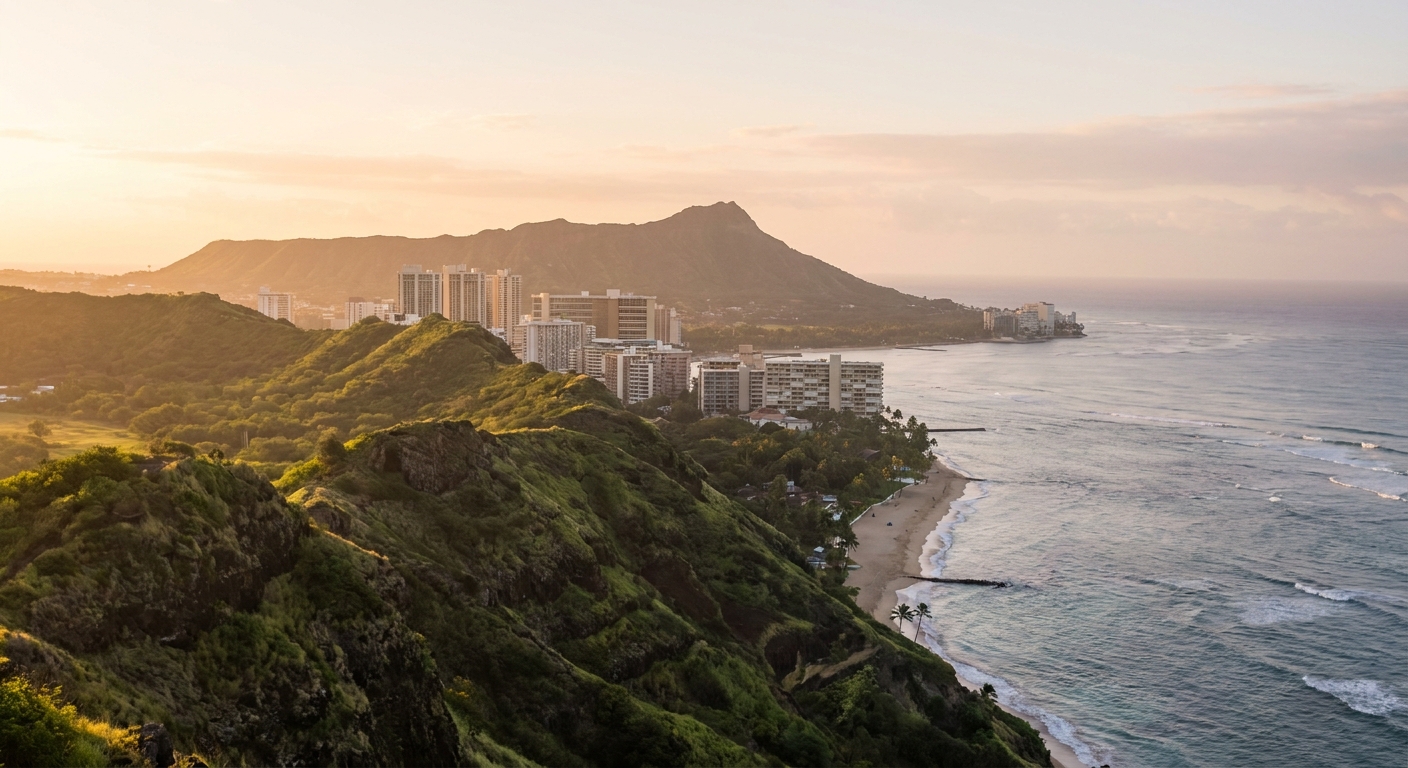
Diamond Head is the crater at the eastern end of Waikiki, and it is the shape you see on every skyline photo of the beach. The trail to the top is short but steep, sunny and partly stepped. It runs up through a lighted tunnel to an old fire control station from 1911, then ends on a lookout over Waikiki, the coast and the sea.
The climb gains 560 feet, and with photo stops most people take a couple of hours round trip. Non-residents need a reservation for entry and parking, which can be made up to a month ahead. Go early, when the rock is still cool and the light is soft on the city below. Bring water and a hat, because there is almost no shade.
Hawaii Volcanoes National Park
On the Big Island, Kilauea is the reason many people choose this island. A loop road follows the crater rim past steam vents and overlooks, and short trails drop into lava tubes and rain forest. The headquarters area sits high enough to be cool and often damp, so a light jacket belongs in the daypack even when the coast is hot.
Rangers post what can be seen from day to day, because the volcano decides. The park is best at dawn or dusk, when a glow from the crater can be visible if the volcano is active, and the Kona and Hilo sides are each a long drive away. Plan most of a day here.
Museums, palaces and old towns
In Honolulu, Iolani Palace was the royal residence of the Hawaiian Kingdom, and the Bishop Museum holds the best collection of Hawaiian and Pacific culture in the islands. Chinatown around the markets and lei shops is good for a slow walk. On Hawaii Island, Hilo’s downtown has a Saturday farmers market and old wooden storefronts facing a rainy, green bay.
| Site | Open | Admission |
|---|---|---|
| Pearl Harbor National Memorial | Daily 7 a.m. to 5 p.m., except Thanksgiving, Christmas and New Year’s Day; USS Arizona boats 8 a.m. to 3:30 p.m. | Free; USS Arizona program carries a $1 Recreation.gov fee per ticket; parking $7 per day |
| Diamond Head State Monument | Daily 6 a.m. to 6 p.m., last entry 4:30 p.m. for the 4:00 p.m. slot | Non-residents $5 per person and $10 per vehicle (reservation required); children 3 and under free; Hawaii residents free with ID |
Beaches and outdoor things to do in Hawaii
Hanauma Bay
Hanauma Bay is a curve of old volcanic crater filled with sea, and fish crowd the reef a few steps from the sand. It is a protected preserve, and everyone watches a short educational video before heading down to the beach. Before you wade in, you read the posted warnings and check the day’s surf and currents, and you swim near a lifeguard only where one is on duty, and snorkel gear is rented on site, which makes it the easiest first snorkel on Oahu.
Entry is booked online, and daily attendance is capped, so go early in your trip. The bay is closed on Mondays and Tuesdays. Snorkeling is where more visitors get into trouble than anywhere else in the islands, and the Department of Health advises it only for experienced ocean swimmers. Ask the lifeguard how the water looks before you go in, and stay off the coral.
Waikiki and the North Shore of Oahu
Waikiki is a long city beach with gentle rollers, surf lessons and outrigger canoes, and a short walk from every hotel on the strip. Sunsets are a daily event, and beach days here run from morning to the last light. At the beach entrance, the posted signs lay out the day’s surf and currents, so read them before you go in, and swim near a lifeguard only where one is on duty.
The North Shore is another world. In winter, big swells from the North Pacific reach its beaches, and surfers and spectators line the sand at Waimea Bay and nearby breaks. In summer the north side often calms and the south shores take the swell. The National Weather Service issues High Surf Advisories by shore, so check them before swimming anywhere exposed.
Molokini and Maui’s beaches
Molokini is a crescent-shaped volcanic crater just off Maui’s southwest coast, a protected marine reserve that you reach only by boat. Snorkel and dive tours leave from the south and west shores, mostly in the morning, when the water inside the crescent is usually at its calmest. Landing is not allowed, since the islet is a seabird sanctuary, and feeding fish is forbidden.
On land, Kaanapali and Wailea are the resort beaches of Maui’s dry side, with soft sand, long walks along the shore and sunsets over Lanai. From November, humpback whales arrive offshore, and boats keep their distance from them.
Other beaches and nature on the neighbor islands
On Kauai, Poipu on the sunny south shore is the family beach, while Hanalei and Princeville on the wetter north have long bays that turn rough in winter. Kee Beach, at the end of the north shore road, is a favorite for swimming and fishing. After Hurricane Lowell in September 2026 damaged roads, trails and parks on Kauai, the state parks notices page at gostateparks.hawaii.gov is the place to check what is open.
On the Big Island, the Kona coast has calm coves and sunny sand. Punaluu has a black sand beach where green sea turtles often rest. Keep your distance from turtles and monk seals, since they are protected.
| Site | Open | Admission |
|---|---|---|
| Hanauma Bay Nature Preserve | Closed Mondays and Tuesdays; closes at 4 p.m., with the beach cleared half an hour earlier; snorkel rentals 7 a.m. to 3 p.m. | Non-residents $25 plus a 2.35% online fee |
Day trips from Hawaii
Haleakala sunrise on Maui
Watching the sun climb out of a sea of clouds is the one Maui outing many travelers plan their whole trip around. From the park gate, the drive to the summit takes about 30 minutes, and you leave your hotel in the dark. The summit is 10,023 feet high, and just before dawn it is regularly wet, windy and below freezing. Bring every warm layer you own.
A sunrise reservation is required, released on Recreation.gov at 7 a.m. Hawaii time, about two months ahead, with a smaller batch two days before. It often sells out within minutes. You show ID and the confirmation at the gate. After the sun is up, the crater trails and the cooler Kipahulu side of the park make a calm second half of the day.
The Road to Hana
The Hana Highway winds along Maui’s rainy east coast, with more than 600 curves and over 59 bridges, several of them one lane wide. You pass waterfalls, bamboo groves, fruit stands and glimpses of cliffs and surf. Drivers pull over to let faster local traffic pass and yield at one-lane bridges. Many stops are on private land and not open to visitors.
Waianapanapa State Park, near the end of the road, is known for its black sand beach, and every visitor needs a reservation. Farther on, the Kipahulu District of Haleakala National Park has a trail through bamboo toward a 400-foot waterfall. The Pools of Oheo are closed to entry for safety and can be viewed from a nearby trail. There is no gas or food in the park, so fill up and pack lunch.
| Site | Open | Admission |
|---|---|---|
| Waianapanapa State Park | Daily 7 a.m. to 6 p.m. | Reservation required; non-residents $5 per person and $10 per vehicle |
Volcanoes and Maunakea on the Big Island
A day around Hilo ties together the volcano park, and Akaka Falls, where a short loop through jungle leads to a waterfall that drops 442 feet. Hilo is the rainy side of the island, so showers come with the lush green, and the waterfalls are reason enough to go.
Maunakea is a different kind of trip. It is a sacred mountain in Hawaiian tradition as well as the home of major observatories. Above the Visitor Information Station you need a four-wheel-drive vehicle, and children under 13 should not go higher. Many visitors stay at the station for stargazing instead, which is easy and rewarding. Visitors stay on marked areas and leave nothing behind.
Na Pali Coast and Waimea Canyon on Kauai
The Na Pali Coast is Kauai’s roadless cliff coast. You see it on foot from Haena at the end of the north shore road, from the water on boat tours, or from the air.
Waimea Canyon and Kokee are the cool, green uplands above the island’s dry side. Since Hurricane Lowell in September 2026, Haena, Kokee and Waimea Canyon have been affected, so check the state parks notices page before planning any trip there.
What to eat in Hawaii
Eating in Hawaii starts with the plate lunch, two scoops of rice, macaroni salad and a main such as kalua pig, chicken katsu or teriyaki beef. Loco moco piles a hamburger patty, rice, a fried egg and gravy into one bowl, and it is breakfast for many locals. Laulau is pork wrapped in taro leaves and steamed until it falls apart, and poi is the mashed taro that goes with it.
Poke, cubes of raw ahi with soy, sesame and onion, comes from grocery counters and fish markets, often better than in restaurants. Spam musubi is a snack-size block of rice with grilled Spam, wrapped in seaweed. Saimin is the local noodle soup, a mix of Japanese, Chinese and Filipino roots.
For dessert, shave ice comes in bright syrups, often over ice cream and sweet beans. Malasadas, Portuguese doughnuts, are served warm and sugary. Haupia is a firm coconut pudding. On the Big Island, Kona coffee farms offer tastings, and farmers markets across the islands sell fruit, baked goods and flowers. Stalls along the road fill up with fruit stands and banana bread.
Things to do in Hawaii at night
Evenings in Hawaii center on the sunset, then dinner outdoors. In Waikiki, people gather along the beach as the sky goes pink, and live music drifts from open-air bars and hotel terraces. Hula shows and slack-key guitar are easy to find, and a luau with kalua pig, poi and dancing is the classic night out on any island.
Beyond Waikiki, nights are quiet. Resort areas on Maui and Kauai go to bed early, and the stars take over. On the Big Island, Maunakea is one of the great places in the world for stargazing, and the Visitor Information Station is the easiest way to enjoy it. Visitors may stay after sunset but must head back down below Park 2.
Lahaina is still rebuilding after the fire of August 2023. Front Street reopened to vehicles in August 2026, and walking its stretch quietly, with respect for what happened, is part of a visit.
Things to do in Hawaii with kids
The sea in Hawaii is what children want most, and the gentlest starts are the protected bays and beaches with lifeguards, so read the posted warnings and the day’s surf and currents before going in, and swim near a lifeguard only where one is on duty. Hanauma Bay lets kids see fish from the surface, and Waikiki has small waves and surf lessons. Lifeguarded beaches, reading the posted warnings and the day’s surf and currents before going in, and staying out when in doubt are the habits that keep a beach day happy.
On land, Honolulu has a zoo and a small aquarium near the beach, and the Bishop Museum has hands-on science exhibits. Maui Ocean Center is a favorite on Maui, and on the Big Island kids love lava tubes and steaming vents in the volcano park. Whale watching boats are a highlight from November, when the humpbacks arrive.
Keep the sun in mind, since it is strong all year and sunscreen is regulated to protect the reef. Altitude matters on the high mountains. Children under 13 should not go above the Visitor Information Station on Maunakea, and the Haleakala summit is cold enough to need jackets and hats. Diamond Head is a steep, shadeless hike for little legs.
Good to know before you go
Hawaii is a U.S. state, so there is no passport or visa to think about, and flights come from the mainland. A rental car makes the neighbor islands much easier, while Honolulu works with buses and rideshares. The Central Pacific hurricane season runs from June 1 to November 30, and winter can bring big surf to north-facing shores.
| Fee | Amount | Who pays |
|---|---|---|
| Haleakala National Park entrance | $30 per private vehicle, valid three days | Everyone entering by vehicle |
| Haleakala sunrise reservation | $1 per vehicle, on top of the entrance fee | Visitors arriving between 3 and 7 a.m. |
| Hawaii Volcanoes National Park entrance | $30 per private vehicle, covering up to 14 passengers | Everyone entering by vehicle |
| Akaka Falls State Park | $5 per person and $10 for parking | Non-residents, no advance reservation |
| TheBus on Oahu | $3.00 per boarding, $7.50 daily cap with a HOLO card | Riders |
Sources
- National Park Service, Haleakala National Park, pages « Fees & Passes » and « Sunrise », nps.gov/hale, checked September 25, 2026
- National Park Service, Hawai'i Volcanoes National Park, « Fees & Passes », nps.gov/havo, checked September 25, 2026
- National Park Service, Pearl Harbor National Memorial, « Fees & Passes », nps.gov/valr, checked September 25, 2026
- Hawaii DLNR, Division of State Parks, « Diamond Head State Monument », dlnr.hawaii.gov/dsp, checked September 25, 2026
- City and County of Honolulu, Department of Parks and Recreation, press releases of June 26, 2023 (« No reservation required for kama'aina entry ») and of October 30, 2025 (« New concession aims to improve access to Hanauma Bay »), honolulu.gov/dpr, checked September 25, 2026
- NOAA NCEI, monthly normals 1991-2020, station USW00022521
- Open-Meteo Marine API, average 2015-2024
- NOAA NCEI, monthly normals 1991-2020, station USC00511004
- NOAA NCEI, monthly normals 1991-2020, station USC00511303
- NOAA NCEI, monthly normals 1991-2020, station USC00513099
- Hawaii State Department of Health, Injury Prevention Systems Section, « Drowning Prevention Information », health.hawaii.gov/injuryprevention, checked September 25, 2026
- National Weather Service, Weather Forecast Office Honolulu, « High Surf Advisory/Warning Information », weather.gov/hfo/highsurfinfo, checked September 25, 2026
- DBEDT (Department of Business, Economic Development and Tourism), press release of January 29, 2026 « Visitor Spending Increased in December 2025 », donnees 2025 preliminaires, dbedt.hawaii.gov/blog/26-04, checked September 25, 2026
- NWS Honolulu / Central Pacific Hurricane Center, « 2026 Central Pacific Hurricane Season Outlook », weather.gov/hfo/hurricaneOutlook2026, checked September 24, 2026
- DBEDT (Hawaii Department of Business, Economic Development & Tourism), press release « Visitor Spending Increased in December 2025 », dbedt.hawaii.gov/blog/26-04, checked September 24, 2026
- City and County of Honolulu, DPR, honolulu.gov/dpr/hanauma-bay-nature-preserve, checked September 25, 2026
- Hawaii DLNR Division of State Parks ; gostateparks.hawaii.gov/diamondhead, checked September 25, 2026
- National Park Service, nps.gov/perl, checked September 25, 2026
- TheBus, thebus.org/Fare/TheBusFares20240701.asp, checked September 25, 2026
- National Park Service, nps.gov/hale/planyourvisit/sunrise.htm and fees.htm, checked September 25, 2026
- Hawaii DLNR Division of State Parks ; gostateparks.hawaii.gov/waianapanapa, checked September 25, 2026
- Hawaii DLNR Division of Aquatic Resources, checked September 25, 2026
- Hawaii DOT, Final EA Hana Highway Bridge Improvements (Sept. 2024), checked September 25, 2026
- County of Maui, notice of July 17, 2026, checked September 25, 2026
- Hawaii DLNR Division of State Parks, haena-state-park, checked September 25, 2026
- DLNR news release Sept. 16, 2026 ; DLNR State Parks announcements (9/23/26), checked September 25, 2026
- National Park Service, Hawaii Volcanoes « Fees & Passes », nps.gov/havo/planyourvisit/fees.htm, checked September 24, 2026
- Center for Maunakea Stewardship, hilo.hawaii.edu/maunakea, checked September 25, 2026
- Hawaii DLNR Division of State Parks, akaka-falls-state-park, checked September 25, 2026
- National Park Service, « USS Arizona Memorial Programs », nps.gov/perl/uss-arizona-memorial-programs.htm (last updated May 7, 2026), checked September 25, 2026
- National Park Service news release « Advanced Reservations for USS Arizona Memorial Boat Tours Resume Nov. 1 », nps.gov/perl/learn/news, checked September 25, 2026
- Hawaii DLNR Division of State Parks, dlnr.hawaii.gov/dsp/parks/oahu/diamond-head-state-monument, checked September 25, 2026
- gostateparks.hawaii.gov/diamondhead/faq ; DLNR news release NR22-055, April 25, 2022, checked September 25, 2026
- gostateparks.hawaii.gov/diamondhead/about, checked September 25, 2026
- gostateparks.hawaii.gov/diamondhead/faq and /about, checked September 25, 2026
- City and County of Honolulu, DPR news release, June 29, 2021, checked September 25, 2026
- City and County of Honolulu, DPR news release « New concession aims to improve access to Hanauma Bay », October 30, 2025, checked September 25, 2026
- National Park Service, sunrise reservations FAQ, nps.gov/hale/planyourvisit/haleakala-sunrise-reservations-faq.htm, checked September 25, 2026
- National Park Service, nps.gov/hale/planyourvisit/fees.htm, checked September 25, 2026
- NOAA NCEI, normals 1991-2020, station USC00511004, checked September 25, 2026
- sunrise-sunset.org (UTC converted to HST, UTC-10), checked September 25, 2026
- DLNR news release, September 16, 2026, via governor.hawaii.gov/newsroom, checked September 25, 2026
- DLNR Division of State Parks, announcements (9/23/26), dlnr.hawaii.gov/dsp/announcements, checked September 25, 2026
- Go Haena, park conditions, gohaena.com/conditions (notice of 9/9/26), checked September 25, 2026
- Hawaii DLNR Division of State Parks, dlnr.hawaii.gov/dsp/parks/kauai/haena-state-park, checked September 25, 2026
- Hawaii DOT, Final Environmental Assessment « Hana Highway Bridge Improvements Project » (Sept. 2024), files.hawaii.gov/dbedt/erp, checked September 25, 2026
- Hawaii DLNR Division of State Parks, dlnr.hawaii.gov/dsp/parks/maui/waianapanapa-state-park, checked September 25, 2026
- gostateparks.hawaii.gov/waianapanapa/about, checked September 25, 2026
- Hawaii DLNR Division of State Parks, waianapanapa-state-park, checked September 25, 2026
- National Park Service, nps.gov/hale/planyourvisit/kipahulu.htm, checked September 25, 2026
- villes.json (hawaii/hana, portee_climat) ; NOAA NCEI station USC00511125
- NOAA Hawaiian Islands Humpback Whale NMS, checked September 25, 2026
- Center for Maunakea Stewardship, « Visiting Maunakea Safely and Responsibly », hilo.hawaii.edu/maunakea/visitor-information/public-safety, checked September 25, 2026
- Center for Maunakea Stewardship, public-safety and « Important Things to Know », checked September 25, 2026
- Center for Maunakea Stewardship, public-safety and visitor information pages, checked September 25, 2026
- Center for Maunakea Stewardship, « Important Things to Know », checked September 25, 2026
- Center for Maunakea Stewardship, visitor information, checked September 25, 2026
- Center for Maunakea Stewardship, « Geology and Climate », hilo.hawaii.edu/maunakea/environment/geology-climate, checked September 25, 2026
To plan your stay
- Best Time to Visit Hawaii: Seasons, Weather by Island, Whales and Crowds
- Where to Stay in Hawaii: Choosing an Island, Oahu to Kauai Bases and the Hotel Tax
- Getting Around Hawaii: Interisland Flights, TheBus and Skyline, Rental Cars and Taxi Fares
- Know Before You Go to Hawaii: Agriculture Form, Sunscreen Law, Reservations and Taxes