
JAMAICA · THE BLUE MOUNTAINS IN AUGUST · 18.05° N
At Blue Mountain Peak, 2,256 m (7,402 ft) above the Caribbean, an average August afternoon tops out at 62.8°F. Pack from a Kingston forecast and you will be cold at the summit, because the range runs far cooler than any stretch of coast. That is the reason a fleece belongs in a Jamaica suitcase this month.
August sits between a slightly drier July and a wetter September, with about 12 hours 46 minutes of daylight on the 15th. We suggest two nights in the mountains, with Kingston as the gateway city and our flights-from-the-US guide for getting there.
THE MONTH AT A GLANCE · BLUE MOUNTAINS · AUGUST
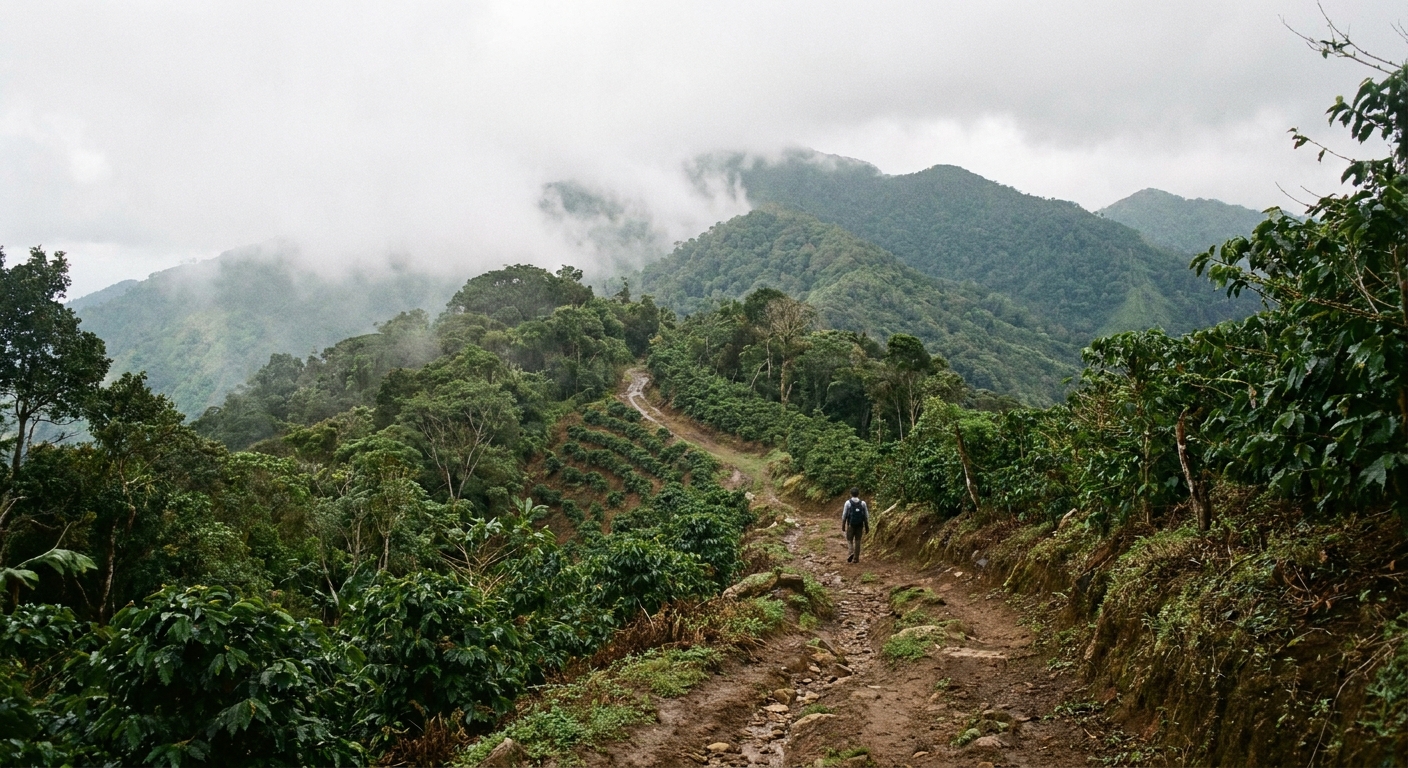
Come for a cool, damp mountain trip: August at the summit averages 62.8°F by day and 54.3°F at night, with measurable rain on about one day in three.
SUMMIT GRID CELL AT 2,256 M · ERA5 NORMALS 1991–2020 · 2 NIGHTS SUGGESTED
Go for: summit hiking into the Elfin Forest above 2,000 m, birding for the Jamaican Blackbird and two threatened parrots, and Maroon history on the Nanny Town Heritage Route.
Think twice before: packing only beachwear, or booking non-refundable nights in the middle of hurricane season.
Climate: Open-Meteo / ERA5 reanalysis, 1991–2020 · Light: sunrise-sunset.org · Heritage: UNESCO · full sources at the end
On this page
- Blue Mountains weather in August62.8°F highs, 54.3°F lows, 11.3 rain days
- How cold the Blue Mountains get in AugustDawn at 54.3°F and what to wear
- Crowds and prices in AugustHurricane season, lodge tax and refundable rates
- Things to do in the Blue Mountains in AugustElfin Forest, endemic birds, Nanny Town Heritage Route
- A two-day Blue Mountains itinerarySunrise at 5:47 am to sunset at 6:33 pm
- August vs July and SeptemberRain days from 10.1 to 14.7
- Is August a good time to visit?Yes for hikers with rain gear, July for drier odds
Every figure here comes from one grid cell centered at 18.0465° N, 76.5788° W, the cell over Blue Mountain Peak. Read the numbers as summit weather. Villages and trailheads lower down are warmer.
The Blue Mountains weather in August: average highs, lows and rain days
| August at the summit | Value | In practice |
|---|---|---|
| Average high | 62.8°F (17°C) | Fleece weather at midday |
| Average low | 54.3°F (12°C) | Cold dawn starts |
| Precipitation | 4.75 in (121 mm) | Wet trails, slick roots |
| Days with 0.10 in or more | 11.3 | About one day in three |
| Days with 1 in or more | 0.4 | About two Augusts in five |
| Daylight, Aug 15 | 12 h 46 min | Sunrise 5:47 am, sunset 6:33 pm |
The normals below are Open-Meteo’s calculation from ECMWF’s ERA5 reanalysis for 1991–2020: an average high of 62.8°F (17°C), an average low of 54.3°F (12°C) and 4.75 inches (121 mm) of precipitation across the month. ERA5 is a model reconstruction of the atmosphere over a grid cell, and no thermometer on the peak stands behind these numbers. We have no official station normal for the summit to check them against, so treat each one as a close model estimate.
On 11.3 days of an average August, the cell logs at least 0.10 inch of rain. That works out to measurable rain on roughly one day in three, so a two-night stay will likely catch some. Downpours are rarer: 0.4 days reach an inch or more, which comes to about two Augusts in five with one heavy day. Build a spare morning into the plan for the summit walk.
The average high and low sit only 8.5°F apart, so the warmest hour of an August day is just a few degrees kinder than dawn. Pack a fleece or light sweater, a waterproof shell, long pants, a hat and dry socks sealed in a bag for the descent. Add them to whatever our Jamaica packing list already put in your bag.
August 15 brings about 12 hours 46 minutes of daylight. Sunrise falls at 5:47 am and sunset at 6:33 pm, Jamaica time (UTC−5, no daylight saving). Under canopy and cloud, usable trail light fades before the official sunset, so aim to be off exposed ground by late afternoon and carry a headlamp either way.
How warm is the Blue Mountains in August?
We hold monthly means for the peak and no record extremes, so the widest spread we can give is the 8.5°F between the 62.8°F average high and the 54.3°F average low. Our sources carry no sea temperature for the range either, since the cell sits on a summit. For a swim, pair the mountains with Port Antonio on the northeast coast. When you read a sea figure there, check whether it is a mean of daily maxima, which runs a little warmer than a 24-hour average.
At dawn, near the 54.3°F low, a fleece over a long-sleeve base layer and a rain shell make sense, with light gloves if wind picks up on the summit ridge. By early afternoon, close to 62.8°F, most walkers climb in the base layer alone and pull the fleece back on at every stop. Damp mountain air chills a sweaty shirt fast.
Our sources carry no count of frost nights, so we give none. The August average low of 54.3°F sits 22 degrees above freezing, and we would not pack for ice this month. A cold, wet night on the summit is still a risk for anyone caught out after the 6:33 pm sunset without a dry layer.
How busy is the Blue Mountains in August? Crowds and prices
We found no occupancy series or monthly lodge rates for the range, so we rank no month cheap or expensive. The calendar does fix one thing: August falls inside the Atlantic hurricane season, and our Jamaica hurricane-season guide gives the dates. Read our after-Hurricane Melissa update before you book.
Without occupancy figures, we give no booking lead time in weeks. Lock the two mountain nights once your flights are set, and keep the second day open so a wet morning can slide. September adds 3.4 rain days to August’s count, so a trip that drifts later gets wetter.
We could not verify a lodging-tax rate for mountain stays, so we give no percentage. Ask the lodge whether taxes sit inside the quoted nightly price before paying a deposit.
A refundable rate is the one upgrade that changes an August booking. In hurricane season, a non-refundable deal leaves you paying for nights a storm can cancel. We could not verify a typical premium for flexibility, but paying it lets you shift the trip to July or later without losing the room money. Our Jamaica trip-cost guide covers the wider budget.
Things to do in the Blue Mountains in August
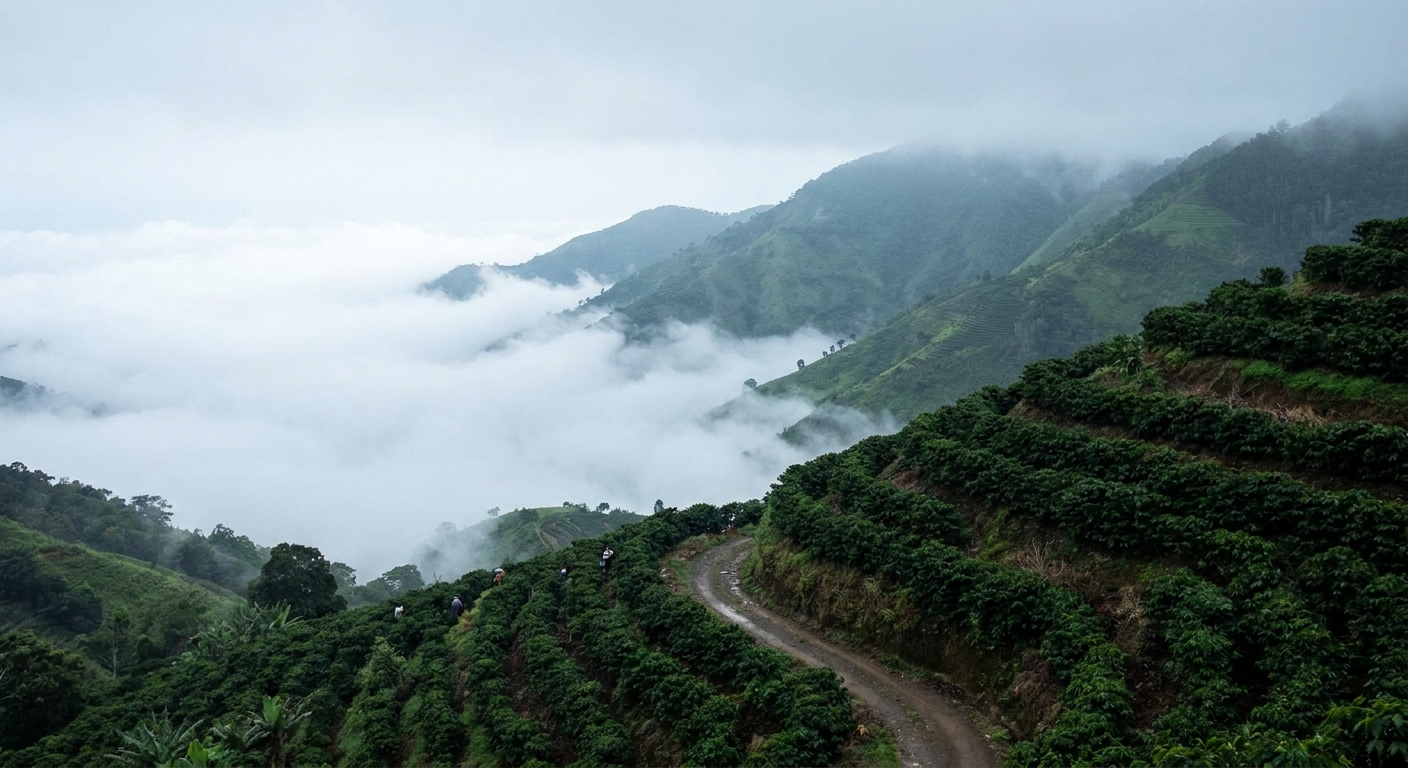
August sets 12 hours 46 minutes of daylight against 11.3 rain days, 3.4 fewer than September’s 14.7. That pairing leaves room for the long summit walk plus a buffer morning, a plan that September’s wetter calendar makes harder to hold.
The Blue and John Crow Mountains World Heritage property covers 26,251.6 hectares, with a 28,494-hectare buffer zone, and climbs from 850 m to 2,256 m at Blue Mountain Peak. Above 1,800 m the trees grow stunted, and above 2,000 m they become Elfin Forest, gnarled and hung with mosses, ferns and tiny orchids. Birders look for the Jamaican Blackbird and the Yellow-billed and Black-billed Parrots. In the John Crow Mountains lives the threatened Hutia, the property’s only non-flying land mammal. The Nanny Town Heritage Route follows the trails and look-outs of the Windward Maroons. We found no stable official page with trail times, entrance fees or guide rates, so we print none.
Temperature hardly shifts across the season up here: the August high sits 0.2°F above July and 0.8°F above September. Rainfall shifts instead, from 3.77 inches in July to 4.75 in August and 6.06 in September. The upper forest, home to 61 species of liverwort and moss and 11 of lichen, all endemic according to UNESCO, stays wet through August, and so do the roots underfoot.
We could not verify whether entry to the national park carries a fee, so we call nothing here free. Once you are on the trail, the botany comes with the walk: the property holds a reported 1,357 flowering species, about 294 of them Jamaican endemics and 87 found nowhere else. Above 900 to 1,000 m, half the flowering plants are endemic.
The Blue Mountains in August: a two-day itinerary
Day one. Be on the trail at the 5:47 am sunrise, with the air near its 54.3°F average low and a fleece on. By late morning, climbing through the stunted forest above 1,800 m into the Elfin Forest above 2,000 m, strip to a base layer as the day warms toward 62.8°F. Eat lunch at the summit if the cloud allows, start down early in the afternoon, and be off exposed ground well before the 6:33 pm sunset. Plan an early dinner at your lodge, since darkness follows soon after.
Day two. Head toward the John Crow Mountains and Moore Town, whose Maroon heritage UNESCO inscribed on its Intangible Heritage list in 2008. The Nanny Town Heritage Route belongs to the same history. If rain sets in, as it does on 11.3 August days out of 31, swap the ridge for a lower forest walk or a birding outing, or drive down early to Kingston for the flight home. Our Jamaica driving guide covers the mountain roads, and the rain shell rides on top of the pack.
The Blue Mountains in August vs July and September
| At the summit | July | August | September |
|---|---|---|---|
| Average high | 62.6°F | 62.8°F | 62.0°F |
| Average low | 54.1°F | 54.3°F | 53.9°F |
| Precipitation | 3.77 in | 4.75 in | 6.06 in |
| Days with 0.10 in or more | 10.1 | 11.3 | 14.7 |
| Gap between high and low | 8.5°F | 8.5°F | 8.1°F |
Temperature barely separates the three months: the average high runs 62.6°F in July, 62.8°F in August and 62.0°F in September, with lows between 53.9°F and 54.3°F. Rainfall climbs steadily. August adds 0.98 inch and 1.2 rain days over July, then September adds another 1.31 inches and 3.4 rain days to reach 14.7. None of the three carries a sea reading, since the cell sits on the peak.
Shift four weeks earlier into July and you gain 1.2 dry days for a high just 0.2°F lower. Shift four weeks later into September and you give up 0.8°F of afternoon warmth for 3.4 more wet days, with hurricane season still running.
Is August a good time to visit the Blue Mountains?
Yes, for hikers and birders who pack for 54.3°F dawns and rain on one day in three, and who hold a spare morning for the summit. No, for travelers after warm-weather Jamaica: the average August afternoon peaks at 62.8°F up here, and the beach days belong to a different calendar.
If August’s rain odds put you off, pick July. It carries 10.1 rain days and 3.77 inches, the lightest of the three months we compared, at a high only 0.2°F lower.
Among the three months we compared, August holds the warmest average high, 62.8°F, while keeping 3.4 fewer rain days than September.
The last word
The Blue and John Crow Mountains cover about 20% of Jamaica’s land, and in 2015 they became the island’s first World Heritage site. In August the decision that counts is the gear, more than the date: a fleece, a shell and a headlamp for a summit that averages 62.8°F. Book refundable, give the range two nights, and set the alarm for the 5:47 am sunrise.
Sources & data for this guide
- August, July and September normals (highs, lows, precipitation, rain days) · Open-Meteo / ECMWF ERA5 reanalysis, 1991–2020, grid cell 18.0465° N, 76.5788° W over Blue Mountain Peak · model reanalysis, not a station reading · checked Sep 24, 2026
- Daylight, sunrise and sunset on August 15 · sunrise-sunset.org, converted from UTC to Jamaica time (UTC−5) · checked Sep 24, 2026
- World Heritage area, buffer zone, elevations, forest zones, plants, mosses, birds, Hutia, Maroon heritage and protecting laws · UNESCO World Heritage Centre, Blue and John Crow Mountains · checked Sep 24, 2026
- Trail times, entrance fees and guide rates · we found no stable official page publishing them, so we print none · checked Sep 24, 2026
- We found no occupancy series, lodge rates or lodging-tax rate for the range and rank no month on price. Conditions at lower elevations will differ from the summit cell.
To plan your stay
- Things to Do in the Blue Mountains: Coffee Farms, the Peak Hike, Bike Descents and Short Trails
- Blue Mountains Wildlife: The Birds, the Hutia and What Lives Only Here
- Best Time to Visit the Blue Mountains: Rainfall, Cool Nights and the Quiet Months
- The Blue Mountains in July: Weather, Rain Days and Cold Nights on the Peak