
FLORIDA · HURRICANE SEASON · JUNE 1 TO NOVEMBER 30
Forty percent of every hurricane recorded striking the United States struck Florida. The count behind that share belongs to NOAA’s hurricane research division: 120 direct hits between 1851 and 2018, 37 of them major, meaning category 3 or above. It is the figure the state’s reputation rests on, and it is usually the first number a traveler meets when a trip lands between June and November.
A count answers a narrower question than the one most travelers arrive with. Over 167 seasons it can say which coast was struck more often and in which months, and nothing at all about one week in October. The gap it does show is large: the Jacksonville and St. Augustine coast has taken one major hurricane since 1851, while the Fort Myers coast has taken seventeen. Choosing a coast changes exposure before a date does.
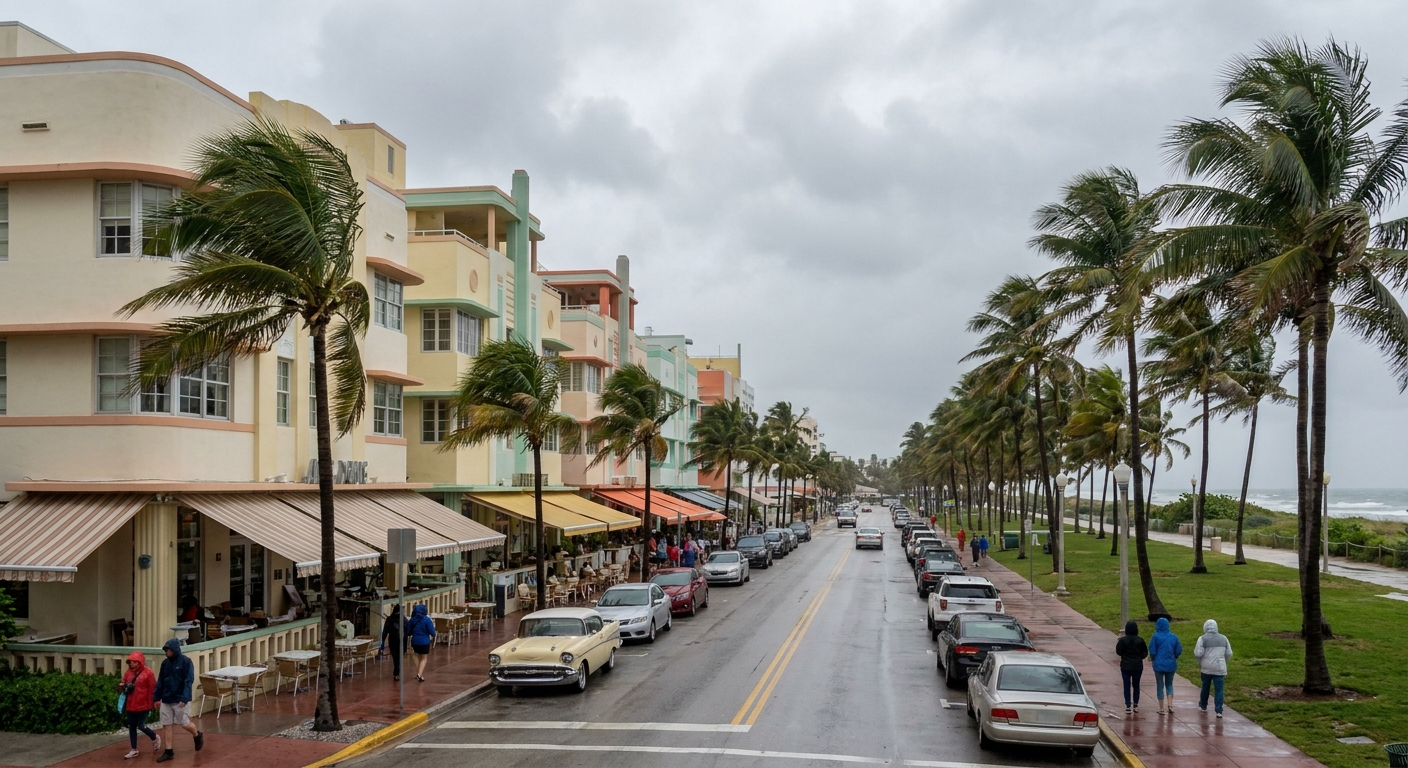
THE SEASON AT A GLANCE · FLORIDA
Florida took 120 direct hits between 1851 and 2018, 37 of them major, and the record splits by coast instead of spreading evenly across the state.
SEASON: JUNE 1 TO NOVEMBER 30 · PEAK: SEPTEMBER 10 · COUNTS RUN 1851-2018
Go for: the counts by coast, the category breakdown of Florida’s 120 direct hits, and the national rates that put them in scale.
Think twice before: reading any of this as a forecast for your week: these are tallies of 167 seasons, and the published table stops at 2018.
Counts: NOAA AOML Hurricane Research Division, FAQ E19 · Season dates and peak: NOAA National Hurricane Center · full sources at the end
On this page
- Hurricane season dates and peakJune 1 to November 30, peak September 10
- How many hurricanes have hit Florida120 direct hits, 37 of them major
- Which Florida coast gets hit mostSouthwest 17 majors, northeast 1
- Traveling in September or OctoberWhat the counts do and do not cover
- Florida month by monthThe 12-month view
- Hurricane season in JamaicaThe same question, Caribbean side
Florida does not carry this alone. Eighty-eight percent of all major hurricane strikes on the United States have come ashore in either Florida or Texas, two states holding nearly nine in ten of the worst ones. Inside Florida the tally splits by coast. The northwest coast, the Panhandle, recorded 66 direct hits between 1851 and 2018. Down the Gulf toward Fort Myers, the southwest coast took 49. The southeast, Miami through the Palm Beaches, also took 49. The northeast coast, from Jacksonville south, recorded 26.
When is hurricane season in Florida?
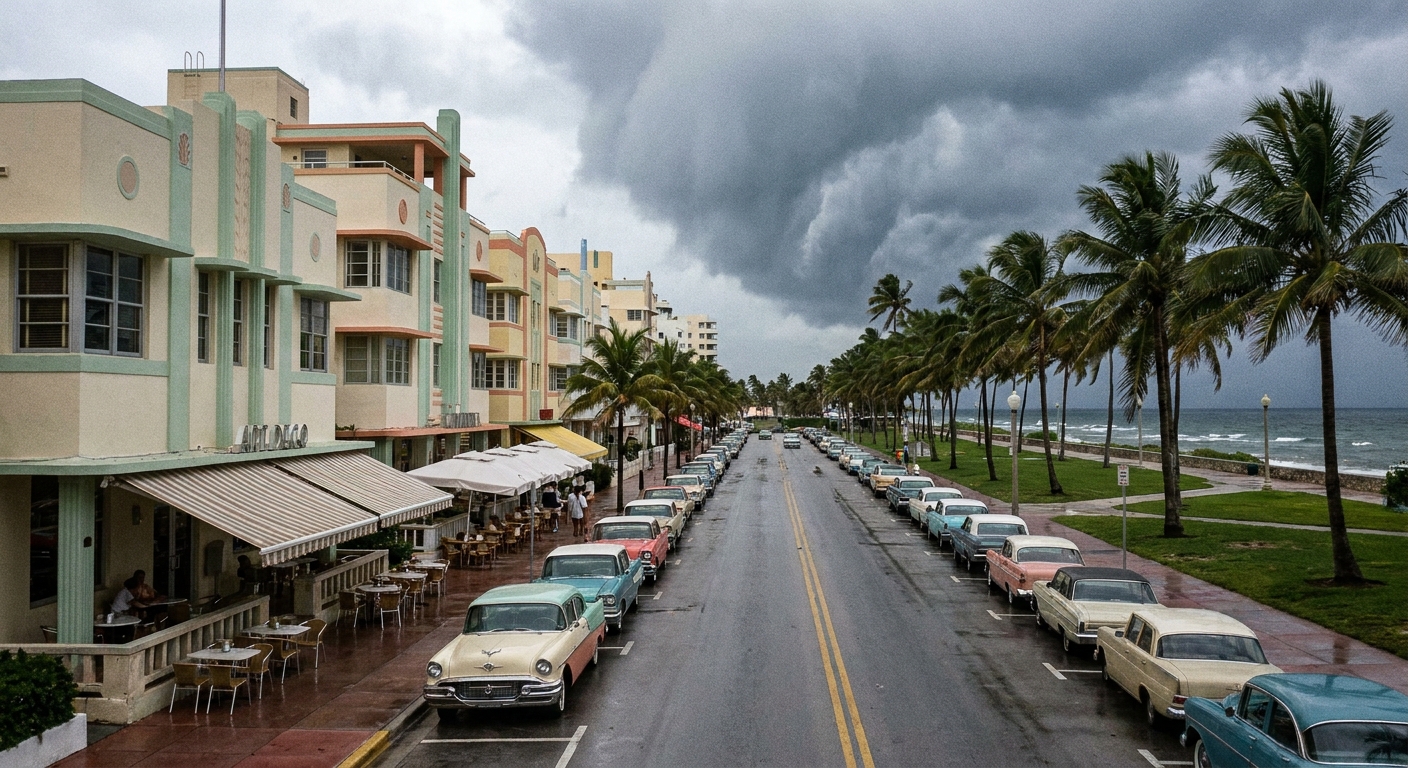
The Atlantic hurricane season runs from June 1 to November 30 and peaks on September 10. Most activity falls between mid-August and mid-October, roughly two months inside a bracket of six. A trip to Florida in June and a trip in September sit inside the same official season and in very different parts of it.
What those dates cannot do is sort your week. September 10 marks the historical high point of the seasonal curve, not a day with a storm scheduled on it, and the six-month bracket covers weeks that behave nothing alike. Travelers who read the season as one block write off half the calendar, October included, which sits on the far side of the busiest run. Beyond those dates, the record supports counts and nothing else.
How often do hurricanes hit Florida?
| Category | Direct hits on Florida, 1851-2018 |
|---|---|
| Category 1 | 47 |
| Category 2 | 36 |
| Category 3 | 24 |
| Category 4 | 11 |
| Category 5 | 2 |
| All categories | 120, of which 37 major (cat 3+) |
Those 120 direct hits landed across 167 seasons, which averages close to seven a decade over the entire Florida coastline (arithmetic ours, from the same table). The record spreads them unevenly: some years took several, many took none at all. Forty percent of every U.S. hurricane strike in that period belongs to Florida alone.
The category mix matters as much as the total. Of the 120 hits, 47 arrived as category 1 and 36 as category 2, so 83 of them, near seven in ten, came ashore in the two lowest categories. Above that the numbers thin fast: 24 category 3, 11 category 4, and 2 category 5. The 37 majors are what the state’s worst memories are built on, and they are under a third of the total.
For scale outside Florida: close to seven hurricanes every four years, about 1.75 a year, strike the United States as a whole, and roughly three major hurricanes cross the coast every five years, about 0.60 a year. Measured against those national rates, one state holding 120 hits and 37 majors is what puts Florida at the top of the table.
Which part of Florida gets hit most?
Category 3 and above narrows the picture and widens the gap. The southwest coast, Fort Myers and Naples, recorded 17 major hurricanes in those 167 years. The southeast, Miami through the Palm Beaches, recorded 16. The Panhandle, which leads the all-category count with 66, recorded 14 majors. And the northeast coast, St. Augustine and Jacksonville, recorded one. One is a count of what happened, not a reading of what will, and it describes a stretch of coastline rather than a hotel on it.
Should you avoid Florida in hurricane season?
Sources & data for this guide
- Direct hits and major hurricanes by state and by Florida coast, 1851-2018 · NOAA AOML Hurricane Research Division, FAQ E19, table updated from Jarrell et al. (2001) · checked Sep 13, 2026
- Category breakdown of Florida’s 120 direct hits (47 / 36 / 24 / 11 / 2) · same FAQ E19 table · checked Sep 13, 2026
- U.S.-wide rates of about 1.75 hurricanes and 0.60 major hurricanes a year · same FAQ E19 table · checked Sep 13, 2026
- Season dates, the September 10 peak and the mid-August to mid-October stretch · NOAA National Hurricane Center climatology · checked Sep 13, 2026
- The published table stops at 2018. Florida has had several storms since, and they are not in these counts.
- We verified no seasonal outlook, no insurance rule and no cancellation policy for this page, so none of those appear on it.
Avoiding the season altogether means avoiding June 1 through November 30: six months, half the calendar, and the cheaper end of Florida’s year. Most people asking the question are asking about one specific week, usually in September or October, and the record cannot rank one week against another. It can say which coast has been struck more often, and that is a choice made when you pick a town rather than a date. The month-by-month view covers the rest of the calendar.
These are counts of what happened over 167 years, not a forecast for your week. They say which coast took more strikes and in which months, and nothing whatever about a particular trip. No seasonal outlook sits behind them, and neither does any insurance or cancellation rule: we verified none of that, so none of it is written here or on the safety page.
The published table also stops at 2018. Florida has had several storms since then, and they are absent from every figure above, so the coast totals read as a floor rather than a current tally. Treat 120, 66 and 17 as numbers with a 2018 cutoff stamped on them.
The counts move the map before they move the calendar. A week in St. Augustine sits on the coast that recorded one major hurricane since 1851; the same week near Fort Myers sits on the coast that recorded seventeen. Neither number says anything about the week you booked, and both are worth knowing before you book it. For what the season does to heat, afternoon storms and prices, September and October carry the detail.