
The northern bus pulls away from its depot in Mykonos Town with a hiss of brakes, and the whitewashed lanes give way to open hillside and the glint of the Aegean. Somewhere along that line sits Elia, a beach whose name is the Greek word for olive tree. It is a day at the sea on an island known for wind, nightlife and long lunches, planned around a regular bus and the right month.
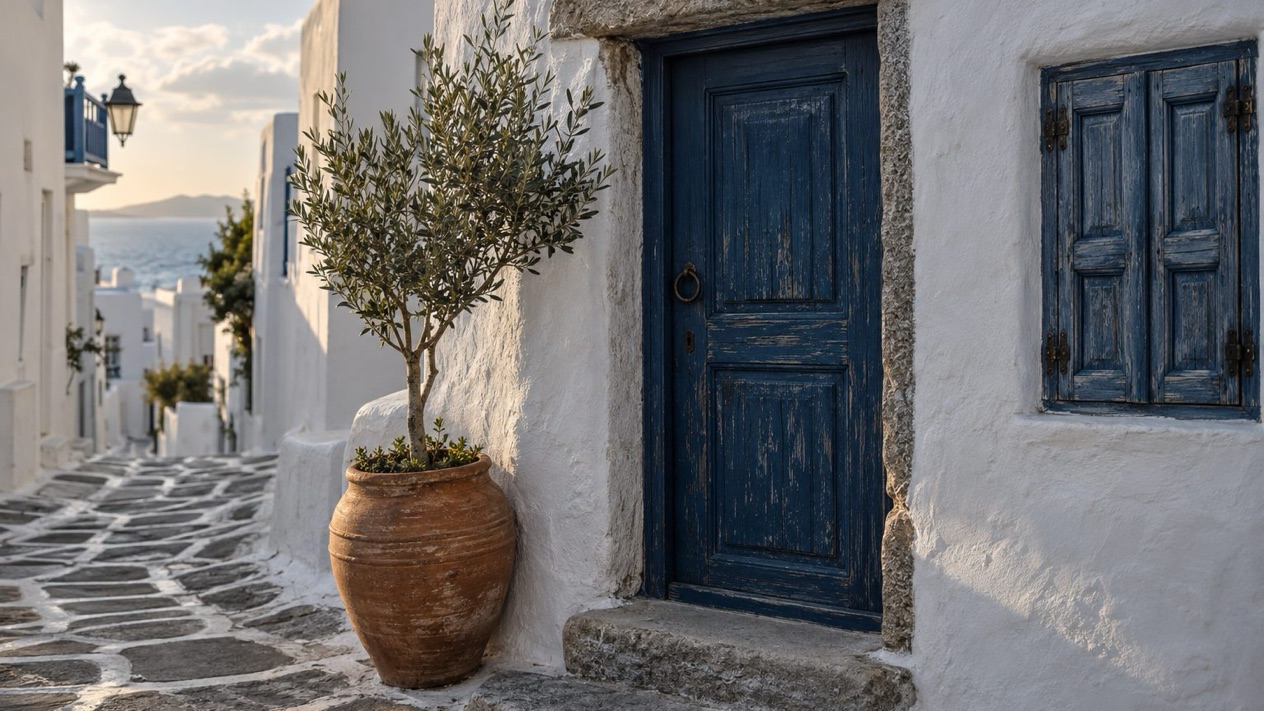
Is visiting Elia Beach worth it?
Yes, if you want a stretch of Mykonos coast that you reach on the public bus and that sits apart from the stops of the southern line. It is also a good pick for anyone who has already seen the Town and wants to understand the island beyond its harbor.
What sets Elia apart on the map is how you arrive. The island’s bus network splits into three depots, and the northern one is the depot that serves Elia, along with Ano Mera and Kalafatis.
The southern depot at Fabrika feeds a different string of beaches: Ornos, Agios Yannis, Plati Gialos, Psarou, Paraga and Paradise Beach. Choosing Elia therefore means choosing the northern line, with its own stops, its own pace and its own company on the ride.
Mykonos is one of the most famous Greek islands, known for cosmopolitanism and luxurious vacations, and it carries the nickname island of the winds. A beach here is never only about the sand and the water.
It is about the weather of that particular day, the light over the Cyclades and the line of the horizon, with Tinos, Syros, Paros and Naxos all lying around the island. Elia gives you that setting without asking you to plan anything more elaborate than a bus ride.
What to see at Elia Beach
Around it, the island offers several reference points that help you read the day, from the ride itself to the inland village and the lighthouse on the coast.
The beach and its name
Elia takes its name from the Greek word for olive tree, a plant that belongs to the Greek landscape as much as the sea does. When you arrive, you take in the shoreline, the water and the open sky that Mykonos is known for. Look at how the beach meets the Aegean and where the island’s hills fall away behind it.
Mykonos is a small island, with an area of 33.0 square miles, and a day here is mostly a matter of choosing where to put your towel. Elia is one of those choices, and it is one that makes a good contrast with the busier names on the southern side of the island.
The northern bus line
The ride is part of the visit. The northern depot runs regular service to Ano Mera, Elia and Kalafatis, so the bus carries a mix of beachgoers and islanders heading to the inland village. Sit by a window and watch the landscape change as the Town falls behind: the dry hillsides, the stone walls, the small chapels and the farmhouses that give Mykonos its rural face.
On the way back, the same line returns you to the Town, which is useful if your evening plans are there.
Ano Mera, the island’s inland village
Ano Mera is the only inland settlement on Mykonos, and it is on the same northern bus line that serves Elia. That makes it a natural companion to a beach day for anyone curious about village life away from the water. The place has the feel of a country square rather than a harbor town, with tavernas, a main plaza and the daily business of the people who live there year round.
A meal of grilled meat, a Greek salad with feta and a glass of local wine is the kind of lunch the village does well. It is also a way to see a side of Mykonos that the cruise crowds and nightlife seekers often miss.
The Armenistis Lighthouse at Fanari
If you want a second stop that shows the exposed edge of the island, the Armenistis Lighthouse stands at Fanari, 4.0 miles from Chora, the main town. It is a reminder of how much the sea shapes life here, and of why Mykonos earned its nickname for the wind. Even if you do not make the trip, it helps you picture the island as a piece of rock in open water.
Seen from the shore of any beach on the island, the horizon is what you remember: a line of blue broken now and then by the outline of a neighboring Cyclades island.
How to get to Elia Beach
The northern depot provides regular service to Ano Mera, Elia and Kalafatis, so you head to that depot in Mykonos Town and board the line that carries the Elia name. The old port depot, by contrast, concentrates on Tourlos (the New Port) and Agios Stefanos, and the southern depot at Fabrika serves a different set of beaches, so it matters which station you walk to.
Mykonos Town sits on the west coast and is the island’s largest settlement, home to most of its 10,704 inhabitants. Most arrivals pass through it, which makes it the natural base for a day at Elia.
Reaching Mykonos first
Mykonos lies in the heart of the Cyclades, 93 miles east of Athens in the Aegean Sea. By air, the flight from Athens takes 25 minutes, and Mykonos Airport is located 2.5 miles southeast of the Town. By sea, high speed vessels visit daily from the surrounding islands and from Athens. Once you land at the airport or step off the boat, you are in the Town or close to it, and the northern depot is your next stop for Elia.
From the Town to the beach
From Mykonos Town, you catch the northern line to Elia. Because the same line also serves Ano Mera and Kalafatis, you can read the stops on the way and know where you are. The ride gives you a look at the interior of the island that a taxi window or a boat deck does not, and it is a good moment to get your bearings before the beach day starts.
When to visit Elia Beach
The best time to visit Mykonos is mid-May through June or September through mid-October, while July and August are extremely crowded.
The meltemi, a strong, dry north wind of the Aegean Sea, blows periodically from about mid-May to mid-September. It is part of the character of Mykonos, which is nicknamed the island of the winds. On a beach day, expect the sea and the air to feel the wind’s presence at times during those months, and look at the day’s conditions when you wake up.
| Month | Average high (°F) | Average low (°F) | Precipitation (inches) | Days with rain |
|---|---|---|---|---|
| January | 55.2 | 47.7 | 2.95 | 10.8 |
| April | 64.0 | 54.7 | 0.83 | 3.9 |
| July | 83.3 | 72.7 | 0.02 | 0.1 |
| October | 71.2 | 63.0 | 1.21 | 3.7 |
The rainy season on Mykonos lasts from October until March, so an October trip can bring a shower, and a light rain jacket is the sensible companion to a swimsuit.
April is cooler, with a few days of rain, and January is the wettest of the four months in the table. For a classic beach day, the late spring and early autumn windows are the ones the island itself recommends.
Tips for your visit
Start by deciding which bus you want. The northern depot is the one that serves Elia, and knowing that before you leave your hotel saves you from walking to the wrong station. From there, the day is yours to shape around the sea, the wind and your appetite.
What to bring
A swimsuit, a towel and sun protection are the basics, and the table of temperatures explains why: summer highs reach the low 80s, and the sun is strong over the Aegean. In October, add a light layer and a rain jacket for the days when showers pass through. A reusable bottle for water and a hat are simple things that make a beach day more comfortable.
If you visit between mid-May and mid-September, think about the meltemi when you pack. A light windbreaker and something to weigh down towels and papers are practical companions on a day when the north wind blows.
What to pair it with
The same northern line that serves Elia also serves Ano Mera and Kalafatis, so you can combine the beach with a visit to the inland village or another stop on the route. Ano Mera suits a late lunch of grilled dishes, salads and local cheese. Back in the Town, you can finish the day with a stroll through the lanes of Chora as the evening begins.
If you have another day on the island, tour boats go regularly from Mykonos to the nearby island of Delos, and the Armenistis Lighthouse at Fanari gives a view of the island’s wilder edge.
Families and mobility
The bus line is the one sure part of the trip, and the rest of the day can adapt to what you find when you step off.
Bring snacks and water for children, and plan the ride so that nobody is tired and hungry at the same moment. A day by the sea on Mykonos goes best when the schedule is loose.
Good to know before you go
Mykonos is known for luxury, and a day at Elia can be as simple or as indulgent as you choose. The island’s wind, the meltemi, is a normal part of summer, so look at the sky and the sea before you commit to a plan. In the quieter months from October to March, the rainy season brings a different mood, with fewer visitors and softer light on the hills.
Keep the usual travel habits: carry water, protect your skin and keep your belongings with you on the bus. The Blue Flag, a certification by the Foundation for Environmental Education that a beach meets its standards, is a label some beaches carry, though it is not a fact attached to Elia here.
Sources
- Wikipedia, Mykonos (https://en.wikipedia.org/wiki/Mykonos), checked October 12, 2026
- Visit Greece (GNTO), Mykonos (https://www.visitgreece.gr/islands/cyclades/mykonos/), checked October 12, 2026
- Wikivoyage, Mykonos (https://en.wikivoyage.org/wiki/Mykonos), checked October 12, 2026
- Hellenic National Meteorological Service (HNMS), climatological normals 1991-2020 for Mykonos station (https://www.emy.gr/climatic-data), monthly mean daily maximum and minimum; rain from the ECMWF ERA5 reanalysis, 1991-2020, grid cell of Mykonos (Open-Meteo), checked October 12, 2026
- ECMWF ERA5 reanalysis 1991-2020, grid cell of Mykonos (Open-Meteo), checked October 12, 2026
- Wikipedia, Blue Flag beach (https://en.wikipedia.org/wiki/Blue_Flag_beach), checked October 12, 2026
- Wikipedia, Meltemi (https://en.wikipedia.org/wiki/Meltemi), checked October 12, 2026
To plan your stay
- Agia Marina Beach near Chania: Setting, Seasons and the Old Town Next Door
- The Beaches of Antiparos: Sandy Shores, Nudist Coves, the Cave and Despotiko
- Agios Gordios Beach on Corfu: Ai Gordis Village, the Pink Palace, Weather by Season and Tips
- Agios Prokopios Beach: Naxos Setting, Seasons, Food and Nearby Sights