
The first thing that stops you at Simos Beach is the color of the water, a blue-green that shifts as clouds pass over the island. Elafonisos is small, and the sea is never far from wherever you stand.
Locals call this place Fragos, and the name travels with the beach on every conversation about the island. A visit here is about the water, the island around it and the old story under the waves just offshore.
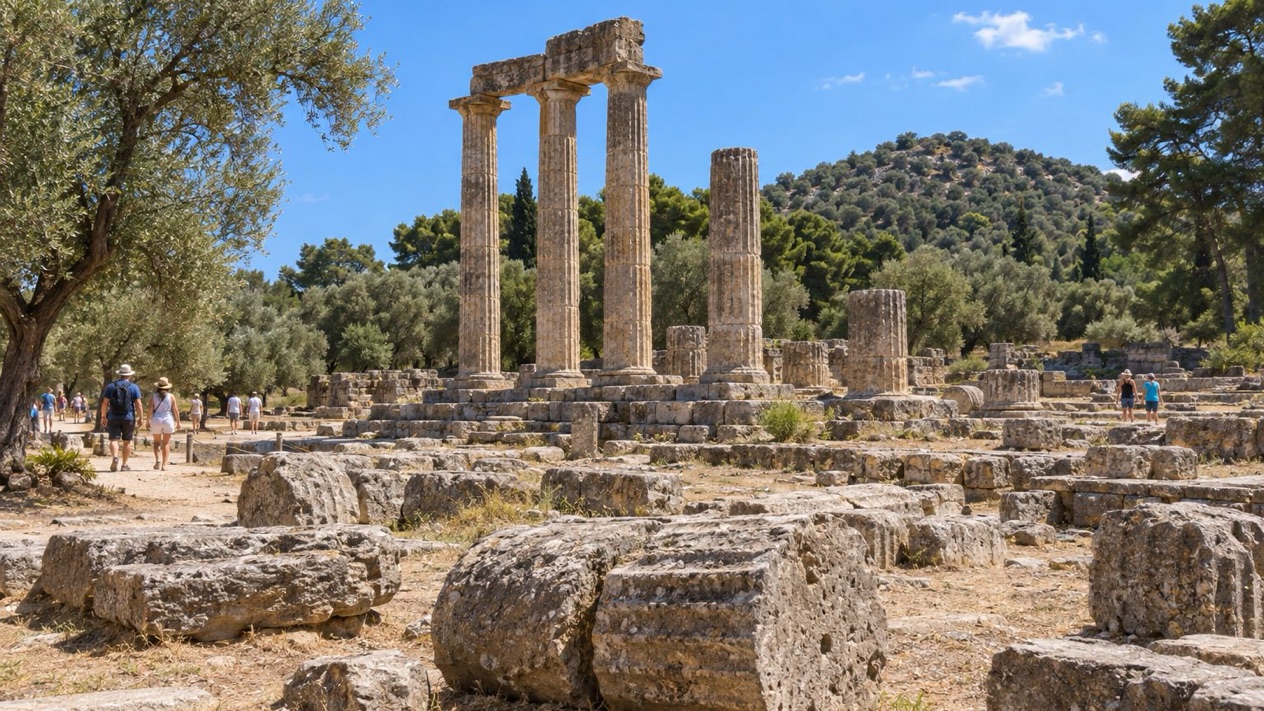
Is visiting Simos Beach worth it?
Simos is one of the most well-known beaches on Elafonisos, and the blue-green water is the reason people talk about it.
What separates it from other beaches in the area is the setting. Elafonisos sits between the Peloponnese and Kythira, off the coast of Cape Malea and Vatika, so the beach belongs to a place with its own municipality and its own rhythm.
It is the largest inhabited island in the Peloponnese archipelago, and the only one of them that stands as a separate municipality. That gives the island a character of its own, rather than feeling like an add-on to a mainland coast.
There is also the matter of scale. The island covers about 7 square miles, so a day here is not a matter of long drives between sights. You can pair a swim at Simos with a look at the other side of the island, with the island’s village life, or simply with a long lunch. The beach is the anchor, and everything else on Elafonisos fits around it.
Layered under all of this is the history that sits just off the coast. The sunken city of Pavlopetri lies in the sea near Elafonisos, which means that the water you admire from the beach also covers one of the oldest stories in this part of Greece. Few beaches in the Peloponnese come with that kind of backdrop.
The island is small and the beach is well known, so the experience changes with the season. In winter Elafonisos is a village-sized community, and in July and August it fills with visitors. Decide which of those two islands you want to meet, and the rest of the plan follows from that choice.
What to see at Simos Beach
The blue-green water of Simos
The water is the main attraction here, and it is described by one color pair: blue-green. In practice that means the sea changes tone as you look from the shore toward deeper water, with lighter green near the edge and richer blue farther out. Bring your eyes before your camera, because the color is the first thing that registers when you arrive.
Take your time at the waterline. Watch how the light moves over the surface, and notice how the tone shifts when a cloud crosses the sun. The sea is the point of the visit, and standing at its edge for a few minutes before you do anything else is a good way to start.
Fragos, the name locals use
Simos goes by a second name on the island. Locals call the beach Fragos, and you may hear it used in conversation, on signs or in directions from people who live there. Knowing both names helps when you ask about the beach, since the one you read in a guidebook is not always the one you hear on the street.
A place with two names usually has a long history of being talked about, and that is true here. The beach is one of the most well-known on Elafonisos, which is why the local name has stuck alongside the better-known one. It is a small detail that makes the beach feel less like a pin on a map and more like part of the island’s own vocabulary.
Pavlopetri, the sunken city offshore
Just off the coast of Elafonisos lies the archaeological site of Pavlopetri, a sunken city. It dates back to the early 3rd millennium BC, which places it among the very old settlements of the region. The sea is thought to have claimed it around 1000 BC, and it has stayed under the water since.
What you can do is stand on the shore and picture what lies out there, a town that once had people, houses and daily routines, now covered by the same sea you are looking at. It gives a plain swim day a longer memory.
Punta Beach and the mainland corner
The community of Elafonisos includes about a square mile of the mainland, made up mainly of Punta Beach. It is a curious detail of the island’s geography: a piece of the municipality that sits on the Peloponnese itself. Knowing it helps you read the map, since Punta belongs to Elafonisos even though it is not on the island.
The town of Neapoli on the mainland is approximately 4.0 miles east of Elafonisos, which shows how close the island is to the mainland shore. For a traveler, this means Elafonisos is not a remote outpost.
The island behind the beach
Elafonisos rises to a highest point of 909 feet, so the island is not flat, even if it is small. That elevation shapes the land behind the sea, and a look at the island’s shape on a map tells you that the beach is one part of a varied small landscape. The coordinates, 36°29′15″N 22°57′45″E, put it near the southern tip of the Peloponnese.
Beyond the beach, the island has a village life of its own. In winter the population is between 300 and 350, a small community that goes about its routines. Seeing the island as a home rather than a destination changes how you move through it, and gives the visit a more thoughtful pace.
When to visit Simos Beach
The season shapes the beach more than anything else, because Elafonisos swings between a village and a summer destination. In July and August, the island receives visitors in large numbers, and Simos, as one of its most well-known beaches, is where many of them head. If you want the beach in its busiest mood, those are the months.
The numbers tell the story. During those two months the number of tourist visitors reaches over 3,000 per day. They bring some 1,600 cars with them, which on an island of this size is a lot of traffic. That is the scale of summer on Elafonisos, and it is worth imagining before you plan a day around one beach.
Outside July and August, the island returns toward its smaller self. The winter population is between 300 and 350, and the contrast with the summer figures is striking. A visit in the months on either side of the peak means meeting an island that is closer to its everyday size, though the details of what is open and when are not something to assume.
Think about what you want from the day. If you want the beach with energy around you, aim for the peak of summer. If you prefer a calmer feeling from the island as a whole, the shoulder months and the colder part of the year show you a different Elafonisos, one that belongs mostly to its residents.
Light and color matter too. The blue-green water is the draw, and you will see it in any month the island is open to visitors, though the mood around it changes with the season. Plan around the version of Elafonisos you want to meet, then let the sea do the rest of the work.
Tips for your visit
Start with the size of the island. Elafonisos covers about as much ground as a small town, so you can plan a day here without a long list of stops. Simos is the anchor, and a second place or two fills out the day, whether that is a different beach, a stretch of the village or a meal.
Bring what you would take to any Greek beach day: a swimsuit, a towel, sun protection and water. The sea is the whole point of Simos, so pack for time in and beside it. Anything beyond the basics depends on your own habits, since the island is small enough to adjust as you go.
If you travel in July or August, expect the island to be full of other visitors. With over 3,000 people arriving on an average day in those months, you are sharing the place, and a relaxed attitude helps. In the colder months the island is closer to its resident community, so you meet it more as a neighbor than as a guest in a crowd.
Combining Simos with Pavlopetri
The most meaningful pairing on the island is with the story of Pavlopetri. The sunken city lies just off the coast, and knowing about it before you arrive turns a swim day into a small lesson in the region’s past. You are looking at the same sea that covers a town from the early 3rd millennium BC.
Read about the site before you go, so that the water carries meaning when you reach it. A few minutes of reading is enough to change how you see the bay. It is a quiet way to add depth to a beach day, and it costs nothing but attention.
Pairing the beach with the rest of the island
Elafonisos is the largest inhabited island in the Peloponnese archipelago, and it has a village life worth seeing alongside the beach. Wander into the settlement, watch how the island lives, and let a meal be part of the plan. Greek island meals tend to center on fish, vegetables, olive oil and bread, and a table in the shade is a fine way to end a beach morning.
Punta Beach is another corner of the island’s community, on the mainland side. Looking at the map, you can see how the municipality stretches across the water. Including it in your thinking, even if you do not visit, gives you a better sense of how Elafonisos fits into the southern Peloponnese.
Families and mobility
The island is small, which helps anyone planning a day with a group of mixed ages. Think about your own group and adjust the day to match.
Because the island rises to 909 feet at its highest point, the terrain is not entirely flat. If anyone in your group has limited mobility, it is sensible to think about how you will move between the places you want to see. Keep the plan simple, and let the sea at Simos be the main event.
Good to know before you go
Simos Beach is part of a small island community, so treat it as you would a neighborhood: leave the shore as you found it and respect the people who live there year-round. The summer crowds are large compared with the island’s winter population, which is a good reason to be patient with the pace of things.
Carry a bit of cash and a bottle of water for the day, since small places run on their own habits. The Blue Flag is a certification from the Foundation for Environmental Education that a beach meets its standards, and it is something travelers sometimes look for when choosing where to swim.
Sources
- Wikipedia, Elafonisos (https://en.wikipedia.org/wiki/Elafonisos), checked October 12, 2026
- Visit Greece (GNTO), the Peloponnese (https://www.visitgreece.gr/mainland/peloponnese/), checked October 12, 2026
- Wikipedia, Peloponnese (https://en.wikipedia.org/wiki/Peloponnese), checked October 12, 2026
- Wikivoyage, Peloponnese (https://en.wikivoyage.org/wiki/Peloponnese), checked October 12, 2026
- Wikipedia, Blue Flag beach (https://en.wikipedia.org/wiki/Blue_Flag_beach), checked October 12, 2026
- Wikipedia, Meltemi (https://en.wikipedia.org/wiki/Meltemi), checked October 12, 2026
To plan your stay
- Agia Marina Beach near Chania: Setting, Seasons and the Old Town Next Door
- The Beaches of Antiparos: Sandy Shores, Nudist Coves, the Cave and Despotiko
- Agios Gordios Beach on Corfu: Ai Gordis Village, the Pink Palace, Weather by Season and Tips
- Agios Prokopios Beach: Naxos Setting, Seasons, Food and Nearby Sights