
The first thing you notice at a Zakynthos beach is the sea itself: the smell of salt, the hiss of small waves on the shore, the Ionian blue running out to the horizon. Banana Beach belongs to that picture.
It is a place for spreading a towel, wading in and letting a day go by on an island that also has turtles, sea caves and a shipwreck cove.
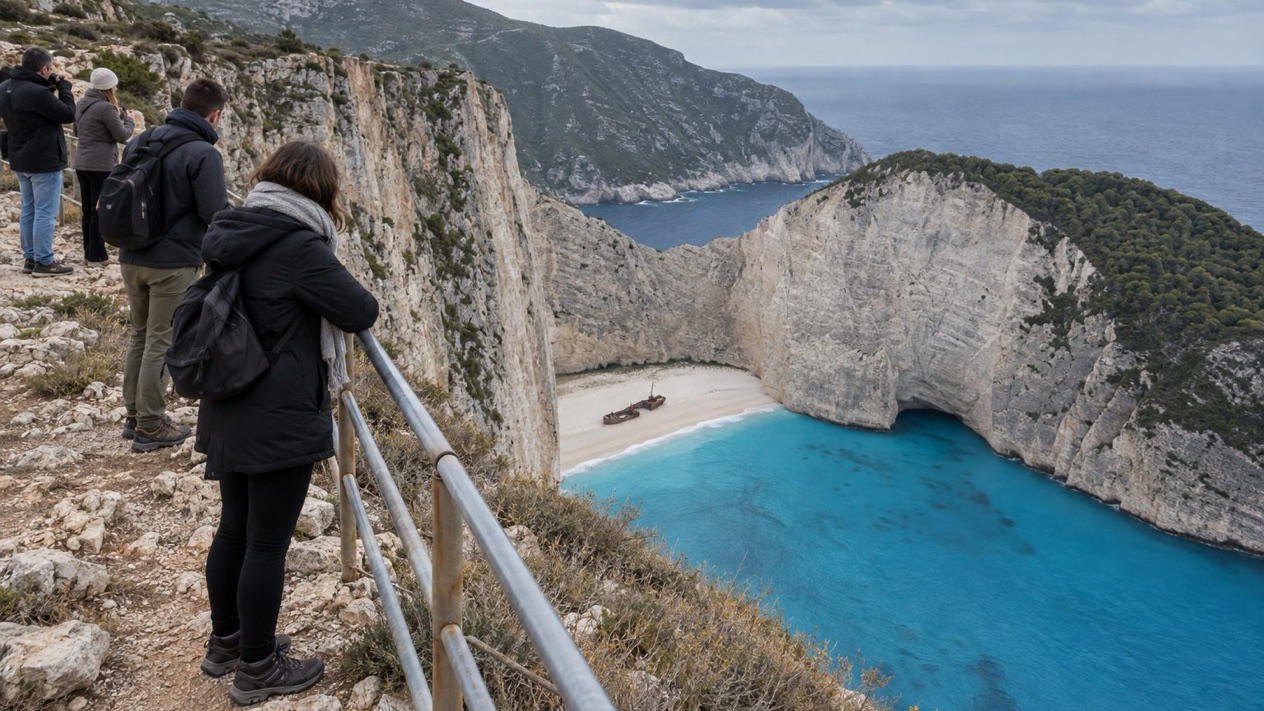
Is visiting Banana Beach worth it?
Yes, if what you want from Zakynthos is a plain day beside the Ionian Sea, with a swim, a long lunch and no timetable. It suits couples, friends and families who like to pick a spot and stay put rather than chase a list of sights.
The island offers very different days. Laganas has been a hub for clubbing, bars and nightclubs since the mid-1980s. Navagio, one of Greece’s most photographed beaches, can only be reached by boat, and so can the Blue Caves near Cape Skinari.
The Bay of Laganas is also the main nesting area for loggerhead sea turtles in the Mediterranean. Against all that, Banana Beach is the unscripted option: no boat to catch, no nightlife to join, just the shore and the water.
Zakynthos, also called Zante, is the third largest of the Ionian Islands, and its landscape alternates sandy beaches and tranquil coves with rugged coastline, marine caves and a rich underwater world. A beach day here sits comfortably beside a boat trip or a walk through the island’s main town. Travelers give Banana Beach a day of its own and fill the rest of the week with the island’s bigger names.
What to see at Banana Beach
The shore and the Ionian Sea
The main sight is the water and the line where it meets the land. The Ionian Sea has its own colors, from pale turquoise in the shallows to a deep, dark blue farther out, and the island’s coast is known for that range. Zakynthos pairs sandy beaches with rocky stretches, so a walk along the edge of the bay often shows a change of scenery within a few steps.
Look at the shoreline as well as the sea. Pines, scrub and olive groves are typical of the Ionian Islands, and the sound of cicadas often carries from them in summer. The sea gives plenty to do on its own: floating, wading, watching the horizon for the passing ferries and sailboats that cross these waters.
Loggerhead turtles on the island
Zakynthos is the Mediterranean’s prime nesting ground for loggerhead sea turtles, Caretta caretta, and that fact shapes the way the whole island looks at its beaches. The nesting area is the Bay of Laganas, and the turtles are a reason why some shores here are treated with particular care.
On any Zakynthos beach it is worth keeping the turtles in mind. A turtle may surface in the sea, and the island’s coastline is their home as much as a vacation spot. Leave the sand as you found it and keep an eye out for any signs posted on the shore, since the island’s relationship with its turtles comes up wherever you swim.
Navagio and the Blue Caves
Navagio beach is accessible only by boat, and the Blue Caves near Cape Skinari are accessible only by small boats. Both belong to the marine side of Zakynthos, where rugged coastline drops into the sea and caves open at the waterline.
Seen from the water, the island’s cliffs and caves explain why Zakynthos has such a pull. Visitors arrange one boat outing and one beach day, so each gets its own proper place in the trip. Banana Beach fits the second kind of day, where the only plan is the sea.
Zakynthos town and its museum
A beach day is easy to balance with an hour among the town’s streets. The Museum of Solomos and Eminent Zakynthians stands on St Mark’s plaza and holds local art from the 18th and 19th centuries. It is a gentle contrast to salt and sunscreen.
The town carries a particular history. The massive earthquake of 1953 heavily affected Zakynthos and destroyed much of its Venetian architecture, so what you see today is a town shaped by rebuilding. Cafés, squares and the waterfront make a natural evening after a day by the sea.
How to get to Banana Beach
Every route to Banana Beach begins with reaching Zakynthos, an island in the Ionian Sea around 12 miles west of the Peloponnese mainland. From the main port of Zakynthos town, a ferry connects to the port of Kyllini on the mainland, which is the crossing visitors who travel overland will know. The island’s ports are where the journey changes from mainland to island time.
A second ferry link runs from the port of Agios Nikolaos on Zakynthos to the island of Kefalonia. Travelers combining two Ionian Islands can use it, and it gives the trip a natural shape: one island, then the next. Zakynthos sits off the west coast of Greece, so the sea is part of every approach.
Once on the island, the shores that attract summer visitors are described as wide sandy beaches along its northern and eastern coasts, and the island’s own sights, from the town to the boat departures, are spread across that coastline. Planning a beach day means choosing a base on Zakynthos, then heading out from there. The island’s highest point, Vrachionas, rises to 2,487 feet, a reminder that the interior has real hills behind the shore.
Navagio beach and the Blue Caves need a boat, so those outings are planned separately from a beach day. For Banana Beach itself, settle your base on the island first and arrange the last stretch from there.
When to visit Banana Beach
For a visit with fewer people, the island’s own best time is spring. March to May is described as particularly rewarding, with relatively few tourists, the Easter parade and blooming flowers.
Days are still warm enough for the shore, but rain becomes a real possibility, with several wet days in the month. January is the wettest and coolest of the four months below, and the beaches are a place for walking, not for lying out.
| Month | Average high (°F) | Average low (°F) | Precipitation (inches) | Days with rain (1 mm or more) |
|---|---|---|---|---|
| January | 57.7 | 44.6 | 5.69 | 13.1 |
| April | 67.5 | 50.9 | 1.64 | 6.4 |
| July | 90.7 | 68.7 | 0.19 | 0.4 |
| October | 75.0 | 59.2 | 4.43 | 8.5 |
In July, afternoons are hot enough that shade, water and sun protection matter as much as the swim. April is mild, with spring flowers on the island and rain on some days, so a light rain jacket belongs in the bag.
Easter is worth a thought when planning spring. Holy Week and Easter move every year, and the Easter parade on Zakynthos is one of the reasons spring is praised. If your dates are flexible, the weeks around it add a local celebration to the beach.
Tips for your visit
Bring what any Greek beach day asks for: sun protection, a hat, plenty of water, a swimsuit and a towel. In July the air is hot, so sunscreen and a place to cool off are not optional extras. In spring and autumn a light layer and a rain jacket cover the changeable days.
Plan the beach as the center of a day and let the rest follow. Swim, read, eat something grilled and stay for the evening if you like. Zakynthos rewards unhurried days, and Banana Beach is a good place to practice that.
Combining the beach with the rest of the island
A balanced trip pairs Banana Beach with something different. Add a boat outing to Navagio or the Blue Caves, a visit to the Museum of Solomos and Eminent Zakynthians in town, or a look at the Bay of Laganas and its turtles. Each of these gives the island a different face than the beach alone.
If you travel on to Kefalonia, the ferry from Agios Nikolaos links the two islands, so a Zakynthos beach day can close one chapter before the next begins. For spring trips, the blooming flowers add color to walks away from the shore.
Families and food
Families will find the island’s wide sandy beaches on its northern and eastern shores a familiar kind of vacation setting. Pack snacks, extra water and something for shade, and let children set the pace. Turtles are a good topic for young travelers, since the island is the Mediterranean’s prime nesting ground.
For meals, Ionian cooking leans on grilled fish, tomatoes, olive oil and feta. A Greek salad, a plate of grilled octopus or a spoonful of something sweet like loukoumades (small fried dough balls with honey) is what people reach for after a swim. Order a few dishes for the table, the way meze are meant to be shared.
Good to know before you go
Greece uses the euro, and prices on a Zakynthos beach day are paid in euros. Keep a few coins for small purchases such as water or a coffee. The island’s summer months bring strong sun and hot afternoons, so drink water often and take shade breaks. Beaches on Zakynthos share the coast with nesting turtles, so treat the sand and the sea with the care that fits the island.
Sources
- Wikipedia, Zakynthos (https://en.wikipedia.org/wiki/Zakynthos), checked October 12, 2026
- Visit Greece (GNTO), Zakynthos (https://www.visitgreece.gr/islands/ionian-islands/zakynthos/), checked October 12, 2026
- Wikivoyage, Zakynthos (https://en.wikivoyage.org/wiki/Zakynthos), checked October 12, 2026
- Hellenic National Meteorological Service (HNMS), climatological normals 1991-2020 for Zakynthos station (https://www.emy.gr/climatic-data), monthly mean daily maximum and minimum; rain from the ECMWF ERA5 reanalysis, 1991-2020, grid cell of Zakynthos (Open-Meteo), checked October 12, 2026
- ECMWF ERA5 reanalysis 1991-2020, grid cell of Zakynthos (Open-Meteo), checked October 12, 2026
- Wikipedia, Blue Flag beach (https://en.wikipedia.org/wiki/Blue_Flag_beach), checked October 12, 2026
To plan your stay
- Agia Marina Beach near Chania: Setting, Seasons and the Old Town Next Door
- The Beaches of Antiparos: Sandy Shores, Nudist Coves, the Cave and Despotiko
- Agios Gordios Beach on Corfu: Ai Gordis Village, the Pink Palace, Weather by Season and Tips
- Agios Prokopios Beach: Naxos Setting, Seasons, Food and Nearby Sights