
Seven days is enough for Athens and two islands if you keep the moves simple: two nights in Athens, two on Mykonos, two on Santorini, and the trip home on Day 7. Each stop has its own personality. Athens has the ruins, Mykonos has the beaches and the nightlife, and Santorini has the white villages perched above the caldera.
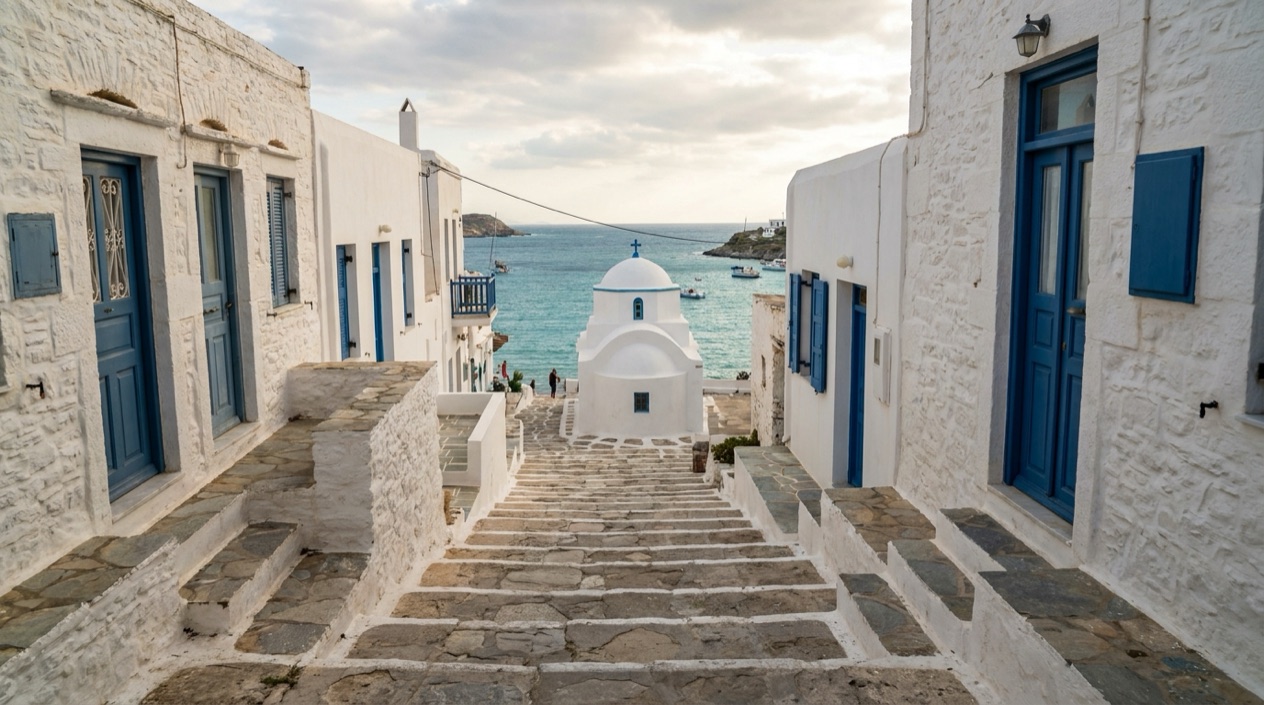
What does a 7-day Greece itinerary look like?
Fly into Athens, since international fares are usually cheaper into the capital than into an island. Spend Days 1 and 2 in the city, take the ferry to Mykonos on Day 3, move on to Santorini on Day 5 and head back on Day 7. Two nights per island covers the highlights without spending the week on boats. For a slower pace, you can swap one island for a quieter one.
Day 1: Arrive in Athens
Athens International Airport and the city's metro are fully accessible, with ramps and elevators. The drive to the center takes about 45 minutes, depending on traffic. Uber doesn't operate as a rideshare in Athens, but its app books regular taxis and quotes a fare range up front. The metro's blue line also runs straight to the airport. Buy the airport-specific ticket at the kiosk, because a regular ticket won't open the turnstile.
Most visitors stay near the Acropolis. Plaka is the most popular neighborhood, with clean, pretty streets that fill with people in summer. Monastiraki has plenty to do and great food. Drop your bags and walk. The Acropolis sits on a hill and is lit at night, and many rooftop bars and restaurants in the center look straight at it, so pick one for dinner.
Day 2: The Acropolis and the city
Reach the Acropolis early in the morning. The crowds build as the day goes on, and by afternoon the sun is intense on those marble steps. Afterward, see the Temple of Zeus and the other ancient sites. A local guide adds history and inside knowledge to what you're looking at.
In the afternoon, stroll or bike through the National Gardens. If the heat gets to you, the beaches of the Athens Riviera are 30 to 45 minutes from the center and make a good swim break.
Day 3: Ferry to Mykonos
Ferries leave from the port of Piraeus, west of Athens. The crossing takes anywhere from about two and a half hours on a fast boat to four or five hours or more on one that makes extra stops. Strong wind can slow boats or delay departures, and fast catamarans can be rough when it blows, so pack motion-sickness medication if you need it. Compare schedules and prices online and book ahead. Flights from Athens to Mykonos skip the sea entirely.
Is Mykonos worth it in a week?
Yes, for a couple of nights, as long as you go in knowing it's the party island. Most people find 2 to 4 nights right, since a few days of partying wear you out, and this plan uses two. Expect glamorous, loud, beachy and expensive. Mykonos is among the priciest islands in Greece, and meals, cocktails and beach club cabanas all cost more than elsewhere. The food is excellent and the service warm, so the quality keeps pace with the prices.
Days 3 and 4: Little Venice and the beaches
Little Venice is where the water splashes right up against a cliff-like wall of buildings, and it's the spot for sunset. The windmills a short walk away make a good photo stop, with a view back across the water to Little Venice. Book a sunset dinner table ahead, particularly for a group. If a restaurant doesn't take online reservations, many will book by WhatsApp, or your hotel can call for you.
Most beaches have beach clubs or DJs that start around noon, so skip any plans for a quiet nap on the sand.
Taxis are an easy way to get around the island, and it's wise to keep some cash on hand for the fare. In peak season the taxi stand in Little Venice has a line, so allow time for the wait. Your hotel can also arrange a private car or van. If you book a private driver, try to get their WhatsApp number so you can easily shift the pickup time.
How do you get from Mykonos to Santorini?
Take a morning ferry on Day 5. The Santorini port lies at the foot of the cliffs, roughly 5 miles south of Fira, and it gets crowded, so it helps to line up a transfer or rental car ahead of time. The public bus to Fira is another option, and taxis can be hard to find.
Pack light. Many Santorini hotels sit on cliffs, so you'll likely walk from the drop-off point, and the island is full of cobblestones and steps that call for comfortable shoes.
What should you do in Santorini?
Santorini is the relaxing one, though it's also busy, and in summer the beaches and some towns get packed. The rest of Day 5 and all of Day 6 leave time for the caldera villages, the beaches and ruins, and a boat trip.
Days 5 and 6: Oia, Imerovigli and Fira
The white villages sit along the northwest side of the island, where cliffs rise high above the caldera. Oia is the postcard stop, with blue domes and windmills, and it draws plenty of sunset seekers, so arrive early to find a spot. The ruins of its Byzantine castle are one of the top places to watch. Walk down the long steps to Amoudi Bay for a swim and fresh seafood.
Imerovigli is quieter and great for wandering. An early hike out to Skaros Rock for sunrise can leave you with the place nearly to yourself. Fira, the capital, has the shops, restaurants and several museums, including the Museum of Prehistoric Thera. A path links Fira, Imerovigli and Oia, with big views and a real workout.
Black sand beaches line the eastern side of the island. Perivolos, Kamari and Perissa have cafes, water sports and lounge chairs. On the south coast, Red Beach has rust-colored cliffs dropping to a sandy cove. For ruins, see Ancient Thera on the mountain between Kamari and Perissa, and the prehistoric village of Akrotiri near Red Beach. The drive from one end of Santorini to the other takes about 40 minutes, so a rental vehicle for the day or a guided tour covers the highlights easily.
Spend one afternoon on a caldera boat trip. The catamaran stops for swimming and snorkeling, and a later departure keeps you on the water for sunset.
Where to stay in Santorini
For views, stay on the caldera side. Oia and Fira are the most popular, with shops and restaurants close to the cliffside hotels. Imerovigli is calmer and sits highest of the three, so its views are hard to beat.
How do you get back to Athens?
Day 7 is the return. Santorini also has flights to many large European cities if you're connecting onward. The Athens airport is very busy, so arrive about an hour earlier than you normally would, and remember that morning rush hour can add 30 minutes or more to the drive. Most hotels will hold your bags if your flight is late and you want a few more hours to explore.
What if you want a quieter week?
Swap Mykonos for Naxos, the largest of the Cyclades and far calmer than the big-name islands. Its west side has gorgeous sandy beaches, some lively with amenities and others quiet and secluded. Ferries between Naxos and Santorini take about 1 to 3 hours, and flights from Athens serve both islands. Paros makes an easy day trip, 30 to 45 minutes from Naxos by ferry.
For more ancient sites and fewer beaches, stay on the mainland. Meteora's cliff-top monasteries, Mycenae's Lion Gate and Olympia's original Olympic stadium are all UNESCO sites that make a good addition to a week built around Athens and Delphi. A car covers more ground, and buses work if you have extra days. If you rent, keep passports and valuables out of the car, since thieves target rental cars.
When is the best time for a 7-day Greece trip?
Summer is sunny, hot and crowded, especially on small, popular islands like Santorini. May, September and October usually still offer beach weather with thinner crowds, and in late September and early October tours and boat rides are still running. Forest fires are common in the dry summer months and occasionally close roads.
What should Americans know before going?
U.S. citizens can visit Greece without a visa for up to 90 days. Your passport should have at least three months of validity beyond your planned departure date, and one reported lost or stolen won't get you in. Be ready to show proof of funds and a return ticket if asked, and carry your passport or a photo ID at all times.
Greece is a generally safe destination, though petty crime is common at popular tourist sites, and pickpocketing is a particular problem on the Athens metro, so keep your bag zipped. Tremors and earthquakes occur regularly. Strikes and demonstrations are common and can disrupt ferries, taxis, seaports and airports, so leave some slack around your flights.
To drive, you need a valid U.S. license, and insurance companies may require an international driver’s permit. On buses and the metro, make sure you hold the right ticket and validate it, because a missing, wrong or unvalidated ticket can bring a fine of up to 60 times the basic fare.
Sources
- goseekexplore.com (https://www.goseekexplore.com/blog/greece-itinerary), checked October 18, 2026
- ricksteves.com (https://www.ricksteves.com/europe/greece/itinerary), checked October 18, 2026
- harborsandhavens.com (https://www.harborsandhavens.com/blog/7-day-greece-itinerary), checked October 18, 2026
- tourradar.com (https://www.tourradar.com/n/greece-7-day), checked October 18, 2026
- workforyourbeer.com (https://www.workforyourbeer.com/blog/what-i-did-for-one-week-in-greece-athens-and-santorini), checked October 18, 2026
- U.S. Department of State (https://travel.state.gov/content/travel/en/international-travel/International-Travel-Country-Information-Pages/Greece.html), checked October 15, 2026
- U.S. Department of State (https://travel.state.gov/content/tsg_aem/us/en/home/international-travel/travel-advisories/destination.grc.html), checked October 15, 2026
To plan your stay
- Best Time to Visit Greece: September and Late May to Early June
- Arachova: Parnassus Mountain Town, Formaela Cheese, Ski Season and Saint George's Day
- American Airlines Flights to Greece: U.S. Cities, Athens Arrivals and Onward Island Flights
- Greece on a Budget: Cash Machines, Cards, Beaches and Ferries