
On a cold morning at Lake Kinrin, steam lifts off the water while the twin peaks of Mount Yufu stand behind it, and people with cameras line the shore waiting for the light. That is Yufuin, a hot spring town in Oita Prefecture that mixes soaking, small shops and mountain scenery. It suits travelers who want a slow stop with a bath at the end of the day.
What is Yufuin?
Yufuin is an extensive hot spring system in the city of Yufu, Oita Prefecture, Japan, and the name covers both the springs and the town that grew around them. A visit here is built around water that comes out of the ground warm, around a lake and a mountain that people come to photograph, and around a main street lined with small shops.
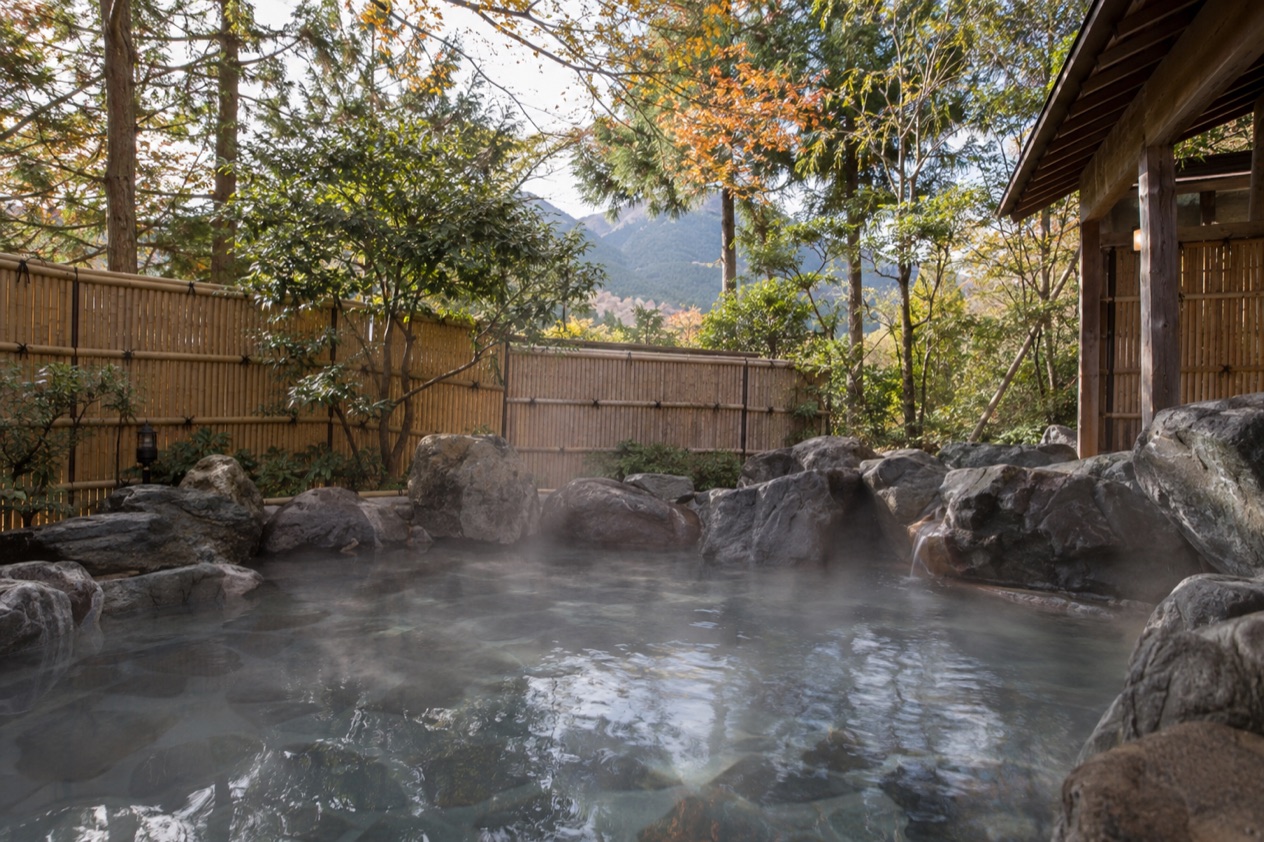
The hot springs are the heart of it. Japanese onsen culture means bathing in naturally heated mineral water, often outdoors, and Yufuin follows the pattern with baths attached to inns as well as public ones. Not every bath is open to a passing visitor, and that is worth understanding before you plan a day around soaking.
Onsen and sento: who can use them
Some onsen in Yufuin are available to day tourists, but many are strictly for overnight guests. In practice, that means two ways to bathe: stay at an inn with its own baths, or look for the places that welcome day visitors. If a soak is the main reason you are coming, an overnight stay opens up the widest choice.
The town also has sento, the traditional public baths that neighborhoods have long used for everyday washing and relaxing. Some of them can be used by tourists, while others are for local residents only. A bath that looks open from the street may belong to the neighborhood, so treat a closed door as a sign to move on to the next one rather than a puzzle to solve.
A town with a following
Yufuin has a strong pull for visitors from abroad. In December 2023, 55,000 Korean tourists stayed overnight here, more than four times the pre-COVID numbers. It tells you the town draws overnight guests from across the region, and that the inns have a lot of company in winter.
Add the annual events and the calendar fills out. The Yufuin Music Festival is held every July, the Yufuin Film Festival every August, and the Ushikurai Shouting Tournament every October, so the town has a reason to be lively across the summer and into fall.
What can you do there?
You can bathe, walk to a lake, hike a mountain, browse small shops and time your trip around a festival.
Lake Kinrin and the twin peaks
The two-peaked Mount Yufu and Lake Kinrin are commonly viewed and photographed by tourists, and the pairing is the image people carry home from town. The mountain rises behind the water with its double summit, and the lake gives you the foreground.
Lake Kinrin is known for its fall leaves and for the steam that rises from the surface on cold mornings. That makes autumn and the colder months the moments when the shoreline has the most to show, with color on the trees and a haze lifting off the lake. Bring a camera and some patience for a slow stroll around the edge.
Hiking Mount Yufu
Mount Yufu, or Yufu-dake, can be hiked in about 90 minutes. For a traveler who wants more from the town than baths and shops, it is the outing that puts you up among the peaks you have been admiring from the lake.
Pack water and sturdy shoes as you would for any mountain walk, and give yourself time afterward. A hike followed by a soak in warm mineral water is the natural rhythm of a hot spring town, and Yufuin is set up for it.
Yufuin Floral Village and the shops
Yufuin Floral Village features many small gift shops modeled after the Cotswolds region of England. The cottage styling is a surprise in a Japanese hot spring town, and it makes for an easy hour of browsing for souvenirs, sweets and small gifts.
It balances the quiet of the lake and the mountain. After a morning of steam and scenery, the shops offer a change of pace, with the village’s storybook look doing much of the work.
Festivals through the year
If your dates are flexible, the festivals give you a reason to choose a month. July brings the Yufuin Music Festival and August the Yufuin Film Festival. October has the Ushikurai Shouting Tournament, a more unusual event that fits the town’s relaxed, slightly quirky character. All three are held annually in Yufuin.
How do you get there?
You can reach Yufuin by rail on the JR Kyushu Kyudai Main Line, which has stations at Yufuin, Minami-Yufu and Yunohira in the Yufuin area. The line is operated by JR Kyushu, the railway company for the island of Kyushu.
The three stations
Three stations serve the area, and the names are worth knowing before you buy a ticket or check a timetable. Yufuin is the station for the town itself. Minami-Yufu and Yunohira are the other two stops in the Yufuin area on the same line.
Because all three sit on the Kyudai Main Line, a ride that passes through the area can put you at any of them. Match your station to where you are staying, and confirm the stop name when you plan your day so you step off at the right place.
Planning the trip around the train
With the railway as your way in, build the visit around what the town offers: a night at an inn with baths if soaking is the goal, Lake Kinrin and Mount Yufu for the views, the Floral Village for browsing. A stay of a night lets you do the lake, the shops and a bath without rushing.
If you are timing the trip, remember that Lake Kinrin is known for fall leaves and cold-morning steam, and that October brings the Ushikurai Shouting Tournament. Those are the moments when the town has an extra reason to be on your route.
Good to know before you go
Many of Yufuin’s onsen are for overnight guests only, and some sento are reserved for local residents, so a day trip works best when you have a bath in mind that welcomes visitors. Bring a camera for the lake, and plan around the festivals in July, August and October if you want the town at its liveliest.
Sources
- Wikipedia, Yufuin (https://en.wikipedia.org/wiki/Yufuin), checked October 11, 2026
To plan your stay
- Best Time to Visit Japan: Cherry Blossoms, Autumn Colors, Weather and Festivals
- Where to Stay in Japan: Ryokan, Temple Stays, Capsule Hotels and the Best Cities to Base In
- Sending Luggage from the Airport in Japan: Hands-Free Travel, Hotel Delivery and Coin Lockers
- Know Before You Go to Japan: Entry, Money, Etiquette and Getting Around