
Under the glass roofs of Osaka Station, commuters stream toward the ticket gates while a Ferris wheel turns on the side of a department-store tower outside. Down the stairs, a whole second city of shop windows, lunch counters and corridors carries on out of sight. Umeda, the heart of Kita in northern Osaka, is where trains, shopping, dinner and nightlife come together, and it suits travelers who like their city days with a lot of choice close at hand.
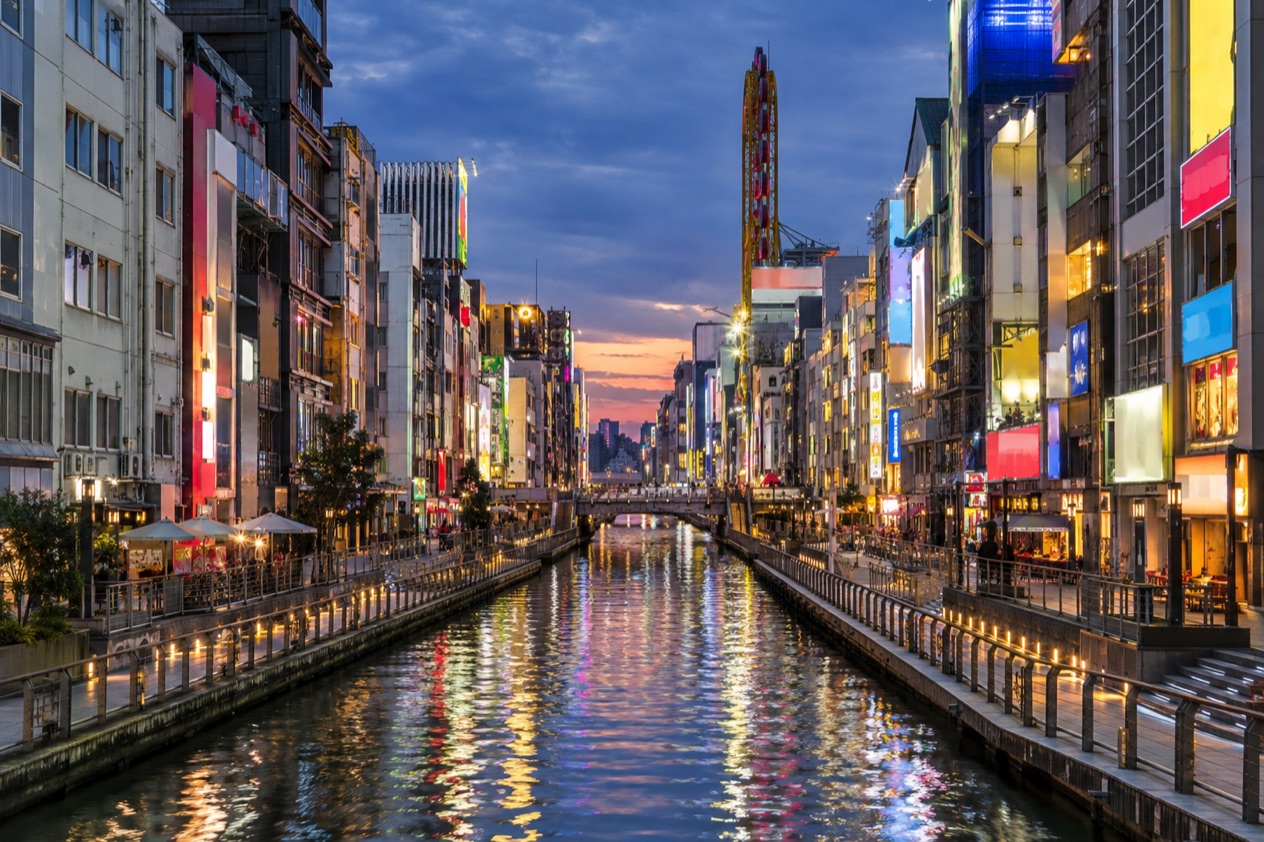
What is Umeda (Kita) like?
Umeda is Osaka’s big commercial, business, shopping and entertainment district, and it feels like the city’s front door. Osaka Station and Umeda Station, the main railway termini in the north of the city, sit right here, and JR Osaka Station handles more passengers than any other station on the JR West network. Around that traffic, towers of offices, department stores and restaurants have grown up on both sides of the tracks.
The name means plum field, a small reminder that this was not always a forest of glass. Kita, the name of the ward, is described as the newest center of Osaka, and you can feel the difference from the older, more tangled streets of the south. Here the scale is bigger, with wide crossings, overhead walkways and shopping complexes that stack one on top of the other.
Osaka as a whole is known for its food, entertainment and nightlife, with some history and culture to discover, and Umeda carries the first three with ease. It is a place for people who enjoy browsing department-store floors, ending a day with skewers and a drink, and watching the crowds from a window seat. The district also holds a corner of a different kind, Doyama-cho, one of the few LGBT districts in Japan and home to one of the largest gay communities in western Japan.
Things to do in Umeda (Kita)
Umeda rewards wandering more than ticking off sights. A good day mixes the towers and station concourses with a shrine, a museum or two and, in spring, one of the city’s best-known flower events. Hours for the places below sit in this table.
| Site | Open |
|---|---|
| Osaka Tenmangu Shrine | Daily, 09:00 to 17:00, free admission |
| Japan Mint museum | 09:00 to 16:45, free admission |
| Osaka Science Museum | Tuesday through Sunday, 09:30 to 17:00. Closed December 28 to January 4 and on public holidays |
Osaka Station City and the department-store towers
Osaka Station City is the name for the area around Osaka Station, above and below ground, and it works as a destination in itself. You walk between the station roofs, terraces and shopping floors, and the buildings around them keep pulling you in. The main branch of Hankyu Department Store rises as a 41-story tower here, and its floors are a pleasant way to spend a rainy afternoon.
Nearby, the HEP Five building has a Ferris wheel on its roof, which makes it easy to spot from the street. Riding it gives you a look over the rooftops and rail lines of the district. Even if you do not shop, the lights and signs here make an evening stroll worthwhile.
The underground city
Beneath Umeda lies an underground city that links most of the local train stations and holds shops, eateries and entrances to the department stores. It is a place to get pleasantly lost, with lunch counters, boutiques and bakeries lining corridors that rarely announce where they lead. You can cross a good part of the district without ever seeing the sky.
It is especially handy when the weather turns, since you can go from station to store to restaurant under cover. Follow the signs for the department store or station you want and you will come up in the right building. Treat it as a way to explore, not only a shortcut.
Osaka Tenmangu Shrine
Osaka Tenmangu is a shrine in Kita, open daily and free to enter. After the glass and steel of the station area it offers a change of pace, with a torii gate, a main hall and the rituals of a working shrine, such as visitors bowing, clapping and leaving small offerings. Dedicated to Tenjin, the deity of learning, Tenmangu shrines draw students, and the plum motif is a link to the district’s name.
It suits a break between shopping and dinner, when you want to see a different side of the neighborhood. The shrine pairs well with a walk through the nearby streets, where small shops and eateries show everyday Osaka life.
Japan Mint and its cherry blossom tunnel
The Japan Mint in Osaka opens its cherry blossom tunnel road for a limited week in mid-April, and close to 1 million people come through in those days. The tunnel is a lane of cherry trees that arch overhead, so the walk itself is the event. If your trip falls in spring, it is worth planning around.
The Mint museum is free and open the rest of the year, so the visit is not limited to the blossom week. It is a quiet-minded stop for anyone curious about how coins and medals are made and what they look like up close.
Osaka Science Museum
The Osaka Science Museum is open Tuesday through Sunday, and it closes from December 28 to January 4 and on public holidays. It is a place for a rainy day or for travelers with children who like hands-on exhibits. Plan around the closing days, since a Monday visit will find the doors shut.
Beyond Umeda, the Midosuji Line carries you to Shinsaibashi and Dotonbori, and the JR Loop Line and Chuo subway line lead to the Osaka Bay area. Both make an easy add-on to a day spent in Kita.
Eating and drinking in Umeda (Kita)
Eating in Umeda means choosing among station-side counters, department-store food floors, underground arcades and the small bars of the evening streets. The underground city alone has restaurants and eateries enough for several lunches. Many travelers find that the most memorable meals are the simplest, eaten standing or perched on a stool.
Kushikatsu in Kitashinchi
The Kitashinchi district is famous for its kushikatsu restaurants, which serve skewers of meat, seafood and vegetables coated in crisp breadcrumbs and deep-fried. Each skewer arrives hot, usually with a sauce on the side, and you keep ordering until you are full. It is a lively, sociable way to eat, and a good match for a cold beer.
Kushikatsu is a food of Osaka, so a meal of it fits the reason many people come to the city. Go with an appetite and a willingness to try a skewer you cannot identify.
Takoyaki inside the station
Takoyaki, the round octopus-filled batter balls cooked on a griddle, is the street snack most people associate with Osaka. Hanadako, a takoyaki shop in Umeda station, is open from 10:00 to 23:00 every day, which gives you a window from late morning to late at night. You get the balls hot, topped with sauce, mayonnaise and bonito flakes that sway in the steam.
A tray makes a snack between trains or a late bite after dinner. Let it cool for a moment, because the centers hold heat well.
Department-store food halls, cafés and evening bars
The basements of the department stores hold food halls with bento boxes, pastries, sweets and prepared dishes arranged like jewelry. They are good places to assemble a picnic or simply to look. Upstairs and in the underground arcades, cafés and coffee shops offer a seat out of the crowds.
In the evening, the izakaya (Japanese pubs) of the district fill with groups sharing small plates and drinks. Doyama-cho has its own cluster of bars, and its place in the neighborhood adds to the night scene. For a first dinner, an izakaya near the station lets you sample several dishes at once.
Staying in Umeda (Kita)
Umeda suits travelers who want to be at the center of the rail network with restaurants and shopping on the doorstep. Lodging here is mostly hotels of the city kind, in towers and mid-rise buildings around the stations, rather than traditional inns. If your plans involve many day trips or an early train, a room here keeps the transit part of the day light.
The district is a commercial and entertainment area, so evenings carry on with dinner crowds and bars, especially in Kitashinchi and Doyama-cho. Some travelers enjoy stepping out for a late bite, while others prefer a room on a higher floor away from the street. Ask for the kind of room that matches your taste for lights and activity.
Compared with the Dotonbori and Shinsaibashi area, Umeda feels more like a business and transport hub, with the neon and street food of the south a ride away on the Midosuji Line. Staying in Kita puts you near Osaka Station and Umeda Station, and the Shinkansen stop at Shin-Osaka is a local train ride away. It makes a good base if trains matter more to you than a street-food setting outside your door.
Getting to Umeda (Kita)
Umeda is built around Osaka Station and Umeda Station, the main railway termini in the north of the city, so reaching it by rail is the natural thing to do for most visitors. The Tokaido and Sanyo Shinkansen trains arrive at Shin-Osaka Station, north of the city center. From Tokyo, the Tokaido-Sanyo Shinkansen to Shin-Osaka takes about two and a half hours.
From Shin-Osaka, take the JR local line to Osaka Station, which puts you in the middle of Osaka Station City. Once you arrive, the underground city links most of the local train stations, so you can switch between lines and walk to a department store or restaurant without going outside.
From Osaka or Umeda Station, the Midosuji Line runs to Shinsaibashi Station for Shinsaibashi and Dotonbori, and if you stay on until Namba Station you can reach Dotonbori from there as well. To reach the Osaka Bay area, take the JR Loop Line or the Chuo subway line from Osaka or Umeda stations. Together these lines make Umeda a handy starting point for exploring other parts of the city.
Good to know before you go
Umeda is large, and the station complexes and underground passages can be confusing, so give yourself time to find your way between buildings. The same area has several station names, among them Osaka and Umeda, and they sit close together, so check which one your route uses. Habits worth keeping are the usual city ones, like keeping your belongings close in crowded corridors and following the signs for the right exit.
A shrine visit, a food hall and an evening of skewers fit into a single day here. Spring brings the cherry blossom week at the Japan Mint, and the Osaka Science Museum is the one stop to plan around, since it is closed on Mondays and public holidays.
Sources
- Wikipedia, Umeda (https://en.wikipedia.org/wiki/Umeda), checked October 11, 2026
- Wikivoyage, Osaka/Kita (https://en.wikivoyage.org/wiki/Osaka/Kita), checked October 11, 2026
- Japan National Tourism Organization, Osaka (https://www.japan.travel/en/destinations/kansai/osaka/), checked October 11, 2026
To plan your stay
- Best Time to Visit Japan: Cherry Blossoms, Autumn Colors, Weather and Festivals
- Where to Stay in Japan: Ryokan, Temple Stays, Capsule Hotels and the Best Cities to Base In
- Sending Luggage from the Airport in Japan: Hands-Free Travel, Hotel Delivery and Coin Lockers
- Know Before You Go to Japan: Entry, Money, Etiquette and Getting Around