
At a Tokyo hotel desk, a traveler stares at a phone that has just flipped to a new time and wonders whether to call home before bed or after breakfast. The clock in the station, the one on the Shinkansen platform and the one in a Hokkaido village inn all say the same thing. Japan runs on a single time, Japan Standard Time, and it never moves with the seasons.
What time zone is Japan in?
Japan is in Japan Standard Time, which runs nine hours ahead of UTC (written UTC+09:00). It is the time on every clock in the country, so a traveler never has to adjust a watch when crossing from one island or prefecture to another.
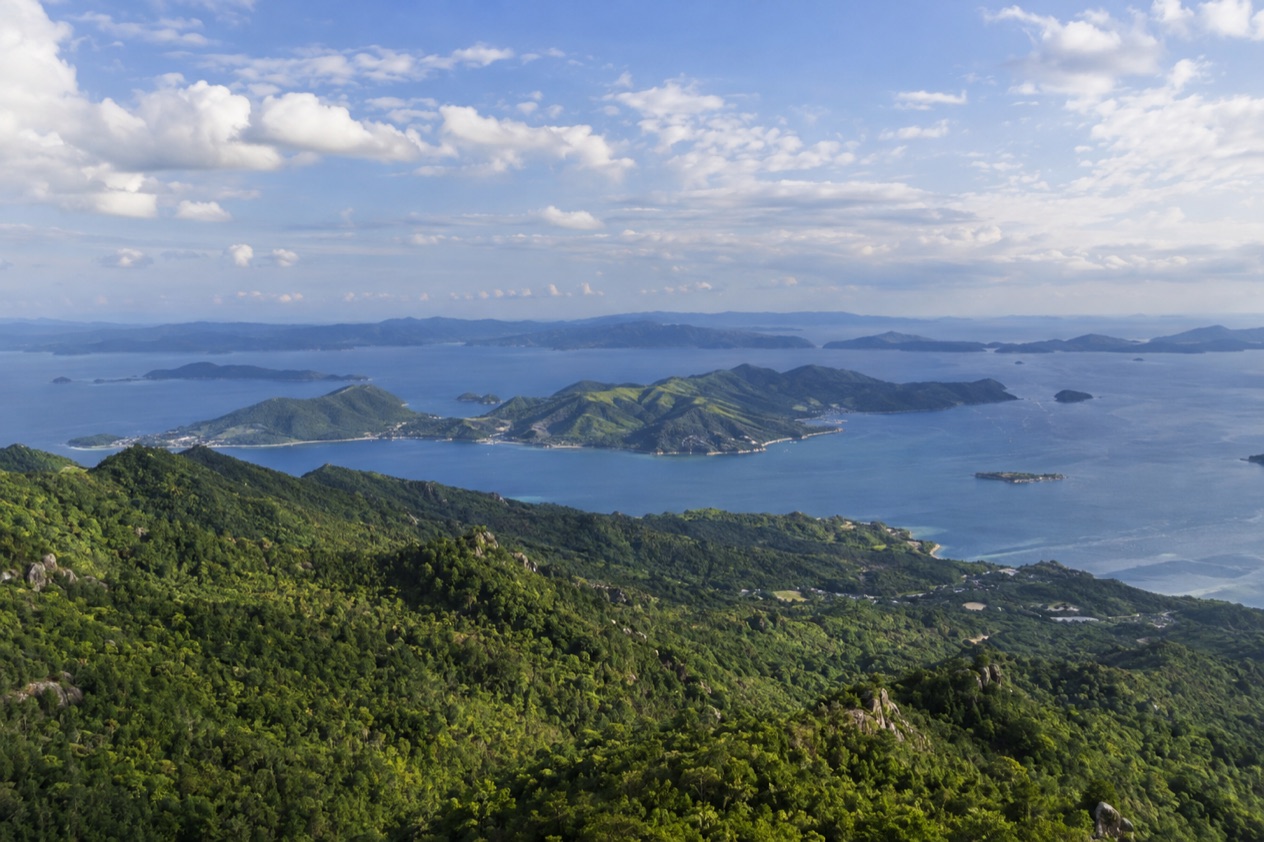
That includes the long chain of islands that stretches along the Pacific coast of Asia, 14,125 in all. Whether you are watching a sunrise from a Hokkaido hillside or a sunset over the water in Okinawa, the number on your phone is the same. The five main islands, from north to south, are Hokkaido, Honshu, Shikoku, Kyushu and Okinawa, and all of them keep this one clock.
One clock from Hokkaido to Okinawa
For a trip that crosses the country, a single time zone makes planning simple in one respect. A train ticket, a dinner reservation at a Kyoto restaurant and a ferry departure are all written on the same clock, with no zone to convert and no hour to gain or lose on the way.
What does change from place to place is the daylight, because the country is long and the sun does not follow the clock evenly. The same hour on the dial can mean full morning light in one prefecture and a gray dawn in another. That gap between the clock and the sky is what makes a trip from the far north to the far south feel different even without a time change.
Akashi and the 135th meridian
Japan Standard Time has a home address of sorts. The city of Akashi in Hyogo Prefecture sits exactly on 135 degrees east longitude, the line the country’s standard time is built around. Visitors who like small, quirky stops can find the Akashi Municipal Planetarium there, standing right on that line and known as a symbol of Japan Standard Time.
The line itself is not a dramatic sight, since there is no wall or border to cross. It is more a quiet marker, a place to stand and think that the whole country’s day is set from this one stripe of the map.
What the sun does with that clock
Because the clock never shifts, summer days in Japan start early and end at a fairly fixed hour in the evening. In Tokyo, the latest sunset of the year is at 19:01, a time reached from late June into the first day of July. That is the long, glowing evening of the rainy-season weeks, when dinner can start while the sky is still pale.
In the Hokkaido region the summer sun comes up remarkably early, with daylight starting as early as half past three in standard time. Travelers sleeping in a northern inn in midsummer may wake to bright light long before breakfast is served. A sleep mask is a reasonable thing to pack for that stretch of the calendar.
Does Japan change its clocks?
No, Japan does not observe daylight saving time, so the clocks stay put in spring and in autumn. A traveler who arrives in March and leaves in November will see the same offset from UTC the whole way, with no night in which an hour disappears or is repeated.
For the visitor, that means the only clocks that move are the ones back home. A phone set to automatic time will keep Japan steady while quietly updating your home city when the U.S. changes its own clocks. Anyone arranging a video call across the ocean should remember that the shifting side is the American one.
The occupation years
Japan has tried daylight saving before, though only briefly. Occupied Japan observed it from the first Saturday in May to the second Saturday in September between 1948 and 1951. Those were years of rebuilding, and the summer clock change was part of the arrangements of the Allied occupation.
The practice did not outlast the occupation. In 1952, the Japanese government abolished daylight saving time, three weeks before the Allied occupation ended. Since then it has never been officially implemented nationwide, and a Japanese resident of today has never lived through a clock change.
Summer schedules without a clock change
The idea of using the long summer mornings has not disappeared entirely. Since 2000, a few local governments and commerce departments have promoted hour-earlier work schedules during the summer. These experiments are not mandated, and they happen without anyone resetting a clock.
So a traveler in July who finds an office or a shop opening an hour earlier than expected is seeing a local experiment, not a change in the time itself. The clock on the wall is the same one that runs all year, and the only thing shifting is when a particular group of people chooses to start work.
What it means when you plan
With no seasonal shift, an itinerary in Japan is built on a fixed frame. A flight that lands in the early morning will land in the same morning light logic in every month, adjusted only by the natural length of the day. The clock stays the same, and the sunrise and sunset do the changing.
That steadiness is useful for anyone who likes to schedule around the light, whether for a temple garden walk, a photo of Mount Fuji or an evening stroll along a river. The hour on the watch tells nothing about the season, so it helps to think in terms of the month and its daylight rather than a clock change.
What is the time difference with the U.S.?
Japan is 17 hours ahead of Los Angeles, which means a call placed at noon in Japan reaches California at 7 p.m. the previous day. Japan is always the side that is ahead, so for an American the question is mostly how many hours to count back.
| When it is this in Japan | It is this in Los Angeles |
|---|---|
| Noon | 7 p.m. the previous day |
Reading the Los Angeles gap
A Monday morning in Tokyo is still Sunday evening on the West Coast, so a message sent at breakfast in Japan lands in an American evening that belongs to the day before.
This is worth remembering when you book something that has a date attached, such as a hotel night or a train departure. The date on a Japanese confirmation is the Japanese date, which may be a day later than the date on a calendar at home. A traveler leaving the U.S. in the afternoon will arrive in Japan on a different calendar day from the one they left.
Calling home from Japan
Because the offset is large, the hours when both sides are awake are limited. A morning in Japan often matches a late afternoon or evening on the West Coast of the day before, and that is where most conversations with family fall. A call at the end of a Japanese evening reaches California in the early part of its own day.
Other American cities sit on their own clocks, and the gap changes when the U.S. moves its clocks forward or back. Japan does not move, so the difference with any American city can shift by an hour at those moments. Before arranging a call or a livestream, it is worth checking the current gap for the specific city you need.
Other time differences
For travelers who combine Japan with a stop in South America, the gap there is smaller than the American West Coast. When it is noon in Japan, it is midnight in both Buenos Aires and Rio de Janeiro, and Japan is 12 hours ahead of each. The two cities share the same offset in this comparison, so one calculation covers both.
Seen side by side, the numbers show how much of the globe sits between Japan and the Americas. A traveler who crosses from Tokyo to Los Angeles gains a day on the calendar at the end of the flight, while one headed to Rio faces a flipped day and night. In either case, the hours do not change with the Japanese seasons, only with the home side.
Good to know before you go
Since the clocks in Japan never change, the one seasonal thing to keep in mind is the weather. In late summer and early autumn, typhoons often bring heavy rain, and a storm can reshuffle a day’s plans even when the schedule on paper looks fixed. In Okinawa the main rainy season begins in early May.
A phone that updates automatically will show Japan’s time as soon as you land, so a manual change is rarely needed. Setting a second clock for home on the phone’s world clock is a simple way to keep track of the gap while you travel.
Sources
- Japan National Tourism Organization, time zone, no daylight saving time (https://www.japan.travel/en/plan/timezones/), checked October 11, 2026
- Wikipedia, Daylight saving time in Japan (https://en.wikipedia.org/wiki/Daylight_saving_time_in_Japan), checked October 11, 2026
- Wikipedia, Japan (https://en.wikipedia.org/wiki/Japan), checked October 11, 2026
To plan your stay
- Best Time to Visit Japan: Cherry Blossoms, Autumn Colors, Weather and Festivals
- Where to Stay in Japan: Ryokan, Temple Stays, Capsule Hotels and the Best Cities to Base In
- Sending Luggage from the Airport in Japan: Hands-Free Travel, Hotel Delivery and Coin Lockers
- Know Before You Go to Japan: Entry, Money, Etiquette and Getting Around