
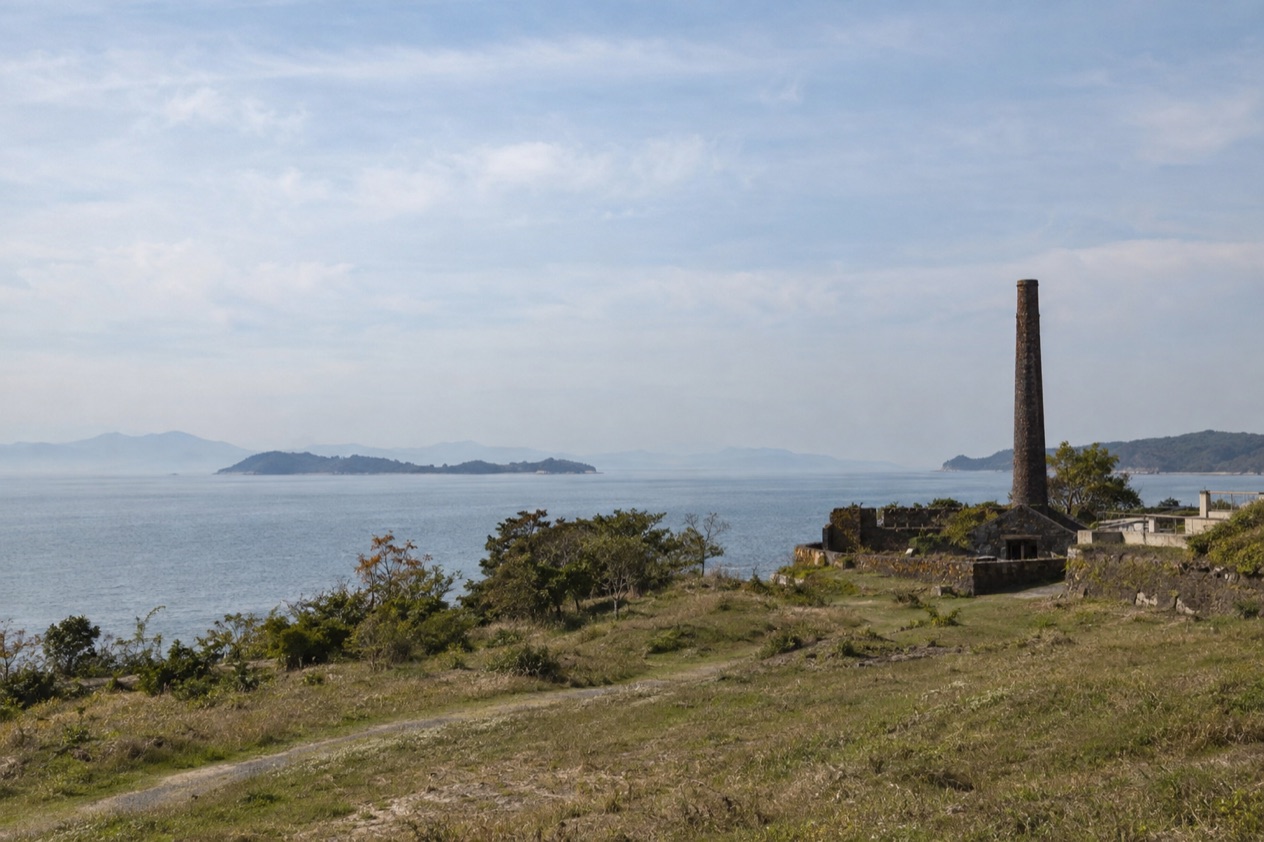
Step off the boat onto Teshima and the first thing you notice is the hillside: terraced fields stepping down toward a bay, with a few low buildings tucked among them. Inujima has its own signature, a brick chimney and a heap of old refinery walls that now hold art.
Is visiting Teshima and Inujima worth it?
These islands suit travelers who already know the pull of Naoshima and want to see what the same spirit looks like on smaller, less showy ground. They are less suited to anyone who wants a long list of attractions in one stop.
What sets this pair apart from the other art islands nearby is how little there is, and how much that matters. Teshima Art Museum holds a single artwork.
On Naoshima you can move between museums, installations and sculptures set along the shore, and the island is best known for its many contemporary art installations. Teshima and Inujima ask for a different rhythm: arrive, walk, sit, look, and leave with one strong memory rather than ten faint ones.
The setting does half the work. The Setouchi archipelago is a chain of thousands of islands of various sizes dotting the Seto Inland Sea, and the water between them gives every crossing a sense of passage. The islands have a mild climate, clean beaches and sparkling blue waters, which is why they work so well as short getaways from Okayama, Takamatsu, Hiroshima and Kobe.
There is also a story to the contrast. Many of these islands carried working lives of fishing, farming and industry, and the art here often grows out of that history instead of ignoring it. Inujima is the clearest case, where an old refinery site became a museum built around reuse. Teshima’s art grows from the land and the water of the island itself.
For a first trip to the Seto Inland Sea, Naoshima is the usual anchor, with the Chichu Art Museum and its site-specific installations by James Turrell and Walter De Maria and paintings by Claude Monet. Adding Teshima and Inujima turns a single-island visit into a small journey, and gives you a way to compare how three islands treat the same idea of art in landscape.
What to see at Teshima and Inujima
Teshima Art Museum and Matrix
Teshima Art Museum stands on the island of Teshima in Kagawa Prefecture and is operated by the Benesse Foundation. The architect is Ryue Nishizawa, co-founder of SANAA, and the building is a freestanding concrete shell with no columns holding it up. From outside it looks like a drop of water frozen mid-fall, a low white dome resting on the hillside above the sea.
Inside, the single artwork is Matrix by sculptor Rei Naito. Two openings in the shell let in sky, wind and sound, and water seeps up from the floor, gathers into beads, and slides across the surface in tiny streams. What you do is mostly watch, and the work changes with the light, the air and the weather of the moment, so no two visits look quite the same.
The dome is also worth reading as architecture. Notice how the thin shell meets the ground, how the openings frame the trees and sky, and how the building seems to belong to the slope more than to any plan imposed on it. The approach across the fields is part of the experience, so give it attention instead of hurrying toward the entrance.
| Feature | Detail |
|---|---|
| Shell thickness | 25 cm |
| Footprint | 40 by 60 meters |
| Height at highest point | 4 meters |
| Artworks | 1 |
The island of Teshima around the museum
Teshima is more than its one famous building. The island is a place of terraced rice fields, small harbor settlements and hillsides that run down to the water, the kind of rural scene that gives the Seto Inland Sea its character. Wandering the lanes between the museum and the shore shows you the working landscape that surrounds the art, and why placing a work like Matrix here makes sense.
Think of the island as the second half of the visit. The museum gives you a concentrated moment, and the countryside around it lets that moment settle. Look for the way the sea appears between hills, the shapes of the terraces, and the patterns of old farmhouses. None of it is staged, which is part of the appeal.
Inujima and its refinery museum
Inujima is the smaller, more unusual stop. Its art centers on the remains of a copper refinery, where a tall chimney and walls of dark brick and slag blocks stand beside the water. The museum built into the site is known for reusing materials and for keeping the old industrial shell as part of the experience, so the architecture and the history are as much on show as the art.
The island carries the same slow, human scale as Teshima. Houses sit along narrow lanes, and the art extends from the refinery into the village in the form of small installations and gallery spaces. Look for how the place treats its past, not as something to hide behind glass but as material to build on. It makes a good counterweight to the airy white dome on Teshima.
Naoshima as a companion
Naoshima is an island and town in the Seto Inland Sea, famous for its contemporary art museums and outdoor art installations, and although it lies closer to Honshu, it belongs administratively to Kagawa Prefecture in Shikoku. Pairing it with Teshima and Inujima lets you see how one idea, art placed in landscape, plays out at three scales.
At the Chichu Art Museum you meet site-specific installations by James Turrell and Walter De Maria, along with paintings by Claude Monet. Taken together with Matrix on Teshima, the experience becomes a conversation between light, water and space. Most of the museums on Naoshima are closed on Mondays, which is worth remembering when you shape the order of your days.
When to visit Teshima and Inujima
The Seto Inland Sea has a mild climate, and that mildness suits a visit built around walking between buildings, along fields and past the shore. You are not trying to beat extreme heat or cold, so you can plan around your own calendar and the rest of your route.
Each season shows the islands differently. In spring the terraced fields turn fresh green, and the light over the water has a soft clarity. Summer brings deep color to the hills and the sea, and the white dome on Teshima stands out sharply against the foliage. Because Matrix reacts to its surroundings, a different time of year changes what you see inside as well.
Autumn turns the hillsides gold and amber, and the air over the Inland Sea tends to look crisp and clear. Winter strips the landscape down to its lines, so the shapes of the terraces and the shoreline read more strongly. Whatever the season, the walking is outdoors, so the weather of the day sets the mood, and a gray sky gives the islands a different, more inward feeling than a bright one.
Rain deserves a thought. A wet day does not ruin a visit to Teshima, since the artwork inside the shell responds to the elements, and the sound of rain on the openings becomes part of the experience. It does change how the paths and fields feel underfoot, so plan the outdoor stretches with the sky in mind.
Think about the day of the week as well. Naoshima’s museums are mostly closed on Mondays, so if you want to combine the islands, build the route around that and place Naoshima on another day. For Teshima and Inujima themselves, plan your days around the schedules that apply to each site, and let the rest of your Seto Inland Sea trip flex around them.
Tips for your visit
Treat Teshima and Inujima as slow destinations and shape your day around that. The islands reward patience, so leave space between the museum visits for walking, sitting by the water and looking at the landscape. A visit squeezed into a tight schedule loses much of what makes these places worth the trip, because the art depends on attention more than on information.
Think of the Seto Inland Sea as a region to explore as a chain. The main transportation hubs for reaching the Setouchi archipelago are Okayama, Hiroshima and Kobe on Honshu, and Takamatsu and Matsuyama on Shikoku. Choose the hub that fits the rest of your Japan route, then build the island days from there, remembering that the islands are a getaway from those cities.
A good combination is Naoshima, Teshima and Inujima as three different pictures of the same idea. Naoshima offers the concentrated museums and outdoor installations, including the Chichu Art Museum. Teshima gives you one work in one building, with the countryside to absorb it. Inujima shows how an industrial ruin can become a place for art. Together they give a fuller sense of the region than any one island alone.
On the islands themselves, expect to be outdoors between stops, so dress for the weather of the day and keep your hands free for the walking. The museum rooms are places for looking and listening, so a calm pace suits them. Stay curious about small things, such as a doorway, a field edge or the way a path meets the water, because that is where these islands tend to reveal themselves.
Families and travelers who prefer an unhurried day can enjoy the islands in their own way, with the open landscape and the water giving everyone something to look at. Rather than aiming to see everything, pick one or two stops and give them time. That approach matches the spirit of the art, which asks you to stay with one thing and notice how it changes.
Good to know before you go
Carry some yen with you for the small things that come up on island days, such as a drink, a snack or a souvenir in a village shop. The islands are rural, so plan on a simple, unhurried rhythm, and keep an eye on the sky, since weather in the Seto Inland Sea can change how a day on the water and in the fields feels. If your trip falls in the typhoon season, keep your plans flexible and follow the day’s conditions.
Sources
- Wikipedia, Teshima Art Museum (https://en.wikipedia.org/wiki/Teshima_Art_Museum), checked October 11, 2026
- Japan National Tourism Organization, Naoshima (https://www.japan.travel/en/destinations/shikoku/kagawa/setouchi-islands/), checked October 11, 2026
- Wikipedia, Naoshima (https://en.wikipedia.org/wiki/Naoshima), checked October 11, 2026
- Wikivoyage, Naoshima (https://en.wikivoyage.org/wiki/Naoshima), checked October 11, 2026
To plan your stay
- Best Time to Visit Japan: Cherry Blossoms, Autumn Colors, Weather and Festivals
- Where to Stay in Japan: Ryokan, Temple Stays, Capsule Hotels and the Best Cities to Base In
- Sending Luggage from the Airport in Japan: Hands-Free Travel, Hotel Delivery and Coin Lockers
- Know Before You Go to Japan: Entry, Money, Etiquette and Getting Around