
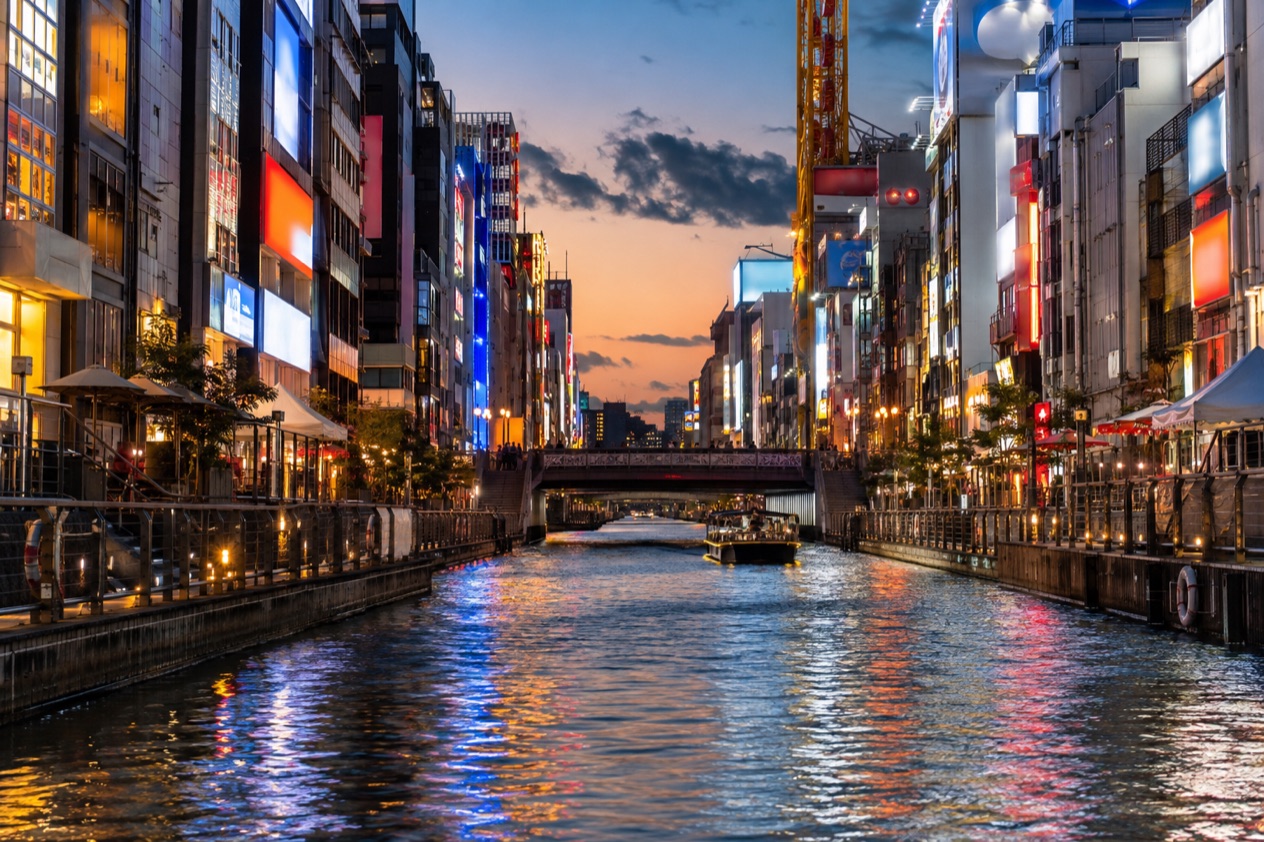
Tenma and Nakazakicho sit in Kita-ku, Osaka, and they give you two moods in one outing: the everyday shopping and drinking streets around a shrine, and a tangle of small lanes full of galleries, vintage shops and tiny cafés. It is a neighborhood for wandering, grazing and sitting down often.
What is Tenma and Nakazakicho like?
Tenma and Nakazakicho are an everyday Osaka neighborhood with a shrine at its heart and a handful of creative lanes beside it, a place where locals shop, eat and drink and where visitors drift in at their own pace. Both sit in Kita-ku, one of the wards of Osaka, the same ward that holds the glass towers of Umeda. The contrast is part of the story: tall office buildings are one way of looking at Kita-ku, and the low-roofed streets of Tenma are another.
Tenma grew up around Osaka Tenmangu Shrine, and the long shopping street that runs past it gives the area its rhythm. Shops sell groceries, sweets, clothes and tools, and the small restaurants and izakaya (Japanese pubs where food comes in small plates alongside drinks) behind them keep the neighborhood lively after the shops close.
Nakazakicho feels different. Its narrow lanes are lined with old wooden houses that have been converted into cafés, shops selling secondhand clothes and handmade goods, and little galleries, and the signs are often hand-painted and easy to miss.
The area suits people who like to wander without a checklist: travelers who enjoy browsing, photographers, café-hoppers and anyone curious about how Osaka eats and shops day to day. Osaka is known for its food, entertainment and nightlife, and Tenma carries the food and nightlife part with very little polish.
Nakazakicho adds the slower side, with a coffee, a vintage find and a look into a gallery. If you want sights with tickets and turnstiles, this is not that kind of place, and the rewards come from the streets themselves.
Things to do in Tenma and Nakazakicho
Osaka Tenmangu Shrine
Osaka Tenmangu is a Shinto shrine founded in AD 949 by Emperor Murakami. Shrines of this kind are dedicated to Sugawara no Michizane, honored as the god of learning, and students come to ask for success in their exams. You pass beneath the torii, then the entrance hall and gate built in 1845, before reaching the main hall.
Look for the wooden ema plaques that hang in rows, covered in handwritten wishes, and for the fortune slips folded and tied to racks. Osaka Tenmangu is also tied to the Tenjin Matsuri, a summer festival held in late July in which processions and boats move along the river.
Even outside the festival, the shrine grounds are a pause from the shopping streets that surround them. Osaka-Temmangu Station and Minami-morimachi Station are the nearest stations.
Tenjimbashisuji Shotengai
Tenjimbashisuji Shotengai is the longest covered shopping street in Japan, and it runs through the heart of Kita-ku. Greengrocers stack fruit, fishmongers lay out the day’s catch, and bakeries, sweet shops, pharmacies, clothing stalls and small restaurants share the same arcade. Because the roof covers the whole length, it works as a rainy-day plan too.
Treat it as a stroll and a snack run rather than a destination with one stop. Croquettes, skewers, fried snacks and sweet buns are the kind of things sold from counters here, and you eat them standing near the stall. Osaka-Temmangu Station is near the shrine.
The lanes of Nakazakicho
Nakazakicho is best explored without a map. Its lanes are narrow and its houses are low and wooden, and many of them now hold a café, a shop for vintage clothes, a ceramics studio or a small gallery. Signs are small, doors are often half hidden, and some shops are tucked up a staircase or behind a courtyard, so a lane that looks empty may hold three or four places.
Look for the details: a tiled roof next to a concrete wall, a plant-lined doorstep, a chalkboard menu propped against a sliding door. Many of the houses are lived in as well as used as shops, so voices stay low and photography of residents’ doors is done with care. Nakazakicho Station is the station that gives the district its name.
Within reach elsewhere in Kita-ku are Nakanoshima, an island of museums and civic buildings in the river, and the Umeda area, where Umeda Sky Building and Grand Front Osaka stand. Dotonbori and Shinsaibashi lie farther along the Midosuji Line from Osaka or Umeda Station.
| Site | Admission |
|---|---|
| Osaka Science Museum | ¥400 adults, ¥300 university and high school students, free for children (planetarium extra) |
| Osaka Museum of Housing and Living | ¥600 adults, free for junior-high students, children and seniors |
| Japan Mint Museum (open 09:00 to 16:45) | Free |
Eating and drinking in Tenma and Nakazakicho
Eating in Tenma means small places, counters and shared tables, with food that is meant to be passed along and talked over. Osaka is known for its food, and the arcades and side streets around the shrine are where everyday Osaka eats: grilled skewers (kushiyaki), fried cutlets, takoyaki, okonomiyaki (a savory pancake cooked on an iron griddle), and plates of simmered vegetables and fish lined along a counter.
Izakaya and standing bars
Tenma has a reputation among locals for its izakaya and tachinomi, standing bars where you order a drink and a few small plates. A typical order mixes a beer or a highball with something grilled, something fried and something pickled, then adds a second round. The menus are often on paper strips stuck to the wall, and the staff will point if you point back.
Sake and shochu (a distilled spirit) appear on many lists, often by the glass, and it is common to share dishes. Smoke from the grill, laughter and the clatter of glassware fill the lanes as the shutters on the arcade come down, which is when the neighborhood changes character.
Cafés and sweets in old houses
In Nakazakicho the mood is slower. Cafés in converted wooden houses serve coffee brewed by hand, tea, and cakes or toast with sweet toppings, and tatami rooms or low tables are common. Some pair coffee with a short lunch plate of curry or a set meal, others stick to baked goods and desserts such as pudding, shortcake and kakigori (shaved ice) in warm weather.
Many cafés have only a handful of seats, so the pattern is to sit, enjoy the room and move on to the next lane.
Staying in Tenma and Nakazakicho
Tenma and Nakazakicho suit travelers who want a base that feels like a neighborhood rather than a business district. Lodging here tends toward business hotels, small guesthouses and apartment-style stays tucked among shops and restaurants, rather than large resorts. You wake up near bakeries and arcades and step out for coffee in a lane that locals use too.
Nights have a certain life, because the izakaya and standing bars keep going after the shops shut. If you want silence at bedtime, ask about the room’s position relative to the street.
Compared with the neighboring parts of Kita-ku, the character is different. The Umeda area around Osaka Station is one of the main commercial centers of Osaka, with Grand Front Osaka, large underground complexes and the railway terminals where JR West, Hankyu, Hanshin and the subway all meet. Nakanoshima has government facilities, museums and office buildings. Tenma offers a more local atmosphere, and its stations connect it to the rest of the city.
The choice depends on how you travel. If you arrive with luggage by Haruka or the Airport Limousine bus, Umeda is where those routes land. If you want daily life, food and wandering on your doorstep, Tenma and Nakazakicho are good bases for it.
Getting to Tenma and Nakazakicho
Tenma and Nakazakicho are reached by train and subway from Osaka Station and Umeda Station, the two railway terminals of Kita-ku. Osaka Station is served by JR West, and Umeda Station by Hankyu, Hanshin and the Osaka Subway. Yodoyabashi Station, served by Keihan and the Osaka Subway, is the third terminal of the ward.
Several smaller stations serve the neighborhood itself: Temma Station, Nakazakicho Station, Osaka-Temmangu Station, Tenjimbashisuji Rokuchome Station, Minami-morimachi Station and Ogimachi Station, among others in Kita-ku. Osaka-Temmangu Station is on the JR Tozai Line, and Minami-morimachi Station is on the Osaka Municipal Subway. Both are nearest stations to the shrine.
From Kansai International Airport
The JR limited express Haruka has called at Osaka Station since March 13, 2023, and the trip from Kansai International Airport takes about 45 minutes. The Japan Rail Pass includes the Haruka trip to Osaka Station.
The Airport Limousine bus runs from Kansai International Airport to the Hotel New Hankyu bus station in Umeda. From either arrival point you continue by train or subway to the station nearest your lodging in Tenma or Nakazakicho.
From Tokyo and elsewhere in the city
From Tokyo, the Tokaido-Sanyo shinkansen runs to Shin-Osaka Station, and the journey takes about two and a half hours. From Shin-Osaka, take a JR local train to Osaka Station.
Within Osaka, Osaka and Umeda stations are the starting points for the Midosuji Line to Shinsaibashi and Dotonbori, and for the JR Loop Line and Chuo subway line to Osaka Bay, where Universal Studios Japan stands. Those are all trips from the same terminals that serve Tenma.
Good to know before you go
Prices in Tenma and Nakazakicho are in yen, and the small arcade shops and standing bars are the kind of places where you pay for what you ordered at the counter. The lanes of Nakazakicho are partly residential, so the habit is to speak softly, step aside for people carrying shopping or pushing bicycles, and ask before photographing a doorway.
Shoes come off at the entrance of cafés with tatami rooms, so socks without holes are a small kindness. The United States Consulate-General in Osaka is also located in Kita-ku.
Sources
- Wikipedia, Kita-ku, Osaka (https://en.wikipedia.org/wiki/Kita-ku,_Osaka), checked October 11, 2026
- Wikipedia, Osaka Tenman-gu (https://en.wikipedia.org/wiki/Osaka_Tenman-gu), checked October 11, 2026
- Wikivoyage, Osaka/Kita (https://en.wikivoyage.org/wiki/Osaka/Kita), checked October 11, 2026
- Japan National Tourism Organization, Osaka (https://www.japan.travel/en/destinations/kansai/osaka/), checked October 11, 2026
To plan your stay
- Best Time to Visit Japan: Cherry Blossoms, Autumn Colors, Weather and Festivals
- Where to Stay in Japan: Ryokan, Temple Stays, Capsule Hotels and the Best Cities to Base In
- Sending Luggage from the Airport in Japan: Hands-Free Travel, Hotel Delivery and Coin Lockers
- Know Before You Go to Japan: Entry, Money, Etiquette and Getting Around