
Steam rises from a bath set near the edge of the Pacific, and the sound of the ocean carries into the water. That is the picture travelers have when they hear Shirahama Onsen. It is a hot spring town on the coast of Wakayama Prefecture, where soaking, sea views and a few striking pieces of coastline sit side by side, and where the Kumano Kodo pilgrimage landscape is part of the neighborhood.
What is Shirahama Onsen?
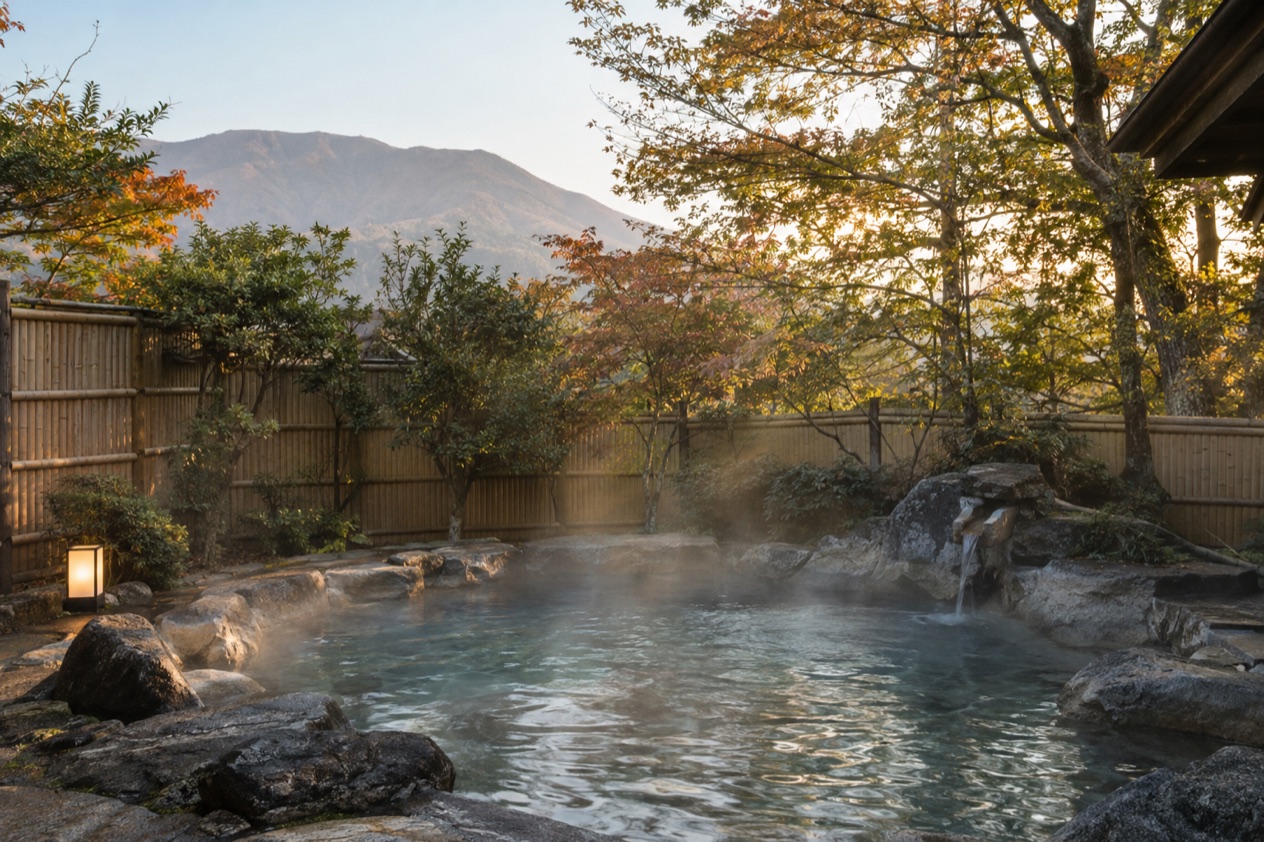
Shirahama Onsen is the hot spring side of Shirahama, a town on the Pacific coast of the Kii Peninsula, in the southwestern part of Wakayama Prefecture. The town has many hot springs, and the best known is Nanki-Shirahama Onsen. The name tells you how the place works: an onsen is a natural hot spring, and a town built around one is a place where the baths shape the day.
In practice, a stay here means a rhythm of soaking, eating and walking by the water. Onsen towns in Japan tend to share certain habits.
Bathers wash thoroughly at a stool and shower before stepping into the shared bath, towels stay out of the water, and a yukata, the light cotton robe, often replaces street clothes in the evening. Guests at a ryokan, the traditional inn, usually find shoes coming off at the entrance and tatami underfoot.
Where the town sits
The Kii Peninsula is a rugged, forested piece of Honshu that pushes out into the Pacific, and Shirahama lies on its ocean side. That position gives the town its character. The land meets the water in rock, cliffs and small islands rather than in a long, uniform shoreline, and the baths and the coast belong to the same scene.
The climate is humid subtropical, with warm summers and cool winters. Rain is generous across the year on this coast, so a flexible plan serves you better than a fixed one. A wet afternoon is a natural moment for a long bath, an aquarium visit or a slow meal, and a clearer day suits the cliffs and the shoreline.
The baths and the kind of stay
Nanki-Shirahama Onsen is the name to look for when you compare places to soak. Other hot springs in the town share the same setting, and the choice usually comes down to the kind of stay you want: an inn with its own baths and a multi-course dinner, or a simpler base from which you go out to the sights.
A ryokan evening has a familiar shape. You arrive, change into a yukata, bathe, and then sit down to a kaiseki-style meal, a series of small seasonal dishes. On a coast like this, seafood is the natural thread, and the meal often reflects what the nearby ocean offers. Afterward comes a second bath, then futons laid out over the tatami.
A coastline of rock and legend
What gives Shirahama its edge over a plain spa town is the shoreline itself. Engetsu-to, a natural arch standing just off the coast, and the cliffs of Sandanbeki, which rise 50 meters above the ocean, are the landmarks that define the town’s look.
The Kumano Kodo adds another layer. This ancient pilgrimage route crosses the Kii Peninsula and links several large shrines, and it passes through the Shirahama area. Pilgrims have long walked it, and the onsen tradition of the region grew up alongside that movement of people, as places to rest and warm up.
How do you get there?
You can reach Shirahama by air, by rail or by road, and each way is tied to a named piece of infrastructure. The town is served by Nanki-Shirahama Airport, by JR West’s Kisei Main Line, and by the Kisei Expressway and National Route 42. Which one suits you depends on where you start and whether you want to drive.
By train on the Kisei Main Line
JR West’s Kisei Main Line runs along this coast, and several stations serve the town: Kii-Hiki, Tsubaki, Kii-Tonda and Shirahama. The station names matter because they are spread across the town, so the one you choose should match where your inn or your first stop is. Look at your accommodation’s address and match it to the nearest of the four.
Arriving by rail has a pleasure of its own. A line that follows a Pacific coast gives you a gradual change of scenery from the window, with hills, small harbors and the ocean appearing and disappearing. It also means you step out into the town without the question of parking, which suits a stay built around baths and meals.
By air to Nanki-Shirahama Airport
Nanki-Shirahama Airport serves the town directly. For travelers coming from far away, it is the entry that puts an airport on the same stretch of coast as the hot springs, so the first sight of Shirahama can be the Kii Peninsula from above. Visitors to Japan combine regions by train, but this is the air connection tied to the town itself.
If you are building a longer trip, think of the airport as one possible start or end to a loop through Wakayama. The Kumano Kodo area and the coast belong to the same region, so a flight in and a different way out is a pattern to consider when you map the days.
By car on the Kisei Expressway and Route 42
Two roads reach Shirahama: the Kisei Expressway and National Route 42. The expressway is the limited-access road, and Route 42 is the national route that follows the coast. A car gives you freedom to stop at the cliffs, the arch and the beach on your own schedule, and to continue toward other parts of the Kii Peninsula.
Driving suits travelers who want to link the town with the wider peninsula, including the Kumano Kodo area. If you plan to soak in the evening, remember that a bath and a meal end the driving day, so it helps to arrange your stops so that you arrive at your inn first and go out afterward on foot or by other means.
What can you do?
You can soak in the hot springs, walk the coast, visit an aquarium and safari park, and touch the Kumano Kodo. The town offers a mix of water, rock and entertainment, and a stay of a couple of days can include all of it without much repetition.
Soak at Nanki-Shirahama Onsen
The baths are the center of the visit. You wash first, ease into the bath, and let the heat settle in. After a day on foot along the shore, the bath is where the legs finally rest.
Travelers plan two soaks, one on arrival and one before bed or in the morning. Afterward, a cold drink in a yukata and a slow stroll are part of the routine in a hot spring town. Tattoo and towel policies vary from bath to bath, so each facility’s own rules are the ones to follow.
Walk to Sandanbeki, Senjo-jiki and Engetsu-to
Sandanbeki is a stretch of cliffs along the ocean edge, 50 meters high, with caverns that were once inhabited by pirates. The mix of sheer rock and old stories is the draw. Stand at the edge, look at the water below, and imagine the seafarers who used those hollows as shelter.
Senjo-jiki is a rocky point near Shirahama Beach, a broad shelf of stone that meets the sea. Engetsu-to, the natural arch just off the coast, completes the trio of shoreline sights. Together they make a day of looking at how the ocean has shaped the land, with the beach nearby as a place to pause between viewpoints.
Adventure World
Adventure World combines a safari park, an aquarium and an amusement park in one facility. That mix makes it the obvious rainy-day option and a draw for anyone who wants animals and rides in the same outing, since you do not have to choose between them.
It suits travelers who like variety, and groups with different tastes can each find something. After a morning at the baths and the cliffs, a day here gives the trip a different pace, more playful and less contemplative, before you return to the quiet of the inn.
The Kumano Kodo
The Kumano Kodo is an ancient pilgrimage route across the Kii Peninsula that links several large shrines, and it passes through the Shirahama area. Even a visitor who is not planning a long walk can feel its presence here, because the town sits within the region the route crosses.
Pilgrimage and bathing have gone together in Japan for a long time, with travelers resting in hot springs after the road. Staying in Shirahama gives you a way to connect the two ideas, with a day on the trail or at a shrine followed by an evening in the bath.
Good to know before you go
Rain falls generously on this coast, so a waterproof layer and a plan that bends are sensible. The climate is humid subtropical, with warm summers and cool winters. Bring cash for small purchases and an open mind about bath etiquette, since each inn and bath house sets its own customs. Hot spring towns reward an unhurried schedule, so leave room in each day for a second soak.
Sources
- Wikipedia, Shirahama, Wakayama (https://en.wikipedia.org/wiki/Shirahama,_Wakayama), checked October 11, 2026
To plan your stay
- Best Time to Visit Japan: Cherry Blossoms, Autumn Colors, Weather and Festivals
- Where to Stay in Japan: Ryokan, Temple Stays, Capsule Hotels and the Best Cities to Base In
- Sending Luggage from the Airport in Japan: Hands-Free Travel, Hotel Delivery and Coin Lockers
- Know Before You Go to Japan: Entry, Money, Etiquette and Getting Around