
You are standing in a Tokyo station concourse with a rolling suitcase, staring at a departure board in two alphabets, and the question lands: which ticket do you actually need for the bullet train? The shinkansen is a train that asks for a supplement on top of the basic fare, and tickets come from station counters, machines and the rail companies’ own services. What follows sorts out the pieces so the platform feels familiar before you reach it.
How do you buy shinkansen tickets?
You buy a shinkansen ticket as two parts that work together: the fare for the distance, and a supplement for riding a high-speed train. That second part is what separates the bullet train from the commuter lines you use around town, and it is the detail that surprises first-time visitors who assume one fare covers everything.
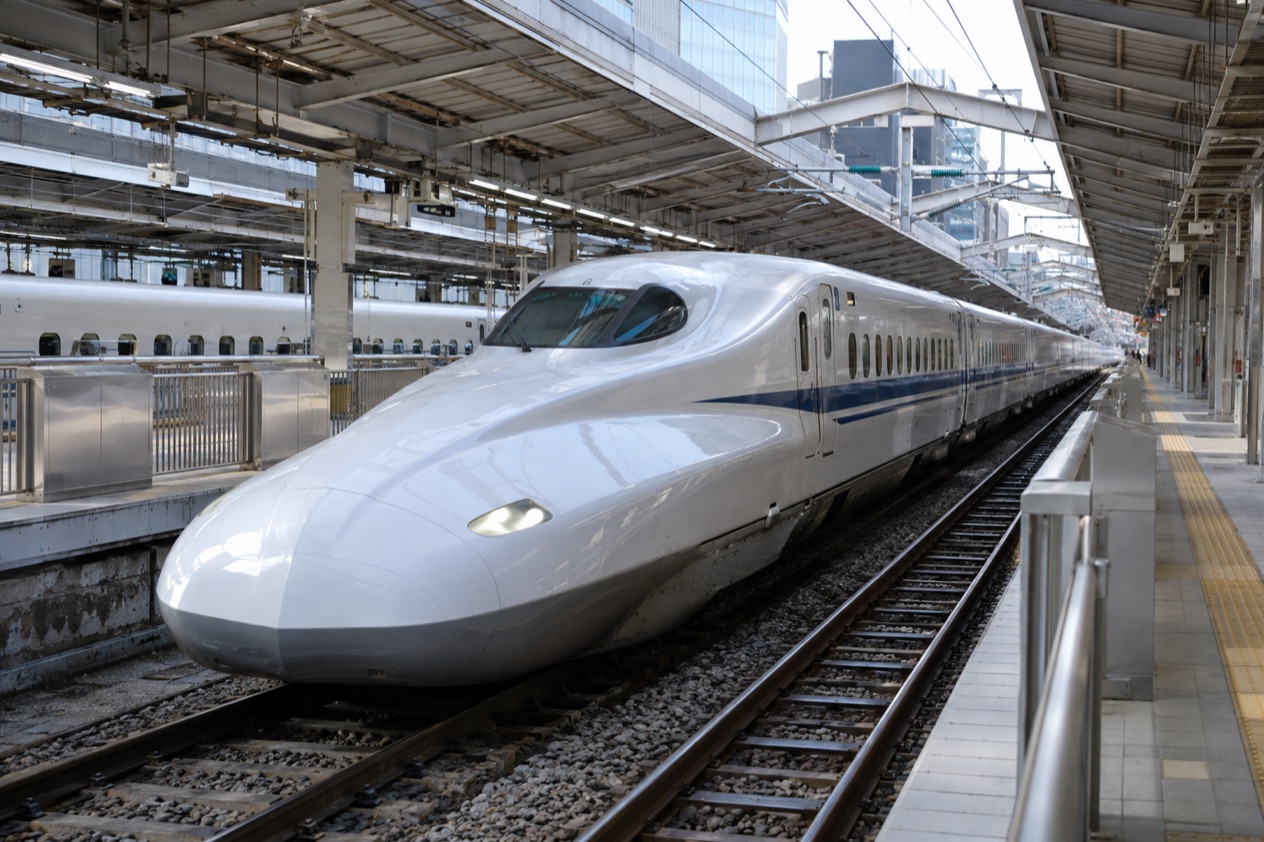
The shinkansen is a family of high-speed intercity trains on several lines across the country, and the Japan National Tourism Organization describes it as running with a supplement. The first line, the Tokaido Shinkansen, opened in 1964 and links Tokyo, Yokohama, Nagoya and Osaka. Later lines reach most major cities on Honshu and Kyushu and extend as far as Hakodate on Hokkaido.
Where the supplement sits among Japan’s train types
Understanding the other trains makes the shinkansen charge easier to place. Local trains stop at every station and suit short distances. Rapid trains skip the smaller stops and carry no extra charge. Express trains serve fewer stations, and a supplement may be applied. Limited Express and Special Express trains offer faster intercity travel with reserved seats and typically need a supplement. The shinkansen belongs to that last family of paid, fast trains.
| Train type | How it serves the line | Supplement |
|---|---|---|
| Local | Stops at every station | Not part of the fast-train charges |
| Rapid | Skips smaller stations | None |
| Express | Serves fewer stops | May apply |
| Limited Express and Special Express | Faster intercity travel, reserved seats | Typically required |
| Shinkansen | High-speed intercity lines | Required |
Picking the right train for your route
Choosing a ticket starts with knowing which line your journey follows. The Tohoku Shinkansen, for example, brought the run from Tokyo to Shin-Aomori down to around 3 hours, while the Tokaido line ties together the cities visitors string into a first itinerary.
A route planner helps here. Japan Travel by NAVITIME, Japan Transit Planner by Jorudan and Google Maps all let you look up routes and calculate fares before you stand in front of a machine.
Once the route is clear, you know the stations at each end, the line and the kind of train. That is everything a ticket window or a machine needs from you, and it keeps the exchange at the counter to a few words and a point at the screen.
If you travel with a Japan Rail Pass
The Japan Rail Pass is open to foreign nationals visiting as tourists with a temporary visitor stamp, and to Japanese nationals who have lived outside Japan for at least ten years. It comes with one exception that matters on the busiest corridors. On the Tokaido, San’yo and Kyushu Shinkansen, the pass does not cover Nozomi or Mizuho services unless you buy a supplemental Nozomi Mizuho ticket.
In practice, that means the name of the train on your ticket is worth reading. Two departures on the same line can be different services, and the service name decides whether the pass alone is enough or whether the extra ticket enters the picture.
Where can you buy them?
You buy shinkansen tickets in the rail system itself, and the most direct place to start is the JR Group, whose network covers the entire country, shinkansen lines included. It serves the cities travelers most often aim for, among them Kyoto, Hiroshima, Kanazawa and Sendai, so a JR station in any of them is a natural place to arrange the next leg.
Odakyu provides direct access to Hakone and Enoshima. Keisei connects to Narita Airport, while Tokyu and Keikyu reach Yokohama and Haneda Airport. Seibu and Keio go to Chichibu and Mount Takao, and Meitetsu runs to Inuyama and Centrair Airport. In the Kansai area, Kintetsu, Nankai, Hankyu, Keihan and Hanshin link Osaka, Kyoto, Nara and Koyasan.
Reading the stations of Tokyo and Osaka
Big cities stack several operators in one place, which is why a station can feel like a small town. Tokyo has Japan Railways trains alongside the Tokyo Metro and Toei Subway lines. Osaka has JR, Hankyu Railway, Hanshin Electric Railway and Keihan Railway, among others. A ticket for the bullet train belongs to the JR side, so following the JR signs is how you find the right gates.
The same stations are also where your local trips begin, whether you are heading from the airport to the city or from the shinkansen platform to a hotel. Planning the whole chain, rather than only the long ride, keeps the ticket you buy matched to the trains you take.
Online reservation resources and IC cards
The Japan National Tourism Organization runs a page of online reservation sites for travel in Japan, available in several languages, English for the United States among them. It mentions the shinkansen and the Japan Rail Pass as ways to get around. It is a planning aid, a place to see which services exist before you arrive.
An IC card works differently from a shinkansen ticket, but it fills the gaps around it. The deposit for most IC cards is 500 yen, refundable if you return the card at the counter at the end of your stay. Welcome Suica is a deposit-free card for tourists in certain parts of the Kanto region and stays valid for up to 28 days. Other IC cards stay valid for 10 years after last use.
You can also pay with an IC card in many vending machines, stores and station coin lockers. One limit to remember is that these cards cannot be used to travel between two different regions, such as from the Suica region of JR East to the TOICA region of JR Central. Mobile versions of PASMO or Suica on a smartphone do not work on every phone.
What do you need to know about reserved seats?
Reserved seats belong to the world of Limited Express and Special Express trains, which carry them as part of the faster intercity service, and the shinkansen sits in the same family of paid, fast trains. A seat is tied to a specific train, which is why the service name on your ticket carries so much weight.
The practical consequence is simple. When you hold a ticket for a particular departure, you are planning around that departure, and the clock matters more than it does on a local line where the next train is right behind the last one. Japanese trains have a reputation for being always on time, which lets travelers plan to the minute, and that reputation is what makes a fixed departure workable.
Planning around the hours the trains run
The shinkansen shuts down between midnight and 6:00 every day for maintenance, and it never runs overnight. So the last ride of the evening and the first of the morning bracket the whole day, and a seat on a late connection is a seat you do not want to miss. Most trains in Tokyo also stop in the early hours, from 1:00 to 5:00, which matters if you were hoping to improvise a way back to your hotel.
These limits shape how you stack a day. A morning departure from Tokyo toward Osaka or Shin-Aomori leaves room for sightseeing at the other end, while a plan that depends on a train after midnight has no bullet train to rely on.
What happens on board and when things go wrong
Once you are in your seat, a few habits are worth knowing. Smoking has been banned on all shinkansen lines since March 2024. Phone calls belong in the corridor between cars, since the shinkansen allows talking on the phone there, which keeps the seating areas calm for everyone else.
If a train is delayed, passengers can apply for a delay certificate from the station or from the rail company’s website. It is a small piece of paper, but it is the proof you hold if a late arrival throws off a connection or a hotel check-in.
Trains on the fastest stretches reach 199 miles/h, and the Tohoku line holds that speed over a long section. The ride itself is smooth and quick, and the shinkansen has had no passenger fatalities in accidents since operations began. The experience that remains is the window: city after city sliding past, and the platform name on the display announcing each stop in English.
Good to know before you go
Think of the ticket as the last small task before a long ride and carry a little extra in yen, since fares, supplements and IC card top-ups are all settled in the local currency. Keep your reservation details handy, because a route and a service name are what the staff will ask about. Japan’s rainy season and typhoon season can touch the schedule of any train, so a flexible day on either side of a big transfer is a sensible habit.
Sources
- Japan National Tourism Organization, trains and buses (https://www.japan.travel/en/guide/how-to-travel-by-train-and-bus-in-japan/), checked October 11, 2026
- Japan National Tourism Organization, traveling by rail (https://www.japan.travel/en/guide/traveling-by-rail/), checked October 11, 2026
- Japan National Tourism Organization, online reservations (https://www.japan.travel/en/plan/online-reservation-sites/), checked October 11, 2026
- Wikipedia, Shinkansen (https://en.wikipedia.org/wiki/Shinkansen), checked October 11, 2026
- Wikivoyage, Rail travel in Japan (https://en.wikivoyage.org/wiki/Rail_travel_in_Japan), checked October 11, 2026
To plan your stay
- Best Time to Visit Japan: Cherry Blossoms, Autumn Colors, Weather and Festivals
- Where to Stay in Japan: Ryokan, Temple Stays, Capsule Hotels and the Best Cities to Base In
- Sending Luggage from the Airport in Japan: Hands-Free Travel, Hotel Delivery and Coin Lockers
- Know Before You Go to Japan: Entry, Money, Etiquette and Getting Around