
On the concourse at Tokyo Station, the departure boards scroll through three train names in a steady rhythm, and a traveler holding a ticket for Kyoto looks up to see which one is theirs. Nozomi, Hikari and Kodama all run along the same Tokaido Shinkansen tracks. They differ in how many stations they stop at and in what a Japan Rail Pass will cover, and those two things decide which platform you walk to.
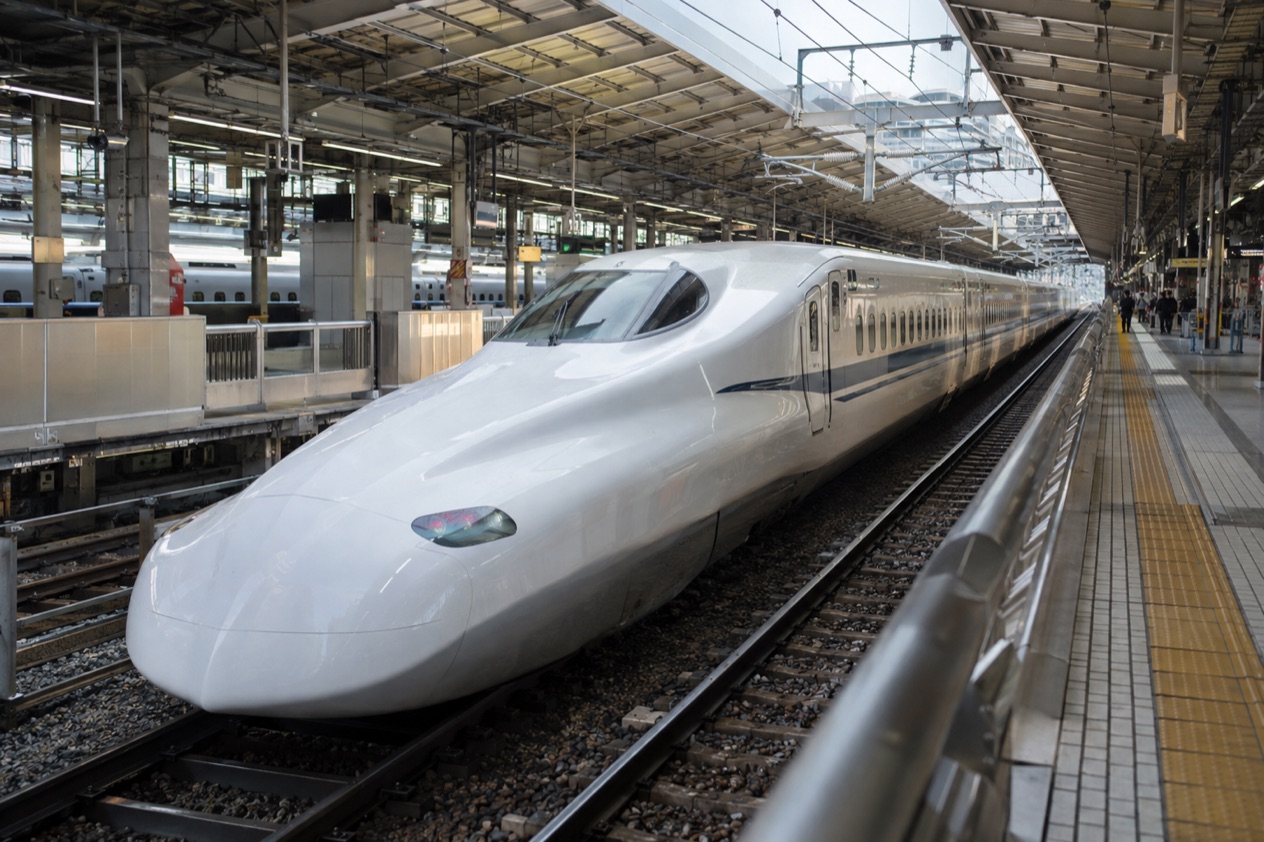
How do Nozomi, Hikari and Kodama differ?
The three names are three stopping patterns on one line: Nozomi is the super-express, Hikari the express and Kodama the train that stops at every station. The Tokaido Shinkansen has been run by the Central Japan Railway Company, known as JR Central, since 1987, and it offers all three types. The line runs between Tokyo and Shin-Osaka, and the trains travel at a maximum speed of 177 mph.
Nozomi is the fastest train service on Japan’s Tokaido and Sanyo Shinkansen lines. Hikari sits in the middle, and Kodama is the one that calls at every platform along the way. The mix on the timetable tells you how the line is used, with Nozomi trains far outnumbering the other two.
| Service | Type | Trains per hour (up to 17 in all) |
|---|---|---|
| Nozomi | Super-express | 13 |
| Hikari | Express | 2 |
| Kodama | All-stop | 2 |
Nozomi, the super-express
Between Tokyo and Shin-Osaka, a Nozomi stops only at Shinagawa, Shin-Yokohama, Nagoya and Kyoto. Past Shin-Osaka, onto the Sanyo Shinkansen, every Nozomi also stops at Shin-Kobe, Okayama, Hiroshima and Kokura, plus at least one more intermediate station that varies from train to train. West of Shin-Osaka, trains reach 186 mph between there and Hakata.
The route is the reason people choose it. The Tokyo to Shin-Osaka run is listed at 2 hours 30 minutes, and the fastest Nozomi trains cover the Tokyo to Osaka journey in 2 hours 21 minutes. The fastest through service from Tokyo to Hakata takes 4 hours 45 minutes.
Hikari and Kodama
Hikari is the express, and it stops at more stations than a Nozomi. Kodama is the all-stop train. It serves every station on the line, so it is the one you board for a small station that the faster trains pass through without opening their doors.
Both appear on the same boards as Nozomi, in the same colors and with the same style of train. What changes is the name on the display and the length of the list of stops. The rhythm of a Kodama journey, with frequent pauses at platforms and faster trains overtaking, is part of the experience of riding it.
Inside the cars
Nozomi trains run with two non-reserved cars instead of three outside of peak periods, a change that began with the revised timetable of March 15, 2025. During New Year and Christmas (late December through the first week of January), Golden Week (April 29 to May 5) and the Obon festival (mid to late August), all Nozomi services have reserved seats only. That arrangement has applied since December 2023.
The seventh car on a Nozomi is the S Work car, where phone calls, video conferences and laptop use are permitted, unlike in standard cars. Green Cars, the first class cars, have seats in a 2+2 layout and are all reserved. Smoking rooms in cars 3, 7, 10 and 15 on Nozomi trains were deactivated in March 2024.
Which one does the Japan Rail Pass cover?
A Japan Rail Pass covers Hikari and Kodama on the Tokaido Shinkansen free of charge, and it reaches Nozomi only if you buy a special supplementary ticket. Since October 2023, pass holders have been able to ride the Nozomi on the Tokaido Shinkansen with that extra ticket. Before that change, the fastest trains were closed to them.
| Service | Type | Japan Rail Pass |
|---|---|---|
| Nozomi | Super-express | Special supplementary ticket required |
| Hikari | Express | Free of charge |
| Kodama | All-stop | Free of charge |
Hikari and Kodama with a pass
For a traveler who holds the pass, Hikari and Kodama are the trains it was built around on this line. They run between Tokyo and Shin-Osaka, and there is nothing to add at the gate. You show the pass and board, and the fare question is settled before you reach the platform.
The two services give you different trips. The Hikari stops at more stations than a Nozomi and the Kodama stops at all of them, which gives you the chance to step off at stations between the big cities. Anyone building a route around smaller stops on the line will find the Kodama pattern lines up with their plan.
Nozomi with the supplementary ticket
Foreign tourists traveling with a Japan Rail Pass are required to purchase a special ticket to use the Nozomi service. On the Tokaido Shinkansen this has been possible since October 2023. The pass alone does not open the Nozomi doors, and the supplementary ticket is the missing piece.
The supplementary ticket is what turns the fastest service from a train you watch go by into one you can ride. If your journey runs through Nagoya, Kyoto or Shin-Osaka, you will see Nozomi trains on the boards at every one of those stations, and the ticket is what links your pass to them.
Which should you take?
It comes down to two questions: whether you hold a Japan Rail Pass, and whether your stop is on the short Nozomi list. Those two answers sort most trips on the line. The rest is a matter of how you want the ride to feel.
If you are traveling with a Japan Rail Pass
A pass holder can ride Hikari or Kodama at no extra charge, and can add the Nozomi by buying the special supplementary ticket. So the choice is between the trains already covered and the fastest service with a ticket on top. For a route that includes Kyoto, Nagoya or Shin-Osaka, the Hikari already calls at those stations.
The Nozomi is the choice to make when the time on the clock matters most to you, for example on a long run toward Hiroshima or Hakata. The fastest through service from Tokyo to Hakata takes 4 hours 45 minutes, a journey long enough that the stopping pattern shapes the day.
If your stop is on the Nozomi list
Between Tokyo and Shin-Osaka, the Nozomi serves Shinagawa, Shin-Yokohama, Nagoya and Kyoto. If you are going to one of those, or on to Shin-Kobe, Okayama, Hiroshima or Kokura, the super-express covers the trip. Without a pass, Nozomi trains are the ones you will see most often on the board, since 13 of the up to 17 trains an hour on the Tokaido line are Nozomi.
Peak travel periods change the picture. At New Year, Golden Week and Obon, every Nozomi seat is reserved, so a ride without a seat assignment is not an option on those dates. Outside them, the trains keep two non-reserved cars.
If your stop is not on the Nozomi list
A station not named on the Nozomi list needs a Hikari or a Kodama. The Kodama, which stops everywhere, is the pattern that covers the smallest stations on the line. For a traveler headed to one of those, the question of Nozomi simply does not arise, because the super-express passes through.
The cars you choose can also shape the ride. Anyone who needs to take a call or work on a laptop can look for the S Work car, the seventh car on a Nozomi. Anyone who wants more room can look at the Green Car, with its 2+2 seats, which is entirely reserved.
Good to know before you go
The Shinkansen system shuts down between midnight and 6:00 every day for maintenance, so the last train of the night and the first of the morning bracket those hours. Since 2020, a reservation is required to take large pieces of luggage on Tokaido Shinkansen trains. The onboard trolley service ended on October 31, 2023, due to falling sales and labor shortages, so the cart that once rolled down the aisle is gone.
Sources
- Wikipedia, Nozomi (train) (https://en.wikipedia.org/wiki/Nozomi_(train)), checked October 11, 2026
- Wikipedia, Shinkansen (https://en.wikipedia.org/wiki/Shinkansen), checked October 11, 2026
- Wikipedia, Tōkaidō Shinkansen (https://en.wikipedia.org/wiki/T%C5%8Dkaid%C5%8D_Shinkansen), checked October 11, 2026
To plan your stay
- Best Time to Visit Japan: Cherry Blossoms, Autumn Colors, Weather and Festivals
- Where to Stay in Japan: Ryokan, Temple Stays, Capsule Hotels and the Best Cities to Base In
- Sending Luggage from the Airport in Japan: Hands-Free Travel, Hotel Delivery and Coin Lockers
- Know Before You Go to Japan: Entry, Money, Etiquette and Getting Around