
On the platform at Tokyo Station, a traveler stands with a rolling suitcase and a day pack, watching the long, pointed nose of a Shinkansen slide in without a sound. The question comes up at that exact moment, and again at the foot of the stairs in Osaka or Nagoya. The short answer is that the luggage question depends on the line and the train you board, so it helps to know what kind of network you are stepping onto.
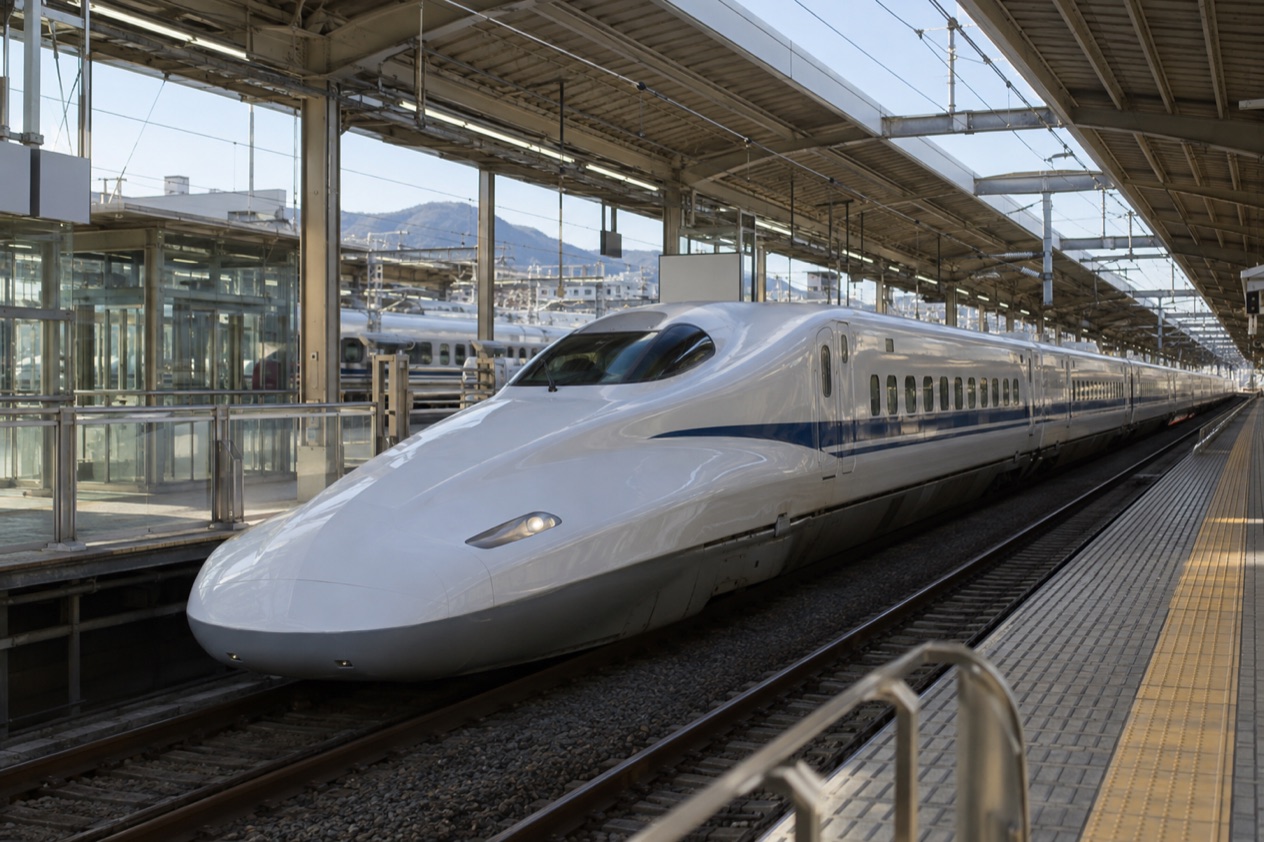
What are the luggage rules on the shinkansen?
The rules belong to the train you board, and the Shinkansen is not one railway but a network of lines that share a name and a look. The Tokaido Shinkansen, the first line, opened in 1964 and links Tokyo, Yokohama, Nagoya and Osaka.
Other lines run north and west from Tokyo, and each is a different route with its own trains. A suitcase that suits a business trip to Osaka is the same suitcase you carry onto a train toward Hakodate, so the first step is knowing which line your ticket names.
Travelers often treat the Shinkansen as one uniform thing, but the network is wide. It covers most major cities on Honshu and Kyushu and reaches Hakodate on Hokkaido. Your bags may ride across several of these lines in one trip, changing platforms in a big station along the way. That is why it pays to pack in a way that lets you carry everything yourself through ticket gates, stairs and crowded concourses.
The lines you are likely to ride
They describe the lines themselves, so you can picture the length of journey your luggage will be part of.
| Line or section | Length (km) |
|---|---|
| Tokaido Shinkansen, Tokyo to Osaka | 552.6 |
| Tohoku Shinkansen, fastest section | 387.5 |
The whole network adds up to 1834 miles of line, with top speeds that range from 260 to 199 miles/h. Those speeds explain why trains feel smooth and quiet inside, and why a bag left unattended between cars is a bad idea in any station or on any train.
Packing with the journey in mind
Think of the trip as a sequence of small handoffs: hotel lobby, subway, station concourse, platform, seat, and then the same steps in reverse. A day bag that holds your ticket, a charger, a water bottle and a snack keeps the essentials on your lap, while the larger bag stays wherever the train allows. Many travelers pack a change of clothes in the smaller bag when they are sending a big suitcase ahead.
Shinkansen trains stop at stations for a short time, so you want your things gathered before the train pulls in. Lining up at the marked spot on the platform with your bags beside you is how most riders handle it, and it keeps the aisle clear once you step aboard.
Which sizes need a seat reservation?
Size is something to settle with the operator of your particular line and train, because the network is a patchwork of routes and each service has its own seating arrangement. What stays constant is that the Shinkansen is a long-distance railway, and a ticket that names a car and a seat puts you in a fixed spot, with your luggage planned around that spot.
The shape of the journey matters as much as the size of the bag. A trip from Tokyo toward Shin-Aomori runs for around three hours over 419 miles, and on a ride that long you notice every item at your feet. A trip on the Tokaido line is a different rhythm, with Yokohama and Nagoya stops stringing along the way to Osaka.
Matching your bag to your route
If your plan is Tokyo to Osaka with a stop in Nagoya, you will be getting on and off at big stations, and a compact bag helps you move quickly through them. If you are heading north on the Tohoku line, the longer ride gives you time to settle in, and a larger bag is more of a question of where it rests than of how fast you can move.
A good habit is to look at your ticket before you leave the hotel and note the line, the car and the seat. With that in hand you can decide, calmly, whether the suitcase comes aboard with you or travels some other way, rather than deciding in a hurry at the gate.
Schedules and the night break
The whole Shinkansen system shuts down between midnight and 06:00 every day for maintenance. For luggage, that means a late arrival at a hub like Tokyo or Osaka can leave you hauling bags to a hotel by other means, and an early start is limited by the same gap. Plan the end of your travel day with your bags in mind, and keep an eye on the clock when you are connecting from a flight.
Looking ahead, the Chuo Shinkansen maglev line is expected to cut the Tokyo to Osaka journey to 67 minutes. It is a different kind of train on a different line, and it does not change how you pack for the trains that run today.
Where do you put large suitcases?
Large suitcases are best thought of as a plan made before you reach the platform: you decide whether the bag rides with you, waits at a station, or goes ahead to your next hotel. The train is the last link in that chain, and the stations on either end are where most of the work happens.
Big stations such as Tokyo, Yokohama, Nagoya and Osaka are large, layered buildings with many exits and long corridors, and a heavy bag turns each of them into a small project. Stairs, escalators and elevators are all part of the picture, and finding the one you want takes a minute even for someone who has been before.
Stations as the real test
Think about your arrival as much as your departure. At the end of a ride, you step onto a platform, find the exit signs, and head for a taxi stand, a subway line or a hotel shuttle with everything you brought. If you have a suitcase and a day pack, one hand stays free for tickets and the other steers the wheels.
Travelers who move between cities every day or two often pack light for exactly this reason. A single mid-sized bag and a small backpack are easier to manage on the move than two big cases, and they let you change plans without redoing the whole logistics chain.
Splitting a trip into bases
A common way to handle a long itinerary is to choose a few bases, such as Tokyo, Kyoto and Osaka, and take day trips from each with only a light bag. Because the Shinkansen reaches so many major cities on Honshu and Kyushu, there are plenty of places to build a trip around. The heavy luggage then moves only when you switch bases, which keeps the number of stressful transfers low.
If your route goes as far as Hakodate on Hokkaido, treat that leg as its own chapter of the trip, with its own packing choices. Give the bags a place to rest at each stop, and carry only what you need for the next stretch.
Good to know before you go
Carry your ticket, your wallet and anything fragile or valuable in the bag that stays on your lap, and keep the rest organized so you can count your pieces at every stop. Station concourses are busy places, and a habit of checking your bags each time you stand up is a simple way to avoid surprises. Because the system pauses overnight, build a little slack into the last day of any journey, so that a late connection does not leave you carrying luggage across a city after dark.
Sources
- Wikipedia, Shinkansen (https://en.wikipedia.org/wiki/Shinkansen), checked October 11, 2026
To plan your stay
- Best Time to Visit Japan: Cherry Blossoms, Autumn Colors, Weather and Festivals
- Where to Stay in Japan: Ryokan, Temple Stays, Capsule Hotels and the Best Cities to Base In
- Sending Luggage from the Airport in Japan: Hands-Free Travel, Hotel Delivery and Coin Lockers
- Know Before You Go to Japan: Entry, Money, Etiquette and Getting Around