
Late in the evening in Roppongi, the glass towers of Roppongi Hills are still lit, bar signs flicker along the side streets, and groups of friends drift between izakaya and karaoke rooms. By day the same streets lead to galleries and a museum with a view over the city. This is Tokyo’s district for art and for staying out late, in Minato ward, and it suits travelers who want both in one neighborhood.
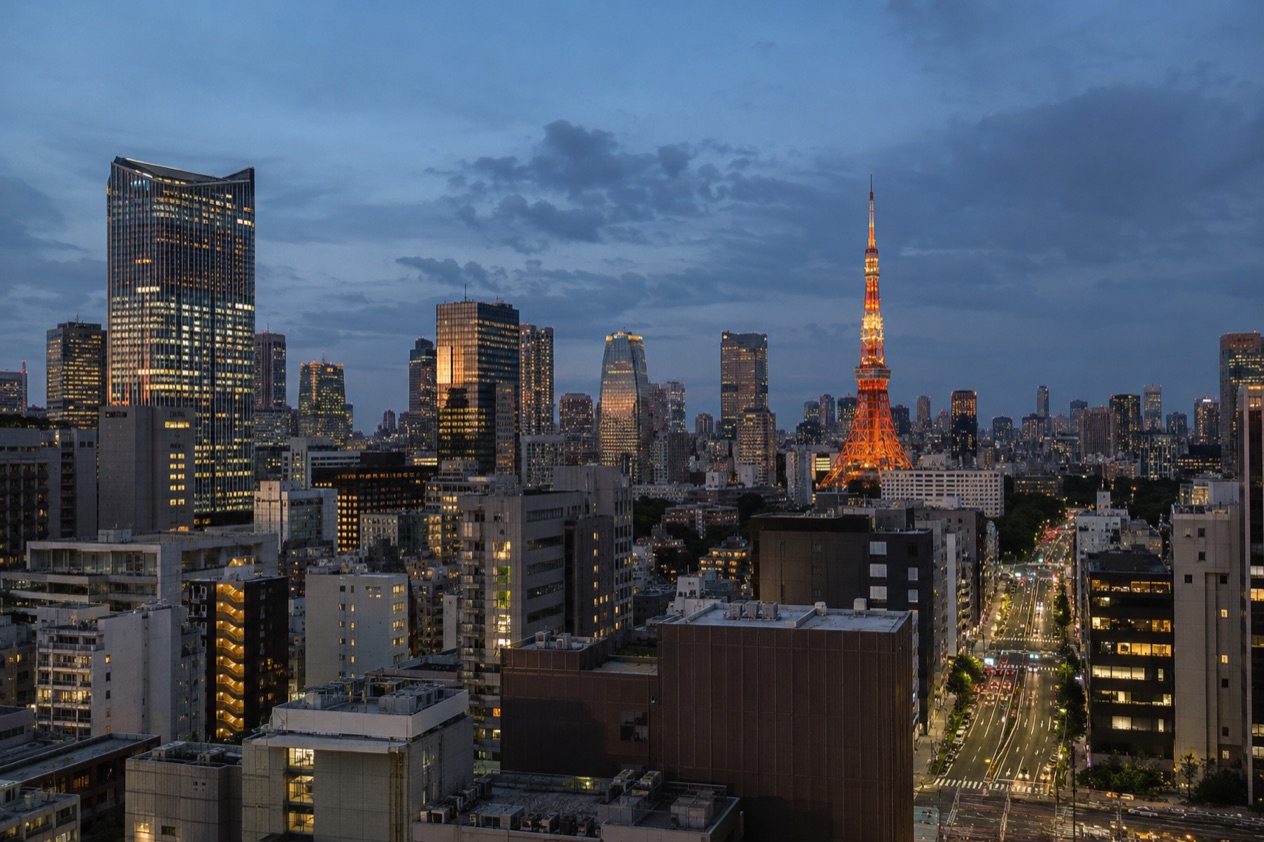
What is Roppongi like?
Roppongi is an expensive, polished corner of Minato ward where galleries, office towers and late-night bars share the same few blocks. It is known for its night life, which draws Tokyo residents and visitors from abroad alike, and that reputation shapes the evening mood far more than the daytime one.
The look of the district changed with two big developments. Roppongi Hills, a high-rise complex of offices, shops, restaurants and a museum, was completed in 2003. Tokyo Midtown followed in 2006 in neighboring Akasaka, and it includes the first Tokyo Ritz-Carlton Hotel. Together they gave the area a second identity, one of design, art and upscale dining, layered over the older entertainment streets.
Roppongi also has a quieter, residential side. The American School in Japan Early Learning Center sits in Roppongi Hills, and Roppongi High School, run by the Tokyo Metropolitan Government Board of Education, is in the district too. Behind the towers you find ordinary side streets where people live and go to school.
The district is loved by people who like to mix a museum afternoon with a long dinner and a late drink without changing neighborhoods.
Things to do in Roppongi
Roppongi Hills
Roppongi Hills is the center of the district and a place to wander for the shops, restaurants and the architecture of the complex itself, which was completed in 2003. Its hours run late, so it works for a morning coffee or for a stroll once the sky has gone dark and the towers are lit.
Treat it as a base for the rest of your day, since a museum, an observation deck and many places to eat are gathered here. Rain does not spoil the plan, because so much of it is indoors.
| Site | Open |
|---|---|
| Roppongi Hills | Daily, 07:00 to 03:00 the next day |
| Mori Art Museum | Wednesday to Monday 10:00 to 22:00, Tuesday 10:00 to 17:00 |
Mori Art Museum and Tokyo City View
The Mori Art Museum is in Roppongi Hills and shows contemporary art in galleries high above the street. The ticket also includes admission to Tokyo City View, also in Roppongi Hills, so one visit gives you both the exhibitions and a look out over the city.
The museum stays open until 22:00 most days, which makes it a natural way to spend an evening before dinner. Tuesday is the exception, with an earlier close, so plan around it.
The National Art Center, Tokyo
The National Art Center, Tokyo is the district’s other major art destination, and together with the Mori Art Museum it makes Roppongi a place where you can see a great deal of art in a single day. Wandering from one to the other lets you take in the streets between them, from office plazas to quiet residential corners.
Roppongi Art Night
Roppongi Art Night takes place every year on a Saturday at the end of March, running from 17:00 until 05:00. The district stays awake through the night for it, and art and the area’s night-owl character meet on the same streets.
If your trip falls at the end of March, it gives the neighborhood a different mood from any other weekend. Outside that date, the museums and the evening bars carry the district. Within reach of Roppongi are Akasaka, where Tokyo Midtown stands, and the upscale streets of Ginza, known for high-end restaurants and luxury shops.
Eating and drinking in Roppongi
Eating in Roppongi runs from restaurants in the towers to small izakaya, the Japanese pubs where plates arrive one after another beside a drink. Because the district is known for its night life, the kitchens and bars here keep late hours, and dinner often slides into a second stop.
Inside Roppongi Hills you find restaurants and cafés gathered under one roof, handy after a museum visit or when the weather turns. Roppongi Hills itself is open until the early hours, so a late meal does not mean a long search. Tokyo Midtown in neighboring Akasaka adds its own restaurants and cafés.
For a more local feel, step into the side streets. Izakaya serve small shared dishes such as yakitori (grilled chicken skewers), edamame, sashimi and fried items, with beer, sake or highballs. Ramen counters are a common late-night stop, and a bowl of noodles is a classic way to end an evening.
Cafés and tea rooms suit the daytime art route. A coffee and a pastry between the Mori Art Museum and the National Art Center is an easy rhythm for the afternoon, and nearby Ginza offers its own upscale dining if you want a change of scene.
Bars range from small counters pouring whisky and cocktails to larger rooms with music, and karaoke rooms are part of the evening landscape. Order what the person beside you is having, and let the evening unfold from there.
Staying in Roppongi
Roppongi suits travelers who want to be in the middle of art, dining and night life, and who do not mind that the evenings stay lively. It is an expensive part of Minato ward, and the lodging reflects that, from large towers and upscale hotels to smaller business-style places in the side streets.
Next door in Akasaka, Tokyo Midtown includes the first Tokyo Ritz-Carlton Hotel, which gives a sense of the upscale end of the market in this part of the city. In Roppongi itself, expect modern buildings and a mix of international visitors and residents.
The nights are the thing to weigh. The district is noted for its night life, so streets near the bars can be animated late. If you prefer to sleep early, a room set back from the main entertainment blocks, or in the residential streets, will feel different from one right above them.
Compared with Ginza, which is an upscale downtown area of high-end restaurants and luxury shops, Roppongi leans more toward art and evening entertainment. Compared with Akasaka, its neighbor, it has the stronger late-night pulse.
As a base, it works for visitors who like to walk out of the hotel to a museum in the morning and a bar in the evening. Four stations on three different subway lines serve the area, which gives you several ways out to the rest of Tokyo.
Getting to Roppongi
The subway is the way into Roppongi, and the district has several stations. Roppongi Station is served by the Tokyo Metro Hibiya Line and the Toei Oedo Line. Roppongi-Itchome Station is served by the Tokyo Metro Namboku Line, and Nogizaka Station by the Tokyo Metro Chiyoda Line.
The Hibiya Line runs from south-west Tokyo to the north-east, via Ebisu, Ginza, Akihabara and Ueno, so it connects Roppongi with several other districts along the way. From Shinjuku or Yoyogi, the Toei Oedo Line is the best way to come to Roppongi.
From Shibuya Station, Roppongi and Akasaka can be reached in about 10 minutes by train. A Toei public bus (T01) also runs east along Roppongi-dori from Shibuya station to Roppongi until about 21:00.
On foot, you can walk east from Shibuya to Roppongi via Roppongi-dori in about 40 minutes, a way to see the city between the two districts. Tokyo’s nearest airports are Haneda Airport, officially Tokyo International Airport, and Narita Airport, Japan’s largest international airport.
Good to know before you go
Roppongi is an expensive part of Tokyo, so budget for dining and drinks accordingly. Opening hours matter here: the Mori Art Museum closes earlier on Tuesday, while Roppongi Hills stays open until 03:00, so the museum belongs in your daytime or early evening plans and the late hours belong to the streets. Evenings are busy and the district stays awake for Roppongi Art Night at the end of March, so keep your plans flexible and keep an eye on your belongings in crowds.
Sources
- Wikipedia, Roppongi (https://en.wikipedia.org/wiki/Roppongi), checked October 11, 2026
- Wikivoyage, Tokyo/Roppongi (https://en.wikivoyage.org/wiki/Tokyo/Roppongi), checked October 11, 2026
- Japan National Tourism Organization, Tokyo (https://www.japan.travel/en/destinations/kanto/tokyo/), checked October 11, 2026
To plan your stay
- Best Time to Visit Japan: Cherry Blossoms, Autumn Colors, Weather and Festivals
- Where to Stay in Japan: Ryokan, Temple Stays, Capsule Hotels and the Best Cities to Base In
- Sending Luggage from the Airport in Japan: Hands-Free Travel, Hotel Delivery and Coin Lockers
- Know Before You Go to Japan: Entry, Money, Etiquette and Getting Around