
The boarding call for Tokyo goes out at a gate in Los Angeles or Chicago, and a whole plane of people shuffles toward a jet bound for the other side of the Pacific. Nonstop service runs from a good handful of American cities to the Tokyo airports, plus a few links from Honolulu to western Japan. Here is who flies where, and which runway you land on.
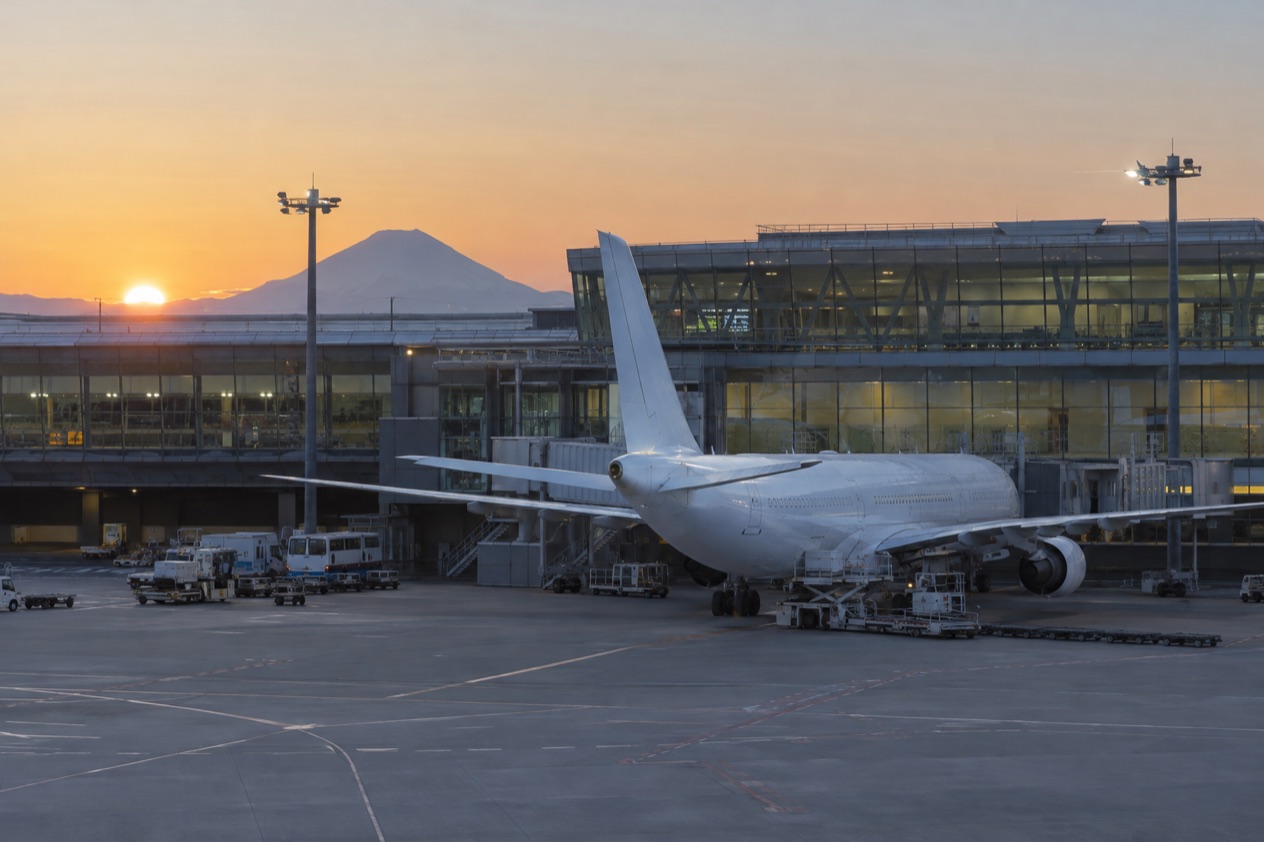
Which U.S. cities have nonstop flights to Japan?
Nonstop flights to Japan leave from the West Coast, the Midwest, Texas, the South, the East Coast and Hawaii, and nearly all of them end in Tokyo. Los Angeles has the widest choice, with several airlines landing at both Tokyo airports, while cities such as Atlanta, Detroit, Dallas/Fort Worth and Minneapolis/St. Paul reach Haneda on one airline each.
West Coast and Hawaii
Los Angeles, San Francisco and Seattle/Tacoma are the Pacific gateways. From Los Angeles, ANA runs three daily nonstop flights to Tokyo, using Haneda and Narita. Delta, American and United also fly Los Angeles to Haneda, and Zipair Tokyo flies it to Narita.
San Francisco sees two daily ANA nonstops to Tokyo, and United flies it to Haneda. Zipair Tokyo adds San Francisco and San Jose, California, flying both to Narita. Seattle has a daily ANA nonstop to Haneda, and Delta flies Seattle/Tacoma to the same airport.
Honolulu is the Hawaii link, with two daily ANA nonstops to Tokyo plus seasonal flights, and Delta and Zipair Tokyo flying there as well. Hawaiian Airlines also flies from Honolulu to Kansai International Airport, which makes it a useful way to reach Osaka and Kyoto without going through Tokyo first.
Midwest, Texas and the South
Chicago–O’Hare has two daily ANA nonstops to Tokyo, using Haneda and Narita, and United also flies it to Haneda. Houston has a daily ANA nonstop to Haneda, and Zipair Tokyo flies Houston–Intercontinental to Narita.
Dallas/Fort Worth connects to Haneda on American Airlines. Atlanta, Detroit and Minneapolis/St. Paul reach Haneda on Delta. For travelers in those cities, a direct flight means skipping a connection on the West Coast before the long Pacific crossing.
East Coast
New York has two daily ANA nonstops to Haneda, and American flies New York–JFK there as well. United flies Newark to Haneda. Washington, D.C. is served by a daily ANA nonstop to Haneda, and United flies Washington–Dulles to the same airport.
United also connects Haneda with Guam, which is a U.S. territory and a different kind of trip from a mainland-to-Tokyo flight. ANA also lists seasonal service from Narita to Vancouver, which is useful only if you are starting in Canada.
Which Japanese airports do they land at?
Almost every nonstop from the mainland U.S. lands at one of Tokyo’s two airports, Haneda or Narita, and the choice between them shapes the first hour of your trip. Haneda receives the flights of Delta, American and United, along with several ANA services, while Narita takes ANA, Zipair Tokyo and some other flights.
Haneda
Haneda is the airport that most of the big U.S. carriers use. Delta serves it from Atlanta, Detroit, Honolulu, Los Angeles, Minneapolis/St. Paul and Seattle/Tacoma. American flies there from Dallas/Fort Worth, Los Angeles and New York–JFK. United flies there from Chicago–O’Hare, Guam, Los Angeles, Newark, San Francisco and Washington–Dulles.
Once you arrive, Haneda is also a hub for flights within Japan. Air Do flies from it to Hokkaido cities such as Asahikawa, Hakodate, Kushiro, Memanbetsu, Obihiro and Sapporo–Chitose. Skymark serves Fukuoka, Kagoshima, Kobe, Naha, Sapporo–Chitose and Shimojishima. Solaseed Air flies to Kagoshima, Kumamoto, Miyazaki, Nagasaki, Naha and Oita, and StarFlyer flies to Fukuoka, Kitakyushu, Osaka–Kansai and Ube.
Narita
Narita sits in Chiba Prefecture, and an express train takes about an hour to reach Tokyo. It handles most major international destinations and many domestic airports. ANA flies it nonstop to Chicago–O’Hare, Honolulu, Los Angeles and San Francisco. Zipair Tokyo flies to Honolulu, Houston–Intercontinental, Los Angeles, San Francisco and San Jose, with charter flights to Orlando.
Onward flights from Narita go to Nagoya–Centrair and Osaka–Itami on ANA and JAL, and to Sapporo–Chitose on ANA. Jetstar Japan covers Asahikawa, Fukuoka, Kagoshima, Kochi, Kumamoto, Matsuyama, Miyazaki, Nagasaki, Naha, Oita, Osaka–Kansai, Sapporo–Chitose, Shimojishima, Shonai and Takamatsu. Peach flies to Amami Oshima, Fukuoka, Ishigaki, Kagoshima, Kushiro, Miyazaki, Nagasaki, Naha, Oita, Osaka–Kansai and Sapporo–Chitose. Spring Japan flies to Hakodate, Hiroshima and Sapporo–Chitose.
Kansai and beyond
Kansai International Airport is the gateway to western Japan, serving Kyoto, Osaka, Nara and Wakayama. It is about 50 minutes from Shin-Osaka high-speed train station and 1 hour 15 minutes from Kyoto Station. From the U.S., the nonstop here is Hawaiian Airlines from Honolulu, and StarFlyer flies from Kansai to Tokyo–Haneda.
Japan’s airport network stretches from Hokkaido in the north to Okinawa in the south, with Nagoya in central Honshu. Many international flights land throughout the country, including Tokyo, Osaka, Fukuoka and Naha on Okinawa Island, so a flight to Tokyo can be followed by a domestic hop to any of them.
| Airport | Location | Nonstop U.S. airlines named |
|---|---|---|
| Haneda | Tokyo | Delta, American, United, ANA |
| Narita | Chiba Prefecture | ANA, Zipair Tokyo |
| Kansai | Western Japan | Hawaiian Airlines (from Honolulu) |
Which airlines operate them?
Three U.S. airlines (Delta, American and United), two Japanese carriers (ANA and Zipair Tokyo) and Hawaiian Airlines operate the nonstops named here. Between them they cover the cities above, with ANA the one that appears at both Tokyo airports.
U.S. airlines
Delta flies to Haneda from Atlanta, Detroit, Honolulu, Los Angeles, Minneapolis/St. Paul and Seattle/Tacoma. American flies there from Dallas/Fort Worth, Los Angeles and New York–JFK. United has the longest list into Haneda, from Chicago–O’Hare, Guam, Los Angeles, Newark, San Francisco and Washington–Dulles.
Hawaiian Airlines is the one that goes to Kansai, flying from Honolulu. That makes it the nonstop pick for a trip that begins in Osaka or Kyoto rather than Tokyo.
ANA
All Nippon Airways is headquartered in Minato, Tokyo, and serves over 100 domestic and international destinations. It has been a Star Alliance member since October 1999. Its first scheduled international passenger service ran from Tokyo to Guam on March 3, 1986, and by the end of that year it had added Los Angeles and Washington, D.C.
Today it flies daily nonstops from Los Angeles (three), New York (two), Seattle (one), San Francisco (two), Chicago (two), Houston (one) and Washington, D.C. (one), plus two from Honolulu and seasonal flights. Onboard, the inflight magazine is Wingspan, also a free iPad app called Virtual Airport, and international flights have had women’s-only lavatories since February 2010.
ANA’s stopover program lets you explore over 40 destinations within Japan, and its ANA CARD U.S.A. Plus gives 5,000 bonus miles after the first purchase with the card.
Japan Airlines and Zipair Tokyo
Japan Airlines is headquartered in Shinagawa, Tokyo, with its main hubs at Narita and Haneda and secondary hubs at Kansai and Itami. It belongs to the Oneworld alliance and serves 60 domestic and 39 international destinations. On its Boeing 777-300ER aircraft, Business Class has Sky Suite seats in a staggered 2-3-2 setup with direct aisle access.
Zipair Tokyo flies from Narita to Honolulu, Houston–Intercontinental, Los Angeles, San Francisco and San Jose, with charter flights to Orlando. Competition among airlines keeps pushing ticket prices to Japan down.
Good to know before you go
The U.S. State Department rates Japan Level 1: Exercise Normal Precautions.
Ferries are the other way in from nearby countries. High-speed boats link Hakata and Busan, and slower Kampu ferries reach Osaka. Weekly sailings from Shanghai reach Osaka, Kobe, Nagasaki and Fukuoka. For travelers coming from the U.S., though, a nonstop flight is the way these routes begin. Ferry fares depend on the length of the crossing.
Sources
- Japan National Tourism Organization, how to get to Japan, airports, airlines (https://www.japan.travel/en/plan/getting-to-japan/), checked October 11, 2026
- Wikipedia, All Nippon Airways (https://en.wikipedia.org/wiki/All_Nippon_Airways), checked October 11, 2026
- Wikipedia, Haneda Airport, airlines and destinations (https://en.wikipedia.org/wiki/Tokyo_International_Airport#Airlines_and_destinations), checked October 11, 2026
- Wikipedia, Japan Airlines (https://en.wikipedia.org/wiki/Japan_Airlines), checked October 11, 2026
- Wikipedia, Kansai International Airport, airlines and destinations (https://en.wikipedia.org/wiki/Kansai_International_Airport#Airlines_and_destinations), checked October 11, 2026
- Wikipedia, Narita International Airport, airlines and destinations (https://en.wikipedia.org/wiki/Narita_International_Airport#Airlines_and_destinations), checked October 11, 2026
- ANA, flights to Tokyo (https://www.ana.co.jp/en/us/), checked October 11, 2026
- U.S. Department of State, Japan travel advisory (https://travel.state.gov/content/travel/en/traveladvisories/traveladvisories/japan-travel-advisory.html)
To plan your stay
- Best Time to Visit Japan: Cherry Blossoms, Autumn Colors, Weather and Festivals
- Things to Do in Japan: Kyoto Temples, Onsen, Street Food and Day Trips
- Where to Stay in Japan: Ryokan, Temple Stays, Capsule Hotels and the Best Cities to Base In
- Know Before You Go to Japan: Entry, Money, Etiquette and Getting Around