
The doors slide open after a long flight, and the arrivals hall at Narita fills with people checking phones, pulling out rail maps and trying to work out which of the trains below the terminal goes where they are going. Narita is the Chiba Prefecture airport that serves Tokyo for international and domestic flights, with three terminals and several rail lines running straight into the city. Knowing which terminal you land in and which train suits your hotel makes the first hour in Japan much calmer.
What is Narita Airport?
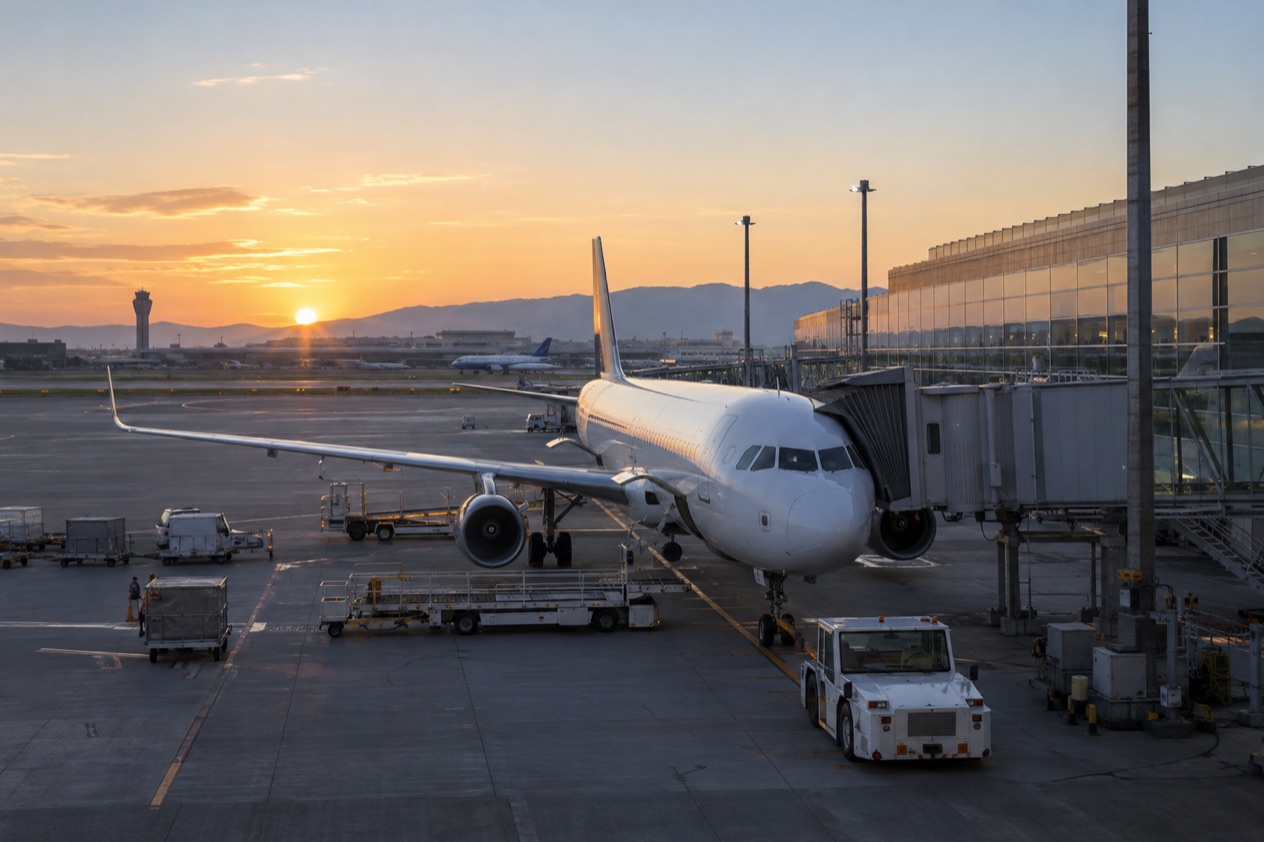
Narita International Airport is one of the two airports serving the Japanese capital, handling both international and domestic flights. Once you land, you are in the countryside of Chiba, and the skyline of Tokyo comes later.
A few things shape how the airport feels to use. Its main runway is among the longest in Japan, and a mandatory late-night curfew keeps aircraft from operating between midnight and 6 a.m. The site is large and still expanding, which is why you spend time walking between check-in halls, security and gates.
Narita and Haneda, the capital’s two airports
Haneda is the other airport, and it is described as the airport of Tokyo city itself: from international destinations it is now possible to arrive directly in the heart of Tokyo. Narita is the one set farther out, and it is the airport that many flights from North America and across Asia use. When you compare flights, look at which of the two airports a ticket lands at, because the ground journey and the neighborhood you reach first change with it.
The two airports are also linked for travelers who change planes or arrive at one and leave from the other. From Narita you can connect by rail to the Tokyo Monorail, which runs to Haneda via Hamamatsucho Station, so a switch between them is possible without leaving the rail network.
Other ways into Japan
Tokyo is not the only gateway. Kansai International Airport makes it possible to visit Japan without going through Tokyo at all, which suits a trip that starts in the Kyoto and Osaka area. Nagoya has Central Japan International Airport, known as Centrair, a hub for flights to and from cities in Asia and elsewhere in Japan.
Farther out, Fukuoka Airport sits so close to the city that you can reach Hakata, in the heart of Fukuoka, by train in five minutes after collecting your bags. Most prefectures have at least one airport, and low-cost carriers reach almost anywhere in the country.
Which terminals and airlines does it have?
Narita has three passenger terminals, numbered 1, 2 and 3, and each has its own railway station or shares one with a neighbor. Terminal 1 is the largest of the group by floorspace and has the most gates, Terminal 2 follows close behind, and Terminal 3 is the newer, lower-cost building that serves budget airlines.
| Terminal | Nearest station | Walk from station |
|---|---|---|
| Terminal 1 | Narita Airport Station | 5 minutes |
| Terminal 2 | Narita Airport Terminal 2・3 Station | 5 minutes |
| Terminal 3 | Narita Airport Terminal 2・3 Station | 10 minutes |
Terminal 1 and Terminal 2
Terminal 1 has forty gates across a floorspace of 463,000 square meters, and Terminal 2 has thirty-two gates across 391,000 square meters. Both are full-size international terminals, and the trains that reach the airport stop at stations built for them, so you step from the platform and walk to the check-in hall.
Terminals 2 and 3 share one rail stop, Narita Airport Terminal 2・3 Station, which the Skyliner and the Narita Express both call at, listed on the lines as Airport Terminal 2 Building Station. Terminal 1 has its own station, Narita Airport Station. Check your ticket for the terminal number before you choose a platform.
Terminal 3 and the low-cost airlines
Terminal 3 was built for low-cost carriers, and using it cuts facility costs by around 40 percent on international flights and 15 percent on domestic ones, which is how budget airlines keep fares down. It was voted best terminal for low-cost airlines in Asia by Skytrax in 2024.
It also has the largest airport food court in Japan, and the food court stays open around the clock. If your flight leaves early or a long layover leaves you hungry at an odd hour, that is the place to settle with a bowl of noodles or a rice set meal before heading for security.
Airlines and where they fly nonstop
For readers coming from the United States, All Nippon Airways flies nonstop to Chicago–O’Hare, Honolulu, Los Angeles and San Francisco, with seasonal service to Vancouver. Zipair Tokyo flies nonstop to Honolulu, Houston–Intercontinental, Los Angeles, San Francisco and San Jose, with charter flights to Orlando. Within Japan, several airlines connect Narita to other cities, which helps if you want to fly onward to Sapporo, Fukuoka or Okinawa without going back into Tokyo first.
| Airline | Nonstop domestic destinations from Narita |
|---|---|
| All Nippon Airways | Nagoya–Centrair, Osaka–Itami, Sapporo–Chitose |
| Japan Airlines | Nagoya–Centrair, Osaka–Itami |
| Jetstar Japan | Asahikawa, Fukuoka, Kagoshima, Kōchi, Kumamoto, Matsuyama, Miyazaki, Nagasaki, Naha, Ōita, Osaka–Kansai, Sapporo–Chitose, Shimojishima, Shonai, Takamatsu |
| Peach | Amami Oshima, Fukuoka, Ishigaki, Kagoshima, Kushiro, Miyazaki, Nagasaki, Naha, Ōita, Osaka–Kansai, Sapporo–Chitose |
| Spring Japan | Hakodate, Hiroshima, Sapporo–Chitose |
How do you get to Tokyo?
Travelers take a train: three rail lines serve Narita Airport, the Narita Sky Access line, the Keisei line and the JR line, and they feed two named express trains, the Keisei Skyliner and the JR East Narita Express. Airports in major Japanese cities are also served by buses and taxis, and generally have car rental counters.
| Train | Terminal stops | Fastest time |
|---|---|---|
| Keisei Skyliner | Narita Airport Station (Terminal 1), Airport Terminal 2 Building Station (Terminals 2 & 3) | 36 minutes to central Tokyo; about 43 minutes between Keisei Ueno and Terminal 1 |
| JR Narita Express (N’EX) | Narita Airport Station (Terminal 1), Airport Terminal 2 Building Station (Terminals 2 & 3) | 53 minutes between Tokyo Station and Terminal 1 |
| Morningliner and Eveningliner | Terminal 1 or Keisei Narita | 72 minutes from Keisei Ueno |
Keisei Skyliner to Ueno
The Skyliner is a limited express that connects the airport to Keisei Ueno Station, with stops at Nippori Station and at the airport terminals. Some trains also stop at Aoto Station and Shin-Kamagaya Station, the latter added to improve access to Kashiwa and Matsudo in Chiba Prefecture. Security guards ride on board.
Skyliner e-tickets can be purchased on the official website, and a discount ticket exists for the run between Narita Airport Station and Keisei Ueno Station. A Face Check in Go service lets passengers board at a discount through facial recognition. Two passes also touch this line: the Shitamati Biyori Pass for unlimited one-day travel on all Keisei lines in Tokyo, and the Greater Tokyo Pass, which covers three days of rides on railways, streetcars and buses of many companies in the Kanto area.
JR Narita Express to Tokyo, Shibuya and Shinjuku
The Narita Express, shortened to N’EX, is a JR East limited express that has served the airport since 1991 and reaches Tokyo, Shibuya, Shinjuku and the west of the city. Its stops include Tokyo Station, Shinagawa, Shibuya, Shinjuku, Yokohama and Ofuna, plus Narita Station and Chiba Station near the airport end. Trains run about every half hour in the morning and evening and hourly through the middle of the day.
Every seat on the Narita Express is reserved, with Standard and Green (first class) cars on board. Because it runs through to Shinagawa, Shibuya and Shinjuku, it can put you close to a hotel on the west side without a change in Tokyo. The average ride between Tokyo Station and the airport falls between 55 minutes and an hour.
Other Keisei and JR trains
The Keisei Access Express serves the airport terminals along with Shin-Kamagaya, Higashi-Matsudo, Keisei Takasago, Aoto, Nippori and Keisei Ueno. The Keisei Main Line stops at Keisei Narita, Keisei Funabashi, Keisei Takasago, Aoto, Nippori and Keisei Ueno, so it works for travelers staying in those parts of the city.
The JR Line from the airport also serves Tokyo, Shinagawa, Shibuya, Shinjuku, Ikebukuro, Yokohama and Ofuna. For onward connections, travelers can transfer to the Toei Asakusa Line, the Keihin Express Line, the Tsukuba Express, or the Tokyo Monorail to Haneda via Hamamatsucho Station.
Good to know before you go
The curfew between midnight and 6 a.m. means no flights take off or land overnight, so late arrivals and early departures cluster around those edges of the day. Narita sits far from the center of Tokyo, and the trains here are a real part of the trip, so a stop at a station kiosk or the food court in Terminal 3 before you board is a calm way to begin. Typhoon season can disrupt flights in Japan, and a delayed arrival can shift your train plans, so keep your hotel name and address handy.
Sources
- Japan National Tourism Organization, how to reach the city from each international airport (https://www.japan.travel/en/plan/airport-access/), checked October 11, 2026
- Narita International Airport, Access by rail (https://www.narita-airport.jp/en/access/train/), checked October 11, 2026
- Keisei Electric Railway, Skyliner (https://www.keisei.co.jp/keisei/tetudou/skyliner/us/), checked October 11, 2026
- Wikipedia, Keisei Skyliner (https://en.wikipedia.org/wiki/Keisei_Skyliner), checked October 11, 2026
- Wikipedia, Narita International Airport, airlines and destinations (https://en.wikipedia.org/wiki/Narita_International_Airport#Airlines_and_destinations), checked October 11, 2026
- Wikipedia, Narita Express (https://en.wikipedia.org/wiki/Narita_Express), checked October 11, 2026
To plan your stay
- Best Time to Visit Japan: Cherry Blossoms, Autumn Colors, Weather and Festivals
- Things to Do in Japan: Kyoto Temples, Onsen, Street Food and Day Trips
- Where to Stay in Japan: Ryokan, Temple Stays, Capsule Hotels and the Best Cities to Base In
- Know Before You Go to Japan: Entry, Money, Etiquette and Getting Around