
You step off the plane at the small airport on Miyako Island and the first thing that stands out is how low and flat the land is, a green patchwork of sugarcane fields running toward a rim of pale sand and reef. Roads slip between the fields and then open suddenly onto the water.
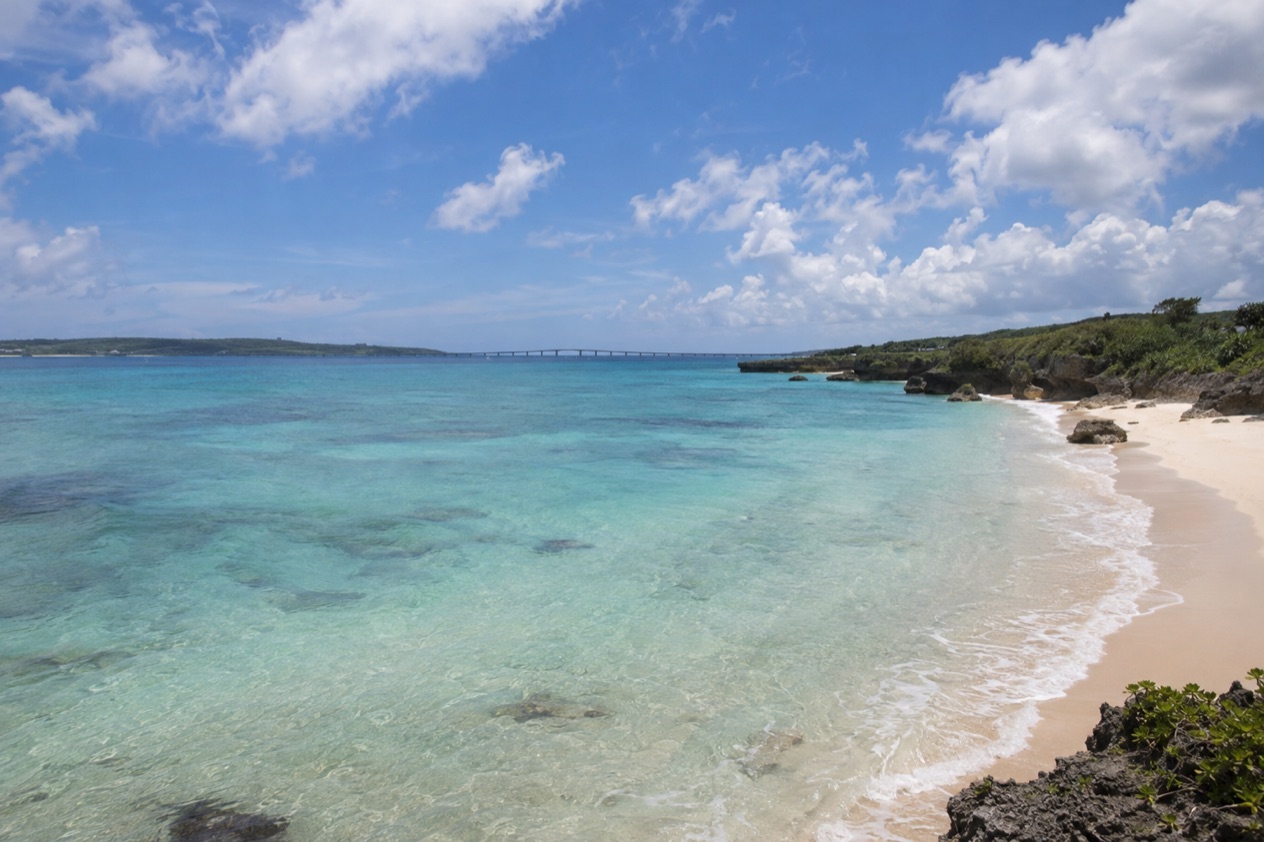
Is visiting Miyako Island beaches worth it?
The Japan National Tourism Organization describes Miyako as a peaceful island getaway known for sun, beaches, golf, cycling and diving in coral reefs, and that list is a fair picture of how people spend their time here. It suits couples, divers, cyclists, golfers and anyone who likes to organize a day around a shoreline rather than a checklist of sights.
What sets Miyako apart from the other islands of Okinawa Prefecture is its shape and its setting. The island sits between Okinawa Island and the Yaeyama Islands, part of the Ryukyu chain, and it is by far the largest of the three main islands of the Miyako group.
Its highest point reaches only about 377 feet, so there are no mountains blocking the horizon. Everything feels open, and the coast is never far from wherever you happen to be.
Miyako is also linked by bridges to smaller neighbors, Ikema and Kurima, which means a beach day can turn into a short island-hopping drive without a ferry. That is a different rhythm from places where every extra island means a boat schedule.
The honest caveat is that this is a place you reach by air. Miyako Airport has direct flights from Tokyo Haneda, Osaka Kansai, Nagoya Centrair, Naha, Ishigaki and Tarama, so the trip takes a little planning, and it rewards visitors who stay long enough to settle into the pace.
If you only want a single quick beach photograph, the journey may feel like a lot. If you want several unhurried days by the water, it is exactly the right kind of trip.
Birdwatchers have a reason to come too. BirdLife International recognizes the Miyako Islands as an Important Bird Area, because they support resident Ryukyu green pigeons and migrating whimbrels. Even on a beach day, the fields and the shoreline scrub have a second layer of life going on that is worth a glance.
What to see at Miyako Island beaches
Sand, reef and open water change from one stretch of coast to the next, and the pleasure is in noticing how. These are the parts of the visit that give the shoreline its character.
The reef edge and the coral
Diving in coral reefs is one of the things Miyako is known for, and the reef shapes what you see from the shore as well. Look for the line where the color of the water shifts, from pale near the sand to a deeper blue farther out.
You do not have to get in the water to enjoy it. Walking the tide line, you can pick out bits of weathered coral, shells and smooth fragments of reef rock that the waves have carried in.
The bridge to Ikema Island
A bridge connects Miyako Island to Ikema Island, a small island with a population of 801 people. Crossing it is part of the experience, since the road runs out over open water and you can watch the color of the sea change beneath you. On the far side, the scale shrinks to fishing harbors, low houses and quiet lanes.
Ikema suits a relaxed afternoon in a car or on a bicycle, with stops wherever the coast looks inviting. Come with the idea of looking rather than ticking things off. The pleasure is the contrast between the broad main island and this small community at the end of the bridge.
Kurima and the smaller islands
Kurima is the other small island linked to Miyako by a bridge, and it adds a second excursion to the same base. Together with Ikema, it shows how the group works as a set of neighbors you can reach by road. The drive between them lets you see the island coastline from different angles, and each crossing gives a fresh view of the water.
Irabu Island and Tarama Island complete the list of major islands in the group. Tarama is separated from the others by a two-hour boat ride or a short flight, so it belongs to a longer trip rather than a beach-day detour.
The coast road around the island
Driving around Miyako Island takes three to four hours, according to the Japan National Tourism Organization, which makes a loop of the coast a good way to see how varied the shoreline is. The land is low, the roads pass through sugarcane and scattered villages, and the sea keeps appearing between the fields. Stop where a side road drops to the shore and you often find a stretch of sand with almost nothing built on it.
Pair the loop with the idea of sampling rather than finishing. A few beaches visited slowly say more about the island than a dozen glimpsed through a car window, and the flat terrain means you can see the line of surf from a long way off.
When to visit Miyako Island beaches
The island is a subtropical getaway in the Pacific, and the beach season belongs to the warmer part of the year, when the idea of a day by the water makes the most sense. Summer is when people picture Miyako, with long days of sun, a bright sky and the shoreline as the center of every plan.
Outside the height of summer, the island shifts to a different kind of visit. Cycling, golf, drives along the coast and long walks on the sand all work without any need to get in the water. A cooler season trip suits travelers who want the scenery and the quiet more than a swim, and it leaves more room for the island’s other pastimes.
Over the course of a single day, the beaches take on very different looks. The shoreline in full sun is bright and flat, with the reef showing as bands of color in the shallows. When the light softens, the same sand turns warmer, and the sky over the open sea becomes the main attraction. Bring the patience to see a beach more than once if you can.
Weather is the factor to keep in mind when you plan. Okinawa Prefecture has its rainy periods and its typhoon season, and a day on the sand depends on the sky. Build a little slack into the schedule, so that a gray day can become a cycling or driving day, a golf round or a rest, and the beach days can fall on the brighter ones.
Birdwatchers have their own calendar. The migrating whimbrels that make the islands an Important Bird Area pass through at certain times of year, while the Ryukyu green pigeons live on the islands all the time. If birds interest you, a visit built around the migration adds another reason to look up from the water.
Tips for your visit
Getting around is the first thing to settle. Local buses on Miyako are not easily accessible, and some hotels provide shuttles, but the Japan National Tourism Organization points to renting a car or taking a taxi as the best way to get around.
Plan your time around the size of the island. The loop around the coast takes three to four hours by car, which leaves room for stops, and the island is about 61 square miles in all. A first visit can fit the main coast, one bridge crossing and a few unhurried hours on the sand into two or three days, and more time lets you add diving or cycling.
Pack for a day outdoors in a sunny climate. Sun protection, a hat, sturdy sandals for walking on rough shoreline and a water bottle are all reasonable, along with a swimsuit and a towel if you plan to be in the water.
Combine the beaches with the other things Miyako is known for. Cycling suits the flat land, golf has a place on the island, and the diving is centered on the coral reefs.
For families and travelers who prefer a gentler pace, the main thing is to plan around the car. With your own transport you can stop when someone is tired and choose the stretch of shoreline that suits your group. If you are thinking of a bridge excursion to Ikema or Kurima, it fits into a day without needing a boat.
Think about how you arrive. Miyako Island can be reached only by plane, with direct flights from Tokyo Haneda, Osaka Kansai, Nagoya Centrair, Naha, Ishigaki and Tarama. Those connections let you add Miyako to a longer Japan itinerary as a final stop of sand and sea before heading home.
Good to know before you go
Miyako is a place to slow down, so give the trip enough days to enjoy it. The coast is a natural setting, and the usual habits of care apply: respect the reef, take your litter with you and follow any signs posted at a beach.
Because rain and typhoons can shape a trip to Okinawa Prefecture, keep your plans loose and your flights flexible where you can. Carry some cash and a card for small purchases, since a beach day often takes you away from larger towns.
Sources
- Wikipedia, Miyako Islands (https://en.wikipedia.org/wiki/Miyako_Islands), checked October 11, 2026
- Japan National Tourism Organization, Miyako Island (https://www.japan.travel/en/destinations/okinawa/okinawa/miyako-island/), checked October 11, 2026
- Wikivoyage, Miyako Islands (https://en.wikivoyage.org/wiki/Miyako_Islands), checked October 11, 2026
To plan your stay
- Best Time to Visit Japan: Cherry Blossoms, Autumn Colors, Weather and Festivals
- Where to Stay in Japan: Ryokan, Temple Stays, Capsule Hotels and the Best Cities to Base In
- Sending Luggage from the Airport in Japan: Hands-Free Travel, Hotel Delivery and Coin Lockers
- Know Before You Go to Japan: Entry, Money, Etiquette and Getting Around