
Steam drifts from the old wooden bathhouse at Dogo Onsen, bathers pad along the street in yukata (light cotton robes), and a little diesel tram rattles past on its way through town. Matsuyama is the kind of city where a hot spring sits a few tram stops from a hilltop castle, and where a poet’s name turns up on postcards, sweets and station signs. It suits travelers who like bathing, strolling and eating well on Shikoku more than ticking off a list of big sights.
Where is Matsuyama and what is it like?
Matsuyama is the capital of Ehime Prefecture, on the island of Shikoku, and it is the largest city on that island. The population is an estimated 494,100, which makes it a real city with department stores, shopping arcades and a busy rail and tram network, yet one that still revolves around two things you can see from almost anywhere: the hot springs and the castle on its hill.
The pace is that of a regional capital rather than a metropolis. Mornings begin with people heading to work on trams and bicycles, lunch hours fill the covered arcades, and evenings drift toward izakaya (casual pubs) serving local seafood and citrus drinks. Ehime is known across Japan for its mikan, the small mandarin oranges, and you notice them everywhere, as juice, jelly, sweets, even soft drinks sold from vending machines and shop counters.
Matsuyama also carries a literary streak. The novelist Natsume Soseki set his comic novel Botchan here, and the haiku poet Masaoka Shiki grew up in the city. Their presence shows up in the tram that carries the novel’s name, in museums and in small monuments along the streets. If you enjoy a place that wears its stories lightly, you will feel at home.
Who may not love it? It rewards people who like a bath, a walk, a bowl of noodles and a day with no hurry. It also works as a base for the rest of Ehime and as a gateway between the Seto Inland Sea and the interior of Shikoku.
What is there to do in Matsuyama?
Matsuyama gives you three big reasons to come: the hot springs of Dogo Onsen, the castle above the city, and the old tram that links the neighborhoods. What sets it apart from other Shikoku cities is how much of its daily life is tied to bathing and to literature, and how easily you can see all of it on foot and by tram in a single stay.
Dogo Onsen and its wooden bathhouse
Dogo Onsen is a hot spring in the city of Matsuyama, and its bathhouse is the image people carry of the place. Dogo Onsen Honkan is a Meiji Period wooden public bath dating from 1894, a layered building of timber and tile with a roof lantern that glows after dark. The springs themselves are among the oldest in Japan, and one source describes the bathhouse as thought to be the oldest in the country, with a history stretching back over 3,000 years.
One thing to know before you plan around it: renovation works that began in January 2019 have partially closed the Honkan. Two small first-floor baths remain open, one for each gender, while the rest of the building is closed.
Even so, the streets around the bathhouse are pleasant to wander. The covered arcade nearby is lined with shops selling towels, citrus sweets and souvenirs, and the district is a natural place to end an afternoon with a bath and a slow dinner.
Matsuyama Castle on its hill
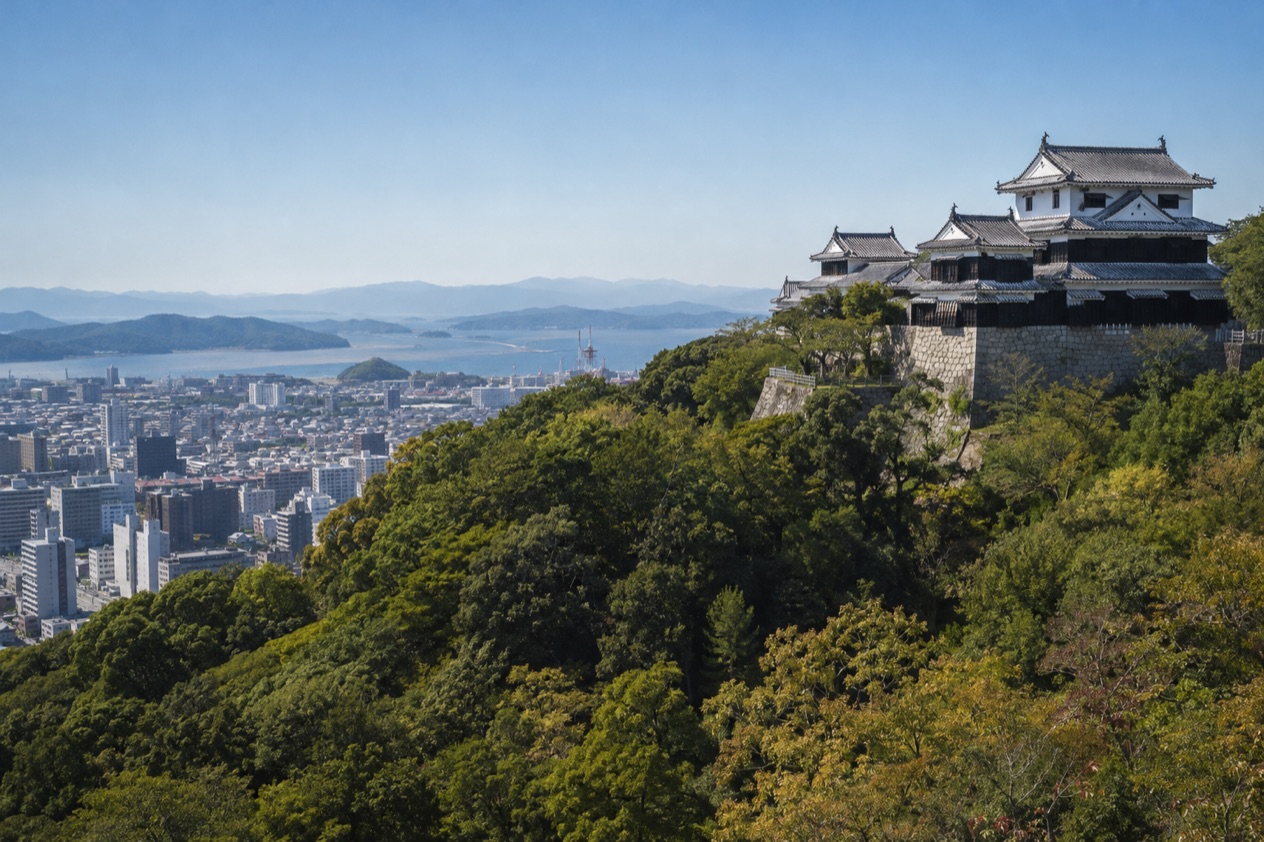
Matsuyama Castle is a popular tourist spot, and it dominates the city’s skyline from its hilltop. The name is shared with several other castles in Japan, including ones in Takahashi in Okayama and Yoshimi in Saitama, so it helps to look for Matsuyama Castle in Ehime, also called Iyo Matsuyama. What you come for is the keep with its white walls and dark roofs, the stone walls below it, and the view over the rooftops of the city.
A visit is as much about the grounds as the keep. You pass stone ramparts, gates and quiet corners where locals sit and look out over the city.
The Botchan Ressha tram
The Botchan Ressha is a recreation of the old steam-powered trams that once ran in Matsuyama, though the modern version runs on diesel. It takes its name from Soseki’s novel, and its small, old-fashioned carriages make the ride feel like a trip into a storybook. For visitors it is more of an experience than a means of transport, a way to see the streets between the center and the hot spring district while the conductor and the little engine carry on in period style.
It suits anyone who likes a bit of whimsy, and it pairs well with the literary side of the city. Think of it as part of the outing to Dogo Onsen rather than a separate attraction, and give yourself time to enjoy the carriage itself.
How many days do you need in Matsuyama?
A long weekend is enough to see the essentials, and a few extra days let you slow down and reach other parts of Ehime. With two days, you can fit the castle, the tram and an evening at Dogo Onsen with time left over for the arcades and a long dinner of local seafood.
A short stay works like this. Spend a morning on the castle hill and the streets around it, then take the Botchan Ressha toward the hot spring district in the afternoon.
Save the evening for the baths that remain open and for a walk through the lantern-lit lanes. A second day can go to museums connected with Soseki and Shiki, to the covered shopping streets, and to an unhurried meal at a local izakaya, where citrus turns up in drinks, sweets and sauces.
With more time, you can lean into the rest of the region. Matsuyama sits on the Seto Inland Sea, and Hiroshima is reachable by ferry, so a crossing makes a memorable way to leave or arrive. Elsewhere in Ehime, small towns of old wooden merchant houses, such as Uchiko, give a different pace, and Shikoku’s pilgrimage temples are scattered across the island for those who want to follow part of the route.
A week lets you treat Matsuyama as one stop on a Shikoku loop, with time for the cities and countryside around it. If you are short on time and arriving by plane, a night or two is still enough to see what the city does best, which is combine a hot spring, a castle and a good meal in a single day.
Where to stay in Matsuyama
The two natural bases are the Dogo Onsen district and the city center, and the choice depends on whether you want to be near the baths or near the shops and stations. Staying near Dogo Onsen puts you among bathhouse lanes, small inns and a ryokan atmosphere, where guests stroll in yukata after dinner. It suits couples, travelers who plan to bathe more than once, and anyone who wants the evening feel of an onsen town.
The city center around the castle hill and the shopping arcades suits people who want restaurants, bars and transport close by. Here the hotels are business-style and the streets stay lively into the evening, with izakaya and noodle shops within reach. It is a sensible choice for a short stay, for anyone arriving late or leaving early by train or ferry, and for travelers who prefer a regular hotel room to a traditional inn.
A third option is to stay near Matsuyama Station if your plans revolve around the JR line, for example a trip to or from Okayama. Because the tram connects the main districts, you are never far from the castle or the baths wherever you sleep. If you want to try both worlds, spend a night in a ryokan near Dogo and the rest in a city hotel.
How do you get to Matsuyama and get around?
Travelers arrive by air, by train or by ferry. A flight from Haneda Airport in Tokyo to Matsuyama Airport takes about 1 hour 30 minutes, and flying from Osaka in the Kansai region takes no more than 50 minutes. Those two routes make Matsuyama an easy add-on to a trip that starts in either city.
By rail, a limited express train on the JR Seto-Ohashi/Yosan Line runs from Okayama Station to Matsuyama Station in 2 hours 30 minutes. If you hold a Japan Rail Pass, travel on JR trains is covered, except accommodation on the Sunrise Seto overnight train to Matsuyama, where you can book a carpeted floor space at no charge.
From Hiroshima, you can take the Setonaikaikisen vehicle ferry or the Super Jet Ferry to Matsuyama Port. Arriving across the Inland Sea gives you a sense of the geography that the train and plane skip, and it is a good fit for travelers linking Matsuyama with Hiroshima.
Once in the city, the tram network and the Botchan Ressha link the center with the Dogo Onsen district, and the castle hill and shopping arcades are places you explore on foot. Taxis and rental cars are other ways to move around, and a car opens up the countryside of Ehime beyond the city.
When is the best time to visit Matsuyama?
Matsuyama is a city for walking and bathing, so the seasons that suit it are the ones in which you want to be outdoors in the morning and in hot water at night. Spring brings cherry blossoms to castle grounds across Japan, and the hill around Matsuyama Castle is the kind of spot where people gather to see them, though bloom dates vary from one spring to the next. Autumn offers the same pleasures with turning leaves along the hill paths and a cooler evening for a bath.
Winter has its own appeal in Ehime, the season of mikan oranges, when citrus is everywhere in shops and on tables, and a soak at Dogo Onsen suits the cold. Summer in Japan can be hot and humid, and the rainy season and typhoon season affect parts of the country in their turn, so a summer visit calls for flexible plans, with the baths and indoor museums as fallbacks on wet days.
For festivals, Matsuyama has its own calendar of local events through the year, and these are worth asking about locally when you book, since dates move. Because the city is not defined by one single peak week, you can usually plan around your own preferences, choosing blossom, leaves or citrus, and fit in the castle, tram and baths at any time.
Good to know before you go
Matsuyama is an easy city to read once you know its layout: a castle hill in the middle, the hot spring district a tram ride away, and the arcades in between. Bring a small towel if you plan to use public baths, since bathhouse habits in Japan include washing before you enter the water. Rain can arrive in any season, so a light rain jacket is useful for the days you spend between the castle grounds and the tram, and a flexible plan lets you swap an outdoor morning for an indoor afternoon.
Sources
- Japan National Tourism Organization, Matsuyama (https://www.japan.travel/en/destinations/shikoku/ehime/matsuyama-and-around/), checked October 11, 2026
- Wikipedia, Matsuyama, Ehime (https://en.wikipedia.org/wiki/Matsuyama,_Ehime), checked October 11, 2026
- Wikivoyage, Matsuyama (https://en.wikivoyage.org/wiki/Matsuyama), checked October 11, 2026
- Wikipedia, Dōgo Onsen (https://en.wikipedia.org/wiki/D%C5%8Dgo_Onsen), checked October 11, 2026
- Wikipedia, Matsuyama Castle (https://en.wikipedia.org/wiki/Matsuyama_Castle), checked October 11, 2026
To plan your stay
- Best Time to Visit Japan: Cherry Blossoms, Autumn Colors, Weather and Festivals
- Where to Stay in Japan: Ryokan, Temple Stays, Capsule Hotels and the Best Cities to Base In
- Sending Luggage from the Airport in Japan: Hands-Free Travel, Hotel Delivery and Coin Lockers
- Know Before You Go to Japan: Entry, Money, Etiquette and Getting Around