
At dusk in Matsue, the sky over Lake Shinji turns copper and the few reeds along the shore stand out as dark brushstrokes against it. People line up along the water to watch the sun go down, while a small boat slides under a bridge on the castle moat.
This is an old castle town built around water, with a dark, many-roofed keep, quiet lanes and a bowl of lake clams on the table. It suits travelers who like to walk, look and linger rather than tick off sights.
Where is Matsue and what is it like?
Matsue is the capital city of Shimane Prefecture, in the Chugoku region of Honshu, and it sits between Lake Shinji and an inner sea, joined by a river and a web of canals. That water is why the town is often called the City of Water. Its center is an old castle town, not a skyline of towers, and the lake is never far from view.
The pace is gentle. Mornings begin with mist over the water, and the day moves between the castle grounds, the moat, a few small museums and the cafés along the river. Much of the town’s character comes from its writers and tea drinkers.
Lafcadio Hearn, who took the Japanese name Koizumi Yakumo and wrote about Japan for Western readers, lived here, and his former home is still a place to visit. Tea, and the sweets that go with it, are part of daily life.
Matsue is a good fit for travelers who enjoy a slower trip, who like old buildings and water views, and who would rather spend an evening beside a lake than in a nightlife district. It may feel too quiet for someone who wants a big-city whirl, department stores and late-night crowds. It makes a calm counterweight to the busier cities of Honshu, and it rewards people who look closely at small things: a roof tile, a lantern, a bowl of broth.
The city has a population close to 200,000, large enough to have a proper station, shopping streets and a lively food scene, yet small enough that the center feels like a town. Beyond it lie shrines, onsen (hot spring) villages and the wider Shimane countryside, the kind of landscape that makes people stay an extra day.
What is there to do in Matsue?
Matsue’s big reasons to come are a castle that survived intact, a samurai quarter, the lake at sunset and a table built on what the lake and sea provide. Together they make a town that is less about a single headline sight and more about the rhythm of the water.
Matsue Castle
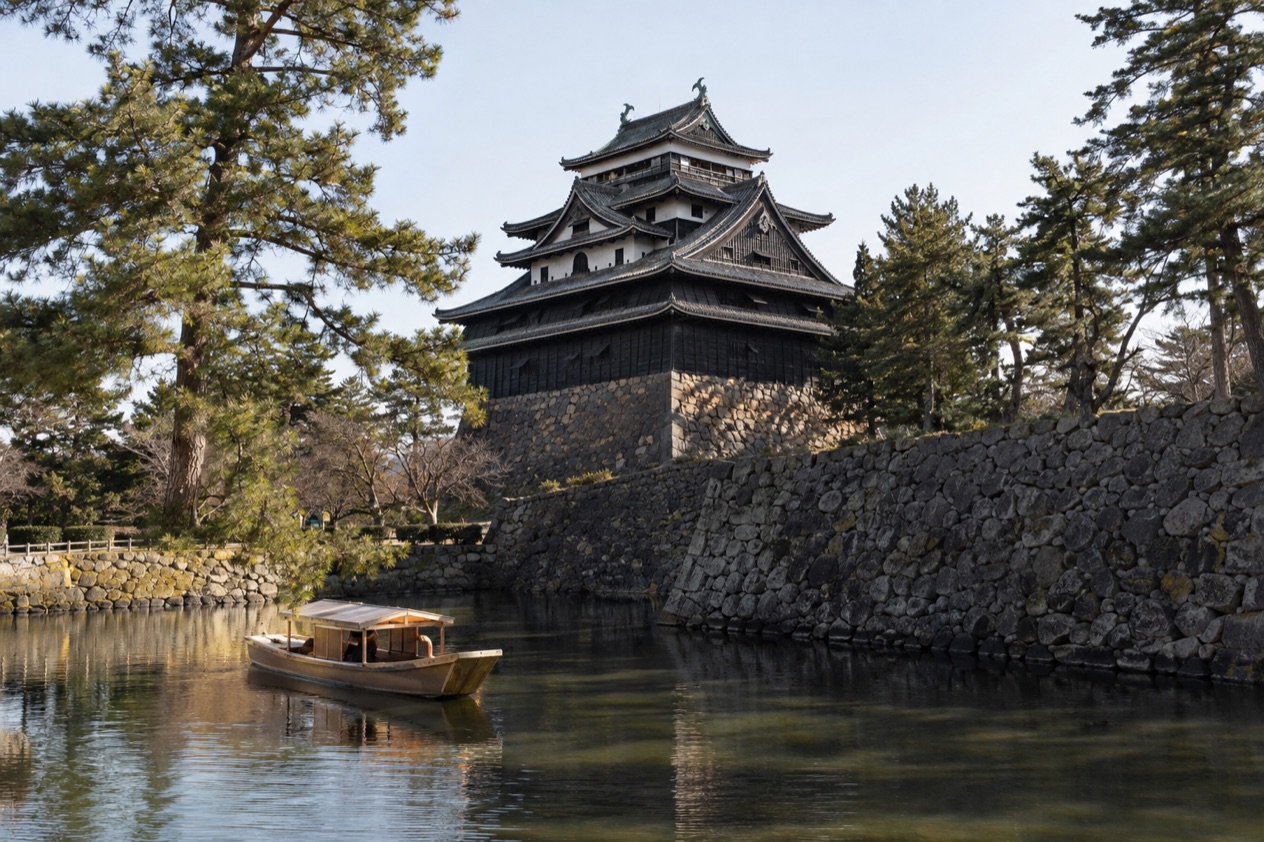
The black keep of Matsue Castle is one of only twelve original castles left in Japan, with a donjon (tenshu) that has been kept intact since 1611. Among those twelve it is the second largest, the third tallest and the sixth oldest. Seen from the grounds, its dark wooden walls and layered roofs look weighty and practical, built for defense rather than ornament.
Inside, you climb through plain timber floors, past old armor and weapons, to a top level with views across the town. The castle grounds are shaded by old pines and stone walls, and the moat around them is part of the visit. Allow time for the grounds as well as the keep, and for the sweets shops and tea houses nearby.
The moat, the canals and the samurai quarter
The water that rings the castle is what gives Matsue its nickname, and seeing it from a boat is one of the town’s pleasures. The low bridges, willows and old stone embankments look different from the surface than from the street. You pass the backs of old houses, gardens and the castle’s walls from an angle that most walkers never see.
On the moat’s edge, the samurai district keeps rows of former warriors’ residences, with gates, plastered walls and gardens. A few are open to the public and show how a retainer’s household was arranged: a tatami room, a veranda onto a small garden, a kitchen. It is a place for slow looking, not for a checklist, and it sits well with a stop at a tea house afterward.
Lake Shinji at sunset
Matsue’s lakeshore is where the day ends. People gather along the water as the sun drops, and the sky moves through orange, pink and violet while the small island in the lake becomes a silhouette. Photographers and couples take their places along the promenade, and the evening feels like a shared, unhurried ritual.
The lake is also the source of a local specialty, shijimi, small clams served in miso soup and in other dishes. Tasting a bowl is a simple way to connect what you saw at dusk with what you eat at dinner. Seafood from the nearby sea and the region’s sake round out the table.
Tea, sweets and small museums
Matsue has a long habit of tea. Tea ceremony, matcha and wagashi (traditional sweets, often shaped like flowers or leaves) are part of local life, and many cafés near the castle serve a bowl with a sweet on the side. Sitting with one in a quiet room is as much a sight as any monument.
Add to this the museums and house museums tied to the city’s history and its literary past, and you have a day of indoor stops for when the weather turns gray. Matsue is a town where a wet afternoon is not a loss, because the tea rooms, galleries and old houses are made for it.
How many days do you need in Matsue?
Two days is a comfortable stay in Matsue, and a long weekend lets you add the countryside around it. The core of the town fits into a day: the castle and its grounds, the samurai quarter, a moat boat, a tea stop and the lake at dusk. Nothing has to be rushed, and the evening is best spent beside the water.
With a second day, the town opens up. You can return to a house museum or garden that caught your eye, wander the shopping streets near the station, linger over a long lunch of local seafood, or take an unplanned walk along the river. A second night also lets you see the lake in morning mist as well as at sunset, which changes the feel of the place.
If you have three or four days, Matsue works well as a base for the wider Shimane and Chugoku area. Shrines, onsen villages and art museums lie within the region, and a night in a ryokan (a traditional inn, where you sleep on futons laid over tatami) or an onsen town gives a very different rhythm from a city hotel.
Matsue also fits into a longer loop through western Honshu. From Okayama the trip takes 2 hours and 40 minutes by train, and Okayama itself is on the shinkansen line, so Matsue can be a calm stop between larger cities. A traveler coming from the south might spend a night here before moving on, and one with more time can linger, because the town gets better the longer you stay.
Where to stay in Matsue
The choice in Matsue comes down to three kinds of base: near the station, along the lakeshore, or in an onsen setting outside the center. Each gives a different evening, and the town is small enough that your choice shapes your mood more than your logistics.
Staying near the station puts you close to the shopping streets, restaurants and the arrival point for trains and buses. It suits travelers who move on early the next day, or who want a wide choice of places to eat after dark. The area has the practical feel of a regional city center, with business hotels and casual dining.
The lakeshore is for people who want sunset on their doorstep. Rooms with a view of Lake Shinji let you watch the light change from your window, and the promenade is just outside. It is a good choice for couples and for anyone who came to Matsue for the water more than for sightseeing, and it makes mornings pleasant as well.
The castle area suits travelers who want to be among the old streets, with the moat and the samurai quarter close at hand. Evenings here are hushed, and a stroll after dinner past the lit castle walls is part of the stay. Some travelers prefer a ryokan or an onsen inn outside the center for one night, to have a hot bath, a multi-course dinner of local ingredients and a morning of quiet before moving on.
How do you get to Matsue and get around?
Travelers reach Matsue by train or bus from the larger cities of western Honshu. From Okayama, the trip by train takes 2 hours and 40 minutes. Okayama is itself on the shinkansen, which reaches Osaka in 50 minutes and Tokyo in 3 hours and 20 minutes, so the journey from those cities means a shinkansen ride followed by a change.
Long-distance buses link Matsue with Hiroshima and Okayama in only three hours. For travelers who like a slower and more atmospheric approach, the Sunrise Izumo is one of the last night trains remaining in Japan, and it connects Tokyo to Matsue. Sleeping aboard and waking up near the lake is an experience in itself, and it turns the trip into part of the journey.
Once in town, most of what you came to see sits close to the water and the castle, and you can look at the town on foot, pausing at bridges and tea rooms. The moat boat is a way to see the castle from the water, and you can combine it with a stop at the samurai quarter. The lake and the river give the streets a pleasant orientation, since many routes follow the water.
For the places outside the center, such as shrines and onsen villages around the region, travelers choose among local trains, buses and taxis depending on where they are going. Planning these outings around the lake, the castle and the tea houses of the center keeps the days from feeling hurried. A rainy afternoon is a fine moment to move between places by public transport and to save the water views for when the weather clears.
When is the best time to visit Matsue?
Spring and autumn are the seasons that suit Matsue’s character most. In spring, cherry trees bloom around the castle grounds and along the moat, and petals drift onto the water, which is exactly the scene the town is built for. The timing varies from one spring to the next, so the blossoms are a pleasure to catch rather than a date to plan around.
Autumn brings color to the garden trees and the castle’s old pines stand out against the leaves. The lake at sunset is most dramatic when the air is clear, and the cooler weather is pleasant for walking the moat and the samurai quarter. Winter has its own appeal for travelers who like a quiet town, a hot bath and a bowl of something warm, though the lake and the sky can be gray.
Summer is warm and humid, and the rainy season and typhoon season can bring wet days to western Japan. A wet day in Matsue is not wasted, since tea rooms, museums and old houses are ideal for it, and the water takes on a soft, silvery look. Look for local festivals and lantern events in the warmer months, and confirm dates with local sources, since they shift from one year to the next.
Good to know before you go
Matsue rewards a slow stay, so leave room in your plans for the evening hours at the lake. Carry some yen for small tea rooms and local shops, and expect shoes to come off at the entrance of old houses and ryokan. In the warm months, the rainy season and typhoons can reshape a day, so keep an indoor option such as a museum or tea room in mind, and take clam soup and local sweets as part of the trip.
Sources
- Japan National Tourism Organization, Matsue (https://www.japan.travel/en/destinations/chugoku/shimane/matsue-and-around/), checked October 11, 2026
- Wikipedia, Matsue (https://en.wikipedia.org/wiki/Matsue), checked October 11, 2026
- Wikivoyage, Matsue (https://en.wikivoyage.org/wiki/Matsue), checked October 11, 2026
To plan your stay
- Best Time to Visit Japan: Cherry Blossoms, Autumn Colors, Weather and Festivals
- Where to Stay in Japan: Ryokan, Temple Stays, Capsule Hotels and the Best Cities to Base In
- Sending Luggage from the Airport in Japan: Hands-Free Travel, Hotel Delivery and Coin Lockers
- Know Before You Go to Japan: Entry, Money, Etiquette and Getting Around