
The first thing you notice in Kusatsu Onsen is the smell, a mineral whiff of sulfur drifting through the streets, and then the steam rising from the middle of town as if the ground itself were exhaling. People stroll in yukata (light cotton robes) with small towels over their shoulders, heading from one bath to the next. This is a hot spring resort in Gunma Prefecture, a place built around the idea that you come here to soak, and the page covers what the town is, the hot water field at its heart and the buses that reach it.
What is Kusatsu Onsen?
Kusatsu Onsen is a hot spring resort in Gunma Prefecture, northwest of Tokyo, and a popular tourist destination for people who travel in Japan mainly to bathe. The whole town is organized around its springs. Hot water runs under the streets, bathhouses stand between the inns, and a stroll after dinner often means a soak somewhere on the way back.
The water comes from nearby Mount Kusatsu-Shirane, a volcanic mountain, which explains the sulfur in the air and the way the town feels slightly wild at its edges. Onsen towns in Japan are as much about the habit of bathing as the bathing itself.
You wash first, you enter slowly, you sit quietly, and you step out pink and a little dazed. Kusatsu follows the same rhythm, but the water here has a reputation that few other resorts match.
The baths and the water
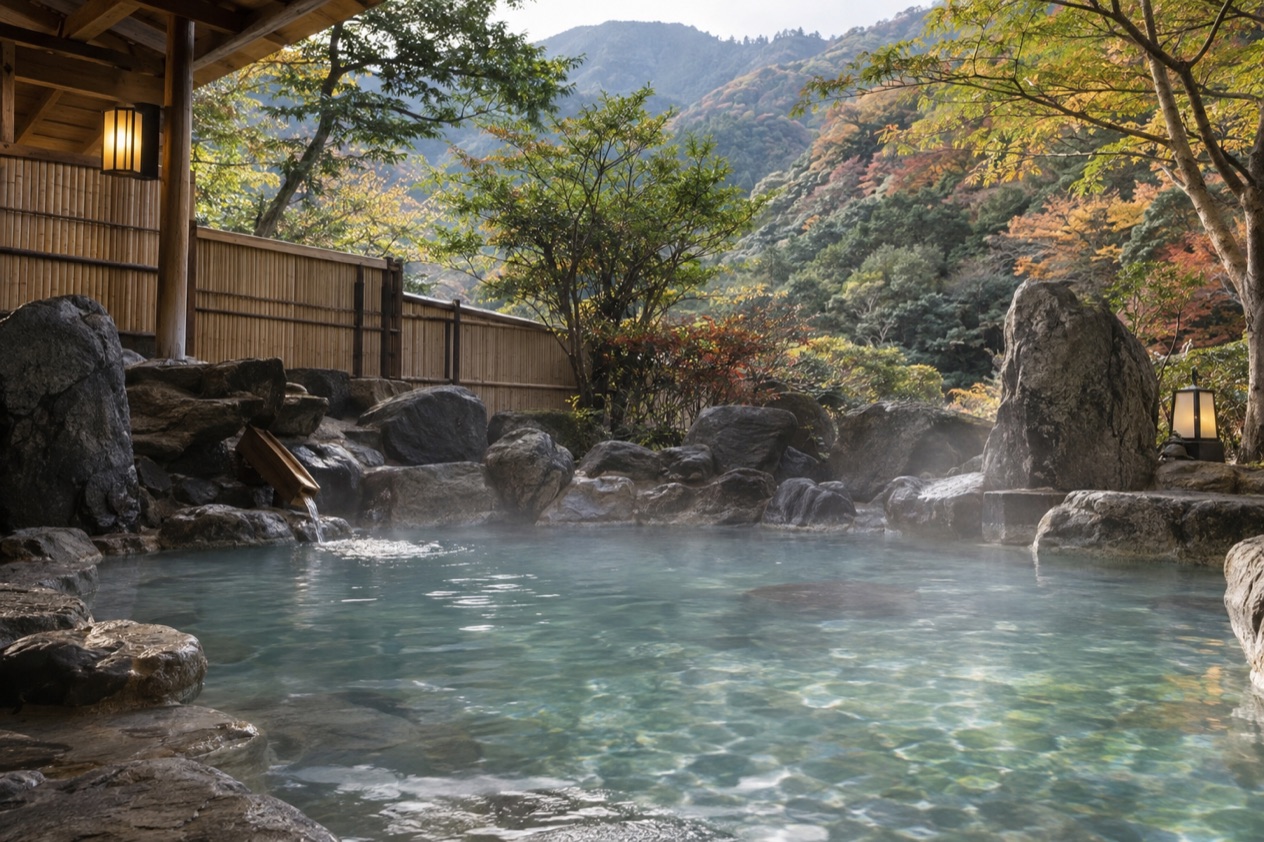
There are 13 public baths in town, and they do not all feel alike. The appearance of the water ranges from cloudy to clear because the baths rely on different sources. One bath may be milky and pale, another nearly transparent, and moving between them is part of the fun. Some visitors make a small project of trying several in a single stay.
Alongside the public baths, the small bathhouses are free for both town residents and tourists, and they are managed by the townspeople themselves. That detail says a lot about Kusatsu.
The baths are not only an attraction but a neighborhood habit, looked after by the people who live beside them. When you use one, you are using something the community keeps going, and the polite thing, as at any bathhouse, is to leave it as you found it.
Why people believe in the water
Kusatsu became well known after its water was recommended for its health benefits by Erwin von Bälz, a German doctor who taught medicine at Tokyo University. His endorsement put the town on the map for people far beyond Gunma, and the reputation has stuck. Locals go further than any doctor would. They claim the hot springs can cure all forms of ailments, other than lovesickness.
Guests have their own stories. Some say pain disappears while they soak in the hot water. Take that as a traveler’s tale rather than medical advice, but it captures the mood of the place. People come to Kusatsu expecting to feel better, and the town leans into that gently, with baths at every turn and a slow pace that suits long soaks.
A day in town
A typical day in an onsen town unfolds without much of a schedule. You wake up and bathe before breakfast, wander the lanes, stop for something warm to eat, and bathe again in the afternoon. In the evening, after dinner, you walk in your yukata past shop windows and steaming grates, then take one last soak before bed.
Onsen towns reward that kind of looseness. The pleasure is in the repetition, the water on your shoulders, the cool air on your face when you step outside, the clack of wooden sandals on the pavement. Kusatsu fits that pattern well, with so many baths that you can change your mind about where to go without ever feeling you have run out of options.
What is the yubatake?
The yubatake, which means hot water field, is the open space in the center of Kusatsu where hot spring water flows out in the open and sends steam into the air. It is the heart of the town, the place where the springs stop being something hidden in bathhouses and become something you can see, smell and hear. Most people head there soon after arriving.
What you see and hear
Long wooden channels carry the steaming water across the yubatake, letting it cool as it runs. The water splashes along the wood, clouds of vapor drift over the stones, and the mineral smell is strongest here. Over time the minerals leave a crust on the channels and surrounding stones, which gives the whole area a weathered look that you would not expect from a town square.
It is as much a sound as a sight. You hear running water and a low hiss, and you often see people standing at the railing, quietly watching the steam. Cameras come out, but many visitors just stand there a few minutes with their hands in their sleeves, taking in the warmth against their faces.
Why it matters to the town
The yubatake shows how the town works. Water from the mountain emerges, travels through the channels and feeds the baths that people use every day. Standing beside it helps you understand why the baths differ in color and clarity, and why the people of Kusatsu treat the springs as the source of their community.
After dark, onsen towns take on a different mood, with warm light on wet stones and lanterns reflecting in the steam. A walk back to the yubatake after a soak is a pleasant way to cool off, and the steam seems thicker when the air is crisp. It makes a natural point to meet someone, check your bearings or simply pause between baths.
Around the yubatake
The streets around the open water are where the town does its strolling. Expect shops selling onsen sweets and small souvenirs, snack stalls with steam of their own, and inns whose doorways are lined with slippers. People drift in yukata from one place to the next, and the atmosphere is relaxed rather than hurried.
A good approach is to treat the yubatake as a compass. Whenever you feel turned around between the lanes, the steam and the smell will point you back. From there, you can choose a bath, a snack or a seat by the water, and let the rest of the afternoon sort itself out.
How do you get there?
You reach Kusatsu Onsen by bus, and two routes are on offer. One runs from Tokyo and the other from a station in Gunma, and both end in the town.
From Tokyo by the Joshu Yumeguri bus
The Joshu Yumeguri bus goes to Kusatsu Onsen Bus Terminal from Shinjuku Station or Tokyo Station, via Ikaho Onsen. That means the ride passes through another well-known hot spring town on its way, a pleasant bit of geography for anyone who likes the idea of travelling from spa to spa. Your departure point can be either of the two Tokyo stations, whichever sits better with where you are staying in the city.
The name of the bus, which roughly refers to touring hot springs in the old province of Joshu, fits the trip. You step off at the Kusatsu Onsen Bus Terminal, which puts you in the resort itself. From there, the steam and the smell of sulfur tell you quickly that you have arrived, and the yubatake is the natural place to head next.
From Naganohara-Kusatsuguchi Station
The second route is the Kusatsu Line bus, which goes to Kusatsu Onsen from Naganohara-Kusatsuguchi Station. This is the connection for travelers who arrive in Gunma by rail and then continue by road. The station name tells you what it is for, since Kusatsuguchi roughly means the entrance to Kusatsu, and the bus carries you the rest of the way up to the springs.
Both buses deliver you to the resort rather than leaving you to find your own way. Arriving by bus also sets the tone, since you roll into town with your luggage and your plans for a soak, without any need to think about anything else. Once you are there, the baths are what matter, and the town is arranged so that you can settle in quickly.
Good to know before you go
Kusatsu rewards a slow stay more than a rushed visit, so leave room for several soaks rather than ticking off a single bath. Because the water varies from cloudy to clear, a second or third bath tells you something new each time.
Bathing follows the usual Japanese onsen habits: you wash before you enter the water, and the towel stays out of the bath. The free small bathhouses, run by the townspeople, are worth treating with the same respect you would show anyone’s home.
Sources
- Wikipedia, Kusatsu Onsen (https://en.wikipedia.org/wiki/Kusatsu_Onsen), checked October 11, 2026
To plan your stay
- Best Time to Visit Japan: Cherry Blossoms, Autumn Colors, Weather and Festivals
- Where to Stay in Japan: Ryokan, Temple Stays, Capsule Hotels and the Best Cities to Base In
- Sending Luggage from the Airport in Japan: Hands-Free Travel, Hotel Delivery and Coin Lockers
- Know Before You Go to Japan: Entry, Money, Etiquette and Getting Around