
In Kyoto in July, the streets around Shijo fill with the sound of flutes and gongs as towering festival floats are hauled past the crowds, and strips of paper flutter from bamboo branches at shrines in Tokyo. The air is heavy and warm, cold noodles and shaved ice turn up on every menu, and evenings stretch out long after sunset. Japan in July is a month of festivals, summer food and a mountain season, and the north and south offer very different ways to spend it.
What is the weather like in Japan in July?
July is hot and humid across most of Honshu and Kyushu, noticeably milder in Sapporo, and fully tropical in Okinawa.
| Place | Average high (°F) | Average low (°F) | Precipitation (in) | Daylight on the 15th (hours and minutes) |
|---|---|---|---|---|
| Tokyo | 85.8 | 72.3 | 6.15 | 14 h 22 min |
| Kyoto | 89.6 | 74.5 | 8.80 | 14 h 18 min |
| Osaka | 89.2 | 76.3 | 6.87 | 14 h 17 min |
| Sapporo | 77.7 | 64.2 | 3.57 | 15 h 05 min |
| Okinawa (Naha) | 89.4 | 80.6 | 7.41 | 13 h 38 min |
| Fukuoka | 88.2 | 76.3 | 11.78 | 14 h 11 min |
| Kanazawa | 85.1 | 73.2 | 9.19 | 14 h 27 min |
| Hiroshima | 87.6 | 75.4 | 11.02 | 14 h 15 min |
On the main island of Honshu, the heat is the story. Kyoto has the hottest afternoons of the Honshu cities in the table, and Osaka is close behind, with nights that barely cool off.
Tokyo is a notch lower, but the air is damp enough that humidity in the city averages 76 percent, so even a mild-looking afternoon feels sticky. Japan’s own travel guidance describes Honshu and Kyushu summers as very humid, hot and sultry, which is exactly how July feels.
Rain is the other variable. Fukuoka and Hiroshima receive the heaviest totals of the eight places, and Kanazawa on the Sea of Japan side sees rain on more days than any of them, often in gray, drizzly spells. Sapporo, by contrast, is the driest and the coolest, with long evenings of light and a gentler feel. Naha in Okinawa is the sunniest, with 227 hours of sunshine, and the warmest at night.
Compared with June, Tokyo’s afternoons climb from the high 70s into the mid-80s, and August pushes them higher again. Kyoto’s highs reach the low 90s by August, while Sapporo moves from the low 70s to just under 80 in the same stretch.
Where to go in Japan in July
July rewards travelers who match the place to the heat. The big cities of Honshu are built around festivals and cool interiors, Hokkaido offers relief, and Okinawa is the month’s beach destination.
Tokyo and the Kanto region
Tokyo in July is a city of shrine events and street stalls. Tanabata, the Star Festival, falls on July 7, and the Shitamachi Tanabata Matsuri sets out decorations for visitors to wander through. At Tokyo Daijingu Shrine, the Tanabata Kigansai lets visitors write wishes on strips of paper, dedicate them at the shrine and offer prayers.
Later in the month, the Asakusa neighborhood around Senso-ji takes on a festival mood for the Hozuki-ichi fair, held on July 9 and 10. Praying at the temple on those days is said to bring 46,000 days’ worth of blessings. The Iriya Morning Glory Festival fills a street with stalls selling potted morning glories, about 30 of them specializing in the plants alongside around 100 others with food and games.
This is a month for museums, department store food halls and long evening strolls, since daylight lasts well into the evening. Pace the afternoons around air-conditioned stops and keep shrine visits for the hours when you can stand outdoors.
Kyoto, Osaka and the Kansai region
Kyoto belongs to Gion Matsuri this month. The festival runs through July and is one of the largest and most famous in Japan, best known for two Yamaboko Junko processions of floats on July 17 and 24. The lead-up has its own rhythm, with neighborhoods around the old merchant quarter hanging lanterns and displaying their floats.
The days are hot and wet in Kyoto, with some of the highest afternoon temperatures in the country, so plan around the shade of temple halls, moss gardens and covered arcades. Osaka is just as warm, with nights that stay close to the mid-70s. Its food culture suits the heat: takoyaki, okonomiyaki and cold noodles eaten at counters and street stalls.
If you pair the two cities, let Kyoto’s festival days set your calendar and fill the rest with Osaka’s evenings, when the lights come on along the canals and the food streets.
Hokkaido and Sapporo
Hokkaido stretches to the northernmost reaches of Japan, near Russia, and July is when it feels most like a relief. Sapporo’s highs stay in the high 70s, its nights remain cool, and it has the longest daylight of the eight places here, with light lingering deep into the evening.
It is the month for outdoor beer gardens, grilled lamb and corn, seafood bowls and soft-serve ice cream in a place that gets only modest rain.
Okinawa
Okinawa is the subtropical end of the country, and July here is sun, heat and sea. Naha has more sunshine than any other place in the table, and the sea near the city averages 84.4°F, warm enough for long stretches in the water. Showers pass through in brief bursts and the humidity stays high, so mornings and evenings are the comfortable hours for walking.
Think of coral-colored reef-edge beaches, island-hopping, shisa lion-dog statues on rooftops and a table of goya champuru (bitter melon stir-fry), sea grapes, Okinawa soba and awamori. Nights stay warm enough to eat outside without a layer.
What to do in Japan in July
Gion Matsuri in Kyoto
Gion Matsuri takes place across the month of July and is the big event on the calendar. Its two Yamaboko Junko processions, on July 17 and 24, send floats through the city streets, pulled by teams in traditional dress. Watch the floats turn the corners, which crews do with ropes and chanting, and see the details of the woven textiles and lanterns.
In the evenings before the processions, the streets near the floats’ neighborhoods fill with lantern light, food stalls and people in yukata, the light cotton summer robes. Even if you miss the parade days, the festival atmosphere runs on across much of the month.
Tanabata, Hozuki-ichi and the morning glories in Tokyo
Tanabata celebrates the meeting of the deities Orihime and Hikoboshi, and in Tokyo it is marked on July 7. Wishes are written on strips of paper and tied to bamboo, so the shrines and shopping streets take on a decorated look.
Two days later the focus shifts to Asakusa, where the Hozuki-ichi fair, held around Senso-ji, fills the grounds with potted ground cherries. The Iriya Morning Glory Festival is another summer rhythm in Tokyo, with stalls of morning glory plants and a street of food and games. These events are small, local and about the details, so wander without a plan.
Climbing Mount Fuji
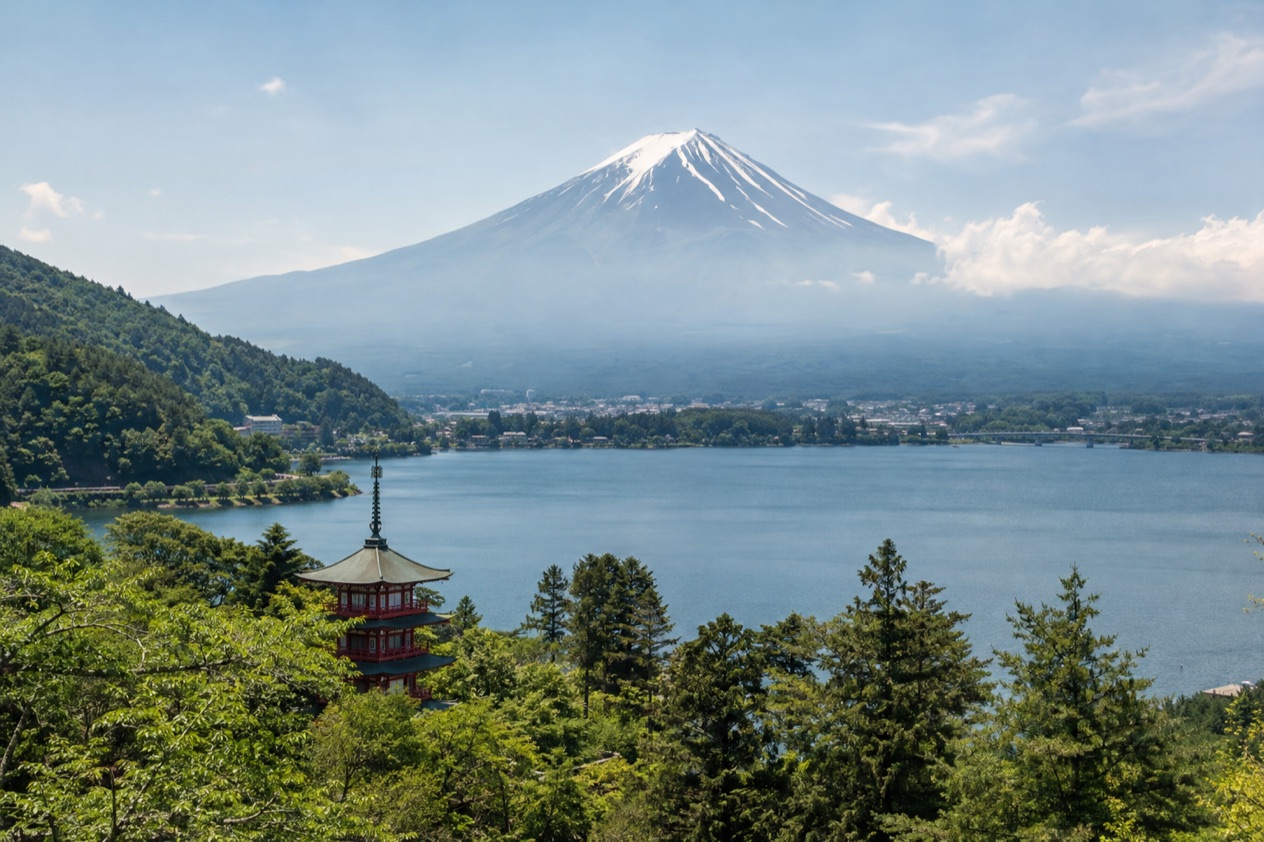
July is when Mount Fuji, the highest mountain in Japan and a UNESCO World Heritage site, opens to climbers. The climbing season typically runs from the beginning of July into early September. In winter the Yoshida, Subashiri and Gotemba trails close from the 5th station to the summit, and the Fujinomiya Trail closes from the 6th station.
For travelers who do not climb, the mountain still shapes the month as a presence on the horizon whenever the clouds allow. Treat any view of it as a chance, since summer haze and cloud often hide it.
Is Japan busy in July?
Japan in July is busy around its festivals and on the open Fuji trails, while the rest of the country moves at a more ordinary pace.
Kyoto is the clearest example. On the days of the Gion Matsuri processions, the center fills with onlookers along the route, and the streets around the floats stay lively through the month. In Tokyo, the pull is local and spread out, with shrine events at Tanabata, the Hozuki-ichi fair in Asakusa and the morning glory stalls in Iriya.
Mount Fuji’s season is open, so the trails are active from the first days of the month. The cities of Honshu in the heat tend to be the places where you decide when to go outdoors rather than where to avoid people. Hokkaido and Okinawa have their own seasons of outdoor leisure, with beer gardens in Sapporo and beach days in Naha.
What to pack for Japan in July
Packing changes with the region. Honshu and Kyushu call for light, quick-drying clothes and rain gear, Sapporo wants one extra layer for cooler evenings, and Okinawa asks for sun and swim gear.
- Lightweight, breathable shirts, since Honshu’s air is hot and sticky.
- A compact umbrella or a light rain jacket, because showers and gray, wet spells come through most regions.
- A sun hat and sunscreen for sunny days, especially in Okinawa.
- A small towel or handkerchief for the humidity.
- A light sweater for Sapporo’s cooler evenings.
- Sturdy, closed shoes for a Fuji climb, and swimwear for Okinawa.
Good to know before you go
Wet weather matters in July. Fukuoka, Hiroshima and Kanazawa see heavy or frequent rain, and the humidity makes even dry days feel close. Daylight is generous, with the sun up early and light lasting into the evening, longest of all in Sapporo. That leaves plenty of room for outdoor events in the cooler hours.
Mount Fuji’s trails are open for the climbing season, which runs to early September, and close in winter. Japan’s emergency warning system, run by the Japan Meteorological Agency, is there to alert people to extraordinary natural events.
Is July a good time to visit Japan?
July suits travelers who want festivals and summer food, and who can handle heat, with Hokkaido the best region for anyone who wants it milder, and Okinawa the pick for beach time.
Compared with June, July is hotter and more humid in Tokyo and Kyoto, though June is not dry either. August is hotter still, with Kyoto’s afternoons reaching their highest, while Sapporo warms but stays moderate. July sits in the middle, with the most festival life in Kyoto and Tokyo and the Fuji season just opening. What sets the month apart is the Gion Matsuri floats rolling through Kyoto, the paper wishes of Tanabata in Tokyo and the first climbers setting off up Mount Fuji.
Sources
- Japan Meteorological Agency (JMA), Normal values 1991-2020, monthly (https://www.data.jma.go.jp/stats/etrn/view/nml_sfc_ym.php?prec_no=44&block_no=47662), station Tokyo, elevation 25 m, checked October 11, 2026
- Computed from the date and the latitude of the place (sunrise equation, solar elevation -0.833 degrees), October 11, 2026
- Japan Meteorological Agency (JMA), Normal values 1991-2020, monthly (https://www.data.jma.go.jp/stats/etrn/view/nml_sfc_ym.php?prec_no=61&block_no=47759), station Kyoto, elevation 41 m, checked October 11, 2026
- Japan Meteorological Agency (JMA), Normal values 1991-2020, monthly (https://www.data.jma.go.jp/stats/etrn/view/nml_sfc_ym.php?prec_no=62&block_no=47772), station Osaka, elevation 23 m, checked October 11, 2026
- Japan Meteorological Agency (JMA), Normal values 1991-2020, monthly (https://www.data.jma.go.jp/stats/etrn/view/nml_sfc_ym.php?prec_no=14&block_no=47412), station Sapporo, elevation 17 m, checked October 11, 2026
- Japan Meteorological Agency (JMA), Normal values 1991-2020, monthly (https://www.data.jma.go.jp/stats/etrn/view/nml_sfc_ym.php?prec_no=91&block_no=47936), station Naha, elevation 28 m, checked October 11, 2026
- Open-Meteo Marine API, average 2015-2024, checked October 11, 2026
- Japan Meteorological Agency (JMA), Normal values 1991-2020, monthly (https://www.data.jma.go.jp/stats/etrn/view/nml_sfc_ym.php?prec_no=82&block_no=47807), station Fukuoka, elevation 2 m, checked October 11, 2026
- Japan Meteorological Agency (JMA), Normal values 1991-2020, monthly (https://www.data.jma.go.jp/stats/etrn/view/nml_sfc_ym.php?prec_no=56&block_no=47605), station Kanazawa, elevation 6 m, checked October 11, 2026
- Japan Meteorological Agency (JMA), Normal values 1991-2020, monthly (https://www.data.jma.go.jp/stats/etrn/view/nml_sfc_ym.php?prec_no=67&block_no=47765), station Hiroshima, elevation 4 m, checked October 11, 2026
- Japan National Tourism Organization, weather and seasons in Japan (https://www.japan.travel/en/plan/weather/), checked October 11, 2026
- Wikipedia, Climate of Japan (https://en.wikipedia.org/wiki/Climate_of_Japan), checked October 11, 2026
- Japan National Tourism Organization, summer in Japan (https://www.japan.travel/en/guide/summer-guide/), checked October 11, 2026
- Japan National Tourism Organization, festivals and events (https://www.japan.travel/en/see-and-do/festivals-and-events/), checked October 11, 2026
- Wikipedia, Hanabi (https://en.wikipedia.org/wiki/Hanabi), checked October 11, 2026
- Wikipedia, Gion Matsuri (https://en.wikipedia.org/wiki/Gion_Matsuri), checked October 11, 2026
- Japan National Tourism Organization, Mount Fuji guide (https://www.japan.travel/en/fuji-guide/), checked October 11, 2026
- Official website for Mt. Fuji climbing, about the climb (https://www.fujisan-climb.jp/en/about/), checked October 11, 2026
- Wikipedia, Tanabata (https://en.wikipedia.org/wiki/Tanabata), checked October 11, 2026
- GO TOKYO, best things to do and see in Tokyo in July (https://www.gotokyo.org/en/story/guide/july/index.html), checked October 11, 2026
- Japan Meteorological Agency, Emergency Warnings (https://www.jma.go.jp/jma/en/Emergency_Warning/ew_index.html), checked October 11, 2026
- Japan National Tourism Organization, autumn in Japan (https://www.japan.travel/en/guide/autumn-guide/), checked October 11, 2026
- Japan National Tourism Organization, spring in Japan (https://www.japan.travel/en/guide/spring-guide/), checked October 11, 2026
- Wikipedia, Japan (https://en.wikipedia.org/wiki/Japan), checked October 11, 2026
To plan your stay
- Things to Do in Japan: Kyoto Temples, Onsen, Street Food and Day Trips
- Where to Stay in Japan: Ryokan, Temple Stays, Capsule Hotels and the Best Cities to Base In
- Sending Luggage from the Airport in Japan: Hands-Free Travel, Hotel Delivery and Coin Lockers
- Know Before You Go to Japan: Entry, Money, Etiquette and Getting Around