
Standing in front of a ticket machine at Hakata Station, with a bowl of tonkotsu ramen still on your mind and a map of Kyushu in your pocket, the question comes quickly: is one pass worth more than paying fare by fare? The JR Kyushu Rail Pass is the regional ticket that foreign visitors use to move between the cities of the island, and it comes in several versions, from a two-day pass around Fukuoka to a week across the whole island.
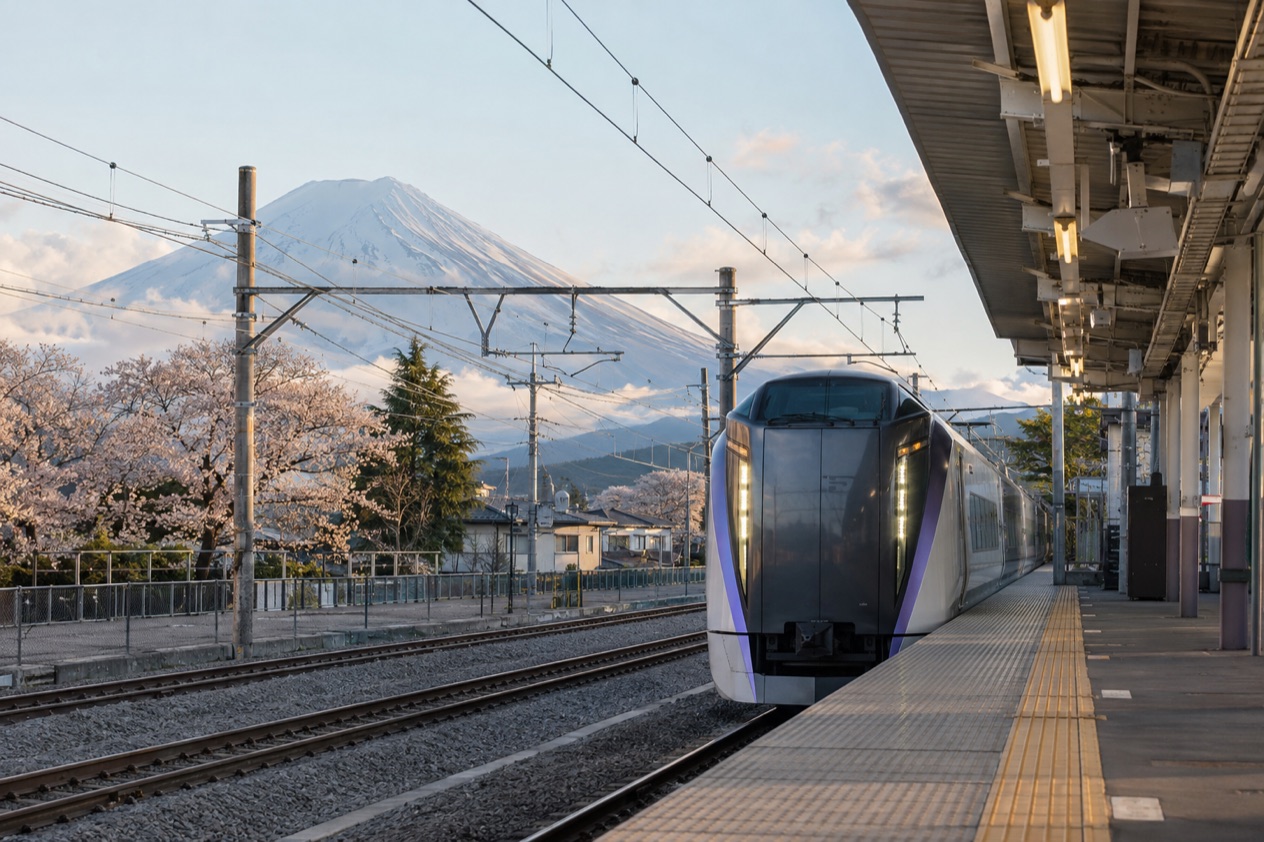
What is the JR Kyushu Rail Pass?
The JR Kyushu Rail Pass is a ticket made for foreign visitors that lets you ride JR Kyushu trains between several cities on the island of Kyushu for a set number of consecutive days. JR Kyushu is the railway company that runs intercity service across the island, with its headquarters in Hakata-ku, Fukuoka. Its network stretches over roughly 1,455.6 miles of line.
The pass comes in different types, so the first decision is not whether to buy but which version fits your plan. Three versions are named by region (All Kyushu, Northern Kyushu and Southern Kyushu) and one is a compact pass for the Fukuoka area. Each is sold by the number of consecutive days, and each has an adult price and a child price. Child fares apply to children ages 6 to 11.
The regional passes and their prices
The All Kyushu pass comes in three lengths. The Northern Kyushu pass comes in two, and the Southern Kyushu pass in one. The prices are set out here by type and length, with the child price beside the adult one.
| Pass | Consecutive days | Adult (yen) | Child (yen) |
|---|---|---|---|
| All Kyushu | 3 | 22,000 | 11,000 |
| All Kyushu | 5 | 24,000 | 12,000 |
| All Kyushu | 7 | 26,000 | 13,000 |
| Northern Kyushu | 3 | 15,000 | 7,500 |
| Northern Kyushu | 5 | 17,000 | 8,500 |
| Southern Kyushu | 3 | 12,000 | 6,000 |
| Fukuoka Wide | 2 | 3,060 | 1,530 |
A useful habit when comparing: the days are consecutive, so a pass runs through the calendar and does not pause on a day when you stay in one place. A traveler who spends two nights in Nagasaki before moving on may get more from a pass that starts on the day of the first long ride.
The Fukuoka Wide pass
It allows free boarding on non-reserved seats of Limited Express trains and Local trains, which makes it a pass for a base in Fukuoka with day outings, and not for a long island tour.
It suits a stay built around Hakata and Tenjin, where the evening is spent at the yatai, the open-air food stalls with their steaming pots of ramen and skewers, and the daytime goes to a trip out of the city. Because its seats are non-reserved, you take whichever free seat you find when you board.
How it relates to the Japan Rail Pass
The JR Group was formed on April 1, 1987, after the division and privatization of the government-owned Japanese National Railways, and it is made up of six regional passenger companies. The Japan Rail Pass is offered jointly by those six and is issued as valid for all JR lines, accepted by all passenger JR companies.
The JR Kyushu Rail Pass is different. It is the regional version, built for travelers who plan to stay on the island of Kyushu.
JR keeps common ticketing rules inherited from the old national railway, which is why a passenger can travel across several JR companies without changing trains and without buying separate tickets. Elsewhere in the country, other regional passes follow the same idea: the ALL SHIKOKU Rail Pass for Shikoku, the Hokkaido Rail Pass for JR Hokkaido, and the JR EAST PASS for Tokyo, Tohoku, Nagano and Niigata. Kyushu has its own.
Which areas does it cover?
The pass covers JR Kyushu rail services across the island, and each version is named for the area it serves: all of Kyushu, the northern part, the southern part, or the Fukuoka area. The Fukuoka Wide version is the one whose territory is spelled out: the main tourist spots in Fukuoka Prefecture and the Karatsu area in Saga Prefecture.
Fukuoka Prefecture and Karatsu
Fukuoka Prefecture is the base of the network, and Hakata is where JR Kyushu has its headquarters. It is a city of shrines, temple gardens, riverside food stalls and department store basements stocked with sweets, and the pass is built around outings from it.
Karatsu, across the prefectural line in Saga Prefecture, is the other named area. It is known for its pottery, a tradition that gives its name to Karatsu ware, and for a castle by the shore.
This is the kind of pairing the Fukuoka Wide pass makes possible: a morning among Fukuoka’s sights, then a ride to Karatsu for the kilns and the seafood. The pass allows non-reserved seats on Limited Express and Local trains, so these are the trains you board.
The Shinkansen lines of Kyushu
Two high-speed lines belong to JR Kyushu. The Kyushu Shinkansen runs from Hakata to Kagoshima-Chuo, and the Nishi Kyushu Shinkansen runs from Takeo-Onsen to Nagasaki. Together they tie Fukuoka to the cities at the two ends of the island, and they are the lines a Kyushu itinerary is usually drawn around.
Kagoshima is the city of Sakurajima, the volcano that sits in the bay, and of black pork and sweet potato shochu. Nagasaki is a harbor city with a mix of Chinese, Dutch and Portuguese influences on its table, from champon noodles to castella sponge cake. Both are names that the pass is meant to put within reach, because they sit on the island’s main JR lines.
Choosing between All, Northern and Southern
The three regional passes are separated by area and by length, so the choice follows your route. The All Kyushu pass is the only one offered in a seven-day version, which suits a loop around the island. The Northern Kyushu pass has three-day and five-day versions for a trip kept to the upper part of the island, and the Southern Kyushu pass comes in a single three-day version.
Think first about where you will sleep. A traveler who lands in Fukuoka, takes in Nagasaki and returns has a different shape of trip from one who goes down the island to Kagoshima and its hot sand baths. Mark your base cities, count the nights, then pick the area and the number of consecutive days that fit.
How do you buy it?
You buy a JR Kyushu Rail Pass by choosing the type, the number of consecutive days and the category of traveler, adult or child, and the passport you carry is what you show when you board. The pass is a ticket for foreign visitors, and the passport must have a temporary visitor visa stamp or seal.
Step by step: choosing what to buy
Start with the shape of the trip. A stay centered on Fukuoka with an outing to Karatsu points to the Fukuoka Wide pass. A trip from Fukuoka to Nagasaki and back suggests the Northern pass. A trip down to Kagoshima points toward the Southern or the All Kyushu pass, depending on how much of the island you want to see.
Then count the days, remembering that they run one after another. Then sort the party: children ages 6 to 11 take the child price, which is half the adult one on every version in the table. Write the choice down by name and length, because the passes are listed that way.
At the gate and on the train
Once you have the pass, the gesture at the station is the same each time: show the pass, and show your passport. Foreign visitors must present the passport when boarding, and it must carry the temporary visitor visa stamp or seal. Keep both together and within reach, so they are ready when a station attendant asks.
The Fukuoka Wide pass has a seating habit of its own. It allows free boarding on non-reserved seats of Limited Express and Local trains, so you board and take a free seat. For the regional passes, the seat arrangements are those of each train.
A pass or a smart card
JR Kyushu also runs its own prepaid smart card, SUGOCA, introduced on 1 March 2009. A card is a way to pay for single rides, while a pass is a flat price for a period of consecutive days on the lines it covers.
For a stay with only one or two rides, a smart card follows your actual movements. For a trip with several long rides in a few days, a pass starts to make sense.
JR keeps an integrated reservation system, known as MARS, jointly developed with Hitachi, across the whole group. It is the system behind seat reservations on JR trains, and it is part of why a ticket bought in one JR company works on the lines of another.
Good to know before you go
Prices are in yen, and the table of passes above holds every amount for adults and children. Travelers who also plan to leave Kyushu should know that the Japan Rail Pass is issued as valid for all JR lines, while the Kyushu pass is made for the island.
Kyushu also has trains that are journeys in themselves. The Aru Ressha runs from Oita to Hita from April to June, and from Sasebo to Nagasaki from July to September, and the Seven Stars is a luxury excursion train that makes circular tours of the island.
Sources
- Japan National Tourism Organization, Japan Rail Pass and regional passes (https://www.japan.travel/en/plan/jr-rail-passes/), checked October 11, 2026
- JR Kyushu, Rail passes (https://www.jrkyushu.co.jp/english/railpass/), checked October 11, 2026
- Wikipedia, Japan Railways Group (https://en.wikipedia.org/wiki/Japan_Railways_Group), checked October 11, 2026
- Wikipedia, Kyushu Railway Company (https://en.wikipedia.org/wiki/Kyushu_Railway_Company), checked October 11, 2026
To plan your stay
- Best Time to Visit Japan: Cherry Blossoms, Autumn Colors, Weather and Festivals
- Where to Stay in Japan: Ryokan, Temple Stays, Capsule Hotels and the Best Cities to Base In
- Sending Luggage from the Airport in Japan: Hands-Free Travel, Hotel Delivery and Coin Lockers
- Know Before You Go to Japan: Entry, Money, Etiquette and Getting Around