
Standing under the departure board at Sapporo Station, with limited express names scrolling past in Japanese and English, is where travelers start wondering whether a pass would make sense for Hokkaido. The Hokkaido Rail Pass is a ticket sold to foreign visitors that lets you ride JR Hokkaido trains for a set run of consecutive days. Two smaller area passes and two passes that stretch south into Honshu sit beside it, and each fits a different kind of trip.
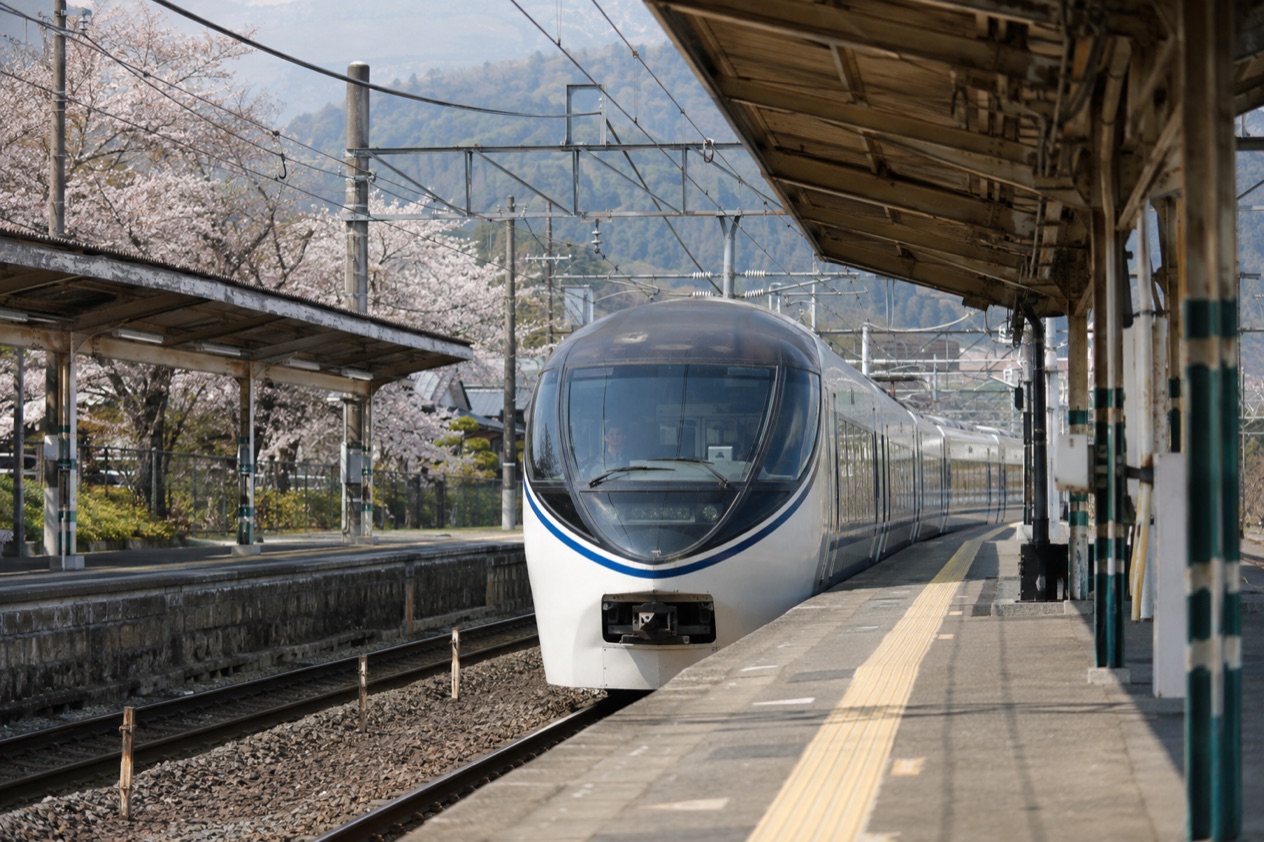
What is the Hokkaido Rail Pass?
The Hokkaido Rail Pass is a rail pass for foreign visitors that lets you board all trains of the JR Hokkaido company for a fixed number of consecutive days. It comes in three lengths, and children pay half the adult amount. Like every pass sold on the JR Hokkaido ticket page, it is available to foreign visitors only.
Two things sit outside it: the Hokkaido Shinkansen line and the SL Fuyu-no-Shitsugen, the steam locomotive train that runs in winter. Everything else under the JR Hokkaido name is open to a pass holder, from the limited expresses to the slower local trains that stop at small stations among fields and forest.
The trains you can board
The long-distance limited expresses are the backbone of a Hokkaido trip. The Hokuto links Sapporo and Hakodate, the port city known for its night view, its morning market and its squid.
The Ozora runs between Sapporo and Kushiro, on the eastern side of the island, where seafood grilled over charcoal is the local pleasure. The Kamui and the Lilac both run between Sapporo and Asahikawa, a city with its own style of ramen and a well-known zoo.
Beyond those, the Chitose Line has a short branch from Minami-Chitose to New Chitose Airport, which is how many rail travelers meet Hokkaido for the first time. JR Hokkaido has its headquarters in Sapporo, and the city is the hub from which the limited expresses fan out.
Where it sits among the JR passes
The Japan Railways Group was formed on April 1, 1987, when the government-owned Japanese National Railways was divided and privatized. It now has six regional passenger companies, one freight company and two non-service entities. The Japan Rail Pass is the joint offer of the six passenger companies, while regional passes such as this one belong to a single company and a single stretch of the map.
That shared heritage explains why passengers can travel across several JR companies without changing trains or buying separate tickets: JR keeps common ticketing rules inherited from the old national system. The Hokkaido pass, though, is a different product from the nationwide one, and it is written around the island and a few trains beyond it.
Prices for the Hokkaido Rail Pass
Amounts depend on how many days the pass runs and on whether it is bought outside Japan or in Japan. The seven-day pass is listed only at the in-Japan amount.
| Pass | Consecutive days | Bought | Adult (yen) | Child (yen) |
|---|---|---|---|---|
| Hokkaido Rail Pass | 5 | Outside Japan | 19,000 | 9,500 |
| Hokkaido Rail Pass | 5 | In Japan | 20,000 | 10,000 |
| Hokkaido Rail Pass | 7 | In Japan | 26,000 | 13,000 |
| Hokkaido Rail Pass | 10 | Outside Japan | 25,000 | 12,500 |
| Hokkaido Rail Pass | 10 | In Japan | 26,000 | 13,000 |
Which areas does it cover?
The Hokkaido Rail Pass covers the whole JR Hokkaido network, apart from the Shinkansen and the winter steam train, while two area passes cover only a corner of it and two others reach down into Honshu. Choosing among them is mostly a matter of the map you have in mind.
The two Sapporo area passes
The Sapporo-Noboribetsu Area Pass and the Sapporo-Furano Area Pass are both valid for consecutive days and, like the rest, are sold to foreign visitors only. Their names tell you the territory. Noboribetsu is a hot spring town, known for its sulfur-scented valley of steaming vents and for the baths that draw people after a day outdoors. Furano is farm country, where summer fields of lavender and other flowers are the postcard image.
The amounts are lower than for the full Hokkaido pass, and the same difference between outside and inside Japan applies.
| Pass | Consecutive days | Bought | Adult (yen) | Child (yen) |
|---|---|---|---|---|
| Sapporo-Noboribetsu Area Pass | 4 | Outside Japan | 8,000 | 4,000 |
| Sapporo-Noboribetsu Area Pass | 4 | In Japan | 8,500 | 4,250 |
| Sapporo-Furano Area Pass | 4 | Outside Japan | 9,000 | 4,500 |
| Sapporo-Furano Area Pass | 4 | In Japan | 9,500 | 4,750 |
Passes that continue south from Hokkaido
The JR East-South Hokkaido Rail Pass gives unlimited access to all trains in the eastern part of Japan and southern Hokkaido for a chosen period. The JR Tohoku-South Hokkaido Rail Pass is the other pass on the JR Hokkaido page that crosses the strait. Both are meant for travelers who combine the two regions rather than stay on the island.
The link between them is the Hokkaido Shinkansen, which currently runs between Shin-Aomori and Shin-Hakodate-Hokuto. Before it, a JR Hokkaido ferry crossed to Aomori, and that service was replaced by the Seikan Tunnel, a dual-gauge railway tunnel. The Shinkansen extension to Sapporo is scheduled to open in 2038, so for now a trip north by rail ends at Shin-Hakodate-Hokuto and continues on conventional trains.
Passes for other parts of Japan
Hokkaido is only one of several regions with its own pass. The JR EAST PASS covers JR East lines for a determined period, with Tokyo, Tohoku, Nagano and Niigata among its destinations. The JR TOKYO Wide Pass reaches Lake Kawaguchiko at the foot of Mount Fuji, Nikko and the Izu Peninsula.
Farther west, the Hokuriku Arch Pass connects Tokyo and Osaka through Nagano, Toyama, Ishikawa and Fukui. JR Central offers four passes for sites in Chubu and Hokuriku such as Shirakawa-go, Takayama, Kanazawa and the Tateyama Kurobe Alpine Route, and JR West sells tickets for Kyoto, Osaka, Toyama, Kanazawa, Okayama and Hiroshima.
The ALL SHIKOKU Rail Pass covers all trains of the six railway companies on Shikoku, and the JR KYUSHU RAIL PASS comes in several types. None of them works on JR Hokkaido trains unless it says so.
How do you buy it?
You can buy the Hokkaido Rail Pass online, and it is sold either outside Japan or in Japan, with the amount lower when bought outside. Because the passes are for foreign visitors only, they are tied to that status.
Buying online and reserving seats
JR Hokkaido sells reserved seats for the Shinkansen and limited express trains online, and the rail passes can be bought the same way. Seat reservations for pass holders can also be made online. Reservations are not available for some trains, so a pass holder should expect that a few services run without them.
The practical effect is that the pass and the seat are separate steps. The pass gives you the right to board, and a reserved seat is a second ticket attached to a specific train. On a limited express such as the Hokuto or the Ozora, that second step is where an itinerary becomes a real plan.
E-tickets and the airport train
Reserved seats for the Shinkansen and for the Rapid Airport can be purchased as E-tickets from JR Hokkaido. The Rapid Airport is the train that serves New Chitose Airport on the Chitose Line branch, so it is the ticket many arriving travelers meet first. An E-ticket means the seat lives on a phone or a screen rather than on a piece of paper.
Remember that the Shinkansen itself sits outside the Hokkaido Rail Pass, so a seat on it is a separate matter from the pass. The Kitaca smart card, which JR Hokkaido introduced in autumn 2008, is a different tool again: a stored-value card for city travel, not a pass.
Choosing between outside and inside Japan
Every pass in the JR Hokkaido list has two amounts, one for purchase outside Japan and a slightly higher one for purchase in Japan. The seven-day pass is listed only at the in-Japan amount.
It helps to decide the route first, because the passes are built around places. A trip between Sapporo and Hakodate, or out to Kushiro, asks for the full Hokkaido Rail Pass. A stay centered on Sapporo with a day at the hot springs or in the fields asks for an area pass. A journey that continues to Honshu points to the East-South Hokkaido pass.
Good to know before you go
Everything is priced in yen, and the amounts on JR Hokkaido’s passes are set for adults and children separately. In Hokkaido, trains cover long stretches between towns, so it pays to build days around one or two stops, with time for a bowl of ramen, a seafood breakfast at a harbor market or a soak in an onsen. Rain and typhoon season can shift plans on any island, so a flexible day or two is a sensible habit for a rail trip.
Sources
- Japan National Tourism Organization, Japan Rail Pass and regional passes (https://www.japan.travel/en/plan/jr-rail-passes/), checked October 11, 2026
- JR Hokkaido, Rail passes and tickets (https://www.jrhokkaido.co.jp/global/english/ticket/index.html), checked October 11, 2026
- Wikipedia, Hokkaido Railway Company (https://en.wikipedia.org/wiki/Hokkaido_Railway_Company), checked October 11, 2026
- Wikipedia, Japan Railways Group (https://en.wikipedia.org/wiki/Japan_Railways_Group), checked October 11, 2026
To plan your stay
- Best Time to Visit Japan: Cherry Blossoms, Autumn Colors, Weather and Festivals
- Where to Stay in Japan: Ryokan, Temple Stays, Capsule Hotels and the Best Cities to Base In
- Sending Luggage from the Airport in Japan: Hands-Free Travel, Hotel Delivery and Coin Lockers
- Know Before You Go to Japan: Entry, Money, Etiquette and Getting Around