
A slice of beef the color of pink marble lands on a hot iron plate, and the room fills with a sweet, buttery smell before it has even finished sizzling. Across a counter, a cook turns it once, cuts it into bite-sized pieces and slides it toward you with a small dish of salt or grated radish. Wagyu is the beef Japan has built a whole food culture around, from city steakhouses to prefectural farms, and the way it is named, raised and served says a lot about how the country thinks about eating.
What is wagyu?
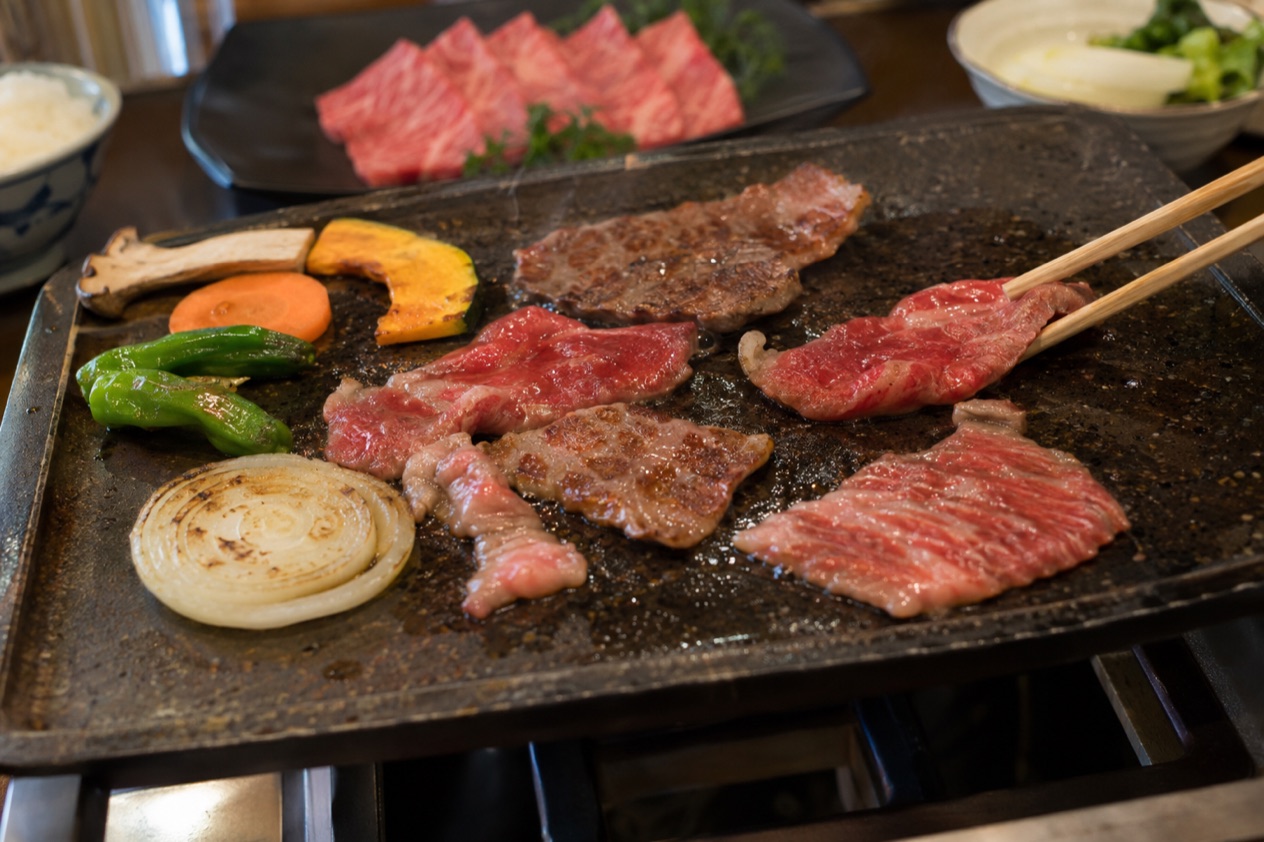
Wagyu means, literally, Japanese cattle: beef from specific Japanese breeds, raised in Japan, and known above all for fine streaks of fat running through the lean meat. That marbling is what makes the texture so soft and the flavor so rich. Wagyu is eaten in small portions, often thinly sliced, and treated more like a delicacy than a daily protein.
The word is also a legal label, not just a marketing phrase. Since 2007, Japan’s labeling guidelines recommend that the designation Wagyu be used only for beef from cattle of the four breeds or specified crosses that were born and raised in Japan. A steak sold under that name is meant to tell you something precise about where the animal came from.
The Japanese Black and the other breeds
One breed dominates the story. The Japanese Black accounts for more than 90% of the Wagyu cattle raised in Japan, and it is the main source of the highly marbled beef that appears on restaurant menus and in gift shops. When a menu simply says wagyu and shows pale, lacy fat through the meat, this is usually the animal behind it.
The designation covers four breeds or their specified crosses, so you will meet leaner and darker cuts as well as the famously marbled ones. Those leaner cuts suit diners who find the richest slices heavy after a few bites. Ordering a mix at a grill table lets you taste the difference between a deeply marbled piece and one with more chew and a stronger beef flavor.
Wagyu, domestic beef and the labels you will see
Not all Japanese beef is wagyu. The Wagyu designation is narrower than the origin category called kokusan-gyu, or domestic beef, which also includes beef from dairy breeds such as Holstein and Jersey. A package or menu that says domestic beef is telling you the meat was raised in Japan, but not that it comes from wagyu cattle.
That gap matters at supermarkets and casual restaurants, where a bowl of beef on rice may be perfectly good domestic beef without being wagyu at all. In a specialty restaurant, the word wagyu on the menu is usually followed by a region or a brand, and that is where the interesting reading begins.
A number on every cow
Japan tracks its cattle closely. Since 2003, the Beef Traceability Law has required each cow in Japan to have a ten-digit identification number, which records its birth and movements. The rule applies to all cattle in the country, not only wagyu.
You will sometimes see that number printed on a menu, a certificate card or a display at a butcher counter. Restaurants that care about provenance like to show it, and it lets you look up where your dinner was born. Reading it is a small ritual that many serious beef restaurants lean into, alongside the name of the prefecture and the brand.
Which regions are best known?
Kobe is the name most travelers already know, but wagyu is a national family of regional brands rather than one place. Cattle are raised in prefectures including Miyazaki, Hokkaido, Kagoshima, Shiga, Kumamoto, Hyogo, Kagawa, Miyagi, Gifu, Gunma, Saitama, Oita, Okayama and Tottori, and each region has its own brand of wagyu, more than 320 in all.
Kobe beef and Hyogo
Kobe beef is a regional brand defined by geographical origin and production standards, not a separate cattle breed. The name belongs to the port city of Kobe, in Hyogo Prefecture, and it is protected the way a place name on a bottle of wine is protected. The cattle behind it are wagyu, and the brand sets the conditions under which they must be raised.
Kobe beef has been famous since the 1860s and became known to foreign countries through foreign residents in Kobe. That port history still shows in the city today, where steakhouses cook at counters with teppan griddles and sit alongside the harbor streets that first introduced the beef to outsiders. A meal here is as much about the story as the steak, and it makes a good anchor for a day in Kobe.
Kyushu and the south: Miyazaki, Kagoshima and Kumamoto
Three prefectures on the list sit on the island of Kyushu: Miyazaki, Kagoshima and Kumamoto. Each raises wagyu, and each puts its own prefectural name on the beef. Travelers who head to Kyushu for hot springs, volcanoes and food stalls will find wagyu woven into local menus, from grilled platters to simmered dishes served with regional vegetables.
Eating the beef where it is raised changes the experience. Menus tend to name the producer or the local brand, and the kitchen builds the meal around that single ingredient. If you are planning a Kyushu trip, a beef dinner makes a natural counterpart to a day of onsen bathing, and it is a good way to compare the south with the cuts you tried elsewhere.
Hokkaido, Miyagi and the colder prefectures
Wagyu is not only a story of warm southern farms. Hokkaido and Miyagi both appear among the raising prefectures, and Gunma, Gifu and Saitama sit on the list too. Hokkaido in particular pairs its beef with the island’s wider reputation for dairy, seafood and vegetables, so a wagyu dinner there can come as one course in a larger regional spread.
Shiga, Kagawa, Okayama and Tottori round out the list of prefectures, and Oita joins them. You will rarely see all of them on one menu, but the breadth is the point: wherever you travel in Japan, there is a good chance a local brand exists, and asking which prefecture the beef came from is a natural way to start a conversation with the cook.
A calendar date for wagyu fans
National Wagyu Day, also referred to as World Wagyu Day, is celebrated on June 21 to promote Wagyu, and it was adopted by the World Wagyu Council. It is a promotional date rather than a festival with parades, so expect special menus and tasting events rather than street celebrations. If your travel falls near it, a beef-focused meal makes a fitting way to mark the day.
How do you order it?
Start by choosing the style of cooking, then the cut, and let the menu’s region or brand name guide the rest. Wagyu appears in several kinds of restaurant, and each one shapes how you eat it, from a quiet counter where a cook works the griddle in front of you to a smoky grill table where you cook every bite yourself.
Steak, teppanyaki and the counter
At a steakhouse or teppanyaki counter, the cook grills the beef on an iron plate and cuts it into small pieces before it reaches you. This format suits the richest, most marbled cuts, because the fat melts as it cooks and the pieces are meant to be eaten in a few bites. Salt, grated daikon, a little soy sauce or a dab of mustard are the usual companions, and they are there to frame the beef rather than hide it.
Sides tend to be modest: grilled vegetables, a small bowl of rice, miso soup and pickles. Eat the beef while it is hot, in small pieces, and give the fatty cuts a moment between bites. A glass of sake or a light tea works as a palate-reset, and the meal tends to feel lighter than the beef would suggest.
Yakiniku, sukiyaki and shabu-shabu
Yakiniku is Japanese-style grilled meat, cooked at the table over a small charcoal or gas grill. You order plates of different cuts, lay the pieces on the grill for a few seconds and dip them in sauce. It is the most social way to eat wagyu, and the plates are usually shared, so ordering a spread lets everyone taste both marbled and lean pieces.
Sukiyaki and shabu-shabu are hot-pot meals. In sukiyaki, thin slices of beef simmer in a sweet soy broth and are dipped in raw egg before eating.
In shabu-shabu, you swish slices through a pot of hot broth and then dip them in sesame or ponzu sauce. Both give wagyu a gentler treatment than the griddle, and both are good choices when the weather is cold or when you want a longer, slower meal.
Reading the menu
A menu may name the prefecture, the brand and sometimes the cut. Common cuts include sirloin, ribeye, tenderloin and the rich, thinly sliced belly meat used for grilling, and the names are often written in Japanese with an English gloss. If you are unsure, point at the line you want and ask the staff for their recommendation. Cooks in beef restaurants are used to explaining the differences.
Look for the words wagyu or the name of a regional brand, and for the ten-digit number if the restaurant displays it. If the menu says only domestic beef, the meat is Japanese but not necessarily wagyu. Smaller portions of several cuts make a good way to learn your own taste before committing to one large steak, and they let you compare a marbled piece with a leaner one.
Good to know before you go
Wagyu is a dish for slow eating, so leave room in the evening and let the meal run at the pace of the cook. Look at the menu for the region and the brand, since the name of the prefecture tells you where the beef came from, and keep the difference between wagyu and domestic beef in mind when you read labels at shops and casual restaurants. A single plate of marbled beef goes a long way, and many diners find that a few small pieces say everything the cut has to say.
Sources
- Wikipedia, Wagyu (https://en.wikipedia.org/wiki/Wagyu), checked October 11, 2026
To plan your stay
- Best Time to Visit Japan: Cherry Blossoms, Autumn Colors, Weather and Festivals
- Where to Stay in Japan: Ryokan, Temple Stays, Capsule Hotels and the Best Cities to Base In
- Sending Luggage from the Airport in Japan: Hands-Free Travel, Hotel Delivery and Coin Lockers
- Know Before You Go to Japan: Entry, Money, Etiquette and Getting Around