
A rail car in Tokyo slides into a station, the doors open, and nobody says a word. Phones are face-down or silent, a few passengers study a route on a screen, and the only sound is the announcement chime. Train etiquette in Japan comes down to a few written rules about tickets and smoking, and a larger set of habits built around keeping the car calm for everyone.
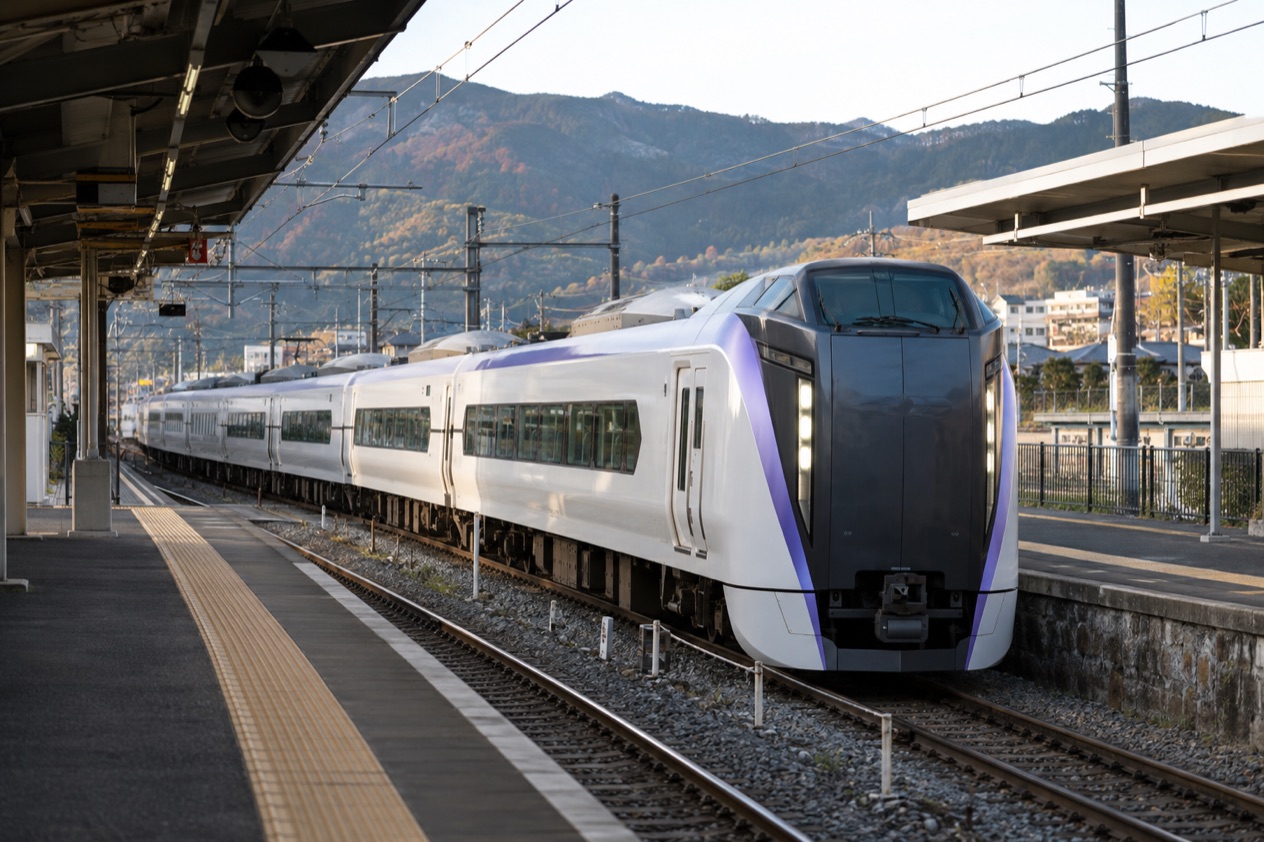
What are the rules on Japanese trains?
The rules on Japanese trains are a mix of firm requirements, such as holding the right ticket and not smoking on a Shinkansen, and quiet habits that you pick up by watching the people around you. Trains have a reputation for running on time, which lets travelers plan a day almost to the minute, so the habit of being ready when the doors open matters.
In Tokyo you will meet Japan Railways (JR) trains, Tokyo Metro lines and Toei Subway lines, among others. Osaka has JR, Hankyu Railway, Hanshin Electric Railway and Keihan Railway. Each operator runs its own network, so a journey across a big city can mean passing through several sets of gates. Apps such as Japan Travel by NAVITIME, Japan Transit Planner by Jorudan and Google Maps find routes and calculate fares.
IC cards at the gate
Most travelers tap through the gates with an IC card, a rechargeable card that also pays at many vending machines, stores and the coin lockers in stations. The card works as a deposit-based product, and you can get the deposit back if you return it at the counter at the end of your stay. Mobile versions of PASMO or Suica on a smartphone do not work on every phone.
| Card | Deposit | Validity |
|---|---|---|
| Most IC cards | 500 yen | 10 years since last use |
| Welcome Suica (certain parts of the Kanto region) | None | Up to 28 days |
One limit is worth knowing before you plan a long trip. An IC card cannot be used to travel between two different regions, for example from the JR East Suica region into the JR Central TOICA region.
Shinkansen tickets and the Japan Rail Pass
Riding a Shinkansen takes two things: a fare ticket for the distance and a Shinkansen special express ticket. These bullet trains link the largest cities, and the Shinkansen never runs overnight, so a late evening plan needs another way to finish the trip.
The Japan Rail Pass is available to foreign nationals visiting as tourists with a temporary visitor stamp. On the Tokaido, San’yo and Kyushu Shinkansen, it does not cover Nozomi or Mizuho services unless a supplemental Nozomi Mizuho ticket is bought. Children from 6 to 12 pay half the adult fare, and long-distance travelers going over 63 miles (63 mi) are allowed unlimited stopovers along the route within the ticket validity period.
Smoking on trains and in stations
All Shinkansen lines banned smoking entirely from March 2024, so a smoke break has to wait until you are off the train. On the street, smoking while walking or dropping cigarette butts is prohibited and can bring a fine. Designated outdoor smoking areas are limited, so smokers look for the nearest marked zone.
Late nights, early mornings and delays
In Tokyo, most trains do not run in the early morning hours from 1:00 to 5:00, which shapes a night out as much as any manners do. If a train is delayed, passengers can apply for a delay certificate from the station or the rail company’s website.
Delays are the exception. The Tokaido Shinkansen recorded an average delay of 0.7 minutes in fiscal 2018, and that expectation of punctuality is part of why people line up and board in an orderly way.
What about phones and luggage?
On public transportation, phones go on silent mode and stay in your pocket or bag as much as possible. In Tokyo, as in all public places and especially on public transportation, visitors are expected to silence their phones and avoid using them.
Calls, messages and the space between cars
When a call cannot wait, the corridor between cars is where it can happen on a long-distance train such as the Shinkansen. Talking on the phone is possible there, which keeps the seats themselves quiet for the people who are reading, sleeping or looking out the window.
Silent mode means more than turning off the ringtone. It is the idea behind the whole car: a place where strangers share a small space and each person keeps their own sound to a minimum. Reading messages, checking a route and tapping through a map all fit that habit.
Your phone as a wallet and a map
A phone is also the tool many travelers use to find their way. The route apps above work for planning a trip across several operators, and a mobile IC card in PASMO or Suica form can pay the fare, provided your smartphone supports it, since not every model does.
If your phone cannot hold an IC card, the physical card does the same work at the gate. It also pays at many vending machines and stores, and it is the card that opens the coin lockers in stations, which is where a bag can wait while you explore without having to carry it onto the next train.
Bags, lockers and the station
Beyond that, the habit that matters is simple: you keep your belongings close and compact, so that your trip through a crowded station does not become an obstacle for the people moving around you.
Seats and the aisle are shared space, and the same quiet consideration that governs phones applies to bags. A traveler who has stowed a bag, silenced a phone and tapped through the gate without fuss has done most of what the etiquette asks.
What about eating?
Eating in Japan is full of small customs, and many of them are more relaxed than visitors expect. Slurping noodles is welcome, sushi can be eaten with your fingers, and leftovers on a plate are not rude.
Ekiben, the station lunchbox
The ekiben, a bento lunchbox sold at stations, is part of the rail tradition. The first one is said to have originated at Utsunomiya Station in 1885. A station box lunch pairs a rice base with small portions of fish, pickles, vegetables and meat, usually reflecting the region you are passing through.
Smoking is banned on every Shinkansen line, so the meal is the pleasure of the ride. The box itself usually comes with its own disposable chopsticks and a tidy lid, which makes it simple to close up again when you finish.
Chopsticks, noodles and sushi
If you are not comfortable with chopsticks, you may ask the staff for alternative utensils, though they may not always be available, especially in traditional places. One taboo is worth knowing: passing food from chopsticks to chopsticks is considered particularly taboo, because it echoes how the family of the deceased handles bones after a cremation.
Local culture dictates slurping noodles rather than chewing them, and some say this enhances the flavor. It is appropriate to slurp certain foods, especially ramen or soba. For sushi, you may use your fingers: take a piece, dip it in soy sauce and enjoy.
The oshibori and the table
In Japanese restaurants you are often given a rolled hand towel called an oshibori. It is for your hands, and it is considered rude to use it to wipe your face or neck. It is a small gesture of welcome that sets the rhythm of the meal before any food arrives.
Leftovers on the plate are not rude. At a host’s table, they are taken as a signal that you would like another helping. At the register, many businesses set out a small tray near the cash so you can place your money on it rather than handing it directly to the cashier.
Good to know before you go
Tipping is not a custom in Japan, though a fixed service charge may exist or be built into the price. In Western-style hotels, tipping is not necessary.
Shoes come off at the entrance of a home or a ryokan, and the same attention to small habits carries from the train platform to the bath, where the body is washed and scrubbed before stepping into the tub. In a ryokan, the staff are the people to ask when you are unsure.
Sources
- Japan National Tourism Organization, trains and buses (https://www.japan.travel/en/guide/how-to-travel-by-train-and-bus-in-japan/), checked October 11, 2026
- Japan National Tourism Organization, manners, etiquette, shoes, bowing, chopsticks, public behavior (https://www.japan.travel/en/guide/understanding-and-mastering-japanese-manners-and-etiquette/), checked October 11, 2026
- Japan National Tourism Organization, manners and customs (https://www.japan.travel/en/plan/custom-manners/), checked October 11, 2026
- Wikipedia, Etiquette in Japan (https://en.wikipedia.org/wiki/Etiquette_in_Japan), checked October 11, 2026
- Wikipedia, Rail transport in Japan (https://en.wikipedia.org/wiki/Rail_transport_in_Japan), checked October 11, 2026
- Wikivoyage, Rail travel in Japan (https://en.wikivoyage.org/wiki/Rail_travel_in_Japan), checked October 11, 2026
To plan your stay
- Things to Do in Japan: Kyoto Temples, Onsen, Street Food and Day Trips
- Where to Stay in Japan: Ryokan, Temple Stays, Capsule Hotels and the Best Cities to Base In
- Sending Luggage from the Airport in Japan: Hands-Free Travel, Hotel Delivery and Coin Lockers
- Know Before You Go to Japan: Entry, Money, Etiquette and Getting Around