
Somewhere between a train station and a ramen counter, every traveler in Japan ends up facing a toilet with a panel of little pictures and a seat that is already warm. The surprise is usually a pleasant one. Japanese toilets range from the high-tech washlet with its spray and heated seat to older squat models, and a few symbols and habits are enough to use any of them with confidence.
What are Japanese toilets like?
Japanese toilets come in several kinds, from the seated washlet with its built-in cleaning functions to the squat toilet set into the floor, and a single day of travel can bring you across more than one. The kind you meet depends on the building, and the differences are as much about small habits as about hardware.
The washlet is the one that gets talked about at home. It is a Western-style seat fitted with a control panel, and it has become such a fixture that Japanese households treat it as an ordinary comfort rather than a gadget. Squat toilets still exist alongside it, and it helps to know both.
The washlet and what it costs
A washlet is a toilet seat with a bidet and other functions built in, and it can be bought as an upgrade for an existing Western-style toilet or as a complete unit with its own ceramic bowl. Japanese households often choose the upgrade, which is why so many ordinary bathrooms have the same familiar panel on the side of the seat.
| Washlet option | Price (US$) |
|---|---|
| Upgrade for an existing Western-style toilet | From $200 |
| Majority of upgrades | Around $500 |
| Top-of-the-range model with ceramic bowl | Up to $5,000 |
The range explains why the toilets you meet differ so much from one building to the next. A basic seat does a few things well, while the top models are closer to furniture, with the bowl and the seat designed as a single piece.
Squat toilets and the hybrid seat
A squat toilet sits flush with the floor, and you face the hood end and crouch over it. Some travelers find the first one awkward, and the practical answer is to take it slowly and keep your balance, with your belongings kept off the floor. Many of these toilets offer two kinds of flush, a small one and a large one, which leads into the buttons covered next.
In rural areas you may find a combination model, where a seat can be flipped down over the squat toilet. It is common only in the countryside, where it is there for the benefit of resident foreigners. If you come across one, the seat flips down for sitting and flips up for squatting, so both preferences are covered by a single fixture.
Toilet slippers and the sink on the tank
Many private homes and some public toilets keep a pair of slippers in front of the toilet door. They are meant for use inside the toilet only and come off immediately when you step out, so you never carry them back into the hallway or the room where you are eating. Leaving your own slippers or shoes outside and wearing the toilet pair is part of the routine.
Look at the top of a toilet with a water tank and you may spot a small sink built into it. Many toilets in Japan with a tank have one, and it uses the water from washing your hands to fill the tank for the next flush. It is a neat bit of household thinking, and it saves water without asking anything of you beyond washing up.
How do the buttons work?
The buttons work by pictures and labels on a panel, usually at the side of the seat or on the wall, and each one starts a single function such as a flush, a spray or a dryer. Press one at a time, read the symbol, and stop the function with the stop button if something surprises you.
The two flushes
Many Japanese toilets have two kinds of flush: small for urine and large for feces. The two are often marked with a single character or a short word, and the large flush uses more water, which is exactly why the choice exists. If you cannot read the characters, the usual habit is to look for the bigger of the two controls and use that for the larger job.
On some toilets the flush is a lever on the tank, while on others it is a button on the wall or a sensor you wave a hand over. If nothing happens when you press, look around the panel for a second control before giving up.
Washlet panels and the standard icons
For years, washlet panels were a puzzle for visitors, because each maker drew its own symbols. In January 2017, the Japan Sanitary Equipment Industry Association agreed to standardize the iconography on control panels to reduce confusion for foreign visitors. As a result, panels you meet today are likelier to share a common set of pictures, though older fixtures will still carry the older designs.
The functions themselves are the familiar ones. One button sprays water for cleaning, another is aimed differently, a third dries, and a stop button ends whatever is running. The seat may be heated, and some units lift the lid on their own as you walk in. Start with a gentle setting if the panel offers one, and press stop at the first sign of surprise.
What the heated seat costs the household
All this comfort draws power. Washlets consume energy, and they are estimated to account for 5% of the energy of the average Japanese household. That is a reminder that the warmth, the spray and the dryer are running on electricity, which is why some panels carry a power-saving control that you can leave alone while you travel.
Where are public toilets?
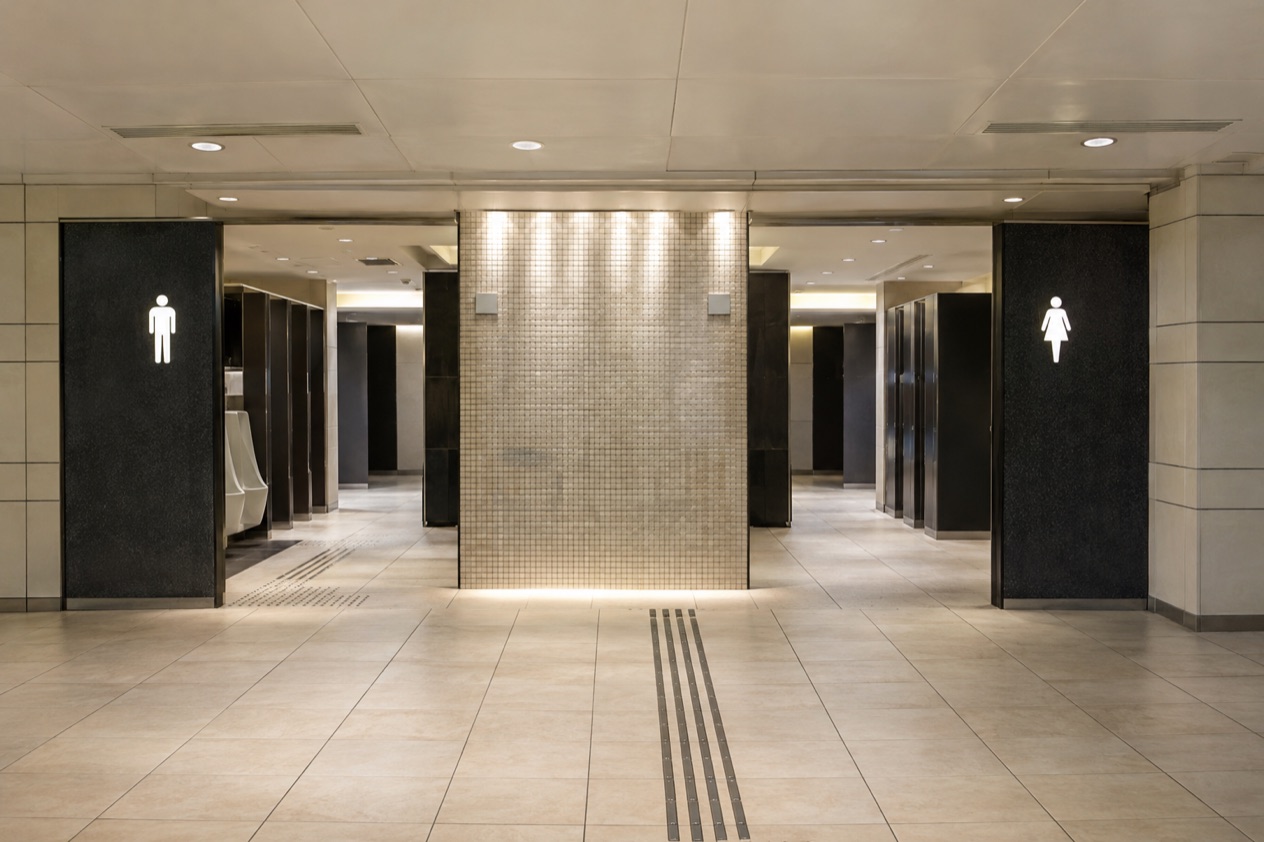
Public toilets turn up in parks, stations and other places you pass through as you travel, and in Tokyo’s Shibuya some of them have become small works of design. The most talked-about examples are the transparent glass restrooms by the architect Shigeru Ban.
The transparent toilets of Shibuya
In August 2020, transparent glass restrooms designed by Shigeru Ban were installed in Haru-no-Ogawa Community Park and the Yoyogi Fukamachi Mini Park in Shibuya, Tokyo. From outside, the walls look like colored glass, and a visitor sees the stalls as bright, lit boxes in the middle of the park.
They are worth knowing about because they show how seriously public toilets are taken as part of a park’s design. If your route through Shibuya includes Yoyogi Fukamachi Mini Park or Haru-no-Ogawa Community Park, you can see them for yourself. They are a short story about public space, told in glass.
What to expect once you step inside
Whatever the building, the habits are the same ones met elsewhere in the country. Check the floor for a squat model or a seated one, look at the panel for pictures, and leave the slippers where they belong if the door has a pair waiting. Handwashing at a tank sink may be built into the fixture itself, and the water is put to work again.
A public toilet in Japan is often a place where you can see the same thinking as in a home, with a flush that saves water, a seat that is already comfortable and a control panel designed to be read at a glance. That attention to the small detail is part of travel here.
A day for the toilet
The Japan Toilet Association celebrates an unofficial Toilet Day on November 10. It is a light-hearted occasion, and it is also a sign of how much attention Japan gives to the subject. If your trip falls around that date, the toilet is a fair topic of conversation with the people you meet, and a good excuse to ask about their favorite design.
Good to know before you go
Most of what matters here is habit rather than money. Take your time with an unfamiliar panel, press the stop button if a function surprises you, and leave toilet slippers inside the toilet.
If a fixture is a squat model, keep your belongings clear of the floor and enjoy the small detail of the sink on the tank. Toilet Day on November 10 is a reminder that the subject is treated with some affection, and a few minutes of curiosity go a long way.
Sources
- Wikipedia, Toilets in Japan (https://en.wikipedia.org/wiki/Toilets_in_Japan), checked October 11, 2026
To plan your stay
- Best Time to Visit Japan: Cherry Blossoms, Autumn Colors, Weather and Festivals
- Where to Stay in Japan: Ryokan, Temple Stays, Capsule Hotels and the Best Cities to Base In
- Sending Luggage from the Airport in Japan: Hands-Free Travel, Hotel Delivery and Coin Lockers
- Know Before You Go to Japan: Entry, Money, Etiquette and Getting Around