
The check arrives at a small ramen counter, the cook calls out a cheerful thanks, and an American hand instinctively reaches for a few extra bills. In Japan, that reflex can be set aside.
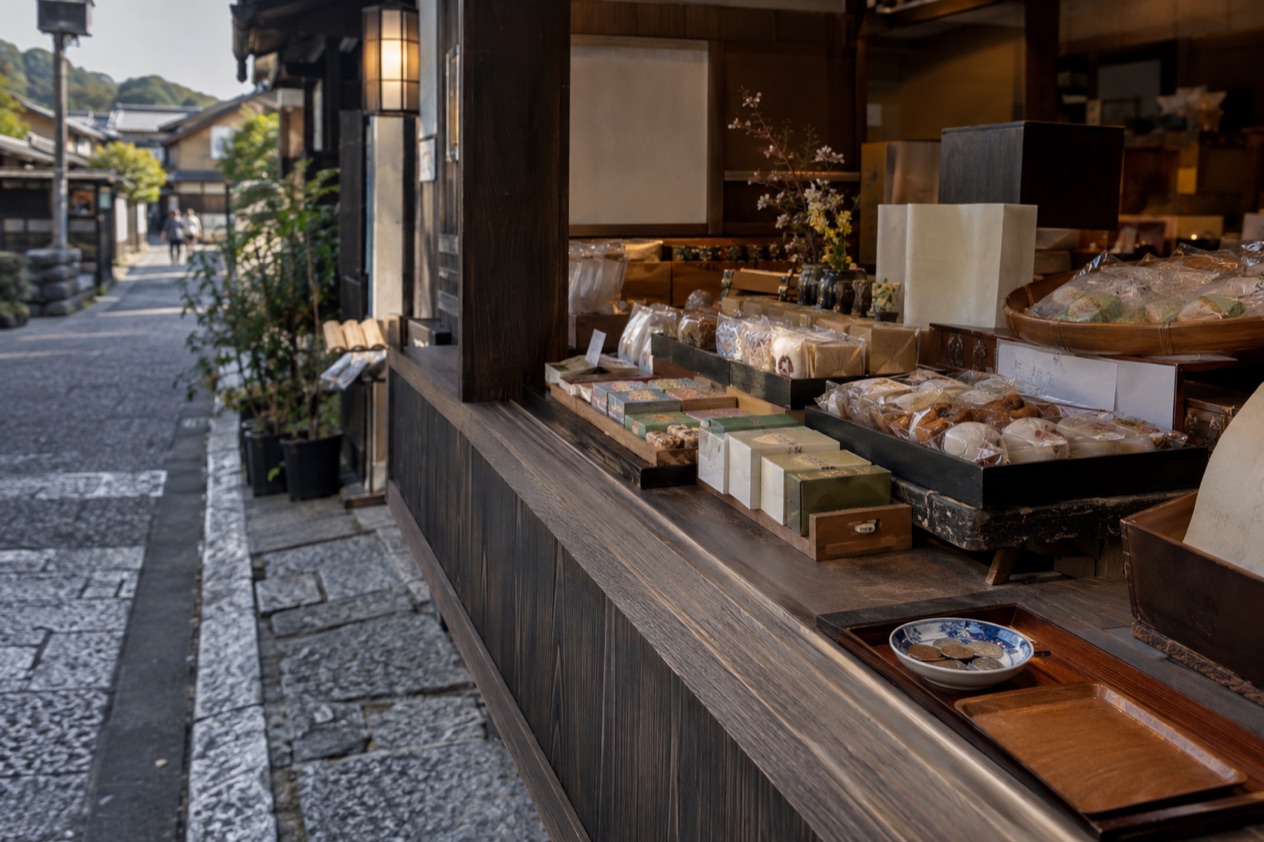
Do you tip in Japan?
No, tipping is not common in Japan, not in bars, cafes, restaurants, taxis or hotels. The price you see on the menu or the meter is the price for the service, and the person who serves you is not waiting for something on top of it. For a traveler raised on the American system, that takes a little getting used to, and it is also a relief: no mental math at the end of a meal, no wondering what percentage is right.
It helps to remember how different the two systems are. In the United States, a tip is a sum customarily given to hospitality and other service workers on top of the basic price of the service, and the wage structure of many jobs assumes it.
Under U.S. Department of Labor rules, a tipped employee who receives more than $30 per month in tips must be paid $2.13 hourly in direct wages, provided that amount combined with tips equals the federal minimum wage. Japan does not build its service jobs around that arrangement, so the habit simply has no place to land.
Where the American habit comes from
Tipping itself is an old custom. It began in Tudor England and crossed to America in the 1850s and 1860s, brought back from Europe by Americans who wanted to seem aristocratic. It was not always welcome at home: six American states passed laws that made tipping illegal, the earliest in Washington in 1909, and the last of them was repealed in Mississippi in 1926.
Prohibition, which began in 1919, pushed things the other way. Hotels and restaurants welcomed tips as a way of supplementing employee wages, and the habit settled in. That history explains why Americans so often pay tips even in countries where tipping is less of a norm, and why you may feel an urge to do the same in Tokyo or Kyoto. The urge is understandable, and it is one you can leave in your pocket.
The one exception: a private guide or interpreter
There is a small place for a tip in Japan, and it has a name: kokorozuke, a Japanese custom of giving a tip in certain situations. Such a person may accept a tip as a sign of gratitude after a day spent showing you around.
Even then, the tip is not expected, and it must be given discreetly. Think of it as a personal thank-you at the end of a good day rather than a payment owed. Handing over loose bills in plain view is the opposite of the spirit of the thing, which is why the custom comes with its own packaging, described next.
What happens if you leave money?
If you leave money in Japan, the gesture may simply puzzle the person you meant to thank, because a tip is not part of the exchange there. A few extra coins on a cafe table or a folded bill on a restaurant counter is not how appreciation is expressed, and the staff are likely to see it as something that needs sorting out rather than a reward.
What carries the meaning is the manner. A clear thank-you, a small bow of the head, and a smile at the register all say what the money would have tried to say. At a hotel, a ryokan or a taxi, the same logic holds: the fare or the room rate covers the service, and warm words and good manners are the way to show you noticed.
If you do decide to tip: the envelope
When a situation really calls for it, such as thanking a private guide, the customary way is to put the money in an envelope. The envelope turns cash into a considered gift, handed over discreetly instead of left on a table. It also keeps the moment low-key, which suits a custom where nothing is expected in the first place.
You can buy small envelopes at convenience stores (konbini), stationery stores or 100-yen shops. Since konbini are found all over Japanese cities, picking one up the day before is a small errand rather than a project. Write nothing elaborate on it. The point is the discretion, not the ceremony.
Why the gesture can feel awkward
Americans sometimes tip abroad out of habit or generosity, and the intention is kind. The difficulty is that in a place where tipping is not common, an unexpected offer can create a small moment of awkwardness for both sides: the staff member has to decide how to respond, and you are left wondering whether you did something wrong.
A good rule of thumb is to treat the listed price as complete and to save the envelope for the rare personal case, a guide or interpreter who has given you a full day of their attention. Everywhere else, gratitude travels better as words than as cash.
What about service charges?
A service charge is a fee added to a bill for the service itself, and where one is explicitly charged, tipping may not be expected on top of it. That is a general principle of gratuity: a tip is a sum given in addition to the basic price of a service, so when the service has already been priced and billed, there is nothing left for a tip to cover.
In Japan this fits neatly with the rest of the picture. Tipping is not common to begin with, so a bill that already includes a charge for service gives you two reasons to close your wallet. You pay what the bill says, and that settles the matter for the meal, the room or the ride.
Reading the bill
If a charge for service appears as its own line, it is part of what you owe, not an invitation to add more. Treat it as you would a fixed fee: pay the total, say thank you, and go. There is no second layer of generosity expected, and no calculation to make in your head the way you would at a restaurant in the United States.
If there is no such line, the same answer applies for a different reason. Without a service charge, tipping is still not customary in bars, cafes, restaurants, taxis or hotels, so the total on the check is the whole of what you pay for the experience.
A quick guide for the places you will visit
- Restaurants, bars and cafes: no tip, whatever the size of the party or the quality of the meal.
- Taxis: no tip on top of the fare.
- Hotels: no tip for the front desk, the porter or the room staff.
- Private guide or interpreter: a tip is not expected, but may be accepted as thanks, in an envelope and given discreetly.
Notice how short the list of exceptions is. One category, one custom, one way of doing it. Everything else follows the simple rule that the price is the price.
Good to know before you go
Since tipping is out of the picture, it is worth keeping a few small envelopes in mind only for the rare personal thank-you, and buying them at a konbini, a stationery store or a 100-yen shop when the occasion comes up. Beyond that, the most useful habit is the least costly one: a sincere thank-you, said with a nod, goes further than any bill. Travelers from the United States who tip by reflex can simply let the habit rest for the length of the trip.
Sources
- Japan National Tourism Organization, tipping customs (https://www.japan.travel/en/plan/tipping-in-japan/), checked October 11, 2026
- Wikipedia, Tipping (https://en.wikipedia.org/wiki/Tipping), checked October 11, 2026
To plan your stay
- Best Time to Visit Japan: Cherry Blossoms, Autumn Colors, Weather and Festivals
- Things to Do in Japan: Kyoto Temples, Onsen, Street Food and Day Trips
- Where to Stay in Japan: Ryokan, Temple Stays, Capsule Hotels and the Best Cities to Base In
- Sending Luggage from the Airport in Japan: Hands-Free Travel, Hotel Delivery and Coin Lockers