
Under a wooden gate, two huge guardian statues glare down at you with fists clenched and mouths set, and beyond them a path leads to halls whose roofs curve against the sky. That first step through a temple gate is where a visit to Japan slows down. Temples stand in the old capitals of Kyoto and Nara, in the mountains above Nikko, and in the Kii Mountains of western Japan, and they reward anyone who likes to look closely.
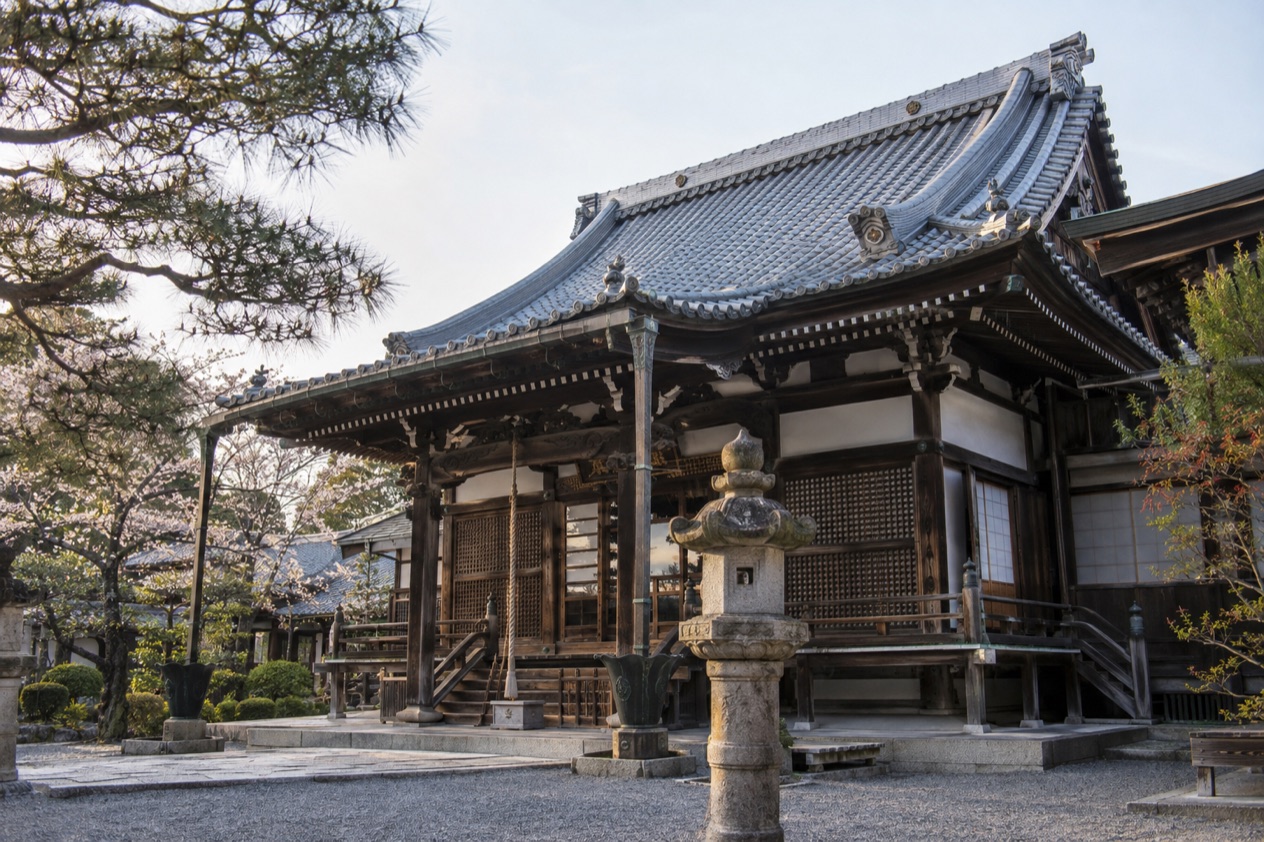
Which temples should you visit in Japan?
Start with the three regions where the great temple complexes cluster: Kyoto, Nara and Nikko, all listed among Japan’s UNESCO World Heritage sites, and then add the sacred mountain routes of the Kii Mountains if you have time to go further. Buddhist temples, together with Shinto shrines, are the most numerous and important religious buildings in the country, so you will meet them in every town, not only on the famous circuits.
It helps to know what you are walking into. A Buddhist temple in Japan is not first of all a place of congregational worship in the way a church is.
Its most important buildings shelter sacred objects and are not open to worshipers, and the complex is also a monastery, with specialized halls for rites that only a limited number of participants attend. So much of what you see is the outside: gates, courtyards, pagodas, gardens and the front of halls whose heart stays out of view.
Kyoto and the temple on Mount Hiei
Kyoto is the obvious base for a temple trip, and it holds sites such as Kiyomizu-dera and Kinkaku-ji, each with its own mood, one set on a wooded hillside and the other beside a garden pond. Give each its own stretch of time rather than stacking them in a rush, because the pleasure lies in the details: moss, gravel, wooden eaves, incense drifting from a burner.
Higher up, Enryaku-ji sits atop Mount Hiei, to the north-east of Kyoto. It is said to defend the city from evil spirits by standing in that direction, an old belief about where danger comes from. A temple on a mountaintop feels different from one in a city street, and this one suits travelers who want trees and a sense of height as part of the visit.
Nara and the rebuilt Yakushi-ji
Nara pairs well with Kyoto for temple lovers, and Todai-ji is the name most visitors know. A quieter study in how these complexes were planned is Yakushi-ji, built in Nara in the early eighth century and since reproduced in its original layout. The monumental Yakushi triad, three seated figures, is kept there.
Walking a reconstructed layout lets you see how halls, pagodas and gates were meant to relate to one another. It is a good stop for anyone curious about architecture and who likes to understand a plan as well as a view.
Muro-ji and the sacred mountain
Muro-ji is a reminder that temples can be tied to the landscape itself. The caves of Mount Muro are especially sacred, and the famous Dragon Cave is thought to house the Dragon King who protects the country. The area behind the temple is off limits to visitors and pilgrims, so you appreciate the setting from where you are allowed to stand.
That boundary is part of the experience. Not everything is meant to be seen, and a temple that keeps a hillside to itself says something about how the place is understood. Travelers who enjoy forested, spiritual settings over big sightseeing sites will find it rewarding.
Nikko and the Kii Mountains
Nikko’s temple complexes are among the World Heritage properties named alongside Kyoto and Nara, and they make a different kind of day, with sacred buildings set among trees. The Kii Mountains, in western Japan, hold sacred sites and pilgrimage routes, for travelers who want the walking, the forest and the sense of a route that has been followed for a very long time.
Mix the two kinds of days if you can: one among the grand halls of a city complex, one in a mountain setting where the approach matters as much as the building.
Which are best known?
The temple complexes of Kyoto, Nara and Nikko carry the most recognition, because they are the ones gathered under Japan’s UNESCO World Heritage listings, and within them names like Kiyomizu-dera, Kinkaku-ji and Todai-ji come up again and again. They differ widely in feel, so it is worth choosing by what you like to look at rather than by reputation alone.
Kiyomizu-dera and Kinkaku-ji in Kyoto
Kiyomizu-dera is a hillside temple whose wooden structures face out over the city, a place for looking as much as for visiting halls. Kinkaku-ji, the Golden Pavilion, is a building you meet across the water of its pond, reflected and glinting, with a garden path that leads you around it.
They make a good pair for contrast: one is about height, wood and views, the other about a single striking building and its setting. Photographers, garden lovers and first-time visitors tend to enjoy both, and each repays a slow loop rather than a quick look.
Todai-ji and the temples of Nara
Todai-ji is the temple most travelers associate with Nara, a large complex of the kind where the scale of the gates and halls is part of the point. Alongside it, Yakushi-ji adds the story of a plan reconstructed on its original layout, with its Yakushi triad.
Go with an eye for the guardians at the gates. Buddhist temple complexes generally have gates with a pair of large guardian statues called Nio, fierce figures set there to watch over the entrance, and they are among the most memorable things you pass on the way in.
Beyond the temples: other World Heritage names
Temples are only one strand of Japan’s World Heritage list, which also includes castles, historic villages, a vast national park and sacred routes. Himeji Castle stands in Hyogo Prefecture, the villages of Shirakawa-go and Gokayama are known for pointed thatched roofs, and colorful castles stand in Okinawa, the southernmost islands. Mount Fuji is described as the most iconic of all the sites.
If temples are your theme, these are good companions for variety: a castle day, a village of thatched roofs, a mountain on the horizon. They break up a run of halls and give a fuller sense of the places the temples belong to.
What are the etiquette rules?
Temple manners come down to a few habits of respect, and the clearest guide is the layout itself: you pass through a gate, you keep to the areas open to visitors, and you accept that the most sacred buildings are not for entering. These are habits rather than a legal code, and they follow from how a temple works.
At the gate and in the grounds
Gates mark the entrance, and temples share this feature with Shinto shrines, which also have torii gates alongside the rōmon gates of temples. Pass through with a moment of attention, and notice the Nio guardians if there are any. Treat the grounds as a place of quiet work as well as sightseeing, since a temple is a monastery as well as a destination.
Because temples and shrines sit side by side in many places, it is useful to tell them apart. Torii gates mark Shinto shrines, while temples are entered through their own gates and often have a hall of sacred objects that stays closed to the public.
Respecting what is off limits
Most important buildings safeguard sacred objects and are not accessible to worshipers, so do not expect to walk into the main hall as you would a church. Specialized halls used for rites are usually open only to a limited number of participants, and some areas are closed altogether, such as the area behind Muro-ji, which is off limits to visitors and pilgrims.
Follow signs and ropes, and treat a closed door as the answer. Ceremonies with many people are held outdoors, so if you come across one, stay at a respectful distance and let the participants have the space.
Moving through a visit with care
Think of a temple as a working monastery that lets you walk through. Keep your voice low, give people who are praying room, and take your time in courtyards and gardens rather than hurrying from photo to photo.
Mass gatherings do not happen with regularity at Buddhist temples, so a visit is usually a quiet affair of individual moments: a bow, a pause at a hall, a walk under old eaves. That rhythm is the one to match.
Good to know before you go
Temples are spread across regions from Kyoto and Nara to Nikko and the Kii Mountains, so plan a day around one area rather than several. Carry some yen and wear shoes that are easy to take off, since many halls ask visitors to remove them. Rain and typhoon seasons vary by region and year, so keep a plan B indoors, such as a museum or a covered arcade, for the wettest days.
Sources
- Japan National Tourism Organization, World Heritage sites in Japan (https://www.japan.travel/en/world-heritage/), checked October 11, 2026
- Wikipedia, Buddhist temples in Japan (https://en.wikipedia.org/wiki/Buddhist_temples_in_Japan), checked October 11, 2026
To plan your stay
- Best Time to Visit Japan: Cherry Blossoms, Autumn Colors, Weather and Festivals
- Where to Stay in Japan: Ryokan, Temple Stays, Capsule Hotels and the Best Cities to Base In
- Sending Luggage from the Airport in Japan: Hands-Free Travel, Hotel Delivery and Coin Lockers
- Know Before You Go to Japan: Entry, Money, Etiquette and Getting Around