
Somewhere on a mountain road in Japan, a traveler looks up at a wooden gate, a drift of incense and a roofline of dark tile, and wonders whether the lodging next to the hall could be theirs for the night. It can. Many temples take in overnight guests, and the stay is called shukubo: a room in a Buddhist temple, a vegetarian dinner, and the chance to join the morning service.
What is a temple stay?
A temple stay is a night spent inside a Buddhist temple, in a lodging called a shukubo. The word describes a place that historically hosted traveling monks and now welcomes ordinary travelers too. You sleep under the same roofs as the community that lives there, and the temple’s routine becomes part of your evening and your morning.
The idea is old. These lodgings were first designed to accommodate only monks and worshippers, and today most of them accept general tourists. In the Edo period, visits to temples and shrines became popular, with journeys to Ise, Kotohira-gu and Zenko-ji among them. Lodging houses were built at major temples and shrines in each area for the ordinary pilgrims and tourists who arrived.
The room
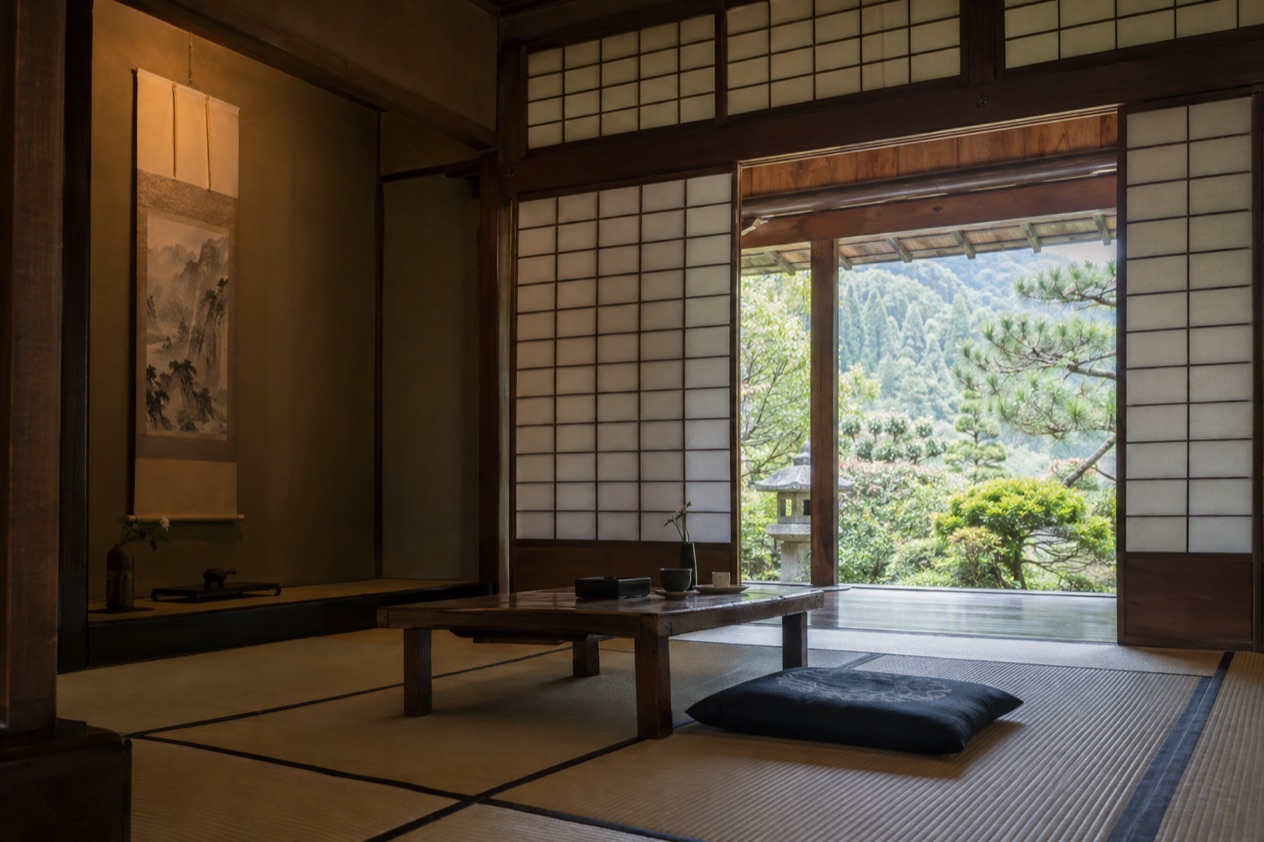
Traditional rooms have tatami flooring and a futon mattress for sleeping. Expect the usual habits of a Japanese inn: shoes come off at the entrance, slippers carry you down the corridors, and the room feels more like a quiet guest chamber than a hotel bedroom. Sliding paper doors separate you from the hallway, and the bedding is laid on the straw mats.
Toilets in shukubo are generally shared spaces, though some temples offer suites or rooms with a private bathroom. Bathing arrangements differ from one temple to the next. At Mount Koya, some temples have open-air baths with onsen water, which makes a soak after a day on the mountain part of the stay.
The meals
The room price at a shukubo usually includes both dinner and breakfast, so the meals are part of the experience rather than something you hunt for. They are called shojin ryori, a Buddhist cuisine that does not use meat, fish, dairy products or eggs. Think of it as something close to vegan cooking, built around vegetables, tofu, sesame, seaweed, pickles and rice.
The dishes arrive as a set of small bowls and plates, each with its own texture and seasoning. Travelers who expect a plain meal are surprised by how much variety fits on a tray without a trace of meat or fish. It is food made with care for the season, and the simplicity is the point.
What changed over time
Many modern-day operators of shukubo are descendants of families that ran shukubo when they were purely religious. That family continuity gives the lodgings a lived-in feel, with hosts who have grown up in the temple’s rhythm. In modern times, some shukubo have been converted into traditional inns and ryokan for tourists.
Opening to the general public has substantially increased the number of people staying at shukubo. Because of that, a temple stay today can range from a simple room run by a temple family to an inn that keeps the temple setting while working much like any other ryokan. Reading what a given temple offers before you choose tells you which of these you will find.
Where can you do one?
In many towns, shukubo are the only accommodations available, which tells you how closely these lodgings are tied to the places where pilgrims gather.
| Temple | Area | Online booking |
|---|---|---|
| Kakurinbo | Yamanashi | English |
| Seikokuji | Nara | English |
| Koyasan temples | Wakayama | English |
| Waqoo Miidera | Shiga | English |
| Shoureki-ji | Kyoto | English |
| Chishakuin | Kyoto | English |
| Enmeiin-SUWA | Nagano | Japanese only |
| Anrakuji | Tokushima | Japanese only |
Temples with English booking
Six shukubo offer English online reservation: Kakurinbo in Yamanashi, Seikokuji in Nara, the temples of Koyasan in Wakayama, Waqoo Miidera in Shiga, and Shoureki-ji and Chishakuin in Kyoto. For a first stay, this list gives you a spread of regions, from a mountain pilgrimage center to temples in and around the old capital.
Koyasan is the name to know if you want a cluster of lodgings in one place, since some of its temples have open-air baths with onsen. Kyoto offers two names in the list, which lets you pair a night in a temple with the city’s gardens and halls. Nara, Shiga and Yamanashi each bring a single temple to the list, suited to a trip built around one region.
Temples booked only in Japanese
Enmeiin-SUWA in Nagano and Anrakuji in Tokushima can be booked online only in Japanese. They appear among the shukubo that draw guests, and they are worth knowing about if you read Japanese or travel with someone who does. For everyone else, the English-language options above cover the ground more directly.
Old pilgrimage roads
Knowing the history helps you read the map. At the foot of Mount Haguro there were once 336 shukubo, all linked to Shugendo, the mountain-training tradition. Networks of shukubo also developed in Ise, Shima, Toba and Futami, where pilgrims needed beds near the great shrines.
Some of those lodging districts have faded, and others carry on in new forms. When you see a temple town with guesthouses clustered around its gates, you are looking at the descendants of those pilgrim networks. A night in one is a way of following the same road travelers took long before rail passes and online booking forms.
What is the daily schedule?
A day at a shukubo is shaped by the temple: you arrive, settle into a tatami room, eat the vegetarian dinner included in the room price, sleep on a futon, join the morning service and have breakfast before you leave. The details vary from one temple to the next, so think of it as an outline rather than a fixed timetable.
Evening: dinner and the room
After you have put your shoes away and found your room, the evening centers on shojin ryori. The meal is vegetarian in the Buddhist sense, with no meat, fish, dairy or eggs, and it is served as part of the lodging rather than as an extra. The tray is worth eating slowly, one small bowl at a time.
Each shukubo has its own rules about alcohol. Some allow ordering it as medicinal food or drink, while others prohibit it strictly. Since the answer changes from one temple to the next, ask at the time of booking instead of assuming a drink with dinner. After the meal, the futon is laid out on the tatami, and the evening winds down without a screen-filled lounge to fall back on.
Morning: gongyo and meditation
Visitors can take part in the morning devotional services called gongyo. The kind of service depends on the Buddhist sect of the temple, so the chanting, the sounds of bells and the order of the ritual differ from one lodging to another. You sit in the hall, listen to the sutras, and watch the monks go through the offerings.
Meditation training is another activity often offered to visitors at shukubo. Where it is on offer, it gives you a way to sit with the practice instead of only observing it. Ask the temple what it provides, because not every shukubo runs the same program, and some stays are built mostly around the room, the meals and the service.
Breakfast and departure
Breakfast comes with the room price, as dinner does, and it follows the same vegetarian approach. After the service, a plain Buddhist breakfast of rice, soup and small side dishes feels like the natural close to the stay. When you pack up, the futon goes back in its place and the slippers return to the entrance.
What you take away is mostly a feeling for how a temple day runs: the shared spaces, the service, the food and the room. That combination is the reason travelers choose a shukubo over a regular inn, even when the ryokan next door offers a similar tatami room.
Good to know before you go
Some shukubo temples accept only cash, so confirm the payment method in advance when booking. Information on the Japan National Tourism Organization shukubo page may change, which means details such as which temples take English reservations can shift from one season to the next.
Shared toilets are the norm, so if a private bathroom matters to you, look for the temples that offer suites or rooms with one. Treat the temple as a place of worship first and a lodging second, and let its routine set the pace of your stay.
Sources
- Japan National Tourism Organization, temple stays (https://www.japan.travel/en/guide/temple-stays/), checked October 11, 2026
- Wikipedia, Shukubo (https://en.wikipedia.org/wiki/Shukubo), checked October 11, 2026
To plan your stay
- Best Time to Visit Japan: Cherry Blossoms, Autumn Colors, Weather and Festivals
- Things to Do in Japan: Kyoto Temples, Onsen, Street Food and Day Trips
- Sending Luggage from the Airport in Japan: Hands-Free Travel, Hotel Delivery and Coin Lockers
- Know Before You Go to Japan: Entry, Money, Etiquette and Getting Around