
At the foot of a stone stairway, a red torii gate frames the path into the trees, and a few visitors pause, bow slightly and walk on, keeping to the side. Farther in, incense smoke drifts from a big burner and a coin clinks into an offering box. Temples and shrines ask for little: quiet, a bit of observation and a willingness to copy what the people ahead of you do.
What are the rules at temples and shrines?
The rules are mostly habits of respect: move quietly, bow where others bow, stay out of areas closed to the public and take your cue from the people around you. Few of them are written down as orders, and most of what follows is the way people behave rather than a list of prohibitions.
It helps to know that two different kinds of places share the same landscape. They look alike at first glance, and the etiquette overlaps, but they are not the same thing.
Shrines and temples are not the same place
Shinto shrines number around 100,000 across the country, from huge complexes to tiny roadside sanctuaries tucked behind a house. Fushimi Inari Taisha in Kyoto is the head shrine of the largest shrine network in Japan, with more than 32,000 member shrines, about a third of the total. Many of those are small, so a shrine you stumble on in a neighborhood is quite normal.
Temples are Buddhist, and they share some architecture with shrines, including torii gates and rōmon gates that mark the entrance. A temple is also a monastery. Unlike a church, it has specialized buildings for certain rites that are usually open only to a limited number of participants. That explains why you may walk a courtyard and see a hall you cannot enter.
Large religious gatherings do not happen regularly at temples, and when people take part in a ceremony it is held outdoors. If you come across a rite in progress, you are watching something that belongs to the people taking part, so a respectful distance is the natural habit.
Gates, guardians and the inner buildings
Temple complexes generally have gates, and those gates typically hold a pair of large guardian statues called Nio. They stand with fierce expressions on either side of the passage, and walking between them is part of entering the grounds. A small bow toward the gate as you pass is a common gesture, and it costs nothing.
The most important building of a temple is not primarily for worshipers. It safeguards sacred objects and is not accessible to them. At a shrine, the honden, where the sacred object called the shintai is kept, is always closed to the public and is not used for prayer or ceremonies. So the hall you stand before and pray to is not the innermost one, and the closed doors are part of the design.
The shintai leaves the honden only during festivals, when it is placed in a portable shrine called a mikoshi and carried through the streets. If you happen to be in town during a matsuri, the mikoshi procession is the moment when the sacred and the street meet, and crowds line the route to watch it pass.
Ground that is off limits
Some sacred ground is closed to visitors altogether. At Muroji temple, the area behind the temple is sacred and is off limits to visitors and pilgrims. The caves of Mount Muro are especially sacred there, and the famous Dragon Cave is thought to house the Dragon King who protects the country. It is a good example of why a rope, a fence or a sign at a temple means exactly what it says.
Some shrines have no hall of sacred images at all. Omiwa Shrine in Nara contains no sacred images or objects, because it is believed to serve the mountain on which it stands. Futarasan Shrine in Nikko takes Mount Nantai as its shintai. In both cases the real object of reverence is the mountain, and the buildings are the place from which you face it.
Shoes, slippers and a silent phone
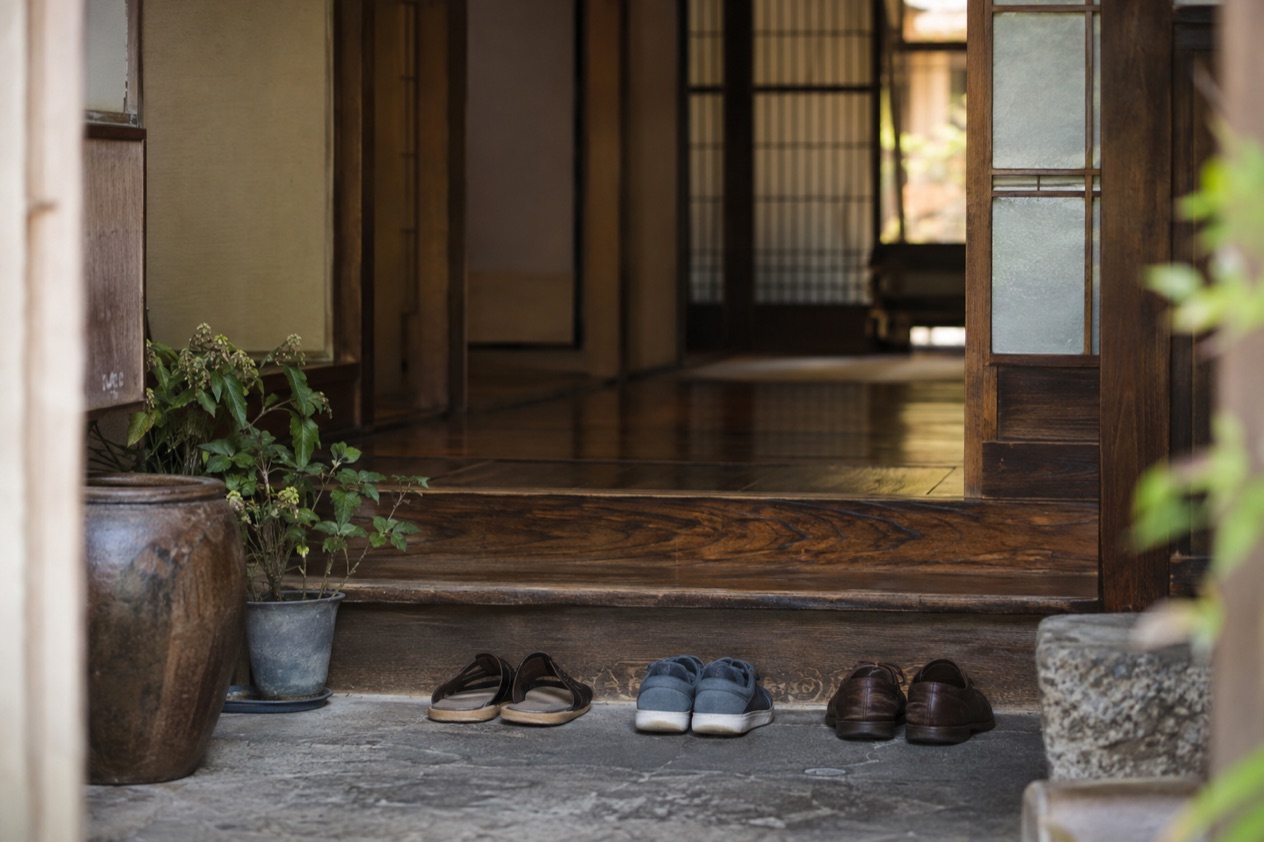
In Japan it is customary to remove shoes at the entrance when entering a building, put on indoor slippers and set your shoes in a shoe box or to the side. Temple halls you are allowed to enter often follow the same habit, so socks without holes are a small kindness to yourself. At traditional ryokan inns, shoes must come off at the entrance, and the same custom of leaving them at the door runs through homes.
Phones belong on silent mode in public places, especially on public transportation, and the same courtesy suits a temple courtyard, where the sounds are a bell, footsteps on gravel and low voices. Smoking while walking on the street is prohibited and can result in a fine, and designated outdoor smoking areas are limited, so temple grounds are not a place to light up.
How do you pray at a shrine?
You pray at a shrine by approaching the front hall with a small bow, offering a coin, and then greeting the deity with a bow, a pair of claps and a quiet moment of thought. The hall in front of you is the place for prayer, since the honden behind it stays closed.
None of this is policed. Visitors who have never prayed at a shrine simply follow the person in front of them, and the order is easy to read from the way people stand. The sequence below is the general habit, told without fixed counts, because the posted instructions at a shrine are the guide to follow.
From the gate to the water basin
The torii gate marks the passage into the shrine. People bow slightly before going through and walk toward the side of the path rather than straight down the center, which is thought of as the way for the deity. It is a small gesture that costs a second and tells you immediately that you have crossed into a different kind of space.
Near the entrance there is usually a water basin with ladles, where worshipers rinse their hands and mouth before praying. People rinse quietly, put the ladle back and move on. The idea is purification before approaching the hall, and watching a few people do it before you try is the best instruction available.
Bowing is a general gesture across Japan. Informal bows are made at about a fifteen-degree angle, and more formal bows at about thirty degrees. If someone holds their bow longer than you expected, generally about two or three seconds, the person who rose first may bow a second time. At a shrine, a modest tilt of the head and shoulders is natural.
At the offering box
In front of the main hall stands an offering box, often with a thick rope and a bell hanging above it. Visitors step up, drop in a coin and ring the bell if there is one, then bow, clap their hands and bow once more with a short silent wish or thanks. The claps are meant to be crisp, and people keep their voices low.
If a line has formed, you wait for your turn and step aside once you have finished so the next person can come forward. Do not expect to go inside or beyond the box: the doors behind it are closed, and the inner hall is not used for prayer.
At a Buddhist temple, the habit is different. People generally stand quietly, press their palms together and bow, without clapping. Incense burners in temple courtyards are another feature, and visitors often waft the smoke toward themselves. If you are unsure which kind of place you are in, look at the gate: a torii means a shrine, and Nio guardians mean a temple.
Great shrines, same manners
The famous shrines follow the same small gestures. Itsukushima Shrine, remembered for its torii rising from the water, is a UNESCO World Heritage Site, and visitors walk its approaches with the same quiet bearing as at a village shrine. Kasuga Taisha in Nara, the shrine of the Fujiwara family, was established in 768 AD, and it welcomes people in the same way.
Ise Grand Shrine is still rebuilt every 20 years, preserving ancient architectural styles, which is a reminder that these buildings are living places of worship and not museum pieces. Yasukuni Shrine in Tokyo is dedicated to the soldiers and others who died fighting on behalf of the Emperor of Japan, and visitors there are walking into a place with its own history and meaning, so the same quiet manner applies.
What about photos?
Temples and shrines are places people photograph constantly, but the sensible approach is to photograph the architecture and the scenery and to keep your camera away from anyone who is praying or taking part in a ceremony. Nothing in the rules we have sets out where cameras are allowed, so the signs posted at each site decide.
What you can say in general is that a temple or shrine is a working religious place, with its own habits of silence. A camera shutter, a phone ringtone or a loud conversation breaks that. Phones belong on silent mode in all public places, and a temple courtyard is a good place to follow that custom.
What people tend to photograph
The outer features are the visual draw. Torii gates, rōmon gates and the pair of Nio guardians at a temple entrance give a sense of scale and character, and the torii rising from the water at Itsukushima is among the images people remember. Stone lanterns, rope-hung offering boxes and the roofs of the halls are all part of the scene.
Setting up a shot in the middle of a path, particularly in the center of a gate, gets in the way of other visitors and of people who are there to pray. Stepping to the side to compose a picture is the natural habit, in line with the way people walk through a torii.
What is not on view
A great deal of a temple or shrine is simply not accessible. The honden of a shrine is always closed to the public, and the most important buildings of a temple safeguard sacred objects and are not open to worshipers. At Muroji, the area behind the temple is off limits to visitors and pilgrims. If something is closed or roped off, there is nothing to photograph from inside.
Ceremonies are a different case. Temples have specialized buildings for rites usually open only to a limited number of participants, and a procession at a festival, when the shintai is carried out in a mikoshi, is something people are carrying out with devotion. Treat these as moments to watch with respect, and keep a camera low and discreet.
Manners around the camera
A few ordinary habits fit here. Do not stand in a doorway or on a stairway to line up a picture, keep your phone silent, and wait your turn at the offering box rather than filming over someone’s shoulder. If a person is bowing or praying in front of a hall, wait until they have finished before moving into the frame.
Smoking while walking is prohibited in Japan and can bring a fine, so a cigarette during a photo stroll through the grounds is out. After a visit, a ryokan stay or a hot spring may be part of the trip, and there the rules change again: body cleaned before entering the bath, shoes off at the door, and tattoos sometimes banned at sentō and onsen.
Good to know before you go
Money matters are simple around temples and shrines. Tipping is not a custom in Japan, though it may exist as a fixed service charge or be built into the price, and in Western-style hotels it is not necessary.
Many shops set out a small tray by the register for your money rather than taking it from your hand, and the same courtesy applies at a stall near a shrine. Eating habits are part of a day out too: slurping noodles is appropriate, and the rolled oshibori towel is for your hands, not your face.
Sources
- Japan National Tourism Organization, manners, etiquette, shoes, bowing, chopsticks, public behavior (https://www.japan.travel/en/guide/understanding-and-mastering-japanese-manners-and-etiquette/), checked October 11, 2026
- Japan National Tourism Organization, manners and customs (https://www.japan.travel/en/plan/custom-manners/), checked October 11, 2026
- Wikipedia, Buddhist temples in Japan (https://en.wikipedia.org/wiki/Buddhist_temples_in_Japan), checked October 11, 2026
- Wikipedia, Etiquette in Japan (https://en.wikipedia.org/wiki/Etiquette_in_Japan), checked October 11, 2026
- Wikipedia, Shinto shrine (https://en.wikipedia.org/wiki/Shinto_shrine), checked October 11, 2026
To plan your stay
- Best Time to Visit Japan: Cherry Blossoms, Autumn Colors, Weather and Festivals
- Where to Stay in Japan: Ryokan, Temple Stays, Capsule Hotels and the Best Cities to Base In
- Sending Luggage from the Airport in Japan: Hands-Free Travel, Hotel Delivery and Coin Lockers
- Know Before You Go to Japan: Entry, Money, Etiquette and Getting Around