
A wrestler tosses a fistful of salt into the ring, the crowd draws one collective breath, and two enormous men crouch face to face, waiting for the moment the other blinks. Then comes a clap of flesh, a shove, and it is over almost before you have understood it.
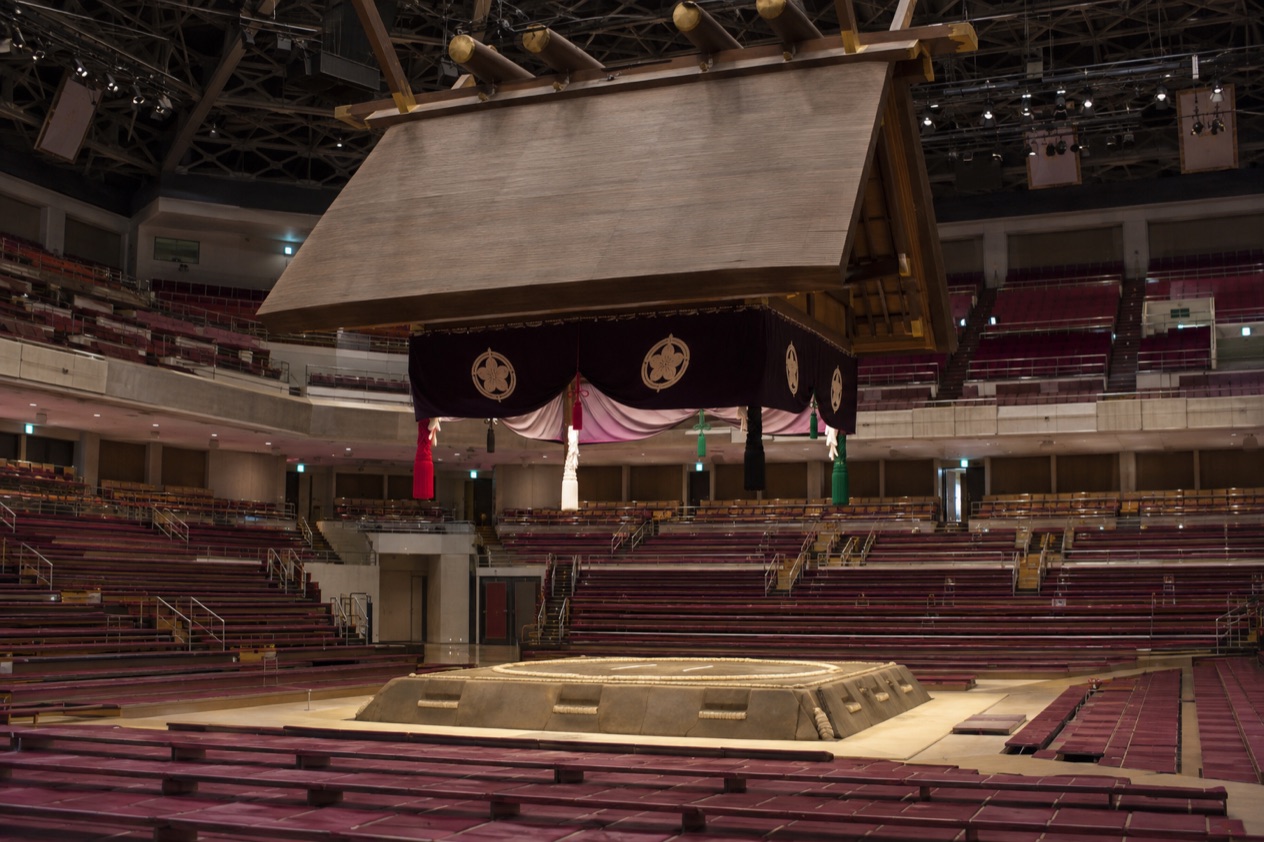
How does sumo work?
Two wrestlers face off inside a circular ring, and the first to be forced out of it or made to touch the ground with anything but the soles of his feet loses. Sumo is practiced professionally only in Japan, which is part of why it feels so rooted in the place.
The ring itself, the dohyo, is a raised circle of packed clay with a diameter of 4.55 meters (14.9 feet). It is small, which is the first surprise for newcomers: the whole contest plays out in a space you could cross in a few steps, so every shove and pivot happens right in front of you. Women are not permitted to compete in professional sumo or to enter the ring.
What happens in a single bout
Before bouts in the top two divisions, wrestlers scatter salt as a gesture of purification rooted in Shinto. They crouch at the center, stare each other down, and rise when both are ready. Sometimes the first charge does not line up and they reset, so the build-up can stretch while the tension grows.
In the top division a bout is allowed a maximum of four minutes, though most end far sooner, often in a few seconds. What you watch for is the clash at the start, the grip on the belt, and the moment one man loses his footing or is walked over the edge. The referee, in his colorful robes, calls out the winner with a sweep of his fan.
The rhythm of a tournament day
A day of sumo is built like a slow crescendo. Wrestling starts in the morning with the youngest, lowest-ranked men, the jonokuchi, and builds through the ranks until it ends around 6:00 p.m. with the bouts of the yokozuna, the grand champions. Early on the hall is often thinly filled and relaxed, with people wandering in and out. As the afternoon goes on the seats fill and the noise grows.
That structure lets you choose how much to see. You can arrive for the early bouts to watch young wrestlers fighting for their first rank, or time your visit for the evening finale when the best men step in. Either way, the pageantry of the top ranks, with their ring-entering ceremonies, belongs to the later part of the day.
Who fights whom
Sumo elders meet every morning at 11 a.m. and announce the following day’s bouts around 12 p.m., with one exception: the final day’s matchups are announced later, on day 14. That gives each day a sense of unfolding story as rivalries and winning streaks shape what comes next.
There are also rules about who can meet. In regular play, wrestlers from the same training stable cannot face each other, and neither can brothers. The only exception is a playoff to decide the championship, which can produce the most charged bout of the whole tournament.
When are the tournaments?
Six Grand Sumo tournaments, called honbasho, are held each year across four cities. Each one begins on a Sunday and runs for 15 days, ending on a Sunday, so a tournament always covers two full weekends with a stretch of weekdays between them.
That shape is useful when you plan. If you want the most atmosphere, the weekends fall at the opening and the close, and the final Sunday is the day the championship is settled. If your trip is flexible, a weekday still gives you the full ladder of bouts from morning to the champions in the evening.
Tokyo: January, May and September
Tokyo hosts three of the six, all at the Kokugikan, the arena built for sumo. The tournaments fall in January, May and September, which makes the capital the easiest city in which to line a sumo afternoon up with a wider trip. Each one covers the same 15 days from a Sunday to a Sunday.
Because there are three a year, Tokyo gives you the most chances, and it pairs naturally with the rest of a city itinerary: a morning at a temple or market, then an afternoon in the hall. Planning around the January, May or September dates means you can fit it into very different seasons of travel.
Osaka, Nagoya and Fukuoka
The other three tournaments travel. Osaka hosts one in March, Nagoya in July, and Fukuoka in November. Each is a chance to see the sport outside Tokyo, in a city with its own food and character, and to build a trip around it if you are already heading to that part of the country.
Together the six tournaments follow an every-other-month rhythm through the year: January, March, May, July, September and November. If your travel dates are fixed, check which of those months you land in, since the host city changes with the calendar and the same 15-day, Sunday-to-Sunday pattern applies to every one.
Planning your day around the schedule
Since wrestling runs from the morning until about 6:00 p.m., you can treat a tournament day as a flexible outing. Arriving in the afternoon catches the higher ranks, while an early start rewards you with the youngest wrestlers and a more relaxed hall. The yokozuna bouts close the day, so staying to the end gives the strongest finish.
Matchups for the next day go public around midday, so if you are deciding which day to attend while already in the host city, that announcement is the moment the day’s headline bouts become known.
How do you get tickets?
, so the first step is to choose a day within one of the six 15-day tournaments and then secure a seat for it. How do you get tickets?
What you can do is decide how you want to experience the day. Because the action runs from the morning bouts to the evening yokozuna matches, Think about whether you prefer the quieter early ranks or the headline finish.
Choosing the right day
Each tournament has 15 days, and each one has a different feel. The opening Sunday brings the excitement of a fresh start, the middle days let the story build, and the final Sunday carries the weight of the championship. A weekend day suits a first visit if you want the fullest atmosphere, while a weekday keeps the pace more relaxed.
If you want to see a particular rivalry, the matchups for each day are announced around 12 p.m. the day before. The last day’s bouts are announced later, on day 14, so the final pairings come at the last moment.
Choosing the city
Your route through Japan largely decides this. Tokyo has the most tournaments, in January, May and September at the Kokugikan. If your trip passes through Osaka in March, Nagoya in July or Fukuoka in November, a tournament there can become a highlight in a city you were visiting anyway.
Building a trip around a tournament works in either direction: pick the city first and see which month it hosts, or pick the month and see which city has the bouts. Either way, the Sunday-to-Sunday span gives you room to fit a day of sumo into a longer stay.
Good to know before you go
Since the tournaments fall in different seasons across the year, dress for the month you travel in. Wrestlers are treated with deep respect, and the ring is a place of ritual, so Follow the crowd’s cues while respecting the ring ceremonies.
Sources
- Wikipedia, Sumo (https://en.wikipedia.org/wiki/Sumo), checked October 11, 2026
To plan your stay
- Best Time to Visit Japan: Cherry Blossoms, Autumn Colors, Weather and Festivals
- Where to Stay in Japan: Ryokan, Temple Stays, Capsule Hotels and the Best Cities to Base In
- Sending Luggage from the Airport in Japan: Hands-Free Travel, Hotel Delivery and Coin Lockers
- Know Before You Go to Japan: Entry, Money, Etiquette and Getting Around