
Souvenir shopping in Japan is as much about the making as the buying. It runs from the stoneware of old kiln towns to the gold leaf of Kanazawa and the shelves of Akihabara, and this is a look at what is worth carrying home.
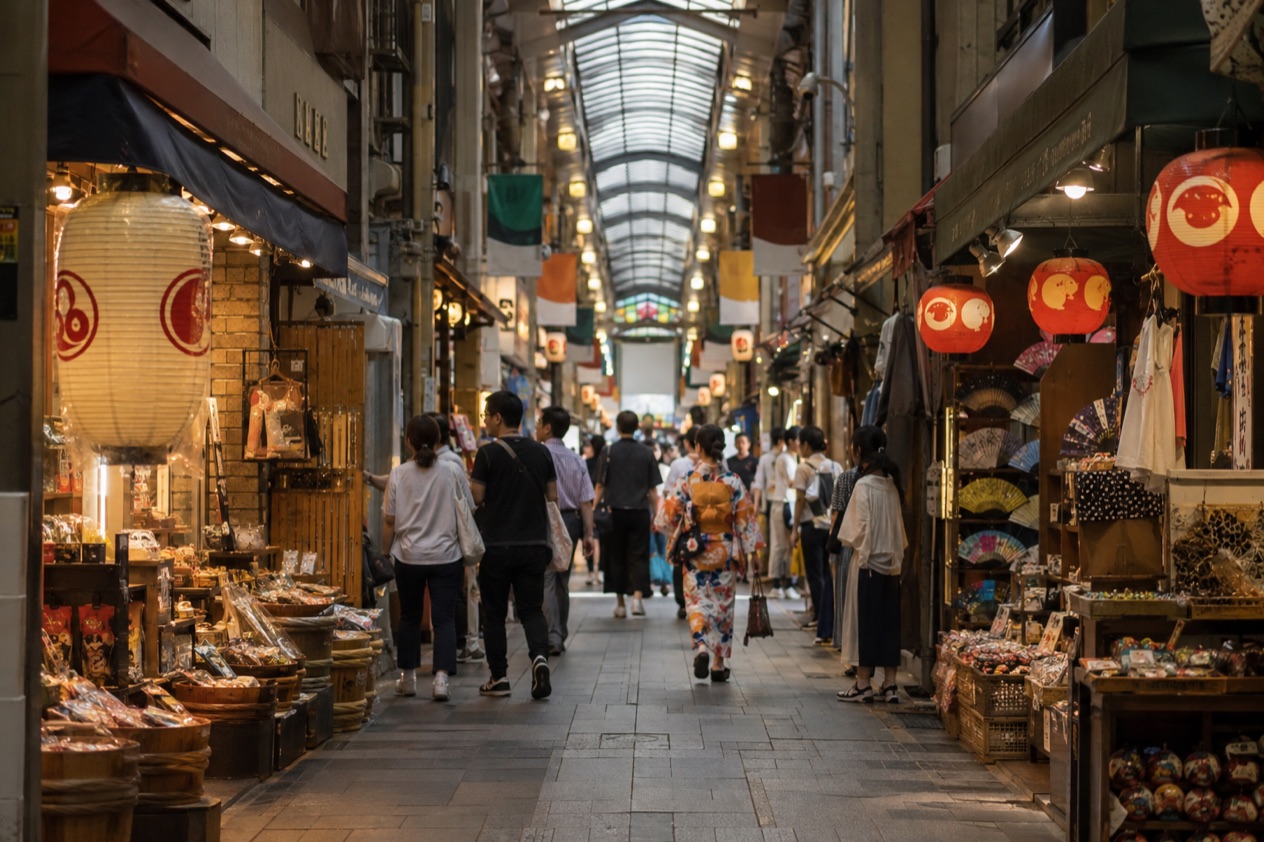
What souvenirs can you buy in Japan?
The most rewarding souvenirs in Japan are crafts: pottery and porcelain, gold leaf, indigo-dyed cloth, swords and drums, along with sake, kitchenware and the latest gadgets. Japan’s long tradition of craftsmanship has earned its goods an excellent reputation worldwide, and shoppers find carefully brewed sake, porcelain made with ancestral know-how, and avant-garde clothing sold side by side.
Many of these objects can also be made by you. Across the country, workshops let visitors shape their own piece, and the result becomes a souvenir with a story attached.
Pottery and porcelain by kiln town
Ceramics are the richest category, and each region has its own character. Arita in Saga Prefecture is where porcelain production began in the early Edo period with techniques imported from Korea, and its kilns shipped enormous quantities to Europe and Asia.
Imari ware takes its name from the port of Imari in the same prefecture, the harbor from which it left for foreign markets. Nabeshima ware, from a kiln the Nabeshima family set up in Arita to make top-quality enamelware for the upper classes, remains a byword for refinement.
Stoneware has a different feel. Bizen ware is a reddish-brown, long-fired stoneware that was lifted to art pottery through the tea ceremony. Hagi ware, from Yamaguchi Prefecture, is fired at a relatively low temperature, which makes it fragile and quick to pass on the warmth of a hot drink in your hands.
Karatsu ware, from Saga Prefecture, is the most produced pottery in western Japan, while Koishiwara ware from Fukuoka Prefecture makes practical everyday household items. For a bowl that will actually be used at the breakfast table, those are good names to look for.
A few more are worth knowing. Raku ware is typically hand-thrown without a wheel and cooled in the open air.
Onta ware comes from a village in Oita Prefecture where a small community works without electricity in a style going back to the 18th century. The kilns at Tamba, overlooking Kobe, still turn out daily wares in modern shapes. In Seto, pottery was so widely used that Seto-mono became the generic Japanese word for ceramics.
Gold leaf, indigo and other crafts
Kanazawa in Ishikawa is the capital of Japanese gold leaf, known as kinpaku, the material that decorates Kinkakuji Temple in Kyoto and Toshogu Shrine in Nikko. The leaf is only 1/10,000th of a millimeter thick, and watching it handled is a small marvel. The National Crafts Museum in Kanazawa runs regular Touch&Talk guided tours where you can handle the artisans’ tools and the pieces they create.
In Tokushima, where raw material for indigo dyeing is particularly important, visitors can join various workshops and dye cloth in deep blues. Takasaki in Gunma Prefecture is where Daruma figurines, the round red good-luck dolls, are usually produced, and you can try making one. Okinawa has its own line in yachimun pottery, and Hamamatsu offers the chance to build a taiko drum to take home.
Swords, flags and workshops you can join
Sword country has museums worth a detour. The Seki Sword Museum in Seki, Gifu, stands a few minutes’ walk from the station, and blacksmiths work there on designated days. The Bizen Osafune Japanese Sword Museum in Okayama holds regular special events and lets you speak with master artisans, each specialized in a particular part of the sword. These are places to see and learn rather than to shop.
For something playful, the tairyo-bata is a large colorful flag decorated with kanji and sea creatures, originally flown by fishermen to signal an abundant catch. You can make your own. In the Kaga Onsen hot spring area in southern Ishikawa, a potter guides you through creating Kutani porcelain, which is then shipped to your home. On the first floor of Okayama Castle you can try making Bizen-yaki from almost nothing.
Where do you buy them?
You buy souvenirs in shopping streets, department-store districts, specialist neighborhoods, local markets and the craft towns themselves. Japan’s shopping can be explored by area type: shopping districts, shopping centers, shopping streets, local markets and local crafts.
Tokyo: Ginza, Kappabashi, Ameyoko and Akihabara
Ginza and Nihonbashi are the Tokyo districts to browse for polished, giftable things. Kappabashi is a street known for kitchen utensils, a good hunting ground for anyone who wants a proper knife, a ceramic dish or a set of chopsticks to take home. Ameyoko is a lively shopping street where the aisles pack in many kinds of goods.
Akihabara is widely known as an otaku mecca, with stores and booths selling anime, manga, merchandise, video games, household electronics and vintage film cameras. It suits collectors and anyone shopping for a fan back home. One detail to keep in mind: anime DVDs sold in Japan are region 2 NTSC and unplayable in most U.S. players, while Blu-rays are region A, which includes North and South America.
Osaka: Shinsaibashi-suji and Dotonbori
In Osaka, Dotonbori and Shinsaibashi are listed among the popular places, mixing shopping with entertainment. Shinsaibashi-suji is a shopping street where you can drift from shop to shop in one long stretch. It makes a fine place to look for clothing, cosmetics and small gifts, then to stop for a snack nearby.
Craft towns and convenience stores
For ceramics, going to the source adds meaning. Yachimun-dori, a charming street in central Naha, Okinawa, is a good place to buy yachimun pottery, and one shop there offers classes for simple pieces. Kanazawa is the stop for gold leaf, and Arita, Bizen and Hagi for their wares.
Convenience stores such as 7-Eleven, Family Mart and Lawson are open around the clock and stock a wider range of products than those in the U.S. or Europe, which makes them handy for last-minute snacks and small gifts. Most other shops open from 10:00 to 20:00 and close one day a week, though most are open on weekends and public holidays except New Year.
| Place | Typical hours |
|---|---|
| Most shops | 10:00 to 20:00, closed one day a week |
| Convenience stores (7-Eleven, Family Mart, Lawson) | Open 24/7 |
| Pachinko parlours | Close by 23:00 |
Tax-free shopping
Shoppers in Japan can benefit from tax-free prices, limited editions and original finds. To qualify for a tax refund, foreign tourists must spend no more than six months in Japan and take the items out of the country when they leave. Tax-free consumables must leave Japan within 30 days, still in their sealed bags, so plan to open the snacks at home rather than in the hotel.
What should you not buy?
The things to skip are the ones that will not work or will not last when you get home, and the items that are not really worth the luggage space. The clearest case is anime on disc: DVDs sold in Japan are region 2 NTSC, so they will not play in most American players, which are region 1. Blu-rays are region A and do play in the Americas, so those are the safer choice for a collector.
Think carefully about fragile pieces too. Hagi ware is fired at a relatively low temperature, which makes it fragile, and a thin porcelain cup is a risk in a suitcase. If you love a piece, buy it, but wrap it well and carry it in your hand luggage. Pieces made in a workshop can be shipped, as Kutani porcelain from Kaga Onsen is shipped to your home.
Gifts that look like crafts but are not local
A good souvenir belongs to the place where you found it. Pottery bought in a kiln town, gold leaf in Kanazawa, a Daruma from Takasaki or indigo cloth in Tokushima carries the story of where it was made. A trinket that could have come from anywhere does not. Ask where an item was produced and look for the kiln or workshop name.
When a shop sells a famous name such as Arita, Bizen or Karatsu, it is worth knowing what the real thing looks like, since each has its own style. Bizen is reddish-brown and long-fired, Karatsu is practical and widely produced, and Arita is porcelain. A visit to a craft museum before you shop sharpens the eye.
Items that break the tax-free rules
Do not open tax-free consumables before leaving Japan. They must stay in their sealed bags and be taken out of the country within 30 days, and the refund depends on bringing the goods out of Japan when you depart. Anything you plan to use during the trip is better bought at the regular price.
Pay attention to what you spend as well. Japan offers limited editions and original finds on almost every street, which makes impulse buying easy.
Good to know before you go
Many Japanese ATMs close at night and on weekends, so withdraw cash during office hours, with the exception of the ATMs in 7-Eleven, FamilyMart, Lawson and Ministop stores in larger cities. Pachinko parlours must close at 23:00, which is useful to know if you wander into one by accident.
Most shops stay open on weekends and public holidays except New Year, and close one day a week. The Japan National Tourism Organization runs a shopping guide in English for American travelers.
Sources
- Japan National Tourism Organization, shopping (https://www.japan.travel/en/guide/shopping-in-japan), checked October 11, 2026
- Japan National Tourism Organization, crafts (https://www.japan.travel/en/guide/traditional-craft-experiences-and-workshops/), checked October 11, 2026
- Wikipedia, Japanese pottery and porcelain (https://en.wikipedia.org/wiki/Japanese_pottery_and_porcelain), checked October 11, 2026
- Wikivoyage, Shopping in Japan (https://en.wikivoyage.org/wiki/Shopping_in_Japan), checked October 11, 2026
To plan your stay
- Best Time to Visit Japan: Cherry Blossoms, Autumn Colors, Weather and Festivals
- Where to Stay in Japan: Ryokan, Temple Stays, Capsule Hotels and the Best Cities to Base In
- Sending Luggage from the Airport in Japan: Hands-Free Travel, Hotel Delivery and Coin Lockers
- Know Before You Go to Japan: Entry, Money, Etiquette and Getting Around