
Somewhere past Hamamatsu the lights of the towns thin out, the conductor’s rounds end, and a cabin on a Japanese night train settles into the rhythm of the rails. That is the moment the Sunrise Seto is built for, a train you board in Tokyo in the evening and leave on the island of Shikoku. Japan does have a sleeper train, and this is the one to know.
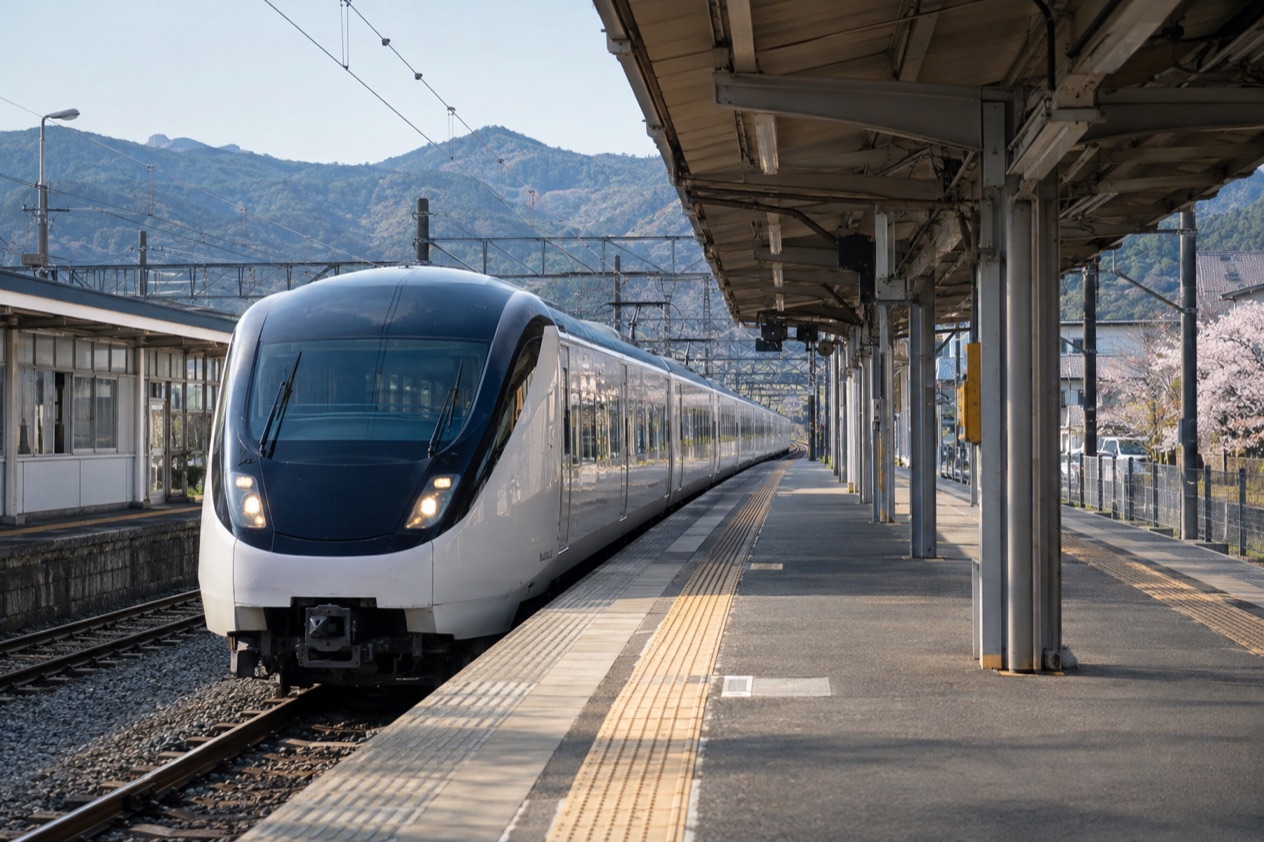
Are there sleeper trains in Japan?
Yes, Japan has a sleeper train in regular service: the Sunrise Seto, an overnight sleeping car train that runs daily between Tokyo and Takamatsu, in Kagawa Prefecture on Shikoku. It covers 500 miles of track, and you spend the night in a berth instead of a hotel room, waking up in a different part of the country.
The idea appeals for reasons beyond saving a night’s lodging. You watch the lit platforms of Yokohama slide by, fall asleep somewhere along the Pacific coast, and wake with the Inland Sea region outside the window. For travelers heading to Shikoku, the train turns the long approach into part of the trip.
The Sunrise Seto
The Sunrise Seto is a sleeping car service, which means the whole train is arranged around beds rather than ordinary seats. Cabins come in several types, from a deluxe single to twin rooms and a carpeted shared sleeping space, so the train suits a solo traveler as well as a pair. The full list of berths is in the booking section.
Capacity is small. When every berth is sold, the train carries 158 people, spread across 146 cabins. That gives the carriages a hushed, close-knit feel, closer to a floating inn than to a commuter service.
Four railway companies, one train
The line is run jointly by four members of the Japan Railways Group: JR East, JR Central, JR West and JR Shikoku. Each company handles the stretch that lies in its own territory, which is why one night’s journey crosses several regions of the network without the traveler noticing a handover.
That shared operation matters when you read about the route, because the train changes character along the way.
The Sunrise Izumo, its travel companion
Between Tokyo and Okayama, the Sunrise Seto does not travel alone. It runs in conjunction with the Sunrise Izumo as one combined train of 14 cars, and the two separate at Okayama Station, each continuing to its own destination.
If you see both names on a timetable or at the platform in Tokyo, that is the reason. The cars for Takamatsu and the cars of the Izumo share the same set of rails for the first part of the night and part ways at Okayama.
Which routes run?
One sleeper route runs here: the Sunrise Seto links Tokyo with Takamatsu every day, with a seasonal extension to Kotohira. Because it is a night service, the stops are spread across the dark hours and the first light, and a few big stations are passed without stopping.
| Direction | Journey time |
|---|---|
| Tokyo to Takamatsu (westbound) | 10 hours 1 minute |
| Takamatsu to Tokyo (eastbound) | 9 hours 42 minutes |
Tokyo to Okayama
Heading west from Tokyo, the train calls at Yokohama, Atami, Numazu, Fuji, Shizuoka and Hamamatsu. Hamamatsu is the final midnight stop, so by then most passengers are in their berths and the train goes quiet. The first stop of the morning is Himeji, followed by Okayama.
Nagoya and Kyoto are on the line, yet the train passes through both without stopping. It reaches them around midnight, and the Sunrise Izumo and Sunrise Seto cannot play announcements at that hour, so they simply roll through. If you are hoping to get on or off at either city, this is not the train.
At Okayama the 14-car formation splits. The Izumo cars go their way, and the Sunrise Seto continues as a shorter train bound for Shikoku.
Okayama to Takamatsu
After the split, the Sunrise Seto is a train of seven cars. It stops at Kojima Station and Sakaide Station before arriving at Takamatsu, in Kagawa Prefecture. This last leg is the crossing from the main island of Honshu to Shikoku, so the final minutes of the trip are the ones that take you across to a different island.
Going the other way, the same train is a little quicker, and it leaves Takamatsu to arrive in Tokyo.
The seasonal extension to Kotohira
During particular seasons and holidays, the Sunrise Seto from Tokyo runs beyond Takamatsu all the way to Kotohira, on the Dosan Line. On those dates the rails carry you farther into Shikoku without a change of train.
The dates of those extra runs are set by the railways, so they are not the same every time you look. Think of Kotohira as a bonus on certain trains, not as the regular end of the line.
Sightseeing trains for the ride itself
If it is the train as an experience you are after, Japan has a family of sightseeing trains with their own personalities. In Hokkaido, the Furano Biei Norokko, run by JR Hokkaido, travels between Asahikawa and Furano and passes the lavender-covered hills of Biei. The Kushiro Shitsugen Norokko, also JR Hokkaido, crosses the Kushiro marsh, where passengers may spot wild animals.
Elsewhere, the Koshino Shu*Kura of JR East has a paid sake tasting space with a selection from Niigata Prefecture and local snacks. The Story of 13000 Feet, run by Ainokaze Toyama Railway, serves meals made from local agricultural products and seasonal fish on its way from the Tateyama peaks to Toyama Bay. The Fujisan View Express of Fuji Electric Railway offers sweets by a pastry chef with Mount Fuji in the window.
How do you book?
A ticket for the Sunrise Seto is built from several parts: a basic fare, a limited express surcharge, and then either a berth fee for a private room or a seat reservation charge for the Nobi-nobi sleeping area. The sections below take each piece in turn.
What the fare is made of
Every passenger pays a basic fare and a limited express surcharge. Both depend on the distance traveled, and the amounts vary with the season, so a trip to Okayama costs less than one to Takamatsu, and the same trip may cost a different amount at different times of year.
On top of that comes the charge for the place where you sleep. Those traveling in a private room pay a berth fee. Those using the Nobi-nobi sleeping area pay a seat reservation charge instead.
Choosing where you sleep
The train offers five types of berths, plus one open sleeping space. Pick according to whether you want a room to yourself, a twin, or a simple carpeted spot to lie down.
- A single deluxe, a private room for one traveler.
- B sunrise twin, a private room for two.
- B single twin, a room configured as a twin that is used by one traveler.
- B single, a private single berth.
- B solo, a single berth for one traveler.
- Nobi-nobi sleeping area, a carpeted space where you pay a seat reservation charge instead of a berth fee.
Because only a limited number of cabins exist, the choice of berth is also a choice among a small stock of rooms. The Nobi-nobi area and the private rooms are priced differently, as described above, so the type you choose changes what the ticket is made of, not just how you sleep.
Traveling by pair or alone
The mix of berths means the same train works for different travelers. A couple can take the sunrise twin and share a room, while a single traveler can look at the single and solo berths. Someone who simply wants a flat, carpeted place to rest can look to the Nobi-nobi area.
Think about the stretch of the trip too. Since the berth fee and the seat reservation charge do not change with distance, they are a flat part of the bill, while the basic fare and the surcharge grow as you ride farther along the line toward Takamatsu.
Good to know before you go
Remember that the Sunrise Seto passes Nagoya and Kyoto in the middle of the night without stopping, so plan any visits to those cities on a different train. The stops that matter for getting off are Himeji and Okayama in the morning, then Kojima, Sakaide and Takamatsu.
A sleeper night also means you will spend the evening and the early hours on board, so it suits itineraries where Shikoku comes next. The rainy and typhoon seasons can affect travel in Japan, so keep your plans flexible around those months.
Sources
- Japan National Tourism Organization, scenic railways (https://www.japan.travel/en/see-and-do/scenic-railways/), checked October 11, 2026
- Wikipedia, Sunrise Seto (https://en.wikipedia.org/wiki/Sunrise_Seto), checked October 11, 2026
To plan your stay
- Things to Do in Japan: Kyoto Temples, Onsen, Street Food and Day Trips
- Where to Stay in Japan: Ryokan, Temple Stays, Capsule Hotels and the Best Cities to Base In
- Sending Luggage from the Airport in Japan: Hands-Free Travel, Hotel Delivery and Coin Lockers
- Know Before You Go to Japan: Entry, Money, Etiquette and Getting Around