
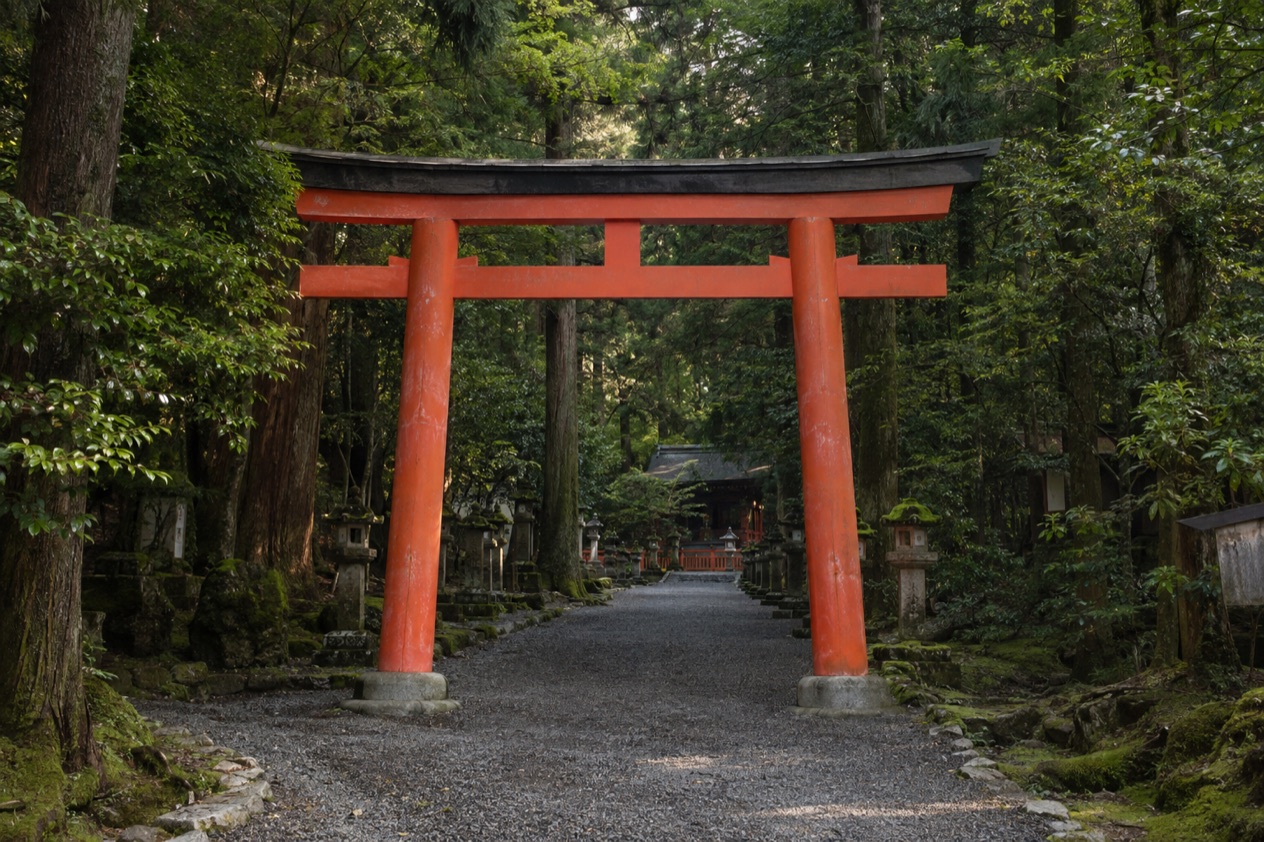
A shrine in Japan often begins with a gate: a torii standing at the edge of a wooded path, or rising straight out of tidal water. Beyond it come the sound of gravel underfoot, the clap of hands at the offering hall and the smell of cedar.
Which shrines should you visit in Japan?
Start with the shrines that tell different stories: one with a vast network of gates, one set in the water, one rebuilt on a rhythm of generations, and one tied to a sacred mountain. Japan has a great many to choose from, with the number of Shinto shrines estimated at around 100,000, so a short list built around contrast serves a trip better than a long one.
Most shrines share a layout. You pass under a torii, approach the hall where people pray, and notice that the innermost building, the honden, stays closed to the public. It holds the shintai, the object in which the deity is believed to dwell, and it is not used for prayer or ceremonies. What visitors see is the approach, the offering hall and the grounds around them.
Shrines tied to mountains and nature
Some shrines are less about a building than about the land. Omiwa Shrine in Nara contains no sacred images or objects, because it is believed to serve the mountain on which it stands. In Nikko, Mount Nantai, a phallus-shaped mountain, is the shintai of Futarasan Shrine. In both cases the shrine is a way of facing the mountain, and the walk matters as much as the hall.
These are the places to choose if you want the idea behind Shinto: the sacred is found in a landscape, and the architecture only frames it. Nikko also belongs to the temple complexes of central Japan that are recognized as UNESCO World Heritage, so a visit there can combine shrine and temple grounds in one stay.
Shrines in the old capitals
Nara and Kyoto hold some of the most storied shrines. Kasuga Taisha in Nara was established in 768 AD and is the shrine of the Fujiwara family, which gives a walk there real historical depth. Nara also has the Omiwa Shrine mentioned above, so the city suits a traveler who wants to compare a grand family shrine with one that has no image at all.
Kyoto is home to Fushimi Inari Taisha, described below. Both cities sit among the central regions where temple complexes are recognized by UNESCO, and shrines and temples stand close together, so you can move between them in a single day of sightseeing.
Ise and the idea of renewal
Ise Grand Shrine is still rebuilt every 20 years, which preserves ancient architectural styles through the hands of each new generation of carpenters. The shrine is therefore both very old in its form and always new in its wood. It is a good choice for travelers drawn to craft and continuity rather than to ornament. Pair it with the shrines above and you see three ways Shinto marks the sacred: a mountain left untouched, a family shrine kept over centuries, and a building renewed again and again.
Which are best known?
Fushimi Inari Taisha in Kyoto and Itsukushima Shrine on its island are the two names travelers arrive with, and both reward the reputation. Yasukuni Shrine in Tokyo is also widely known, for a very different reason.
Fushimi Inari Taisha
Fushimi Inari Taisha is the head shrine of the largest shrine network in Japan, with more than 32,000 member shrines, about a third of the total. That scale explains why you meet small Inari shrines all over the country, often with fox statues at the entrance. The head shrine is where that whole family of shrines begins.
What people photograph here are the rows of vermilion gates that line the paths up the hillside, turning a walk into a long passage through color and shade. It suits travelers who like to keep walking and see where a path goes, and the gates change the light as you climb. Wear shoes you are happy to walk in.
Itsukushima Shrine
Itsukushima Shrine is remembered for its torii rising from the waters, and it is a UNESCO World Heritage Site. The image of a gate standing in the sea has become one of the most recognizable pictures of Japan, and the shrine itself is built so that it seems to float at the water’s edge.
The look of the place depends on the water, so the scene differs from one visit to the next. It suits photographers, travelers who like a setting more than a building, and anyone building a trip around Japan’s World Heritage sites.
Yasukuni Shrine and other well-known names
Yasukuni Shrine in Tokyo is dedicated to the soldiers and others who died fighting on behalf of the Emperor of Japan. It is a place of remembrance with a particular history, and visitors who go should approach it as a memorial and read about it beforehand.
Together with Fushimi Inari and Itsukushima they give a spread across Kyoto, Nara, Hiroshima’s island coast and Tokyo, and a trip can be sketched around any two or three of them.
What are the etiquette rules?
Shrine etiquette is mostly a matter of small habits rather than strict rules, and the main idea is to behave as you would at someone’s sacred place. Slow down at the gate, keep your voice low and follow what the people ahead of you do.
At the gate and on the path
The torii marks the border between the everyday world and the shrine grounds, and visitors bow slightly before passing through. Worshippers often keep to the sides of the path, leaving the center for the deity, so walking a little off the middle is a graceful habit to copy.
Much of what is worth seeing is outdoors: gates, stone lanterns, trees and the offering hall. The honden stays closed to the public, so there is nothing to look for behind it, and you will not see the shintai except at festivals, when it leaves the honden in a portable shrine called a mikoshi and is carried through the streets.
Praying and observing
Visitors who wish to pray usually watch what others do at the offering hall and follow along, which is the simplest way to learn the order of gestures. People simply stand quietly, bow and take in the setting, and that is a perfectly respectful way to visit.
At a festival the mood shifts. Crowds gather, the mikoshi moves through the streets, and the shrine becomes a lively center for the neighborhood. Stand back and let the carriers pass, and treat the procession as a religious event rather than a show.
Photographs and places of remembrance
Shrines are working places of worship, so photograph with care: keep out of the way of people praying and avoid blocking the path to the hall. At a place of remembrance such as Yasukuni, a quiet and reserved manner is the habit to follow.
If you are unsure what is welcome at a particular shrine, watch the other visitors and follow any signs posted on site. A little attention to the people around you covers nearly every situation.
Good to know before you go
Shrines are places of worship as well as sights, so the pace you keep and the way you carry yourself count for as much as the route.
Sources
- Japan National Tourism Organization, World Heritage sites in Japan (https://www.japan.travel/en/world-heritage/), checked October 11, 2026
- Wikipedia, Shinto shrine (https://en.wikipedia.org/wiki/Shinto_shrine), checked October 11, 2026
To plan your stay
- Best Time to Visit Japan: Cherry Blossoms, Autumn Colors, Weather and Festivals
- Where to Stay in Japan: Ryokan, Temple Stays, Capsule Hotels and the Best Cities to Base In
- Sending Luggage from the Airport in Japan: Hands-Free Travel, Hotel Delivery and Coin Lockers
- Know Before You Go to Japan: Entry, Money, Etiquette and Getting Around