
A shopkeeper in a Tokyo kitchenware street turns a knife handle toward you, while down the road a counter piles up with figures from your favorite anime. In an Osaka arcade, the signs overhead glow brighter than the sky. Japan treats shopping as a pastime in its own right, from craft traditions to the newest gadgets, and these are the places and habits that shape a day of browsing.
What can you buy in Japan?
You can buy nearly everything, but the things that stand out are goods shaped by long craft traditions and goods from the cutting edge of design and technology. Japan’s reputation for craftsmanship and high-quality products is well established, and it shows in the shop windows: carefully brewed sake, porcelain made with ancestral know-how, the latest gadgets and avant-garde clothing, sometimes within a few blocks of one another.
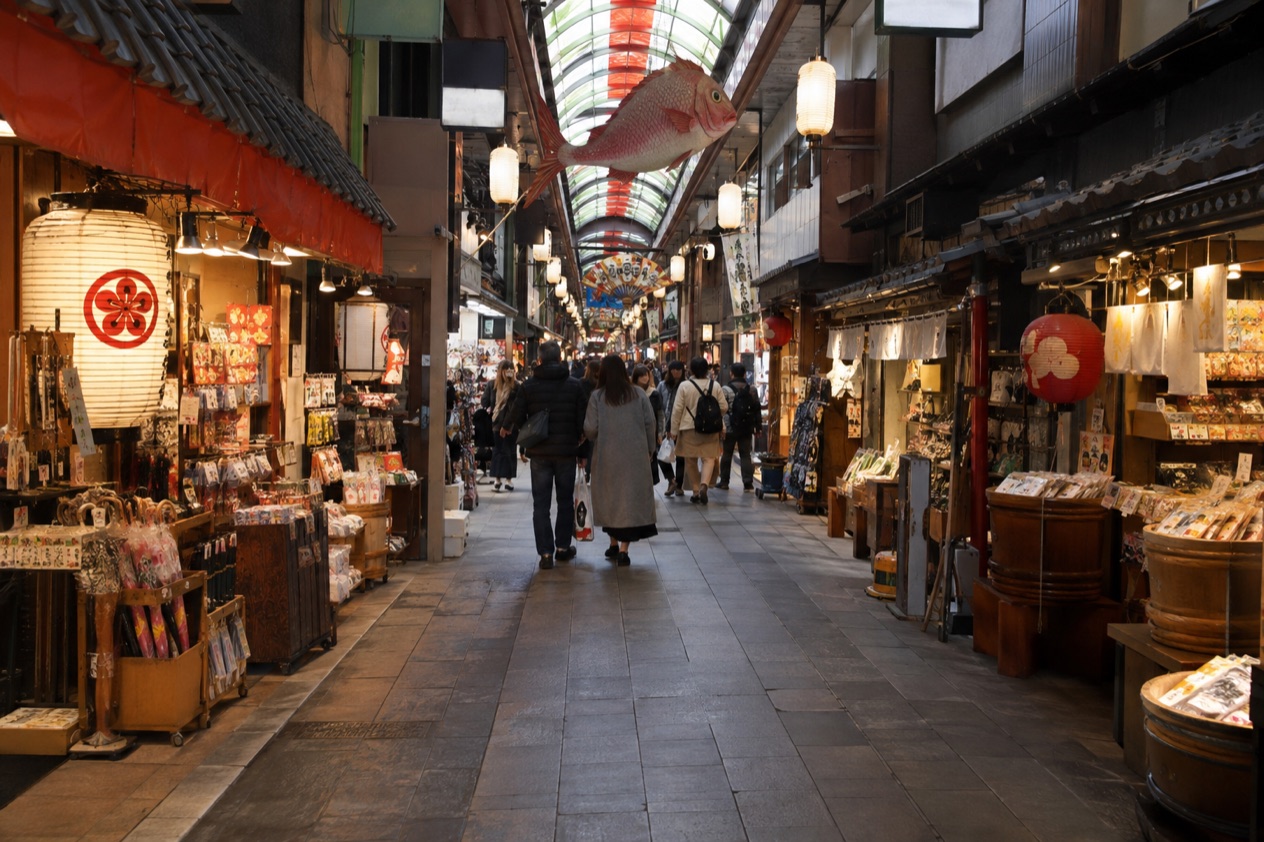
Shoppers also look for limited editions and original finds, the kind of object that is hard to track down at home. Shopping can be explored by type of area: shopping districts, shopping centers, shopping streets, local markets and local crafts. Each type gives a different pace, so a trip often mixes a department store morning with a stroll through a covered arcade.
Crafts, sake and porcelain
Porcelain is a good place to start. Bowls, teacups and plates come in glazes and patterns that reflect their makers’ regions, and holding one in your hand tells you more than a label does. A set of cups carried home becomes a small reminder of breakfast in a ryokan or tea in a quiet café.
Sake belongs to the same family of crafted things. Brewed with care, it is sold in bottles of every shape, and the labels are often works of calligraphy. Pair a bottle with a ceramic cup and you have a gift that explains itself. Local crafts appear in markets and small workshops, where you can see the goods that a single town has made for generations.
Gadgets, fashion and anime
At the other end of the spectrum are the newest gadgets and clothes that look like they came from a design studio rather than a rack. Electronics stores stack cameras, headphones and household appliances to the ceiling, and fashion floors show cuts and fabrics you rarely meet elsewhere. Browsing is half the pleasure, even if you buy nothing.
Anime and manga merchandise has its own universe, with figures, posters, video games and collectibles. One detail matters at the register: anime DVDs sold in Japan are all region 2 NTSC, so they will not play in most DVD players in the U.S. and Canada, which are region 1. Blu-rays are different, since Japanese discs are region A, the zone that includes North and South America.
Convenience stores and shop hours
Convenience stores such as 7-Eleven, FamilyMart and Lawson are shopping destinations in their own right. They carry a wider range of products than their counterparts in the U.S. or Europe, so a stop can turn up snacks, drinks and small necessities in one go. Their long hours make them handy when department stores have already shut.
Regular shops follow a more traditional rhythm. Most stay open through weekends and public holidays, with New Year as the exception, and each shop closes one day a week. Pachinko parlors, the loud gaming halls that glow along many shopping streets, must shut at a fixed hour at night.
| Kind of place | Hours |
|---|---|
| Most shops | 10:00 to 20:00 (open on weekends and public holidays except New Year, closed one day a week) |
| Convenience stores (7-Eleven, FamilyMart, Lawson) | Open 24/7 |
| Pachinko parlors | Close at 23:00 |
Where are the best shopping districts?
The strongest districts sit in Tokyo and Osaka, and each one has a different personality. Ginza and Nihonbashi in Tokyo, Akihabara for anime and electronics, the specialty streets of Kappabashi and Ameyoko, and Dotonbori and Shinsaibashi in Osaka make a rounded list. Pick by what you want to carry home rather than by the size of the crowd.
Ginza and Nihonbashi
Ginza and Nihonbashi are best known in Tokyo for cuisine, but both are also established shopping areas. Food halls tempt you with sweets and boxed lunches wrapped as carefully as gifts.
These districts suit shoppers who like to browse in comfort and to combine a purchase with a good meal. A tea break in a café after the shops is part of the experience, and a wrapped box of confections makes a gift that travels well.
Akihabara
Akihabara is widely known as an otaku mecca, with stores and booths selling anime, manga, merchandise and video games. Alongside them you find household electronics and vintage film cameras, so the street mixes fandom with hardware. Multistory shops stack their goods floor by floor, and a single building can hold everything from collectible figures to retro game cartridges.
It suits collectors, gamers and anyone who wants to see a subculture at full volume. Remember the disc region codes before you buy a DVD, and keep an eye out for camera shops if you like old gear with a story.
Kappabashi and Ameyoko
Kappabashi is a street known for kitchen utensils, so it is the place to look for knives, pans, ceramic dishes and the lifelike plastic food models that restaurants display. Cooks and curious travelers alike wander its shops, and a good knife or a set of chopsticks makes a lasting souvenir.
Ameyoko is a shopping street in Tokyo with a market feel, where vendors sell food, clothing and everyday goods in a lively mix. The two streets offer a contrast: one is specialized and quiet-minded about craft, the other loose and open to whatever catches your eye.
Dotonbori and Shinsaibashi in Osaka
Dotonbori and Shinsaibashi in Osaka are listed as popular places, and they blend shopping with entertainment. Shinsaibashi-suji is a long shopping street lined with shops, and Dotonbori adds neon signs and food stalls that give the evening a festival feel.
Osaka rewards those who like to snack between purchases. Fried street foods and sweets share the pavement with clothing stores and drugstores, and the shopping and eating blur into one outing. Pachinko parlors add their own noise to the mix.
How does tax-free shopping work?
Tax-free shopping lets foreign visitors buy goods without paying consumption tax, but only under certain conditions. The tax-free prices are part of the appeal, along with limited editions and original finds. The details of the system are laid out by the official agencies, and the main rules are simple to follow once you know them.
Who qualifies and what you must do
To qualify for a tax refund, foreign tourists must spend no more than 6 months in Japan, and the items must leave Japan with them when they depart. The purchases are meant to be carried out of the country as part of your own luggage, which is why the departure procedure matters.
Consumable items, such as food and cosmetics, come in sealed bags and must leave Japan within 30 days. Keep the bags closed until you are out of the country. Japan Customs provides procedures for passenger clearance for travelers leaving with tax-free goods.
The change in how goods are sent home
Since April 1, 2025, tax exemption no longer applies when the purchaser sends items abroad via international parcel. That is a significant change for anyone who once planned to ship a heavy purchase home on their own.
Direct shipping arranged by the store may still be available for tax-free purchases after that date. In other words, the shipping must come from the shop itself rather than from you at a post office. Anything you carry yourself continues to follow the rules above.
Official sources for the details
Several official sources explain the system. The Ministry of Land, Infrastructure, Transport and Tourism publishes details on its page, and the Japan National Tourism Organization offers a PDF in English explaining the refund method. The Japan Tourism Agency has a video that walks through the process visually.
The National Tax Agency also provides a notice addressed to foreign travelers who purchase tax-free goods in Japan. The Japan National Tourism Organization website is available in English, including a version for the United States, so these guides read naturally for American travelers.
Good to know before you go
Many Japanese ATMs are closed at night and during weekends, so it is best to get banking done during office hours. The exceptions are the ATMs in convenience stores such as 7-Eleven, FamilyMart, Lawson and Ministop in larger cities. Carry the goods you want to take home in a way that keeps sealed tax-free bags intact until you leave Japan.
Sources
- Japan National Tourism Organization, shopping (https://www.japan.travel/en/guide/shopping-in-japan), checked October 11, 2026
- Japan National Tourism Organization, tax-free shopping for foreign visitors, minimum purchase, passport, how it works (https://www.japan.travel/en/plan/japans-tax-exemption/), checked October 11, 2026
- Wikivoyage, Shopping in Japan (https://en.wikivoyage.org/wiki/Shopping_in_Japan), checked October 11, 2026
To plan your stay
- Best Time to Visit Japan: Cherry Blossoms, Autumn Colors, Weather and Festivals
- Where to Stay in Japan: Ryokan, Temple Stays, Capsule Hotels and the Best Cities to Base In
- Sending Luggage from the Airport in Japan: Hands-Free Travel, Hotel Delivery and Coin Lockers
- Know Before You Go to Japan: Entry, Money, Etiquette and Getting Around