
A train glides out of Kushiro and the reeds of the marsh slide past the window, with the chance of spotting wildlife at the edge of the tracks. Elsewhere a carriage serves sake from Niigata, and a pastry chef’s sweets arrive just as Mount Fuji fills the glass. Japan has a whole family of trains built for looking, tasting and playing, from Hokkaido to Kansai, and each one tells you what it is for in its name.
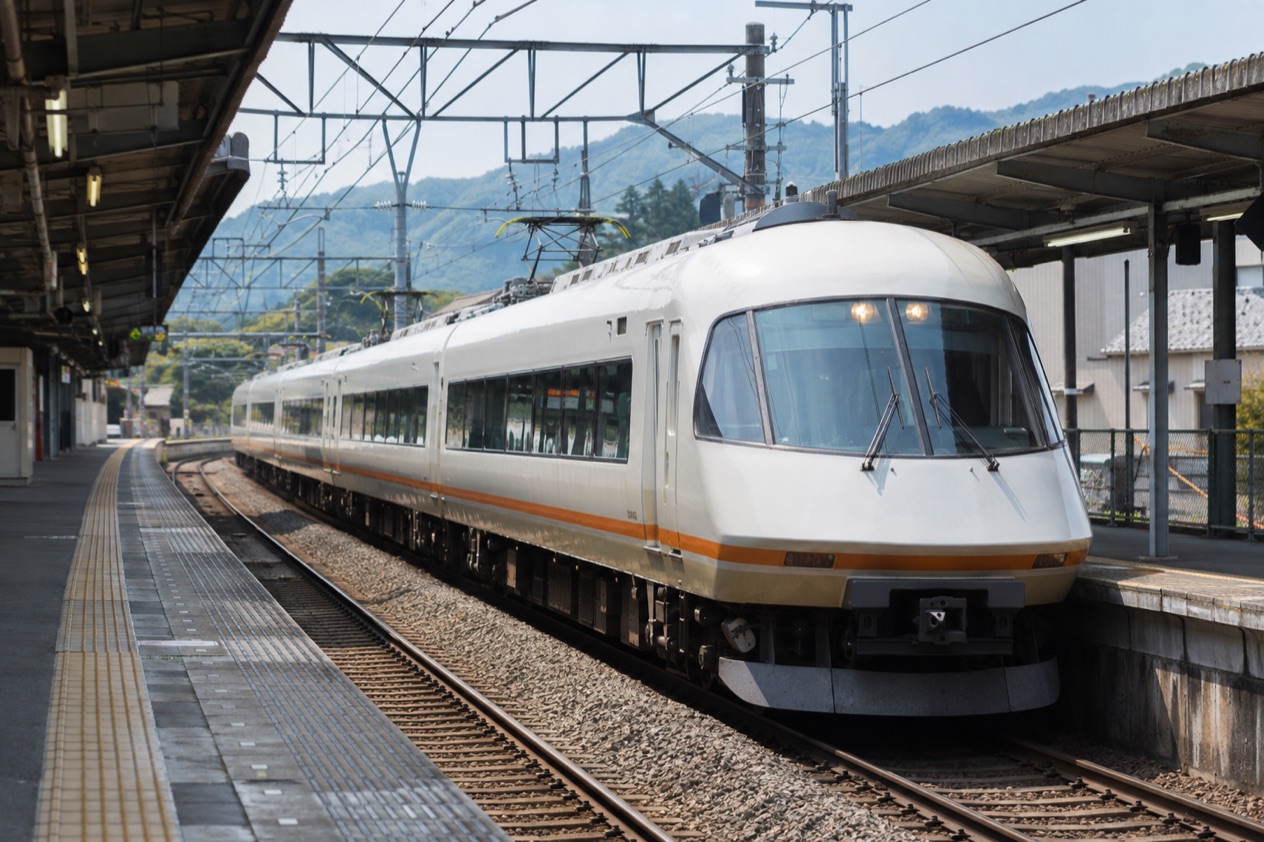
Which scenic trains run in Japan?
Japan has a long list of tourist trains, and each is built around one idea: wildlife, steam, a meal, a drink, a mountain view or a cartoon character.
They are run by many different companies. JR Hokkaido and JR East run several, regional railways run others, and a few belong to small operators with a single line. Some are open-sided or slow on purpose, and some are simply an ordinary line with an extraordinary window.
Norokko trains and steam in Hokkaido
Norokko trains are the slow, wide-windowed kind, meant for watching the land go by. The Kushiro Shitsugen Norokko, run by JR Hokkaido, crosses the Kushiro marsh, and passengers may spot wild animals from the carriage. It is a train for people who like to keep their eyes on the reeds and the sky.
The Furano Biei Norokko, also run by JR Hokkaido, links Asahikawa and Furano and passes the lavender-covered hills of Biei, so the view is of purple rows rolling over the countryside. In winter the same marsh changes character on the SL Fuyu-no-Shitsugen, a steam locomotive that runs only in January and February. It crosses the snowy Kushiro marsh, where passengers can see red-crowned cranes, with a plume of steam over white fields.
Trains with food and drink on board
Several trains make the meal the main event. On the Nagamare Kaikyo, run by South Hokkaido Railway, passengers enjoy refined dishes served on board, including seafood grilled on the quay. The table becomes part of the journey, and the stop on the platform is part of the menu.
The Koshino Shu*Kura, run by JR East, is the train for sake. It has a paid tasting space with a selection of the best sake from Niigata Prefecture, served with local snacks, and free tastings are also available.
The Story of 13000 Feet, run by Ainokaze Toyama Railway, serves meals made from local agricultural products and seasonal fish, as the line runs from the peaks of Tateyama down to Toyama Bay. On the Fujisan View Express, run by Fuji Electric Railway, a pastry chef’s sweets come with a view of Mount Fuji from the window.
Monorails, mountain valleys and character trains
Not every one of these trains is a heritage line. The Chiba Urban Monorail hangs below its track and holds a Guinness record as the longest suspended monorail in the world. The Shonan Monorail gives a roller coaster feeling and is recommended for a visit to Enoshima.
The Kurobe Truck Train, run by Kurobe Railway, travels through a valley in Toyama and offers views of the river and mountains below. For families, the POKÉMON with YOU train, run by JR East, has run since December 2012 to cheer up children in Tohoku affected by the Great East Japan Earthquake. The Hello Kitty Haruka, run by JR West, wears Hello Kitty designs on both the exterior and the interior.
Where do they go?
They go to marshes and lavender hills in Hokkaido, to Tohoku and Niigata, to the valleys and bay of Toyama, to Mount Fuji, to the Shonan coast near Enoshima and to Kyoto, Osaka and the Kansai airport. A map of Japan’s tourist trains is a map of its landscapes.
| Train | Operator | Where it runs |
|---|---|---|
| Kushiro Shitsugen Norokko | JR Hokkaido | Kushiro marsh |
| Furano Biei Norokko | JR Hokkaido | Asahikawa to Furano, past the hills of Biei |
| SL Fuyu-no-Shitsugen | JR Hokkaido | Snowy Kushiro marsh, January and February only |
| Nagamare Kaikyo | South Hokkaido Railway | Hokkaido, with dishes served on board |
| POKÉMON with YOU | JR East | Tohoku |
| Koshino Shu*Kura | JR East | Niigata Prefecture sake, tasted on board |
| Kurobe Truck Train | Kurobe Railway | A valley in Toyama |
| Story of 13000 Feet | Ainokaze Toyama Railway | Tateyama peaks to Toyama Bay |
| Chiba Urban Monorail | Chiba Urban Monorail Co., Ltd. | Chiba |
| Shonan Monorail | Shonan Monorail | Enoshima |
| Fujisan View Express | Fuji Electric Railway | Mount Fuji views |
| Hello Kitty Haruka | JR West | Kyoto, Shin-Osaka, Tennoji and Kansai International Airport |
Hokkaido and Tohoku
Hokkaido holds the greatest number of these trains, and they follow its seasons. The Kushiro marsh is the setting twice, as a wildlife route on the Norokko and as a winter crane route on the steam locomotive. Around Furano and Biei the line is about lavender, and on the southern coast the Nagamare Kaikyo is about the sea and what comes out of it.
In Tohoku the POKÉMON with YOU train belongs to a region that is still remembered through the earthquake it lived through. Niigata, across the mountains in the sake country of the Koshino Shu*Kura, is a place where the drink is the reason for the ride.
Toyama, Fuji and the Shonan coast
Toyama offers two very different journeys. The Kurobe Truck Train goes into a valley where river and mountains lie below the carriage, and the Story of 13000 Feet connects the peaks of Tateyama to Toyama Bay, so one meal can cover the mountain and the sea in a single trip.
Near Mount Fuji, the Fujisan View Express sets its sweets against the mountain in the window. On the coast, the Shonan Monorail runs toward Enoshima, a place reached directly by the private railway Odakyu, which also provides direct access to Hakone. The Chiba Urban Monorail adds a ride in the air over the city.
Kyoto, Osaka and the airports
The Hello Kitty Haruka connects Kyoto, Shin-Osaka, Tennoji and Kansai International Airport, so the ride can begin or end a trip. In Kansai the private companies Kintetsu, Nankai, Hankyu, Keihan and Hanshin provide direct access to Osaka, Kyoto, Nara and Koyasan.
Other airports have their own rail companies. Keisei serves Narita Airport, Tokyu and Keikyu serve Yokohama and Haneda Airport, and Meitetsu serves Inuyama and Centrair Airport. Seibu and Keio provide direct access to Chichibu and Mount Takao. The JR Group network covers the entire country, including Shinkansen lines, and serves Kyoto, Hiroshima, Kanazawa and Sendai.
How do you book?
Fare and seating rules depend on the train category.
| Train type | What it does | Supplement |
|---|---|---|
| Rapid | Skips smaller stations | No supplement required |
| Express | Serves fewer stops | A supplement may be applied |
| Limited Express and Special Express | Reserved seats, faster intercity travel | Typically required |
| Shinkansen | High-speed intercity trains on multiple lines across Japan | A supplement applies |
Ordinary and faster trains
Local trains stop at every station, which makes them a fit for short distances, and the Rapid trains skip smaller stations without asking for a supplement.
Express trains serve fewer stops, and a supplement may be applied. Limited Express and Special Express trains have reserved seats and offer faster intercity travel, and they typically require a supplement. Shinkansen are the high-speed intercity trains that operate on multiple lines across Japan, and they carry a supplement.
On the tourist trains themselves
What you pay for on board is part of the character of each train. On the Koshino Shu*Kura, the sake tasting space is a paid one, though free sake tastings are also available. On the Story of 13000 Feet and the Nagamare Kaikyo, meals and dishes are part of the experience as the trains run.
The Hello Kitty Haruka is an express train between Kyoto, Shin-Osaka, Tennoji and Kansai International Airport, which means it fits into a journey that already has an airport or a city on each end. The SL Fuyu-no-Shitsugen runs only in January and February, so a winter trip to Hokkaido is the only one that fits it.
Good to know before you go
A supplement is a charge added on top of the base fare for Express, Limited Express and Shinkansen trains, and Rapid and Local trains do not add one. Seasons matter for two trains in particular: the steam locomotive crossing the Kushiro marsh runs only in January and February, and the Furano Biei Norokko is the one to think of for the lavender hills of Biei.
Sources
- Japan National Tourism Organization, traveling by rail (https://www.japan.travel/en/guide/traveling-by-rail/), checked October 11, 2026
- Japan National Tourism Organization, scenic railways (https://www.japan.travel/en/see-and-do/scenic-railways/), checked October 11, 2026
To plan your stay
- Things to Do in Japan: Kyoto Temples, Onsen, Street Food and Day Trips
- Where to Stay in Japan: Ryokan, Temple Stays, Capsule Hotels and the Best Cities to Base In
- Sending Luggage from the Airport in Japan: Hands-Free Travel, Hotel Delivery and Coin Lockers
- Know Before You Go to Japan: Entry, Money, Etiquette and Getting Around