
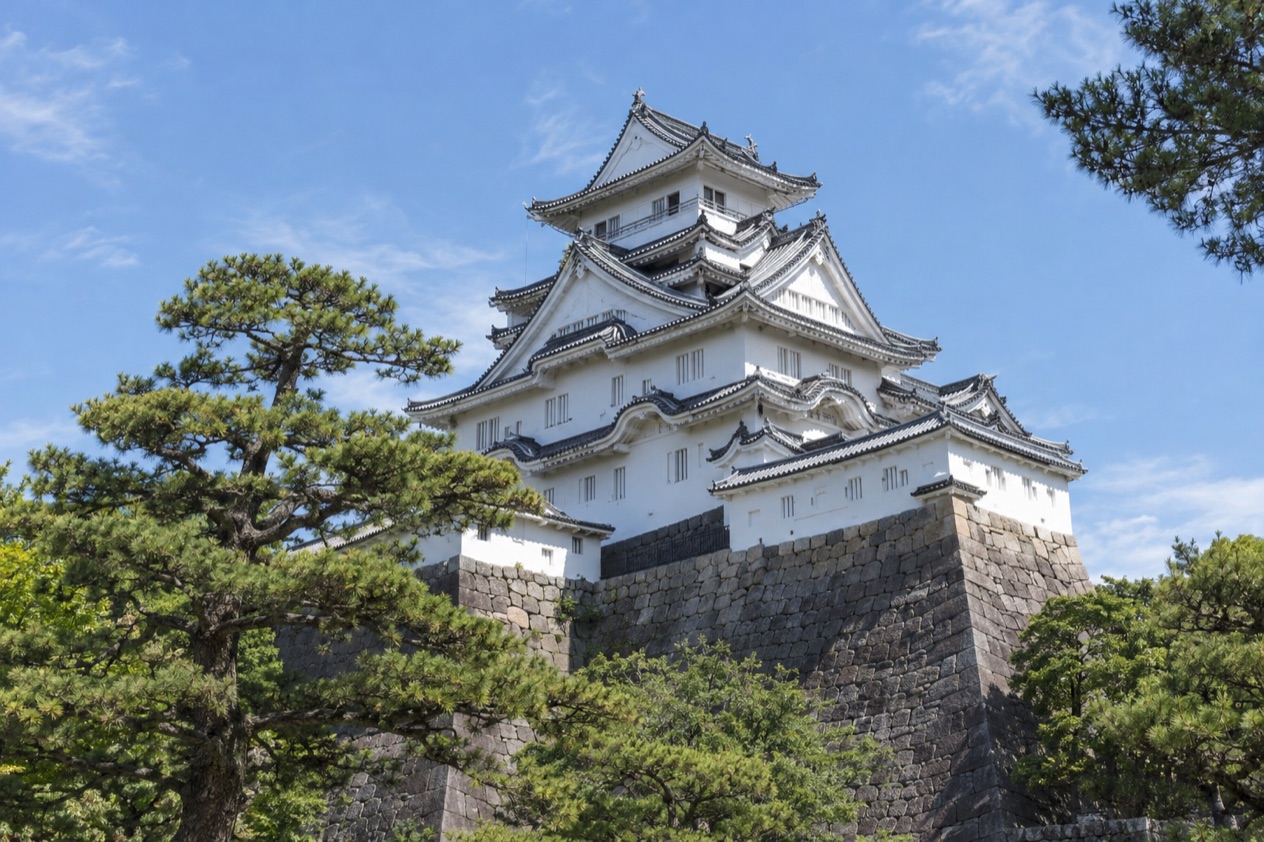
Standing under the stone walls of a castle keep, with your shoes in a cubby and a pair of slippers on your feet, the question arrives by itself: who actually lived and fought here? The short answer is that the samurai were Japan’s warrior class, serving the regional lords and later the shoguns, and their story is easiest to follow through a handful of battlefields, castles, sword museums and ninja villages.
Who were the samurai?
The samurai were the warriors who served Japan’s feudal lords, the daimyo, and who over the centuries became a hereditary class with its own education, its own swords and its own code of conduct. Their world was one of loyalty to a lord, of castles and of campaigns, and it gave way to a long period of enforced peace in which many samurai became administrators and officials rather than fighters.
What follows is a timeline built from the dates that anchor the story, then a closer look at how samurai were raised and how the Tokugawa shoguns changed their lives.
| Year | What happened |
|---|---|
| 1552 | St Francis Xavier writes that nobles send their sons to monasteries for schooling |
| 1600 | Tokugawa Ieyasu defeats the western daimyo at the Battle of Sekigahara (21 October) |
| 1635 | Sankin-kotai becomes compulsory for all daimyo, and the Closed Country Edict bars Japanese from traveling abroad |
| 1636 | The Dutch are restricted to the island of Dejima in Nagasaki |
| 1640 | Everyone is ordered to register at a temple |
| 1865 | The Kakure Kirishitan reveal themselves after more than two centuries of hiding |
A warrior class raised in monasteries
A samurai childhood was not all swordplay. The Jesuit missionary Francis Xavier noted in a letter that noble families sent their sons to monasteries to learn reading, writing and religion, from the age of eight until about nineteen or twenty. It is a useful corrective to the image of a samurai as only a fighter: the class prized letters and Buddhist discipline alongside the blade.
That mix still shows in the places you visit. Temples sit close to castle grounds in many Japanese towns, and the sword museums on the trail treat the blade as both a weapon and a work of craft, forged, polished and mounted by separate specialists.
Sekigahara and the rise of the Tokugawa
The turning point of samurai history is the Battle of Sekigahara, where an enormous army of 160,000 men faced each other. Tokugawa Ieyasu’s victory over the western daimyo settled who would rule the country, and the shogunate he founded governed from Edo for generations. The old calendar dated the fight to the fifteenth day of the ninth month of the Keicho era, a reminder of how differently time was counted then.
Sekigahara is a place you can still read in the landscape, a basin where armies met. Visiting it is quieter work than touring a castle, more about standing in the fields with a map and picturing the formations than about exhibits.
Peace, processions and a closed country
Under the Tokugawa, the samurai’s world was rewritten. Sankin-kotai required roughly 260 feudal lords to spend alternate years in Edo, which sent long processions along the roads and drained the daimyo’s resources, while checkpoints called sekisho, fifty-three of them concentrated around Edo, enforced a policy summed up as women leaving, guns entering.
Isolation followed. The Dutch were confined to Dejima, the Portuguese were expelled, and temple registration was used to suppress Christianity. By the mid-18th century Edo held more than a million people, probably the biggest city in the world then, and Osaka and Kyoto each passed 400,000. A samurai in that era was more often a salaried official in a thriving city than a man on a battlefield.
Where can you see samurai history?
You can see it in castles, in sword museums and in the ninja villages of the Iga and Koka area, with Sekigahara itself as the battlefield that explains the rest. The Japan National Tourism Organization lists a cluster of samurai and ninja sites that makes a themed trip simple to sketch.
Sword museums
Two museums are devoted to the blade itself. The Okuizumo Tatara Sword Museum is tied to tatara, the traditional furnace method of smelting the iron sand from which Japanese swords are made, and the Bizen Osafune Japanese Sword Museum looks at the swordsmithing tradition of the Bizen area. Together they show the craft from raw material to finished blade.
These museums suit travelers who like to understand how things are made. Expect displays of blades, tools and the stages of forging, and a different feeling from a castle, since the subject is the object rather than the building.
Ninja museums and villages
The ninja side of the story is gathered around Iga and Koka. The listings include the Iga-ryu Ninja Museum, the Koka Ninja House, the Koka Ninja Village, the Togakure Ninja Museum and the Chibikko Kids Ninja Village. The names alone suggest the range, from a house with hidden devices to a village built around hands-on play for children.
Ninja belong to the same warring world as the samurai, working as scouts and agents rather than as formal retainers. A day that pairs a ninja site with a castle gives you both faces of the period, the public pageantry and the secret work behind it.
Festivals and living traditions
Samurai history is not only museum glass. The Odawara Hojo Godai Festival, also on the listing, commemorates the Hojo family who held Odawara across five generations, and festivals of this kind bring armor, processions and the pageantry of a warrior town into the street.
Seasonal color adds to the picture too. Hirosaki Castle in Aomori Prefecture is famous in its region for its cherry blossom trees, so a spring visit there sets a feudal keep against pink blossom.
Which castles and districts matter?
Himeji Castle in Hyogo Prefecture matters most for travelers, since it is the most visited castle in Japan, but a handful of others tell different parts of the story. More than one hundred castles are extant or partly extant today, which is a large field to choose from.
| Castle | Place | What to know |
|---|---|---|
| Himeji Castle | Hyogo Prefecture | Renovated by Ikeda Terumasa between 1601 and 1609, which gave it its present appearance |
| Matsue Castle | Matsue | Built in 1611, with its main keep or other buildings in their historical form |
| Kochi Castle | Kochi | Built in 1611, with its main keep or other buildings in their historical form |
| Hiroshima Castle | Hiroshima | Destroyed in the atomic bombing and rebuilt in 1958 as a museum |
| Shuri Castle | Okinawa Island | UNESCO World Heritage Site, rebuilt in 1992 |
| Hirosaki Castle | Aomori Prefecture | Famous in its region for its cherry blossom trees |
| Goryokaku | Hokkaido | A French-style star fortress |
Himeji, Matsue and Kochi: keeps in their historical form
Himeji is the castle to start with, since it owes its present appearance to the renovation by Ikeda Terumasa and still reads as a working fortress. Matsue and Kochi are the other names to know when you want a keep that remains in its historical form, rather than a modern rebuilding in concrete.
Inside a castle that is extant, open flame and smoking near the castle are usually prohibited, and visitors usually remove their shoes before stepping onto the wooden floors, where slippers are usually provided. Those habits are part of the experience, since you walk the same boards the garrison once did, only in slippers.
Rebuilt and lost castles
Not every castle survived, and the rebuilt ones tell their own story. Hiroshima Castle now serves as a museum, Osaka Castle was destroyed by cannon, and Azuchi Castle holds its place in history as the first Japanese castle with a tenshu, the main keep that became the symbol of the form.
Shuri Castle on Okinawa is the most recent reminder of how fragile these buildings are. More than four thousand square meters burned in the early hours after an electrical fault, so what you see there reflects the continuing work of rebuilding a site that has already been rebuilt once.
Fushimi, Goryokaku and districts with a samurai past
Two castles stand out for what they hold or how they look. Fushimi Castle is famous for a tea room covered in gold leaf, which shows the taste of the warlords of the age, and Goryokaku in Hokkaido is a French-style star fortress, a reminder that the later years of the samurai era brought foreign ideas about defense.
Around Odawara, the Hojo family’s story is told through its annual festival, while the Iga and Koka area gives you a district whose identity is built around ninja history. Choosing one castle and one district per day keeps the trip varied: a keep for the architecture, a town for the stories.
Good to know before you go
Many of the sites on a samurai trail are rebuilt rather than original, so a plaque that gives the date of reconstruction is worth reading before you decide what you are looking at. Castles that remain in their historical form carry the habits of a Japanese interior, with slippers, polished wooden stairs and steep steps, and the sites in the Iga and Koka area are small museums and villages, so they pair naturally with a castle visit on the same day.
Sources
- Japan National Tourism Organization, samurai and ninja sites (https://www.japan.travel/en/things-to-do/attraction/samurai-and-ninja/), checked October 11, 2026
- Wikipedia, Edo period (https://en.wikipedia.org/wiki/Edo_period), checked October 11, 2026
- Wikipedia, Japanese castle (https://en.wikipedia.org/wiki/Japanese_castle), checked October 11, 2026
- Wikipedia, Samurai (https://en.wikipedia.org/wiki/Samurai), checked October 11, 2026
To plan your stay
- Best Time to Visit Japan: Cherry Blossoms, Autumn Colors, Weather and Festivals
- Where to Stay in Japan: Ryokan, Temple Stays, Capsule Hotels and the Best Cities to Base In
- Sending Luggage from the Airport in Japan: Hands-Free Travel, Hotel Delivery and Coin Lockers
- Know Before You Go to Japan: Entry, Money, Etiquette and Getting Around