
A small carafe arrives at the table with a few tiny cups, and someone across from you reaches over to fill yours before you can touch it. That is how an evening with sake usually begins in Japan, in an izakaya with the grill smoking and plates of small dishes landing one after another. From breweries in the countryside to the shelves of a convenience store, sake runs through travel here in every season.
What is sake?
Sake is the national drink of Japan, a rice wine made essentially from rice and water, with the help of koji, a rice malt that turns starch into the sugars yeast can ferment. The rice is specially grown and polished to remove the outer bran before brewing.
In Japan itself the word sake can refer to alcohol in general, so the drink you have in mind is called nihonshu, where nihon means Japan. Ask for nihonshu and nobody will wonder which bottle you mean.
Undiluted, sake is stronger than most wines, and it is typically lowered a little with water before bottling. It is brewed like beer in the sense that fermentation converts the grain, yet it tastes like neither. Expect something clean and rounded, sometimes fruity, sometimes dry and savory, and very good alongside salted, grilled and simmered food.
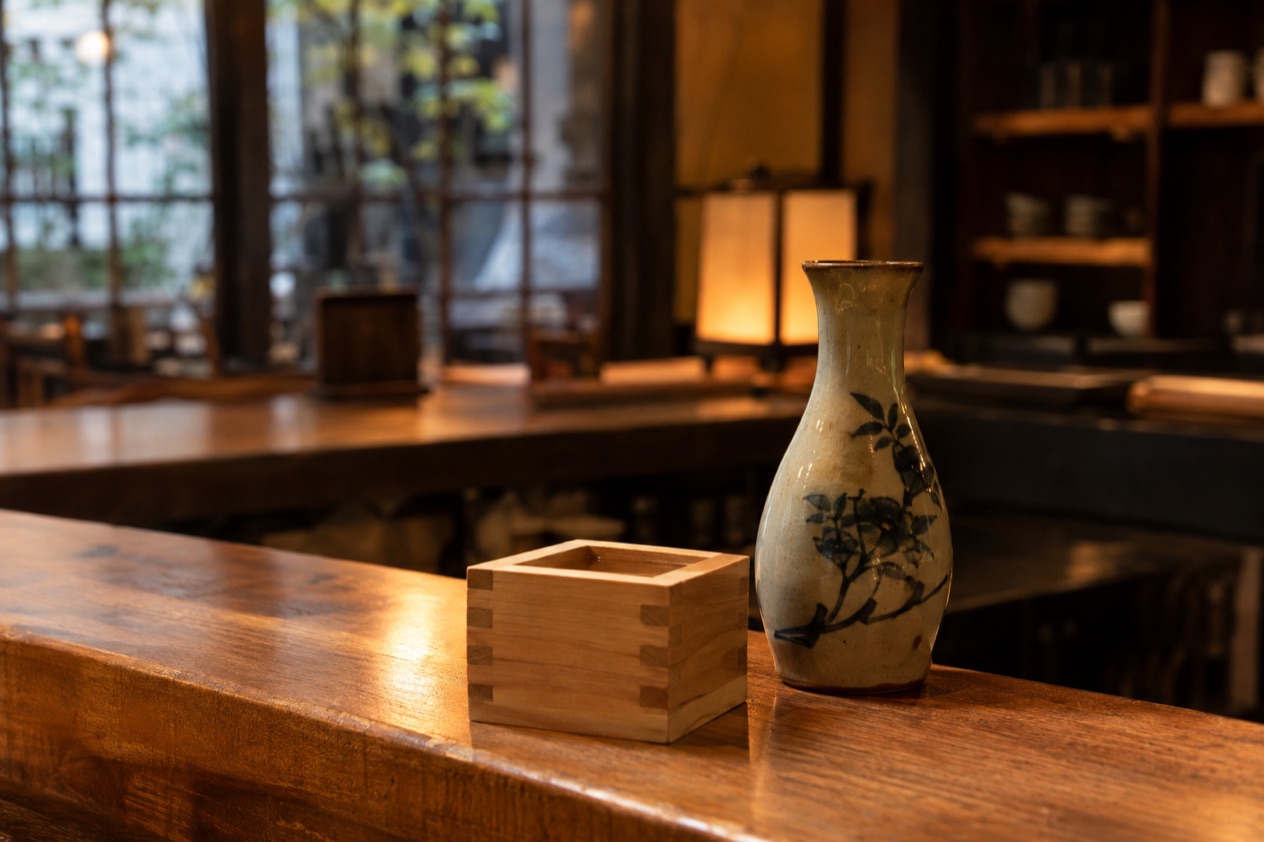
The cups, the carafe and the box
Traditional service has a rhythm of its own. Sake comes in a ceramic carafe called a tokkuri, and you drink from small cups called ochoko. Sometimes a square wooden box called a masu arrives too, and the sake may be poured until it overflows into the box, a small show of generosity. A flatter porcelain cup, the sakazuki, appears at ceremonies, where the sake is often gently warmed.
In many bars and restaurants you order by the go, a unit equal to 180 ml. Ichi-go is one portion and ni-go is two, which fills a tokkuri for sharing. Bottles sold in shops are usually 720 ml and are called yongobin, a good size for taking home a regional find.
Pouring etiquette
The most important rule at a formal tasting is never to pour for yourself. You fill your companions’ cups, and they fill yours, so every cup on the table stays full. It turns a drink into a small conversation. Lift your cup slightly when someone pours, and offer to return the favor when you see an empty one.
Temperature and the seasons
Sake can be served chilled (reishu), at room temperature (joon) or heated (atsukan), depending on the drinker, the character of the bottle and the season. A warmed carafe suits a cold night, while a chilled glass suits a muggy one. Ideal temperatures vary by type, so a server who asks how you would like it is doing you a favor.
A winter drink, still
Sake brewing took place mainly in winter for centuries, and especially from 1673 in the Edo period until the early 20th century. Modern technology allows year-round production, but high-end producers still prefer to brew only in winter.
The most visible symbol of that rhythm is the sugitama, a globe of cedar leaves hung outside a brewery when the new sake is brewed. It starts out green and slowly turns brown as the sake matures, so a brown ball tells you the season has moved on.
When the new year’s sake, called shinshu, is first released in late winter or early spring, many brewers hold a celebration known as kurabiraki, the warehouse opening. In autumn comes hiyaoroshi, the sake that was traditionally shipped once the weather had cooled. Both give a reason to look for seasonal bottles on a menu.
Which types are there?
Sake types are sorted mainly by how far the rice is polished and whether brewing alcohol is added, which gives the families you see on menus: junmai, honjozo, ginjo and daiginjo, plus cloudy and local varieties. A label rarely needs more than a glance once you know those few words.
Junmai, honjozo, ginjo and daiginjo
Junmai is made without added brewing alcohol, using only rice, water, yeast and koji. Honjozo uses rice polished to 70%. Ginjo uses rice polished to 60% or less and is fermented slowly at low temperature, and daiginjo is ginjo with rice polished to 50% or less.
In the glass, the more polished grades often read as lighter and more aromatic, while the simpler ones can feel fuller and rounder. A tasting flight that moves from honjozo up to daiginjo is a quick way to learn what your own palate prefers.
| Type | Rice polished to |
|---|---|
| Honjozo | 70% |
| Ginjo | 60% or less |
| Daiginjo | 50% or less |
Nigorizake, the cloudy one
Nigorizake is cloudy, with rice sediment left in the bottle. It is sometimes unpasteurized namazake, which means it is still fermenting and has an effervescent quality. Shaking the bottle or exposing it to high temperatures may make it spurt out when you open it, so handle it gently.
There is a ritual to drinking it. First pour only the clear liquid from the top. Then close the cap and slowly turn the bottle upside down to mix the sediment into the sake, and pour again for a creamier, sweeter taste.
Jizake and regional styles
Small to medium-sized breweries across the countryside make jizake, artisanal sake produced in small quantities. Many of these bottles are only available near their brewery, so tasting locally made sake is one of the real rewards of leaving the big cities.
Regions have their reputations. Hyogo’s Nada region is renowned for bold, strong sake, while sake from Niigata prefecture has a crisp, refreshing flavor. Ordering one from each side by side shows the contrast in a single sitting.
Shochu and umeshu, the neighbors
Menus that list sake often list two other traditional drinks. Shochu is a distilled spirit, and umeshu is a sweet plum liqueur made by soaking fruit in alcohol. They are different drinks from sake, but they share the same shelves and the same dinner tables, and umeshu is an easy sweet note to end a meal on.
Where can you taste it?
You can taste sake in izakaya, at breweries, and with a bottle bought from a shop and carried to your hotel or outdoors. Which one fits depends on whether you want food, a lesson or a quiet evening.
Izakaya, the Japanese pub
At an izakaya you can enjoy a variety of dishes paired with drinks like sake, beer and whisky. Plates arrive to share: skewers, fried things, pickles, grilled fish. Ordering by the go lets you start with one portion and add a second if the table agrees.
It is the most relaxed setting for trying sake, because the food does half the explaining. Try a crisp bottle with something fried and a rounder one with something grilled or salty, and notice how the drink changes.
Brewery visits
Breweries exist throughout Japan, many using local ingredients, and some but not all are open to visitors. Many offer guided tours, sometimes free of charge, and some include a tasting. Reservations are required, so plan the visit before you arrive rather than knocking on the door.
A brewery stop is a good way to meet the cedar sugitama in person and to taste bottles that rarely travel.
Sake shops, supermarkets and konbini
You can buy alcoholic beverages at sake shops (sakaya), supermarkets and convenience stores (konbini) to drink at your hotel or outdoors. A sakaya is where the choice is widest, and a local bottle makes a fine souvenir.
Once a bottle is open, it keeps best refrigerated or in a cool, dark room, since prolonged heat or direct light leads to spoilage. If you are carrying a bottle of nigorizake, keep it cool and still.
Good to know before you go
Sake is made to be shared, so go slowly, keep your companions’ cups full and let the food set the pace. Undiluted sake is stronger than most wines, which is worth remembering when the carafe keeps coming. Since many bottles never leave the area around their brewery, the best ones are often the ones you taste where they were made.
Sources
- Japan National Tourism Organization, sake (https://www.japan.travel/en/gastronomy/sake/), checked October 11, 2026
- Wikipedia, Sake (https://en.wikipedia.org/wiki/Sake), checked October 11, 2026
To plan your stay
- Best Time to Visit Japan: Cherry Blossoms, Autumn Colors, Weather and Festivals
- Where to Stay in Japan: Ryokan, Temple Stays, Capsule Hotels and the Best Cities to Base In
- Sending Luggage from the Airport in Japan: Hands-Free Travel, Hotel Delivery and Coin Lockers
- Know Before You Go to Japan: Entry, Money, Etiquette and Getting Around