
Squeezed onto a platform at Shinjuku Station, with commuters streaming past in every direction, a traveler quickly starts to wonder just how people this country holds. The short answer is a great many, and most of them live in cities packed around a handful of bays and plains. Outside those urban belts, forested hills and small islands leave long stretches of Japan almost empty.
How many people live in Japan?
Japan has one of the largest populations in the world, large enough that Japanese alone counts around 128 million speakers, most of them living in Japan itself. That language is the thread that ties the crowd together. It is spoken from the northern island of Hokkaido down to Okinawa, and the Tokyo dialect is the one considered Standard Japanese, the voice you hear in train announcements, on television and in most phrasebooks.
What matters more to a visitor than the headline total is how the people are arranged and how the country is changing. The total fertility rate in 2024 was 1.14 children per woman, a low figure that sits behind the everyday talk in Japan about an ageing society. You may notice it in small ways: shops and services aimed at older customers, and conversations about what the future holds for smaller towns and villages.
One language, many ways of speaking
Standard Japanese will get you through any station, hotel or museum, but the country does not sound the same everywhere. Osaka is known for a lively, quick way of talking, Kyoto for a softer and more indirect one, and Hokkaido and Kyushu each have their own turns of phrase. Even a few words in the local manner, such as the greeting you hear when you walk into a shop, tend to bring a smile.
Signs in the big cities and at major sights are usually written in Japanese with English alongside, though in smaller places you will find more Japanese than English. Pointing, smiling and a translation app go a long way in a neighborhood restaurant, where the menu may be a handwritten list on the wall.
A country of islands, counted in thousands
Japan is spread across 14,125 islands that stretch along the Pacific coast of Asia, though people think of it as five main ones. From north to south they are Hokkaido, Honshu, Shikoku, Kyushu and Okinawa. Honshu is the largest island, and it is where Tokyo, Kyoto, Osaka and Nagoya sit, so a good share of a typical first trip happens on that single island.
The country is divided into 47 prefectures, a bit like states, each with its own regional food, festivals and crafts. When you read a menu that says a dish comes from a certain prefecture, you are reading a small piece of the population map: people in each region have cooked with what grows and swims near them for generations.
What a low birth rate looks like to a visitor
A traveler is unlikely to see statistics in daily life, but the mood of a place can change from one town to the next. The big cities hum with students, office workers and visitors, while some country villages feel hushed, with a single café or a lone bus stop serving a wide area. Seasonal festivals, or matsuri, often hold a community together, and they are a good moment to see a neighborhood at its fullest.
If you plan to wander beyond the main cities, expect a quieter pace in the countryside. Inns and small restaurants in rural areas are often family-run, and the owner may greet you personally, which is part of the charm of staying in a small town.
Which are the biggest cities?
Tokyo is the capital and the most populous city of Japan, followed by Yokohama, which is the second largest city by population. The two run straight into each other, and the Tokyo-Yokohama area, with 35 million residents, is the world’s most populous urban area.
| City | Prefecture | Population |
|---|---|---|
| Yokohama | Kanagawa | 3,732,616 |
| Osaka | Osaka | 2,691,185 |
| Nagoya | Aichi | 2,327,557 |
| Sapporo | Hokkaido | 1,976,257 |
| Fukuoka | Fukuoka | 1,588,924 |
| Kobe | Hyogo | 1,524,601 |
| Kyoto | Kyoto | 1,464,890 |
| Nagasaki | Nagasaki | 448,792 |
| Nara | Nara | 367,393 |
Tokyo and Yokohama
Tokyo lies at the head of Tokyo Bay on the central coast of Honshu, and it is less one city center than a string of them. Shinjuku is the administrative center, Shibuya is a hub of commerce and business, and the Imperial Palace stands in the Chiyoda special ward. Tokyo Station is the central hub of the Shinkansen, and Shinjuku Station is the world’s busiest train station, which tells you something about how people pass through each day.
Yokohama, in Kanagawa Prefecture, is a port city that blends into Tokyo’s southern suburbs so smoothly that visitors cross the boundary without noticing. It is a city with its own harbor, its own waterfront and its own restaurants, and it is worth treating as a destination rather than a suburb. Tokyo Skytree, the world’s tallest tower, and the Ginza Line, the oldest underground metro line in Asia, are reminders that Tokyo is a city of records.
Osaka, Nagoya and Sapporo
Osaka is one of the most densely populated cities in the country, and it feels like it: narrow arcades, packed food streets and neon-lit canals. It is a city that revolves around eating, with street snacks like takoyaki, the octopus dumplings, and okonomiyaki, a savory griddle pancake, filling the lanes at night. Its population puts it ahead of Nagoya, a big industrial and trading city in Aichi Prefecture that travelers pass through on the Shinkansen.
Sapporo is a city designated by government ordinance in Hokkaido, and it stands apart from the cities on Honshu. It is the main urban center of the northern island, and visitors who come for ramen, beer and winter snow festivals will find a city built around those pleasures. Travelers heading to Hokkaido often use Sapporo as the starting point for the rest of the island.
Fukuoka, Kobe, Kyoto, Nagasaki and Nara
Fukuoka, in Fukuoka Prefecture, is the gateway to Kyushu, known for its food stalls, or yatai, that set up along the streets in the evening and serve noodles and skewers. Kobe is a designated city in Hyogo Prefecture with a port and a hillside of international history, and it has a name that food lovers know from its beef. Kyoto, once the imperial capital of Japan, is still a city of over 1.4 million people, and it carries its temples, gardens and tea houses into everyday life.
Nagasaki and Nara are much smaller, which shapes how a visit feels. Nagasaki, on the western side of Kyushu, is a port city with a layered past that you meet in its museums, churches and hillside streets.
Nara, the smallest on this list, is a city where deer wander the temple grounds and a day can be spent between a handful of sites. Smaller cities like these often let you cover more ground on foot, though you should plan around what each place offers.
How is the population spread?
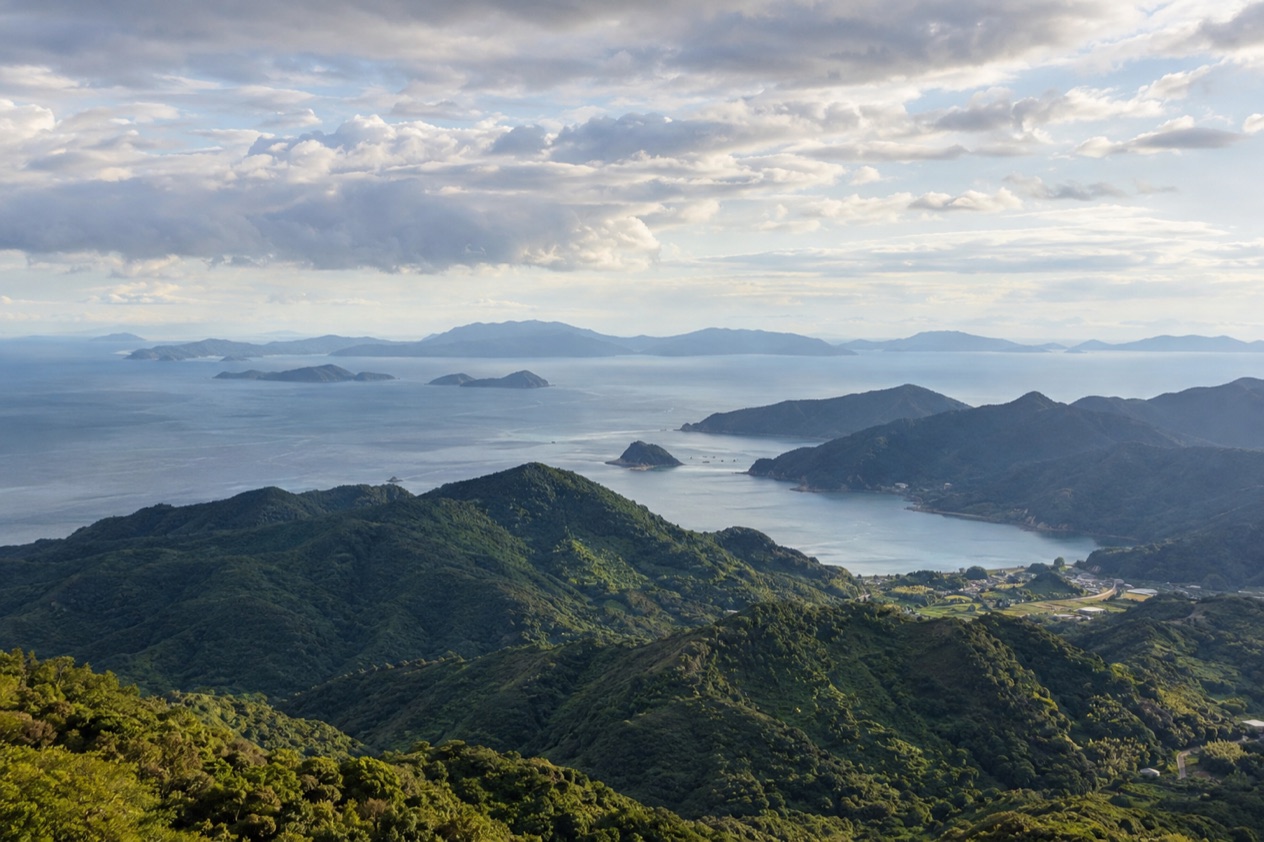
Japan’s people are concentrated in cities, with 90.7% of the population living in urban areas according to the 2010 census, while forests cover 68.5% of the country. That contrast explains much of what you see from a train window: dense towns pressed along the coast and valley floors, and dark green mountains rising behind them.
The land itself is the reason. Japan is a mountainous archipelago, and flat ground is limited, so cities, rice fields and railway lines all squeeze onto the same plains.
The Tokyo region and its commuters
The densest concentration is the Tokyo area and the wider Kanto Region. Daily commutes of two hours each way are common for many workers there, which means the trains carry a huge share of the population at certain hours and the stations are built to handle it. Visitors will see this firsthand in the big hubs, where ticket gates, shopping floors and food courts are all part of a single network.
For a traveler, the lesson is that a long ride out of Tokyo can still be inside the same urban area. Suburbs, bay-side towns and commuter cities blend together, and the map you carry may show far more continuous city than you expect.
Other population centers and the space between
Beyond Kanto, the larger clusters sit around Osaka, Kobe and Kyoto in the Kansai area, around Nagoya, and in places like Sapporo and Fukuoka. Between them, much of the land is mountains and farmland. Lake Biwa, the country’s largest freshwater lake, is an ancient lake that sits amid this mix of towns and hills.
Hokkaido and Okinawa, at the two ends of the chain, feel very different from the central cities. Hokkaido has big open landscapes and one major city, while Okinawa is a group of islands with a warmer climate and its own local culture. Five natural sites have been inscribed on the UNESCO World Heritage List for their outstanding natural value, a sign that wild places remain close to the crowded cities.
City sizes by area
Population is only half of the picture, because cities differ widely in how much ground they cover. A city with a large area, such as Kyoto, spreads across wooded hills and several districts, while a more compact one packs its people together.
| City | Area (km²) |
|---|---|
| Kyoto | 827.90 |
| Kobe | 552.23 |
| Nagasaki | 406.37 |
| Fukuoka | 340.96 |
| Nagoya | 326.45 |
| Nara | 276.84 |
Good to know before you go
Since most of the population lives in cities, plan your days with the rhythm of a big urban area in mind, and leave room to enjoy the quieter forest and mountain stretches between them. Tokyo’s warmest month is August, averaging 80.4°F, and its coolest is January, at 41.7°F. In late summer and early autumn, typhoons often bring heavy rain, and in Okinawa the main rainy season begins in early May.
Sources
- Wikipedia, Demographics of Japan (https://en.wikipedia.org/wiki/Demographics_of_Japan), checked October 11, 2026
- Wikipedia, Japan (https://en.wikipedia.org/wiki/Japan), checked October 11, 2026
- Wikipedia, List of cities in Japan (https://en.wikipedia.org/wiki/List_of_cities_in_Japan), checked October 11, 2026
- Wikipedia, Tokyo (https://en.wikipedia.org/wiki/Tokyo), checked October 11, 2026
To plan your stay
- Best Time to Visit Japan: Cherry Blossoms, Autumn Colors, Weather and Festivals
- Where to Stay in Japan: Ryokan, Temple Stays, Capsule Hotels and the Best Cities to Base In
- Sending Luggage from the Airport in Japan: Hands-Free Travel, Hotel Delivery and Coin Lockers
- Know Before You Go to Japan: Entry, Money, Etiquette and Getting Around