
Standing at the entrance of a ryokan with your shoes in hand, or beneath a cherry tree where families spread out picnic sheets, you start to wonder whether the bag you packed is the right one. Spring in Japan asks for very little: a light jacket, a sweater or two, shoes that are easy to slip off, and a few small things for pollen and for mountain days.
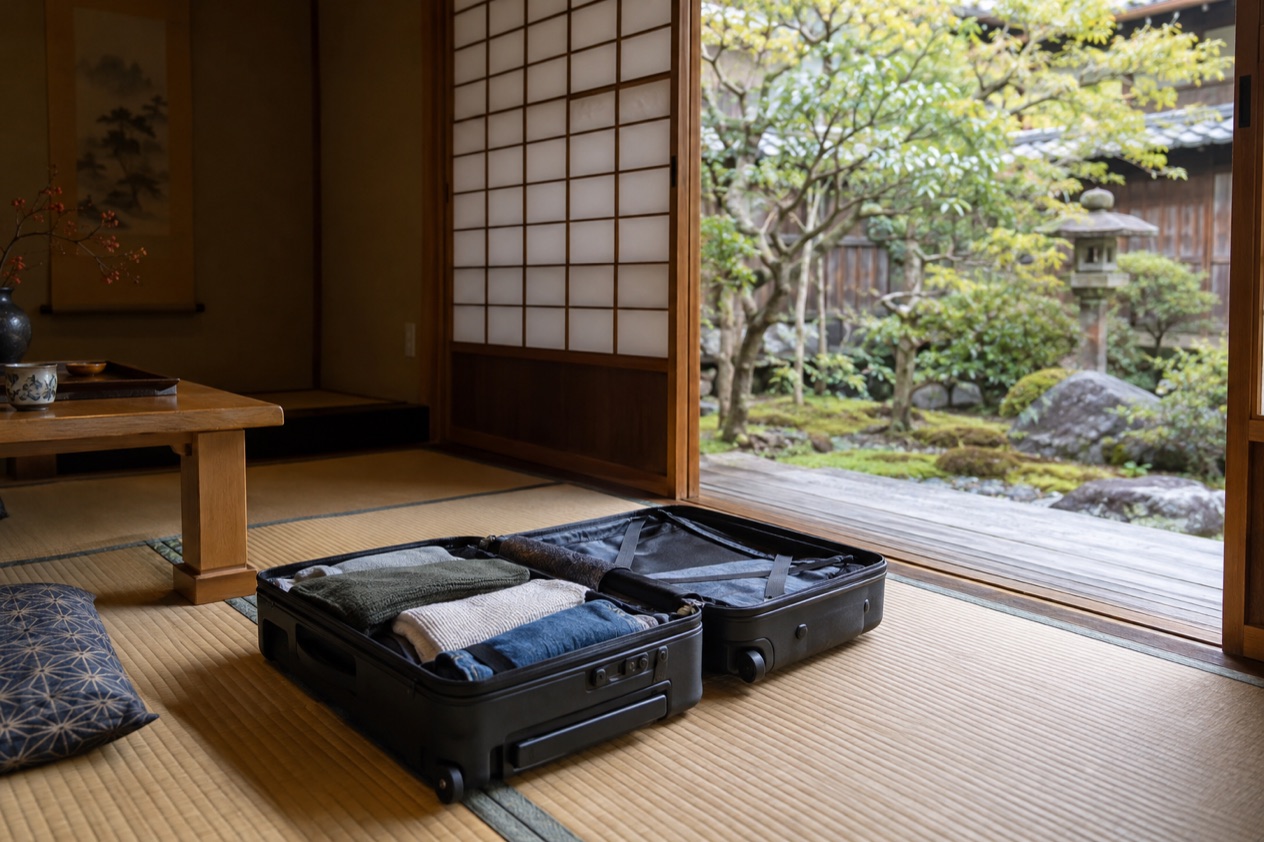
What should you pack for Japan in spring?
Pack for layers: a light jacket or a simple sweater is enough for most of the country, and everything else is a matter of what your days will look like. A spring trip tends to mix mild afternoons with cooler spells, so clothes that stack and unstack serve you better than one heavy coat.
Think in a small, mix-and-match set. Two or three tops that can sit under a sweater, one pair of trousers that works for temples and for dinner, and a light jacket that folds into a day bag will cover most itineraries. Spring is the season of long days outdoors, under blossoms, along riverbanks and across temple grounds, so what you wear should be comfortable for hours on your feet.
Clothes that work in layers
A light jacket and a simple sweater are what the Japan National Tourism Organization suggests for traveling comfortably in spring. Build around those two pieces. Cotton or merino tops in a couple of colors, a long-sleeved shirt, and perhaps a scarf give you ways to adjust when the wind picks up or when you step from a warm train into an open platform.
Pick fabrics that dry quickly if you can, since you may wash a few items in a hotel sink or a neighborhood laundry. Neutral colors help, because the same few pieces will appear in many photos, from a shrine gate to a castle moat to a table at an izakaya (a casual pub serving small plates).
Shoes and socks
Shoes come off at the entrance of a ryokan, in many temple halls, at some restaurants with tatami floors and in plenty of homes, so slip-on or easily laced pairs save time. Bring a pair of comfortable walking shoes that you have already worn in, because days of sightseeing mean a lot of steps on stone paths and station stairs.
Pack socks without holes and with some thickness, since you will often be in them alone. Travelers also tuck a spare pair into a day bag.
Small things for blossom season and pollen
Cherry blossoms are a highlight, and they also release a lot of pollen, which sets off allergic reactions for people. If spring allergies bother you at home, bring the remedies you already know, along with tissues, and consider sunglasses and a mask for days spent outdoors under the trees.
A small picnic sheet or a light scarf to sit on is a good companion for hanami, the custom of gathering beneath the blossoms to eat and talk. A reusable bag, a water bottle and a compact umbrella complete a day kit that fits easily into a small backpack.
Extras for the mountains and the north
If your route includes high country, such as the Tateyama Kurobe Alpine Route in Toyama and Nagano prefectures, which opens from mid-April, add a warmer layer, gloves and a hat to the bag. Mountain routes feel different from city streets, and a scarf and a wind-resistant shell are small items that earn their space.
Hokkaido gets its own planning. Niseko has four interconnected ski resorts, and Rusutsu is just over 30 minutes by car from Niseko, so skiers and snowboarders will want to think about gear and clothing for that part of the trip separately from the rest of the bag.
What is the weather like?
That is an average for much of the country, so a given afternoon in a given city can feel warmer or cooler, and the thing that decides your day is often the wind or whether the sun is out.
What this means in practice is simple. A heavy winter coat would be more than most spring days call for, and shorts-and-sandals weather is not what the season is known for.
How the blossoms move across the country
Spring does not arrive everywhere at once. Cherry blossoms begin in southern Kyushu around late March and move gradually northward, reaching Honshu and Hokkaido in April. A trip that starts in the south and heads north can follow the blossoms for weeks, while a trip in one city catches a single window.
In Fukuoka, if you are there around late March to early April, Nishi Park, Shiranoe Botanical Gardens and Katsuyama Park are the places to look for cherry blossoms. Because the flowering shifts from year to year, plan your clothes for a range of mild days rather than for one exact week.
Beyond cherry trees
Wisteria is another spring show. The display at Ashikaga Flower Park in Tochigi Prefecture is among the most beautiful spring flower displays in Japan, with hanging purple blooms that call for a camera and a comfortable pair of shoes for strolling the garden paths.
Days spent in gardens and parks are days spent outside, so a hat and sunglasses are as useful as a sweater. The pollen that comes with the flowering is part of the picture too, and it is one more reason to keep tissues and your usual allergy remedies within reach.
Golden Week and your suitcase
The end of April marks the start of Golden Week, a series of consecutive public holidays when much of the country goes on vacation. Visitors are advised to plan to avoid peak times, and that choice shapes the trip more than the forecast does.
For packing, it suggests carrying light: a small bag is simpler on the days when stations and trains are in heavy use. Keep your daypack organized, with a jacket, a water bottle and tissues on top, so you do not have to unpack everything on a crowded platform.
What can you leave at home?
You can leave the heavy coat, the bulky boots and most of the “just in case” outfits at home, because a light jacket and a simple sweater carry you through spring. The less you bring, the easier the days are, especially when you are carrying your bag up station stairs and into small hotel rooms.
Winter gear, unless your route calls for it
A thick down parka, thermal layers and heavy gloves are more than a typical spring itinerary needs. The exceptions are specific: a trip to the high country or the ski resorts of Niseko in Hokkaido is its own packing question, and it deserves its own small bag of warm items rather than a heavier suitcase for the whole trip.
If you do add ski clothing for Hokkaido, keep it separate from the city clothes. That way the rest of the trip, across Honshu or Kyushu, stays light, and you are not hauling gear that spends most of the vacation in a locker or a hotel room.
Too many shoes and too many outfits
One pair of broken-in walking shoes and one lighter pair for evenings are enough. A third or fourth pair takes up room and rarely gets worn, especially when shoes come off at so many doors. The same goes for clothes: a few pieces that layer and mix will see you through, and laundry is something you can do along the way.
Skip formal outfits unless you have a specific plan for them. Spring days in Japan are for walking through gardens, temples and neighborhoods, and clean, comfortable, modest clothing fits nearly every setting you are likely to enter.
Extra bulk you can pick up on the way
Leave bulky toiletries, large towels and oversized umbrellas at home and pack small versions instead. A compact umbrella, a small towel and travel-size basics keep the bag light, and what you run out of you can replace during the trip.
The same logic applies to souvenirs. Leave a bit of empty space in the bag, or pack a folding tote, so the things you bring home do not force you to buy another suitcase. A lighter start makes every station and every staircase a little more pleasant.
Good to know before you go
Spring packing is about flexibility more than quantity. Bring a light jacket, a sweater, shoes that suit long walks and slip off easily, and the small things that help with pollen.
Keep your plans loose around the end of April, when Golden Week brings a series of public holidays and much of the country travels. Blossoms arrive at different times from south to north, so a few spare layers let you follow the season wherever your route goes.
Sources
- Japan National Tourism Organization, spring in Japan (https://www.japan.travel/en/guide/spring-guide/), checked October 11, 2026
To plan your stay
- Best Time to Visit Japan: Cherry Blossoms, Autumn Colors, Weather and Festivals
- Things to Do in Japan: Kyoto Temples, Onsen, Street Food and Day Trips
- Where to Stay in Japan: Ryokan, Temple Stays, Capsule Hotels and the Best Cities to Base In
- Sending Luggage from the Airport in Japan: Hands-Free Travel, Hotel Delivery and Coin Lockers