
Standing in front of the gold-leafed pavilion of Kinkaku-ji, or crossing the footbridge to a shrine in a castle town, you start to wonder who built all this and why it looks the way it does. Japan’s past is a long chain of capitals, warrior rulers, closed doors and sudden reinvention, and much of it is still visible on the ground. A little background makes temples, old streets, subway lines and museum labels fall into place.
What is the history of Japan?
Japan’s history is the story of an island nation that built its imperial capital at Kyoto, was ruled for long stretches by warrior families, shut itself off from most of the world under the Tokugawa shoguns, and then reorganized itself completely in the Meiji era. The pieces you can still walk through today come mostly from those turning points.
The islands underneath the story
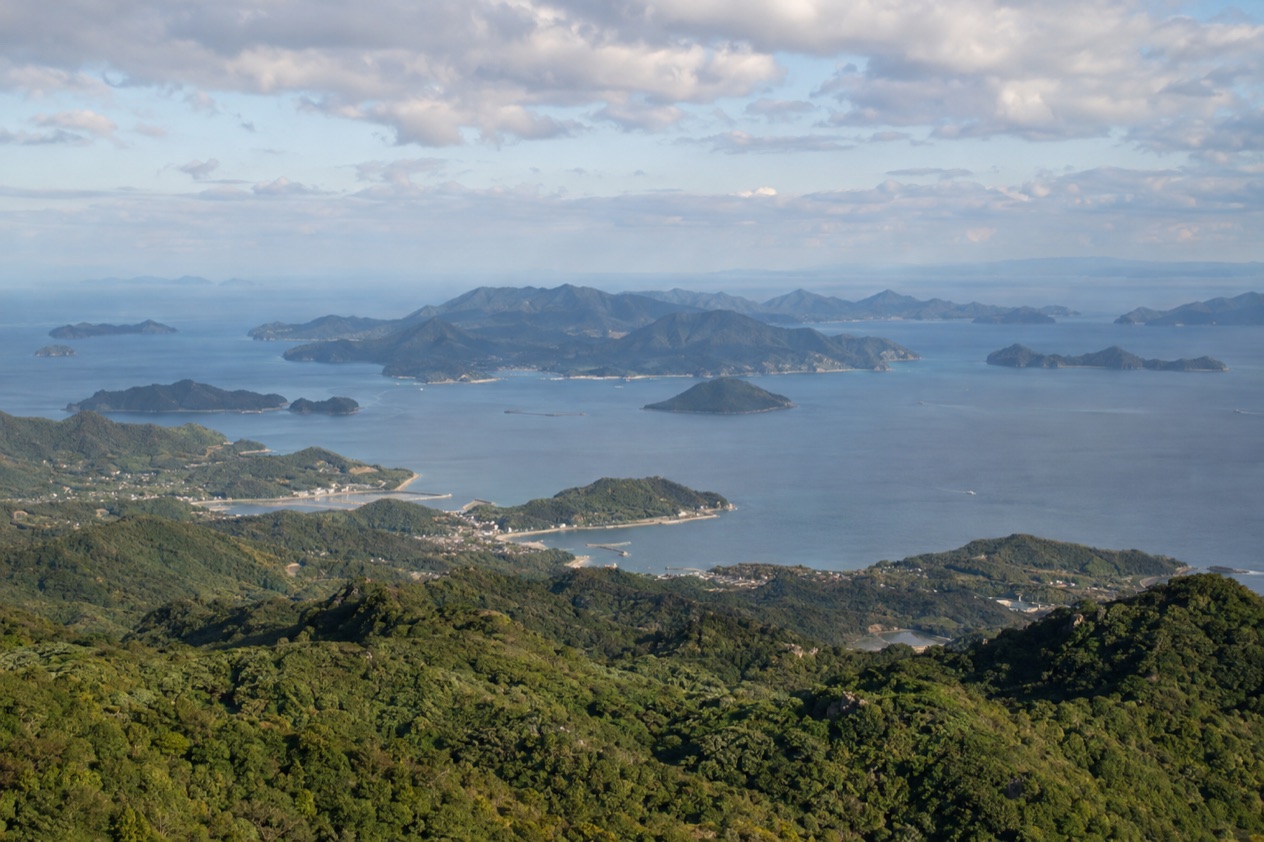
Geography shaped everything. The country is made up of 14,125 islands strung along the Pacific coast of Asia, and five of them carry most of the weight: Hokkaido, Honshu, Shikoku, Kyushu and Okinawa, listed from north to south. Forests cover two thirds of the archipelago, which is one reason so many old temples and shrines sit among trees and why wooden architecture dominates the historic sights.
The long coastline and the many islands also explain why contact with the outside world, when it came, arrived by ship. Late summer and early autumn bring typhoons that often carry heavy rain, a reminder that the weather has always been part of how Japanese communities lived and built.
From Heian-kyo to the first Europeans
In 794 a new imperial capital was founded at Heian-kyo, the city we now call Kyoto. That choice explains why the old imperial city is so dense with temples, gardens and traditional crafts, and why so many of the historic visits in this country begin there.
Centuries later, in 1543, a trading ship landed on Tanegashima, an island just south of Kyushu, carrying the first Europeans to set foot in Japan. In 1571, Omura Sumitada, who had taken the Christian name Dom Bartolomeu, guaranteed land in the small fishing village of Nagasaki to the Jesuits. That grant is why Nagasaki became a port with a European presence long before most Japanese cities saw a foreigner.
Edo: peace, checkpoints and a closed door
Tokugawa Ieyasu’s victory over the western daimyo (regional lords) at Sekigahara on 21 October 1600 opened the Tokugawa era. In the first century of that rule Japan’s population doubled to thirty million, and the shogun’s capital at Edo grew into a city of more than one million people by the mid-18th century, probably the biggest in the world at the time.
The shogunate also tightened its grip. In 1635, Shogun Iemitsu made the sankin-kotai system compulsory, requiring about 260 feudal lords to spend alternate years in residence at Edo. The system kept the lords under watch, and it also filled the roads with processions, which in turn fed inns, post towns and the long tradition of travel in Japan.
Meiji: the end of the shogunate
The Meiji Restoration overthrew the Tokugawa shogunate and established the Empire of Japan. Tokugawa Yoshinobu, the 15th shogun, resigned on 19 November 1867, and the new government’s goals were set out in the Charter Oath of 6 April 1868. Edo was renamed Tokyo on 3 September of that year, and Emperor Meiji took up residence there in 1869.
Reform came quickly after that. In January 1872 the 302 domains were reorganized into 72 prefectures, and the country now has 47. If you wonder why a modern Japanese city can sit beside a castle moat and a high-speed rail line, the answer lies in this rapid, deliberate remaking of the state.
Which periods shaped what you see?
Four stretches of history do most of the work: the Heian age that gave Kyoto its role, the era of warlords and shoguns that produced castles and golden pavilions, the Edo peace that built the cities, and the Meiji years that brought the modern state. Each leaves a different kind of mark on a trip.
The Heian capital and its temples
After the capital moved to Heian-kyo, court culture, Buddhism and the arts gathered in one place. You see the result in Kyoto’s temple precincts, in tea houses and in gardens designed to be looked at from a veranda. Byodo-in, built in 1053 in Uji, belongs to this courtly world, and it shows how a temple could be conceived as an earthly picture of paradise beside a pond.
Older still is Horyu-ji, which is the oldest wooden structure in the world. Standing in its grounds, you are looking at the way early Buddhist builders worked in timber, the same material that later temples, castles and farmhouses would use again and again.
Shoguns, warlords and gold leaf
Power drifted from the court to warrior families, and their taste left its own mark. Kinkaku-ji in Kyoto was built in 1397 by Ashikaga Yoshimitsu, and its pavilion reflected in a pond remains one of the images people associate with Japan. It is a good place to see how a shogun’s retreat differed from an emperor’s palace.
Earlier tombs show the same impulse to mark power on the land. The Daisenryo Kofun in Osaka is a keyhole-shaped burial mound 486 m long. From the ground you read it as a wooded hill, and its outline is clearest on maps and from above, which makes it a different kind of history stop from a temple.
The Edo peace and the closed country
The Edo period left Japan with its great cities, its road network and its sense of a settled society. Osaka and Kyoto each had more than 400,000 inhabitants by the mid-18th century, and Edo was larger still. Travel was regulated, too. The shogunate set up fifty-three checkpoints, called sekisho, concentrated around Edo to enforce a policy summed up as women leaving, guns entering.
Isolation followed the same logic. The Closed Country Edict of 1635 prohibited any Japanese from traveling abroad or, if someone left, from ever returning. In 1636 the Dutch were restricted to Dejima, a small artificial island in Nagasaki, with only a few traders disembarking under close scrutiny, and the 1639 edict expelled the Portuguese entirely.
Religion was policed as well. In 1640 the bakufu (the shogunate’s government) ordered everyone to register at a temple, a measure aimed at Christianity that strengthened Buddhism. Some Christians hid their faith for more than two centuries, and in 1865, as Japan was forced to end its isolation, a group of these Kakure Kirishitan revealed themselves.
The Meiji state and the modern city
The Meiji government moved fast. Nationwide conscription began in 1873, requiring every male to serve four years in the armed forces at 21, followed by three years in the reserves. In 1876 samurai had to convert their stipends into government bonds, which ended their hereditary income and with it a social order.
Industry and infrastructure followed. The Tokyo Koishikawa Arsenal was established in 1871, and the Tokyo Metro Ginza Line, which opened in 1927, is the oldest subway line in Asia. Riding it is a small way of touching the modern chapter of the story.
Which sites tell the story?
A handful of places let you follow the story from the earliest wooden temple to the first subway: Horyu-ji, Byodo-in, Kinkaku-ji, the Daisenryo Kofun, Nagasaki and Tokyo itself. Where the dates are known, they are here.
| Site | Place | Year built or opened |
|---|---|---|
| Byodo-in | Uji | 1053 |
| Kinkaku-ji | Kyoto | 1397 |
| Tokyo Metro Ginza Line | Tokyo | 1927 |
Kyoto and Uji: courtly and warrior taste
Kyoto is the natural starting point for the early story, since it grew out of Heian-kyo. Its temples and gardens show how the court, and later the warrior class, liked to shape space around water, wood and carefully placed stones. Kinkaku-ji gives you the shogun’s side of that taste, and a visit to the pavilion and its pond is a way of seeing the Ashikaga era in a single view.
In Uji, Byodo-in offers the courtly counterpart. Pairing the two in a trip lets you compare an aristocrat’s vision of paradise with a shogun’s retreat, built centuries apart. Both are best taken slowly, walking the grounds and looking at how each building sits in its landscape.
Horyu-ji and the Daisenryo Kofun
Horyu-ji, the oldest wooden structure in the world, suits travelers who like to see how buildings were put together. The timber, the roofs and the arrangement of the halls speak of early Buddhist Japan more directly than any museum panel.
In Osaka, the Daisenryo Kofun belongs to an even earlier world of burial mounds and ruling clans. The shape is the point: a keyhole outline that you appreciate by walking its edge and then studying the diagram. It pairs well with Osaka’s later role, since the city was among the largest of the Edo era.
Nagasaki and the closed country
Nagasaki is where the story of contact and closure is easiest to follow. Land was granted to the Jesuits there in 1571, the Dutch were later confined to Dejima, and the Kakure Kirishitan eventually revealed themselves after the long period of hiding. Walking the port, you trace a place that was both an opening and a limit.
Tanegashima, the island where the first Europeans landed, sits just south of Kyushu and fits naturally into the same narrative. It is a quieter detour for those who want to start the foreign-contact story at its very beginning.
Tokyo: from Edo to the Ginza Line
Tokyo is the former shogun’s capital renamed for an emperor, so the city carries both stories at once. The streets still reflect a place that once housed some 260 feudal lords on rotation and later became the seat of a new government. Haneda Airport, the largest airport in Japan, now brings many visitors to the same city.
For a modern chapter, ride the Ginza Line, the oldest subway line in Asia. It makes a handy bridge between the Edo story told in museums and the way the city moves today, and it needs no ticket to a monument, only a seat on a train.
Good to know before you go
Historic sites are spread across the country, from Kyoto and Osaka to Nagasaki and Tokyo, so a history-minded trip is easiest when you pick a few regions rather than all of them. Typhoons often bring heavy rain in late summer and early autumn, which is worth keeping in mind when you plan outdoor temple grounds and long walks. Dates in this account follow the records of each event, and the old Japanese calendar still shapes how some of them are described, as with Sekigahara, which falls on the 15th day of the ninth month of the fifth year of the Keicho era.
Sources
- Wikipedia, Edo period (https://en.wikipedia.org/wiki/Edo_period), checked October 11, 2026
- Wikipedia, History of Japan (https://en.wikipedia.org/wiki/History_of_Japan), checked October 11, 2026
- Wikipedia, Japan (https://en.wikipedia.org/wiki/Japan), checked October 11, 2026
- Wikipedia, Meiji Restoration (https://en.wikipedia.org/wiki/Meiji_Restoration), checked October 11, 2026
To plan your stay
- Best Time to Visit Japan: Cherry Blossoms, Autumn Colors, Weather and Festivals
- Where to Stay in Japan: Ryokan, Temple Stays, Capsule Hotels and the Best Cities to Base In
- Sending Luggage from the Airport in Japan: Hands-Free Travel, Hotel Delivery and Coin Lockers
- Know Before You Go to Japan: Entry, Money, Etiquette and Getting Around