
Late in the evening, a long-distance coach pulls out of a city terminal while the last commuter trains are still sliding through the stations nearby. Japan calls these coaches highway buses, and they run through the night as well as the day. They are an alternative to the rail network for crossing regions, and they also carry travelers to and from airports.
What are highway buses in Japan?
Highway buses are Japan’s coaches, the long-distance buses that link cities and regions where a local city bus would not go. Regional and long-distance buses in Japan operate both day and night, which gives the traveler a choice between a daytime ride with a view of the road and an overnight one that turns the journey into a stretch of sleep.
The name matters when you read a timetable or a route map. Searching for a coach under the words highway bus is how you find these services, and it separates them from the urban buses that serve a single neighborhood or a station forecourt.
Overnight buses
The overnight bus is the version that gets travelers curious. Some overnight buses in Japan are laid out with three single seats across, divided by two narrow aisles. Each passenger therefore has a seat of their own rather than sharing a bench with a stranger, and the two aisles are tight, which suits a bus where most people settle in and stay put.
A bus like this changes the rhythm of a trip. You leave a city in the evening, sleep as the road unrolls, and step out in another city when the day is beginning. It suits a traveler who likes the idea of spending a night in motion rather than in a hotel room. Because layouts differ from one bus to the next, the seat you get depends on the service you choose.
Airport limousines
Highway buses that run airport services have their own name: airport limousines, also written as limousine buses. The word limousine does not mean a car with a chauffeur. It is simply the label on a coach that links an airport with the city or with a hotel district. When a station sign or an app offers a limousine bus, this is what it is.
For a traveler landing at Haneda, one of the busiest airports in the world by passenger traffic in 2018, or at Narita, the limousine bus is one of the ways into the city alongside the train and the taxi. It is worth knowing the name before you arrive, because you will see it on signs and in route searches.
Buses and other ways across the country
Highway buses are one piece of a wider picture. Ferries connect Hokkaido to Honshu, and Okinawa Island to Kyushu and Honshu, so a journey to those islands can leave the road altogether. On the mainland, trains of every kind cover most of the ground, and outside the major cities a rental car is another way to move around, especially for a group.
If you do rent a car, traffic in Japan drives on the left. A bus lets you skip that question entirely, because someone else is at the wheel on the highway and you can watch the countryside or close your eyes.
How do they compare with trains?
Trains are the backbone of travel in Japan and the point of comparison for any bus, while the highway bus offers a different kind of journey, one that can run through the night. Japanese trains have a reputation for being always on time, and public transport in Japan, including the shinkansen and regional trains, is described as so punctual that you could set your watch by it. That reliability lets travelers plan to the minute.
The shinkansen
The shinkansen is the high-speed train, and it lets travelers move around Japan fast and in comfort. The lines run on tracks completely separate from the commuter trains, so a long-distance journey does not share rails with the local rush. The first line opened between Tokyo and Osaka in 1964, and that route is still the one people picture when they think of the bullet train.
| Shinkansen | Figure |
|---|---|
| Number of lines | 8 |
| Total length of lines | 2,387 km (1,485 mi) |
| Maximum speed, JR East E5 and E6 series | 320 km/h (200 mph) |
| Tokyo to Osaka today | 2 hours 25 minutes |
| First line, Tokyo to Osaka, opened | 1964 |
On a long-distance train such as the shinkansen, the corridor between cars is where you can take a phone call. That is a small difference from a bus, where the cabin is a single space and passengers share it for the whole ride.
Local trains and the big-city networks
Local trains are a different pleasure from either the shinkansen or a coach. They let passengers enjoy the scenery and discover local traditions, since they stop in the towns where the fast trains do not. A traveler with time can treat the slow line as the destination.
In the cities, the picture is crowded with operators. Tokyo has Japan Railways trains, the Tokyo Metro lines and the Toei Subway lines, among others. Osaka has JR, Hankyu Railway, Hanshin Electric Railway and Keihan Railway, to name a few. Japan Railways is the main railway company, and its network extends across the entire country. A highway bus, by contrast, tends to connect one terminal to another without these layers of operators in between.
Choosing between a bus, a train and a car
The choice comes down to what the traveler wants from the journey. A shinkansen offers speed and a punctual arrival. A local train offers scenery along the way. A highway bus offers the option of traveling by night, and some overnight buses give each passenger a single seat. Because buses run both day and night, you can pick the hour that suits the plan.
That is a statement about cars rather than buses, and it leaves the bus as one of several tools. A traveler might take a train between big cities, a coach for a leg that suits it, and a car for a rural stretch with a group.
How do you book?
Booking starts with working out the route, and for that Japan has several apps that find routes and calculate fares: Japan Travel by NAVITIME, Japan Transit Planner by Jorudan, and Google Maps. A traveler can type in a start and an end and see the options laid out, which is a sensible first step before choosing between a train and a bus.
Planning the route
The three apps work for both trains and the wider transport picture, so they are a useful companion whatever the mode. Searching for a highway bus can be done under that name, and an airport service turns up as an airport limousine or limousine bus. Having the right words in mind makes the search results easier to read.
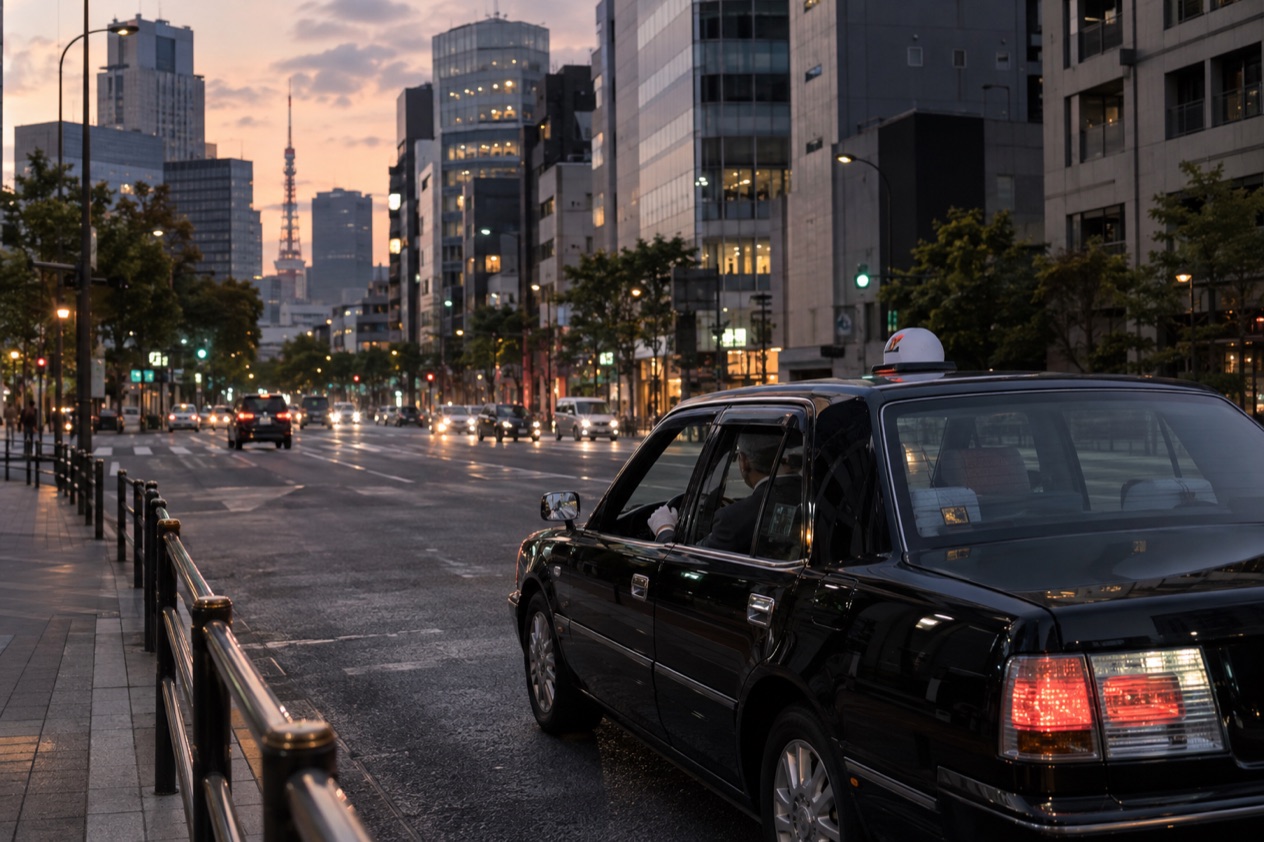
A planned trip often mixes modes, for example a train into a city, a coach out of it overnight, and a taxi at the end. Taxis in Japan are clean and reliable, though passengers should have cash because not all taxis accept cards. That one habit is worth keeping in the pocket for the last leg of a journey.
Paying on the bus and on the rails
Paying is where a traveler meets the IC card, the rechargeable card used across transport. The deposit for most IC cards is 500 yen, and you can get that money back if you return the card at the counter at the end of your stay. Welcome Suica is a deposit-free card for tourists visiting certain parts of the Kanto region, valid for up to 28 days.
An IC card also pays for items in many vending machines, stores and coin lockers in stations, so it is useful beyond the ticket gate. Mobile IC cards, PASMO or Suica on a smartphone, do not work on all smartphones, so a plastic card is a different option from the phone version.
What to expect when you board a bus
One type of bus in Japan works like this: you enter through the rear, take a numbered ticket, and pay when you exit through the front. The fare depends on where you board and where you get off. That describes one kind of bus and not every service, so a coach on a highway route may work differently.
On a bus that does not charge a flat rate, if you put in more than the exact fare you will not get change back. A traveler paying in cash learns to have small coins ready. The same bus-by-bus logic applies everywhere, so each service is worth reading on its own terms rather than assuming it matches the last one.
Good to know before you go
Keep cash on hand for taxis and for buses that give no change, and treat a card as something to confirm rather than assume. If you drive instead of riding, remember that traffic keeps to the left. Trains are known for punctuality, so a plan built around a coach connection can use the same careful timing.
Sources
- Japan National Tourism Organization, trains and buses (https://www.japan.travel/en/guide/how-to-travel-by-train-and-bus-in-japan/), checked October 11, 2026
- Japan National Tourism Organization, getting around Japan: trains, subways, buses, taxis (https://www.japan.travel/en/plan/getting-around/), checked October 11, 2026
- Wikipedia, Highway bus (https://en.wikipedia.org/wiki/Highway_bus), checked October 11, 2026
- Wikipedia, Transport in Japan (https://en.wikipedia.org/wiki/Transport_in_Japan), checked October 11, 2026
To plan your stay
- Best Time to Visit Japan: Cherry Blossoms, Autumn Colors, Weather and Festivals
- Things to Do in Japan: Kyoto Temples, Onsen, Street Food and Day Trips
- Where to Stay in Japan: Ryokan, Temple Stays, Capsule Hotels and the Best Cities to Base In
- Know Before You Go to Japan: Entry, Money, Etiquette and Getting Around