
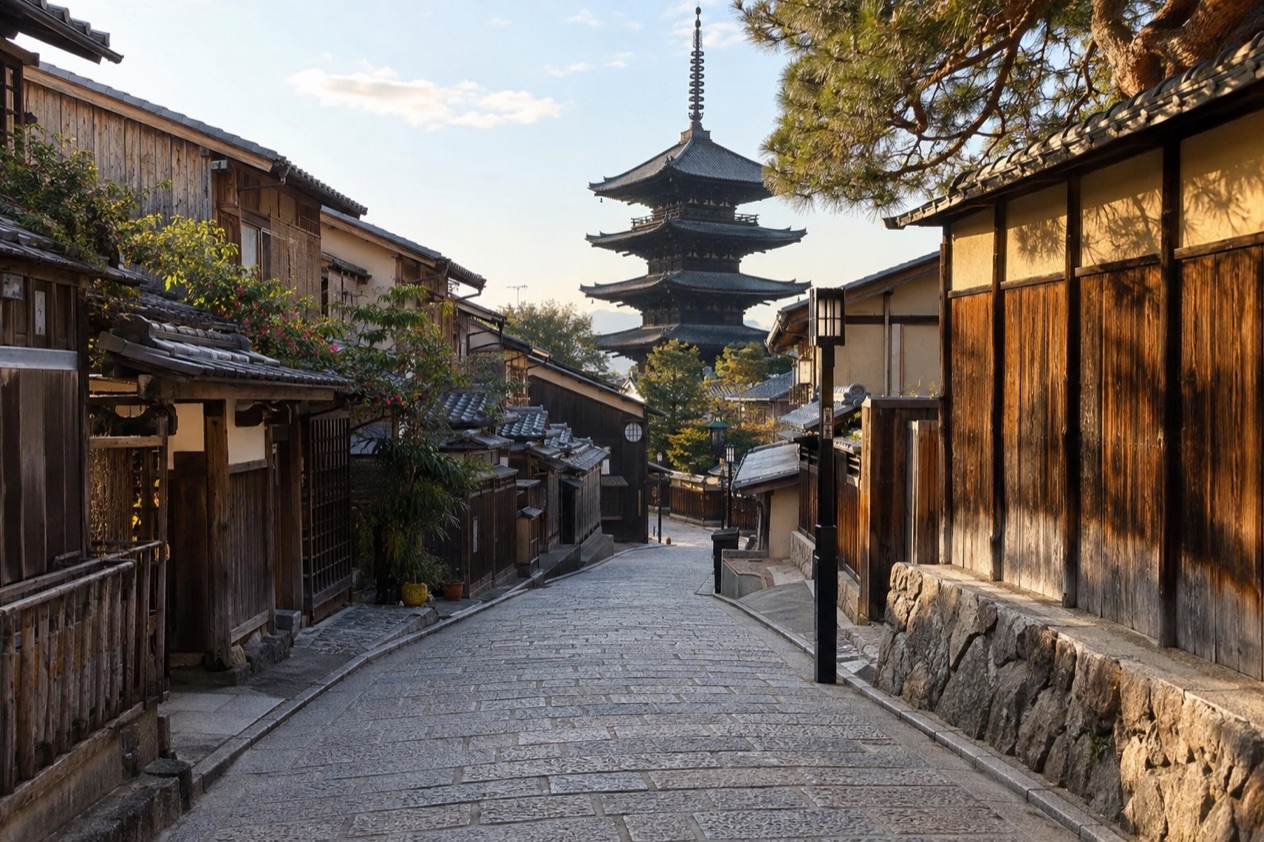
A guide stops in front of a wooden gate, turns to the group and explains why the lanterns hang the way they do, why the rope is twisted to the left, and what the priest does at dawn. Moments like this are where a guided tour in Japan earns its place, turning a handsome backdrop into a story you can follow. Licensed guide-interpreters work in many cities and regions, and they shape trips for travelers who want more than a photograph.
Are guided tours worth it in Japan?
For many travelers, yes, especially when the goal is to understand temples, shrines, old districts and customs rather than simply see them. Japan layers history, religion and daily habit in ways that signs and guidebooks only partly capture. A certified guide helps you experience the country’s culture, tradition and history in depth, and does it in your own language.
The idea behind a guided day is simple: you hand over the small decisions and keep the pleasure. A guide can tell you what a carved figure at a shrine represents, why visitors purify their hands before entering, or what the dish on your table is made from and how it is eaten. Questions you would never find an answer to on your own become part of the walk.
What a licensed guide-interpreter adds
Nationally licensed guide-interpreters are experts who have passed national exams. They work in 10 languages: English, French, German, Spanish, Italian, Portuguese, Russian, Chinese, Korean and Thai. For an American traveler, that means a conversation in English with someone trained to explain Japanese culture to visitors, not a recited script.
That training shows in the way a day unfolds. A guide reads the group, slows down where you are curious, and moves on where you are not. You can ask about the history behind a garden, the meaning of a festival banner, or how a local craft is made, and get a considered reply rather than a shrug.
The JNTO describes the benefit plainly: a certified guide helps you get the most out of your trip and maximize your time doing what you love. If your passion is architecture, food, crafts or history, you can say so and let the guide steer toward it.
Who gets the most from a guide
First-time visitors benefit because so much is unfamiliar at once: customs at shrines and temples, the manners of a tea house, the rhythm of a market. A guide turns that unfamiliarity into curiosity instead of hesitation. Families can use a guide to keep a day focused, and travelers with a specific interest, such as samurai history or traditional crafts, can build a day around it.
Seasoned visitors who already know the headline sights also use guides, often to go deeper into one neighborhood or one theme. A single subject explored properly, say the old merchant streets of a city or the story of a particular shrine, can feel richer than a long list of sights. If you prefer to wander alone, a guide for half a day in your first city can still set up the rest of the trip.
A guided day suits you less if your idea of travel is aimless drifting with no plan. Even then, a guide for one well-chosen subject can sit comfortably inside an otherwise free itinerary.
Which kinds exist?
The main kinds are a private day with a nationally licensed guide-interpreter, a tour sold through a travel agency, and a guide arranged through a national or regional organization of certified guides. Each fits a different style of trip, and they can be combined across a single journey.
Independent guides and their organizations
Nationally licensed guide-interpreters are generally independent professionals. You can reach them directly, or request one through a national organization for government-licensed guides. The national organizations include Japan Federation of Certified Guides, True Japan, GoWithGuide, Japan Wonder Travel, Japan Guide Association, and Guide Interpreting & Communication Skill Studies Association.
This route suits travelers who want a day shaped around their own interests. You describe what you love, whether it is gardens, food, history or crafts, and the guide builds the route with you. It also suits small groups, couples and families who would rather not follow a fixed script.
Regional guide associations
If you already know where you are going, a regional organization can match you with a certified guide who knows that area well. The regional organizations include the Sapporo & Hokkaido Concierge center, the Kansai Interpreter & Guide Association, the Hiroshima Interpreter & Guide Association, and the Kyushu Association of Interpreters, Translators and Guide Interpreters.
The names point to the regions they cover: Hokkaido around Sapporo, the Kansai area, Hiroshima, and Kyushu. A guide tied to one region tends to be the person to ask about local stories, local food and the details of a particular place. It is a good fit when your trip is built around one area rather than a sweep of the country.
Tours booked through a travel agency
You can request a nationally licensed guide-interpreter when booking your trip or tours through a travel agency. The convenience is that transport, lodging and guiding arrive in one package, with fewer separate arrangements for you to manage.
One point deserves attention: a licensed guide is not guaranteed. You should always confirm that a licensed guide will lead the tour, and say so when you book. A clear request at the start avoids surprises on the day and ensures the guide has passed the national exams.
How do you choose?
Start with what you want to understand, then match it to a kind of guide, a language and a region. A clear idea of your interest narrows the choice faster than comparing lists of names.
Start with your interest and your language
Decide what would make the day memorable. Perhaps it is the stories behind a temple, the flavors of a market, or the craft of a particular trade. Tell the guide or the organization that at the outset, because a guide who knows your goal can choose stops that serve it.
Then check the language. Licensed guide-interpreters work in 10 languages, and English is among them, so American travelers can ask for a day conducted in English. Families with relatives who speak another of those languages can ask for it just as easily.
Match the guide to the place
If your trip focuses on one area, a regional association is worth a look. Travelers heading to Hokkaido, the Kansai area, Hiroshima or Kyushu can approach the regional bodies named above. If you are covering several cities, an independent guide or a national organization may give you a wider choice.
Think about the size of the group too. A private guide lets you move at your own pace and change course when something catches your eye. A tour built through an agency may suit those who prefer a ready-made structure.
Confirm the guide before you commit
Whichever route you take, confirm that the person leading the day is a nationally licensed guide-interpreter, particularly when booking through an agency. Ask the question plainly and wait for a clear answer. It takes a minute and saves disappointment.
Finally, leave room in the schedule. A good guide will have more to show you than a rigid plan allows, and the best moments often come from a question you did not plan to ask.
Good to know before you go
A guided day works best when the guide knows what you hope to see, so share your interests when you book. Guides are generally independent professionals, so each arranges the details of the day in their own way, and it is worth settling them with the guide or organization directly. Whether you book through an agency, a national organization or a regional association, the one thing to confirm is that a licensed guide-interpreter will lead the day.
Sources
- Japan National Tourism Organization, guides and tours (https://www.japan.travel/en/plan/how-to-book-a-certified-tour-guide/), checked October 11, 2026
To plan your stay
- Best Time to Visit Japan: Cherry Blossoms, Autumn Colors, Weather and Festivals
- Where to Stay in Japan: Ryokan, Temple Stays, Capsule Hotels and the Best Cities to Base In
- Sending Luggage from the Airport in Japan: Hands-Free Travel, Hotel Delivery and Coin Lockers
- Know Before You Go to Japan: Entry, Money, Etiquette and Getting Around