
The first small moment usually comes at the door of a ryokan or a small restaurant, when you notice a row of shoes lined up and a pair of slippers waiting for you. Japan rewards the traveler who pays attention to such details, and most of what a first visit asks of you is simple habit. The short answer is a handful of customs, a few basics about entry and power, and a plan built around regions rather than a checklist.
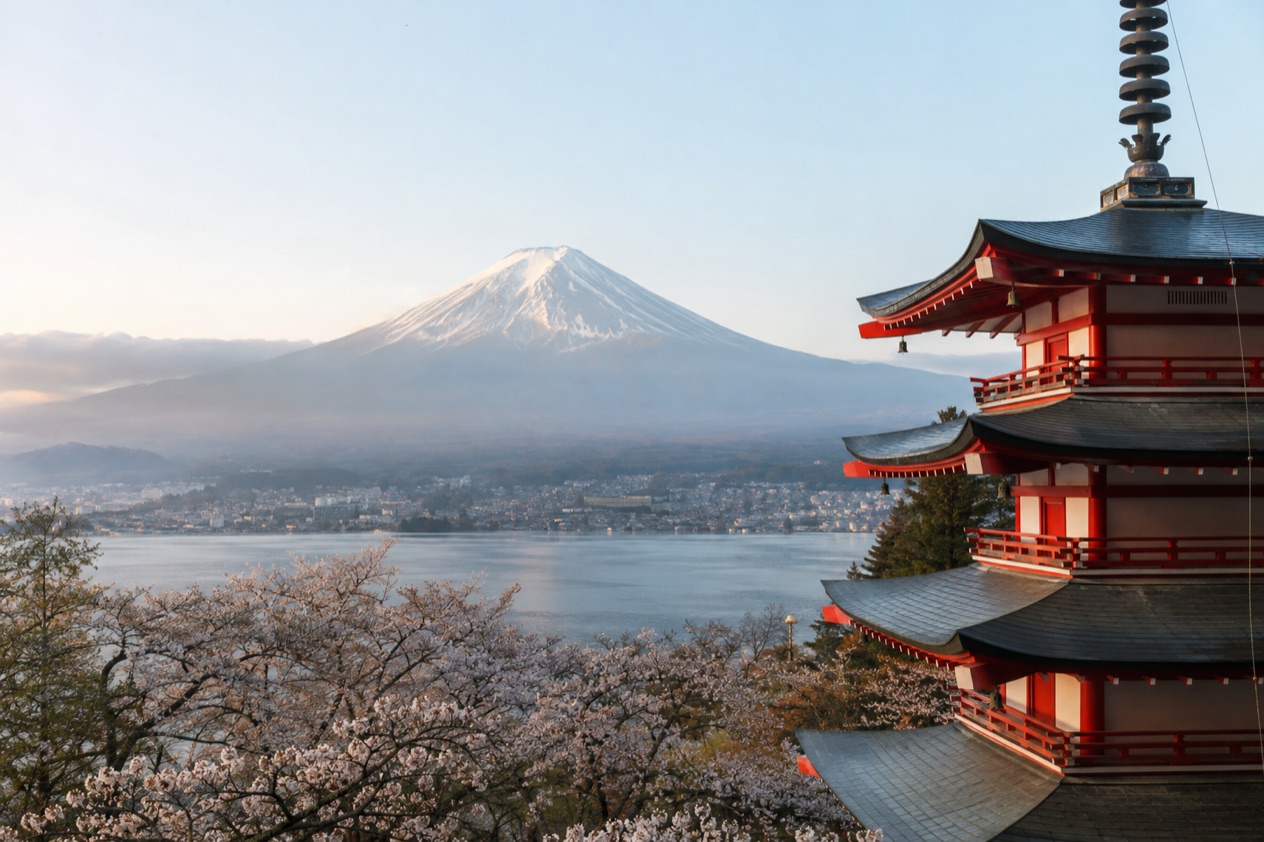
What should first-time visitors know about Japan?
Japan is an island nation in East Asia, run on habits of order and politeness that you pick up quickly once you see them in action. Before you pack, three practical things matter most: how you enter and carry your documents, what happens at the entrance of a building, and what you plug in once you arrive.
Entry and the passport you carry
U.S. citizens can obtain entry permission on arrival without a visa, usually valid for a stay of up to 90 days. That covers a long trip across several cities, a rail journey, a few nights in the mountains and a slow ending in a hot spring town.
Once inside the country, foreigners must carry their passport or trusted traveler card at all times. Travelers who are registered in the Trusted Traveler Program hold a card that is valid for 3 years or until the passport expires, whichever comes first. Keep the passport in the same pocket or bag compartment every day, so that it never stays behind in a hotel room by accident.
Shoes, slippers and tatami
In Japan it is customary to remove your shoes at the entrance of a building, step into indoor slippers and leave your shoes in a shoe box or neatly to the side. You will meet this at ryokan (traditional inns), in homes, in some restaurants and in many temples. The entrance often has a small step up, and that step marks the line between outside and inside.
Inside a home or a ryokan, the slippers come off again when you walk onto tatami, the woven straw mats of a traditional room. Socks or bare feet are the rule on tatami. The bathroom has its own routine, since a separate pair of toilet slippers is often provided. Wearing them only in there, and swapping back on the way out, is the habit that hosts notice and appreciate.
Plugs, voltage and the clock
Electricity in Japan is 100 volts, with frequencies of 50 hertz and 60 hertz depending on where you are. Check the label on every charger and device you bring, since phones, cameras and laptops usually accept a wide range, while hair dryers and travel kettles are less forgiving.
The whole country keeps Japan Standard Time, UTC+09:00, so there is no shift in the clock as you move from one city to another. Your itinerary, your train reservations and your dinner plans all follow a single time across the islands.
What mistakes should you avoid?
The most common mistakes are small, and they come from treating Japan like home: walking into indoor spaces in street shoes, lighting a cigarette in the wrong place, and leaving your documents in the hotel. None of these is hard to avoid once you know it exists.
Smoking while you walk
Smoking while walking on the street, or dropping cigarette butts on the ground, is prohibited in Japan and can result in a fine. The prohibition applies even in places that feel open and informal, such as a shopping street or a park path.
Designated outdoor smoking areas are limited, so smokers should look for the nearest designated zone rather than assume one is nearby. In practice that means a small enclosed corner or a marked spot, often with an ashtray stand, where smokers gather and finish their cigarette before moving on. Planning your breaks around such spots saves a lot of wandering.
Wearing shoes or slippers in the wrong place
The classic slip is to keep going in the wrong footwear. Street shoes stay at the entrance, indoor slippers belong to the hallways and rooms with a hard floor, and the slippers come off before tatami. If you see mats at your feet and a pair of slippers in front of you, step out of them first.
The toilet slippers are the one that catches people out. They stay in the bathroom, and you leave them there when you come out. Wandering back into a tatami room or the hallway in them is the mistake a host will remember, though usually with a smile. Taking a second to look at the floor at each threshold is the habit to build in your first days.
Leaving your documents behind
Because foreigners must carry their passport or trusted traveler card at all times, a day out without it is a mistake. The temptation comes on a day trip or a relaxed evening, when it feels easier to leave valuables in the room. Put the document in a zipped pocket or an inner bag compartment and treat it as part of your outfit.
Pair this with a quiet habit at the end of each day: check that the passport is back where it lives before you go to bed. When you move to the next town, the same check at the hotel door takes a few seconds and avoids a stressful return trip.
Treating Japan as one place
Japan is administratively divided into 47 prefectures, and the country stretches across an archipelago rather than a single landmass. A first itinerary that tries to touch everything tends to turn into a string of stations. Each city, each mountain area and each hot spring town has its own pace, food and customs, and a couple of places seen well tell you more than a dozen seen in passing.
Even something as basic as electricity shows the difference, since the frequency changes between 50 hertz and 60 hertz across the country. It is a small reminder that what is true in one part of Japan is not always true in another, and that habits learned in a big city may need adjusting in a mountain village.
How do you plan?
Decide what you want most, whether temples and gardens, big-city neighborhoods, mountain scenery, hot springs or food, and let that choose the regions.
Choose regions, not a checklist
With 47 prefectures and an island layout, Japan offers more than a first trip can hold. Start with two or three bases and treat everything else as a bonus. A city base gives you restaurants, museums and evening streets, while a smaller town gives you slower mornings, a ryokan dinner and a bath before bed.
The Shinkansen, the world’s first high-speed rail line, is part of what makes this kind of travel appealing for visitors. You can think of the trip as a string of stays linked by trains, with room in each stay to wander without a schedule. Leave one open afternoon in each place for whatever you stumble across, whether a shrine, a market stall or a side street of noodle shops.
Build in the customs
Think of the customs as part of the plan rather than a list of rules to survive. A night in a ryokan is where the shoe and slipper routine comes together: shoes at the entrance, slippers in the corridors, bare feet or socks on the tatami, and the toilet slippers kept for the bathroom. It is worth doing at least once for the rhythm of the evening alone.
Bring a small adapter plan with you as well. The time zone is the same everywhere, so your phone, your watch and your reservations all agree wherever you go.
Know the numbers to call
Save the emergency numbers in your phone before you leave, so that they are there if you ever need them. They are short, and each one belongs to a different service.
| Service | Number |
|---|---|
| Fire | 119 |
| Police | 110 |
| Japan Coast Guard | 118 |
Write them on a card in your wallet too, next to your hotel’s name, so that you have them even if your phone is out of battery.
Good to know before you go
A few habits carry you through the trip: keep your passport or trusted traveler card with you, take your shoes off where others do, and look for the marked spot if you smoke. Japan runs on a single clock, and the same set of customs shows up from the first hotel lobby to the last ryokan, so what you learn on day one keeps working. Leave a little room in each day for the unplanned, since a side street, a small shrine or a counter with a handful of seats often becomes the memory of the trip.
Sources
- Japan National Tourism Organization, manners, etiquette, shoes, bowing, chopsticks, public behavior (https://www.japan.travel/en/guide/understanding-and-mastering-japanese-manners-and-etiquette/), checked October 11, 2026
- Wikivoyage, Japan (https://en.wikivoyage.org/wiki/Japan), checked October 11, 2026
To plan your stay
- Best Time to Visit Japan: Cherry Blossoms, Autumn Colors, Weather and Festivals
- Things to Do in Japan: Kyoto Temples, Onsen, Street Food and Day Trips
- Where to Stay in Japan: Ryokan, Temple Stays, Capsule Hotels and the Best Cities to Base In
- Sending Luggage from the Airport in Japan: Hands-Free Travel, Hotel Delivery and Coin Lockers