
On a Shinkansen window seat, Mount Fuji slides into view and half the car reaches for a phone. Moments like that raise the bigger questions: how many islands make up the country, how it is organized, what people mean when they say Japan.
What are the basic facts about Japan?
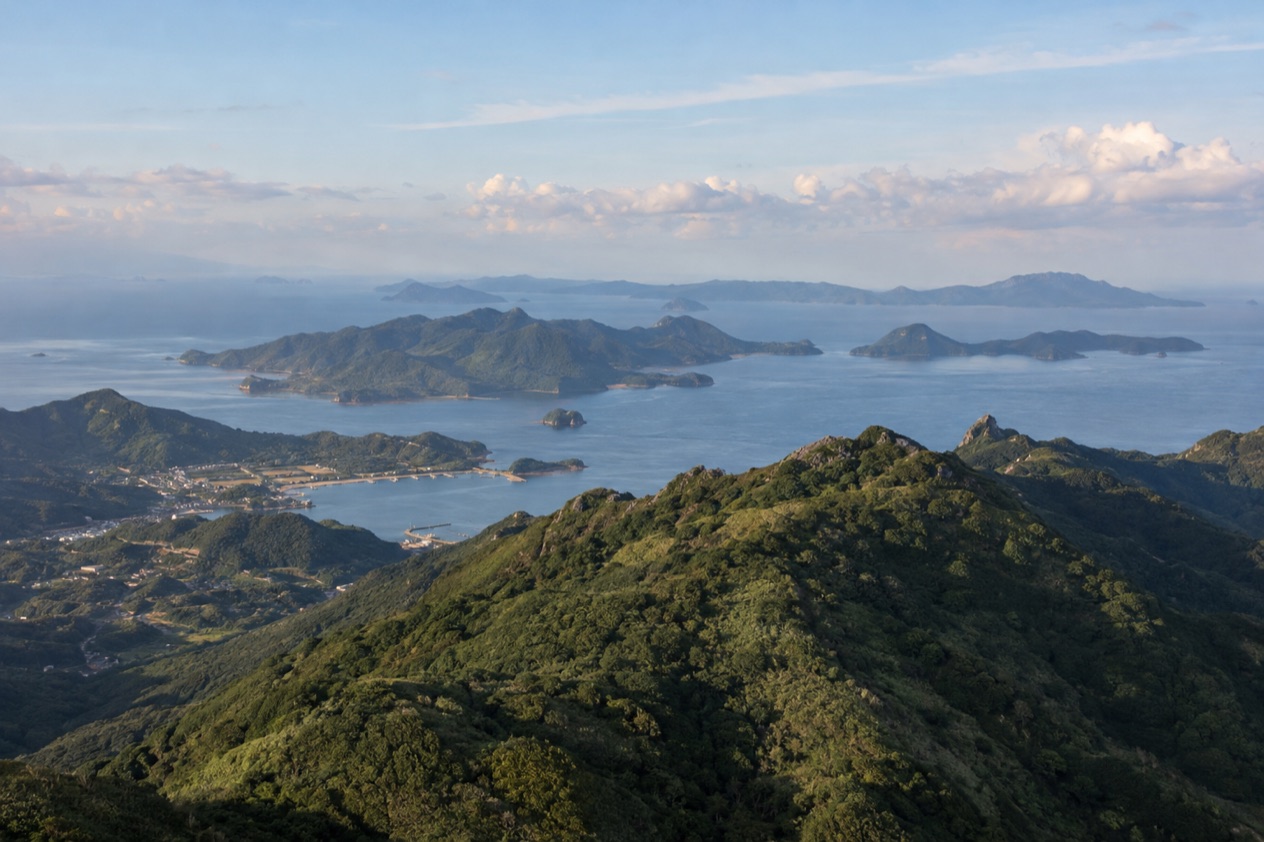
Japan is an island nation made of 14,125 islands strung along the Pacific coast of Asia, and five of them carry the story: Hokkaido, Honshu, Shikoku, Kyushu and Okinawa. Listed from north to south, they run from cold, wide-open Hokkaido to subtropical Okinawa. Honshu is the one where travelers spend their time, since Tokyo sits on it.
The country has the sixth-longest coastline in the world, which tells you how much of daily life, from fish markets to ferry crossings, is tied to the water. Yet the land itself is mostly green.
Forest covers about two thirds of the archipelago, and farmland takes a smaller share. Japan has only a few developed-country peers with such wooded hills, and that is why a train ride out of any big city so quickly turns to ridgelines and cedar.
How the country is organized
Japan is divided into 47 prefectures, which rank immediately below the national government. Each one elects its own governor directly, and its assembly members serve four-year terms. Each prefecture also has its own mon, an emblem that plays the role of a coat of arms in the West, and you will spot them on manhole covers, bridges and local buses.
The 47 are not all the same kind. Forty-three are prefectures proper (ken), Osaka and Kyoto are urban prefectures (fu), Hokkaido is the single regional prefecture (do), and Tokyo is a metropolis (to), a merged city-prefecture with features of both.
Traditionally the prefectures are grouped into nine regions: Hokkaido, Tohoku, Kanto, Chubu, Kansai, Chugoku, Shikoku, Kyushu and Okinawa. Regional names such as Kansai and Kanto come up constantly in conversation and on train maps.
Biggest, smallest and most crowded
The extremes give a feel for the scale. The comparison below puts the largest and smallest side by side, and the contrast between a vast northern island and a tiny prefecture on Shikoku is striking.
| Measure | Prefecture | Figure |
|---|---|---|
| Largest area | Hokkaido | 83,453.6 km² (32,221.6 sq mi) |
| Smallest area | Kagawa | 1,861.7 km² (718.8 sq mi) |
| Most residents | Tokyo | 14,261,000 |
| Fewest residents | Tottori | 525,000 |
Hokkaido also has 14 subprefectures that act as bureaus of the prefecture, a reminder of how much ground it covers. Tokyo is the other extreme: it is the capital, and the Greater Tokyo Area on Honshu counted 38,140,000 people in 2016.
What is Japan known for?
Japan is known first for Mount Fuji and the Shinkansen, the two images that sum up the country for visitors: a snow-capped cone and a bullet train gliding past it. Fuji rises to 3,776 meters, the highest mountain in the country, in Shizuoka Prefecture. It is a volcano dormant since 1707, and it anchors paintings, postcards and the view from many a train window.
Volcanoes, rivers and a very large lake
Fuji is one of 108 active volcanoes in the country, which explains why hot springs, steaming valleys and onsen towns are so woven into travel here. The land is steep and folded, and the water follows it. The Shinano River, the longest in Japan, winds for 228 miles through Nagano and Niigata Prefectures.
Lake Biwa, an ancient lake, is the country’s largest freshwater lake. Five sites are inscribed on the UNESCO World Heritage List for their outstanding natural value, a sign of how much wild country survives alongside the dense cities. For a visitor, that means a trip can swing from a neon crossing to a forested ridge within a single day of travel.
Cities at enormous scale
About nine in ten people live in cities, and the metropolitan Tokyo and Yokohama area, with 35 million residents, is described as the most populous urban area in the world. In the Tokyo area and the wider Kanto Region, commutes of two hours each way are common for many workers, which is the human side of those station crowds you see on the news.
Haneda Airport in Tokyo is the largest airport in the country, and it was Asia’s second-busiest in 2019. For many arriving travelers it is the first look at the scale of the place. Japanese is spoken by around 128 million people, mostly in Japan, and the Tokyo dialect is considered Standard Japanese, the version you hear in announcements and on television.
What should visitors know first?
Visitors should know first that Japan is long and varied, so the place you pick shapes everything: a trip to Hokkaido, a few days in Honshu’s cities and a week on Okinawa feel like different countries. Matching the island and region to what you want is the real first decision, more than any single sight.
Think in regions, not just cities
Maps, timetables and guidebooks lean on the nine regions, so it helps to learn them early. Kanto is the Tokyo area, Kansai is the Osaka and Kyoto side, and Tohoku and Hokkaido lie up the island chain, while Kyushu and Okinawa stretch toward the south. Tottori, the least populated prefecture, and Kagawa, the smallest, show that even the quieter corners have their own local identity and emblem.
Because Japan is so heavily wooded and so full of coastline and mountain, travel between regions tends to cross varied landscape rather than flat farmland. That is part of the pleasure of moving from one prefecture to the next.
Seasons and the weather calendar
The country’s length means the weather is not uniform. On Okinawa the main rainy season begins in early May. In late summer and early autumn, typhoons often bring heavy rain, so that stretch of the year can bring disrupted plans and gray days alongside the warm weather.
Since the archipelago is volcanic and mountainous, hot springs and high country belong to the trip as much as the cities do. Reading a month’s weather for the specific region you are visiting, not for Japan as a whole, is the habit that pays off.
Language and getting around the big places
Japanese is the language of daily life, and with Standard Japanese based on the Tokyo dialect, what you learn from phrasebooks and broadcasts will match what you hear in the capital. In the largest cities, long journeys across town are simply normal for residents, so allow for the scale of Tokyo when you plan a day there.
Good to know before you go
Japan is a country of 47 prefectures and thousands of islands, so the best preparation is choosing your region and reading its own seasonal picture, especially for typhoons in late summer and early autumn and the early-May rains on Okinawa. Yen is the currency you will spend, and it is worth keeping an eye on the habits of each place you visit, since a Tokyo neighborhood and a small island town can feel far apart.
Sources
- Wikipedia, Demographics of Japan (https://en.wikipedia.org/wiki/Demographics_of_Japan), checked October 11, 2026
- Wikipedia, Geography of Japan (https://en.wikipedia.org/wiki/Geography_of_Japan), checked October 11, 2026
- Wikipedia, Japan (https://en.wikipedia.org/wiki/Japan), checked October 11, 2026
- Wikipedia, Prefectures of Japan (https://en.wikipedia.org/wiki/Prefectures_of_Japan), checked October 11, 2026
To plan your stay
- Best Time to Visit Japan: Cherry Blossoms, Autumn Colors, Weather and Festivals
- Where to Stay in Japan: Ryokan, Temple Stays, Capsule Hotels and the Best Cities to Base In
- Sending Luggage from the Airport in Japan: Hands-Free Travel, Hotel Delivery and Coin Lockers
- Know Before You Go to Japan: Entry, Money, Etiquette and Getting Around