
A phone held up at the end of a narrow Kyoto lane, a small crowd waiting for the same shot of a wooden teahouse, a local resident stepping around them with a shopping bag. Scenes like this have pushed some Japanese towns to put up signs, barriers and rules. Japan welcomes visitors warmly, and it also asks them to behave as guests in neighborhoods where people live, so a little understanding of where the pressure builds makes for a better trip.
Which places are most crowded in Japan?
The crowding follows the names everyone has heard: Tokyo, Osaka, Chiba, Kyoto and Fukuoka are Japan’s most visited prefectures, and within them a handful of temples, shrines, streets and viewpoints take the greatest share of attention. Tourism matters a great deal to the country’s economy, with total spending by tourists inside Japan reaching 34.3 trillion yen in 2024. That money is also why towns put up with the pressure, and why they take the trouble to manage it.
Pressure rarely spreads evenly. A single alley, a single photo spot or a single crossing can feel overwhelmed while the next street over carries on as usual. The places below are the ones where Japan has gone as far as writing rules, closing lanes or building barriers.
Gion in Kyoto
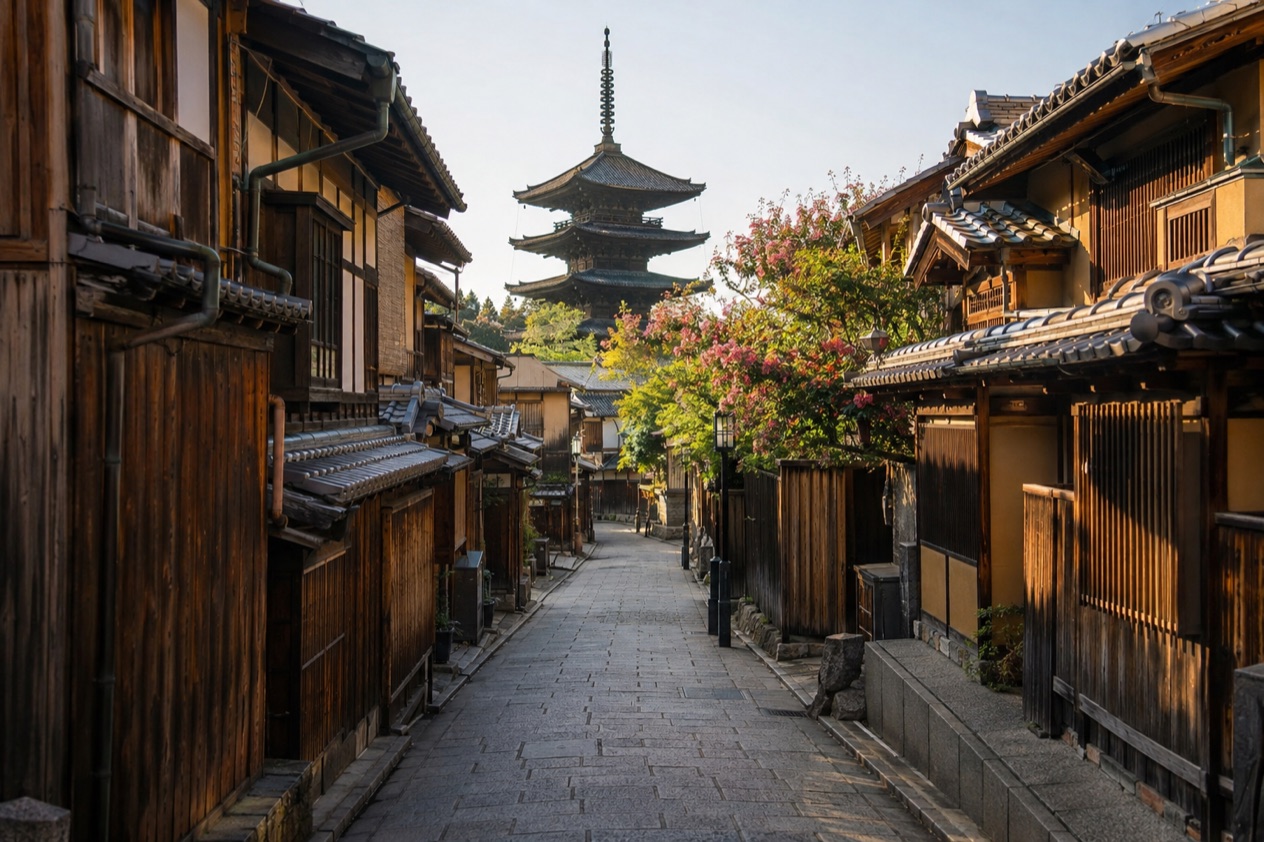
Gion is the Kyoto district of wooden teahouses, lantern-lit lanes and the geisha who work in them, and it is where the debate over overtourism has been sharpest. Kyoto officials prohibit tourists from visiting some of the alleys in the district, because these are private streets where people live and work, not an open-air museum.
If you meet a geisha or a maiko (an apprentice) hurrying to an appointment, the habit that works is simply to step aside and let her pass. Walk the main streets, look at the facades, eat in the district, and leave the closed alleys alone.
Fujikawaguchiko and the Mount Fuji view
In Fujikawaguchiko, in Yamanashi Prefecture, a popular view of Mount Fuji rises behind a Lawson convenience store. The shop became a photo spot, and the disturbances caused by the people gathering there led the town to put up a mesh barrier that blocks the view.
The story says something useful for any traveler. A shop with a mountain behind it is still a shop, with customers, staff and neighbors, and a spot that goes viral online can be shut down within a season. The lake towns around Fuji have plenty of other places to look at the mountain from, so a barrier on one corner does not end the view.
Shibuya and central Tokyo
Tokyo is the most visited prefecture in the country, and Shibuya is where visitors feel it, with the great pedestrian crossing, the station and the streets of shops and bars all packed into one ward. Shibuya has an ordinance that prohibits drinking alcohol in public year-round from 6 p.m. to 5 a.m., aimed at the evening street gatherings that left neighbors with noise and litter.
If you plan to pick up a drink from a convenience store and carry it around the crossing at night, the ordinance is the thing to know. Izakaya (casual Japanese pubs) and bars exist precisely so that drinking happens indoors, with food, at a table.
The great temples and shrines
Among the most popular sites in Japan are Sensoji temple in Tokyo, Nikko, and the Fushimi Inari shrine and Kinkakuji in Kyoto. Each has its own character: Sensoji with its gate and its approach lined with snack stalls, Nikko with its ornate shrines among the trees, Fushimi Inari with its tunnels of red torii gates climbing a hillside, and Kinkakuji with its gilded pavilion beside a pond.
Japan has 26 World Heritage Sites, among them Himeji Castle and the Historic Monuments of Ancient Kyoto and Nara. The list is a reminder that the country’s treasures are not all in the same two or three cities, and that the best-known names are only part of what is on offer.
When are crowds worst?
Crowds are worst wherever and whenever attention collects in one spot: at a photogenic corner, at a crossing as the evening begins, at a gate every itinerary includes. The rules that towns have written show this pattern better than any calendar, because each one answers a specific moment of the day or a specific habit of visitors.
Evenings in the big entertainment districts
Shibuya’s public drinking ordinance starts at 6 p.m. That timing tells you something: the evening, when offices empty, shops glow and groups look for somewhere to meet, is when the neighborhood fills with people who are not just passing through. The street itself becomes the gathering place.
For a traveler, the lesson is about how to spend that hour. The crossing can be crossed, watched and photographed, and then the evening is better spent sitting down somewhere, in a ramen shop, a yakitori counter or a small bar, than standing in the middle of the flow.
Seasons of flowers and leaves
Japan’s calendar is shaped by what is blooming and changing color, with cherry blossoms in spring and maple leaves in autumn drawing visitors and residents alike to parks, temple gardens and riverbanks. These seasons move from city to city and from one year to the next, so they are best treated as moods of the year rather than fixed dates.
The famous gardens and temples tied to these seasons are places where people share the same idea at the same time. If your trip falls in one of them, expect company at the best-known spots and plan to enjoy the less obvious parks and neighborhood streets as well, where a single tree can be just as lovely.
Holiday weeks and viral moments
Visitors from South Korea have, several times in the past, made up the largest group of inbound tourists to Japan, and in 2011 travelers from China were the highest spenders, with an estimated 196.4 billion yen. The country draws people from many places at once.
A second kind of crowd arrives with a photo. The Lawson view in Fujikawaguchiko is the clearest case: a corner nobody had planned for became a destination after images spread, and the town responded with a barrier. Moments like this arrive without warning, which is one more reason to hold your itinerary loosely.
How do you avoid them?
You avoid the worst of the crowds by spreading your trip out, by following the local rules without fuss, and by treating the busiest places as one stop among many rather than the whole point.
Look beyond the five busiest prefectures
With Tokyo, Osaka, Chiba, Kyoto and Fukuoka at the top of the list of most visited prefectures, a trip that touches other regions will feel different. Japan stretches from Hokkaido in the far reaches of the country to Okinawa, with Kyushu, Shikoku, Kanazawa and many smaller towns in between, each with its own food, crafts and landscapes.
Even within a single big city, the idea works. Choose a neighborhood and walk it without a checklist, find a shrine that is not on the usual lists, stop in a local market or a coffee shop. Those hours often stay in memory longer than the minutes spent in line for a photograph.
Follow the local rules
Leave the closed Gion alleys closed, ask before photographing anyone, keep your drink for a table in Shibuya, and leave the Lawson corner in Fujikawaguchiko to the people who shop there. These are small acts, and they are the habits that keep neighborhoods willing to welcome visitors.
A gentler way of seeing a district like Gion is to treat it as a place where people are going about their day. A photograph of a lantern, a doorway or a street without people in it is a perfectly good souvenir, and nobody has to be inconvenienced to take it.
Choose a different view of the same thing
If one Fuji viewpoint is blocked, another can take its place, and the same goes for other sights. Kyoto has more temples and gardens than any traveler can see, and Nara and Himeji Castle give the country’s heritage a wider frame than a single city.
When you do go to Sensoji, Nikko, Fushimi Inari or Kinkakuji, go knowing that you will not be alone, and let that be part of the experience. Part of the pleasure at these sites is seeing how people, Japanese and foreign, have come to look at the same thing.
Good to know before you go
Local ordinances such as Shibuya’s drinking rule apply to everyone on the street, visitor or resident, and following them is the simplest way to avoid trouble and keep an evening pleasant.
| Fee | Amount | Who pays |
|---|---|---|
| Fine for photographing geisha in Gion without permission | US$92 | Tourists |
Sources
- Wikipedia, Overtourism (https://en.wikipedia.org/wiki/Overtourism), checked October 11, 2026
- Wikipedia, Tourism in Japan (https://en.wikipedia.org/wiki/Tourism_in_Japan), checked October 11, 2026
To plan your stay
- Best Time to Visit Japan: Cherry Blossoms, Autumn Colors, Weather and Festivals
- Where to Stay in Japan: Ryokan, Temple Stays, Capsule Hotels and the Best Cities to Base In
- Sending Luggage from the Airport in Japan: Hands-Free Travel, Hotel Delivery and Coin Lockers
- Know Before You Go to Japan: Entry, Money, Etiquette and Getting Around